At a glance Contents
- Why Uganda Has Two Dry Seasons
- Uganda Month by Month
- Gorillas: Which Dry Season Is the Right One
- The Short or the Long Dry Season?
- What the Rain Does to the Dirt Roads
- Safari, Chimpanzees and Birds: When What Is Best
- Which Tour in Which Season
- What You Should Sort Out Before You Leave
- Frequently asked questions
Why Uganda Has Two Dry Seasons
If you want to go to Uganda, you read a different answer everywhere. Sometimes it's July, sometimes January, sometimes "basically always". The truth: everyone is a little bit right, and nobody explains why.
Uganda lies on the equator. The rain belt that travels around the Earth doesn't pass through here just once a year but twice: once on its way north, once on its way back south. Each time it brings a rainy season with it. What's left in between are two dry seasons.
- December to February: the short dry season. Warm, often sunny, the dirt roads firm.
- March to May: the long rainy season. April and May get the most rain.
- June to September: the long dry season, the real high season.
- October and November: the short rainy season. Heavy showers, mostly in the afternoon, with sunshine in between.
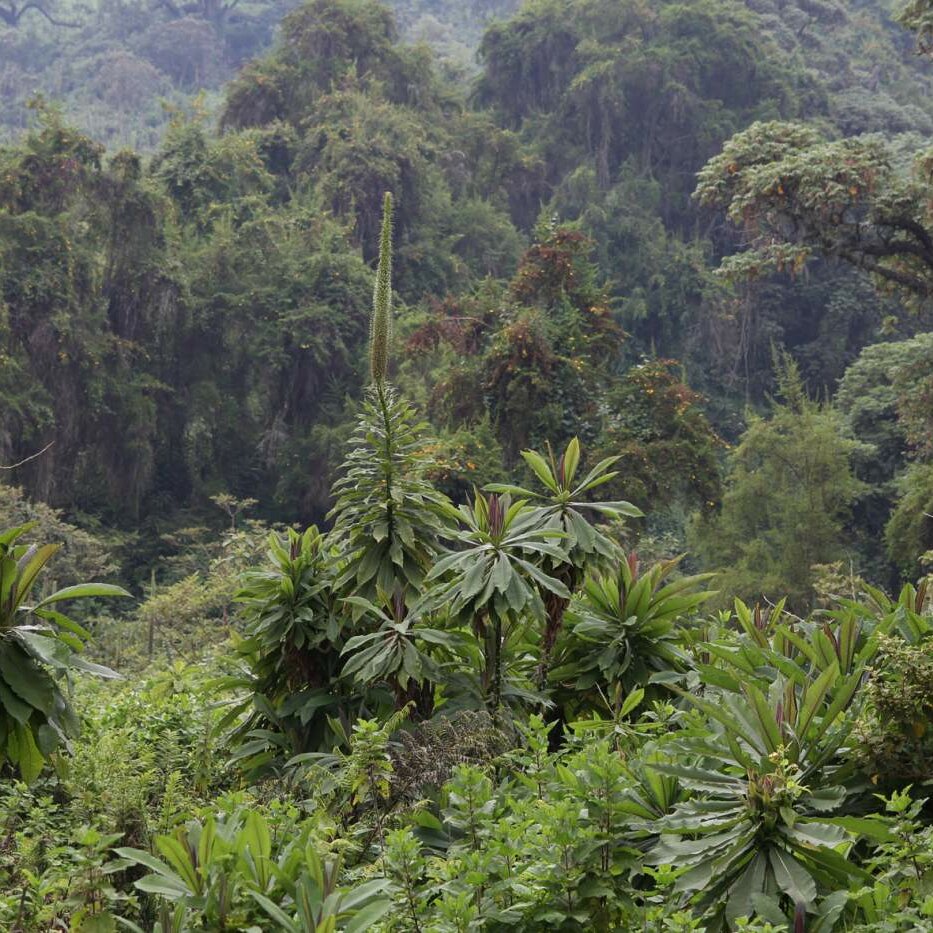
Sounds tidy. But only on paper. In the Bwindi rainforest, where the mountain gorillas live, it rains in every month. The forest isn't called a rainforest for nothing. "Dry season" there only means: it rains less often, and the ground has time to dry between two showers.
So if you turn up for gorilla trekking in July with brand-new, spotless hiking boots and believe they'll come back the way they left, you've misunderstood the words dry season.
Uganda Month by Month
Rough, but honest. The weather on the equator sticks to the calendar as little as it does anywhere else, and the mountains in the southwest make their own weather.
| Months | Weather | Gorilla trekking in Bwindi | Dirt roads | Safari in Murchison and Queen Elizabeth |
|---|---|---|---|---|
| December to February | dry, warm, an occasional shower | good, trails mostly firm | dry, red dust plumes behind every vehicle | good, the animals stay near water |
| March | rain sets in | doable, increasingly slippery | greasy after rain | grass grows, visibility gets worse |
| April, May | main rainy season, heavy showers | steep, muddy, slower, but hardly any other groups | side routes partly difficult, detours possible | lush green, the animals are spread out |
| June to August | dry, pleasant, fresh in the morning | the best time, the trails are at their driest | easy to drive | high season, the most sightings |
| September | mostly dry, first showers | good | good | good |
| October, November | short rainy season, showers mostly in the afternoon | doable, mornings often dry | slippery after thunderstorms | green, quiet, lots of migratory birds |
Notice anything? Not a single row says "impossible". Uganda isn't a country that shuts down in the rainy season. It just gets harder, greener and emptier. For some people that's a drawback. For others it's exactly the reason to go.
Gorillas: Which Dry Season Is the Right One
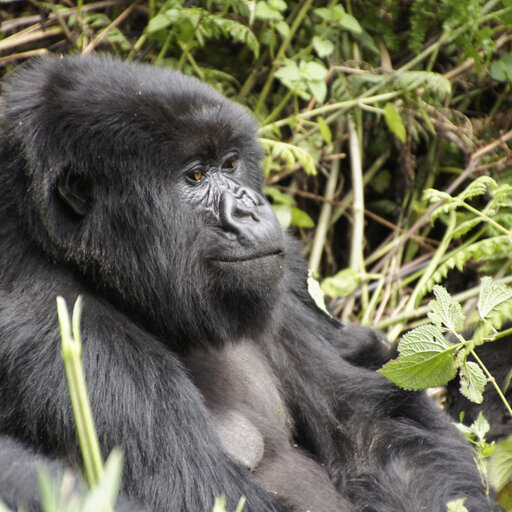
The good news first: the gorillas don't move away. They live in Bwindi and stay there, whatever month the calendar shows. If you have a permit, you set off and, as a rule, you find your gorilla family. The question isn't whether you'll see them. The question is what the way there costs you.
In the dry season
From June to August and from December to February, the trails in the forest are at their firmest. They're still steep. Bwindi is called "impenetrable" in English, and that's not advertising, it's a warning. It goes uphill, downhill, through vines and bamboo, and the rangers cut a path with a machete when the family has retreated into the thicket overnight.
One guest wrote after one of our tours that gorilla trekking demands fitness. True. And in every month.
In the rainy season
In April and May, the steep trail becomes a steep trail made of mud. You slip, you hold on to roots that are just as wet as you are, and after a few hours you come back as if you'd bathed in a clay pit. In return, the forest is full of life, the light between the showers is spectacular, and you share the trail with far fewer other groups.
A ranger in Bwindi is said to have once told a guest: the gorillas don't know it's the rainy season. Only the tourists know. That sums it up pretty well.
Our advice
If you want to see the gorillas for the first time and don't feel like a mudfight: June to August or December to February. If you're fit, have good boots and value peace more than dry socks: the rainy season isn't a mistake, it's a choice. And whenever you go: gaiters, gloves for the thorns and a rain jacket always come along. Anyone who sets off in Bwindi without a rain jacket collects an experience they only want to have once.
How a trekking day works exactly, from the briefing in the morning to the hour with the family, is in our article Gorilla Trekking in Uganda: How Does It Work?
The Short or the Long Dry Season?
Both dry seasons carry the same name, but they don't feel the same. If you have to choose between January and July, you should know how they differ.
| December to February | June to September | |
|---|---|---|
| Weather | warmer, sunny, an occasional shower in the afternoon | pleasant, fresh in the mountains in the morning |
| Gorilla trails | mostly firm, briefly slippery after a shower | the driest of the whole year |
| Landscape | still green from the short rainy season | dustier toward the end, the savanna turns yellow |
| Animals in the savanna | easy to see | easiest to see, the grass is short |
| Crowds | busy over the New Year holidays, quieter in January and February | high season, gorilla permits go early |
| Suits | anyone who wants to escape the German winter | anyone doing it for the first time who wants it as comfortable as possible |
The short dry season has an advantage many people underestimate: it falls exactly in the months when Germany is grey, wet and dark. You swap mud at home for dry dirt roads on the equator. Not the worst trade.
The long dry season is the safe choice. But it's also the time when everyone comes. At the waterhole you won't be alone, and anyone who books too late may not get a place in Bwindi with the family they picked. If you're flexible, you'll gladly take June or September, the edges of the season. The weather there is almost as good and things are noticeably quieter.
And if you're completely honest with yourself: the gorillas don't care about any of these tables. You're the one cursing the mud. So decide by your knees, not by the calendar.
What the Rain Does to the Dirt Roads
Now the part that often goes missing from travel brochures. In Uganda you drive a lot. Between Murchison Falls in the north, Queen Elizabeth National Park in the west and Bwindi in the southwest lie long driving days, and not all of it is asphalt.
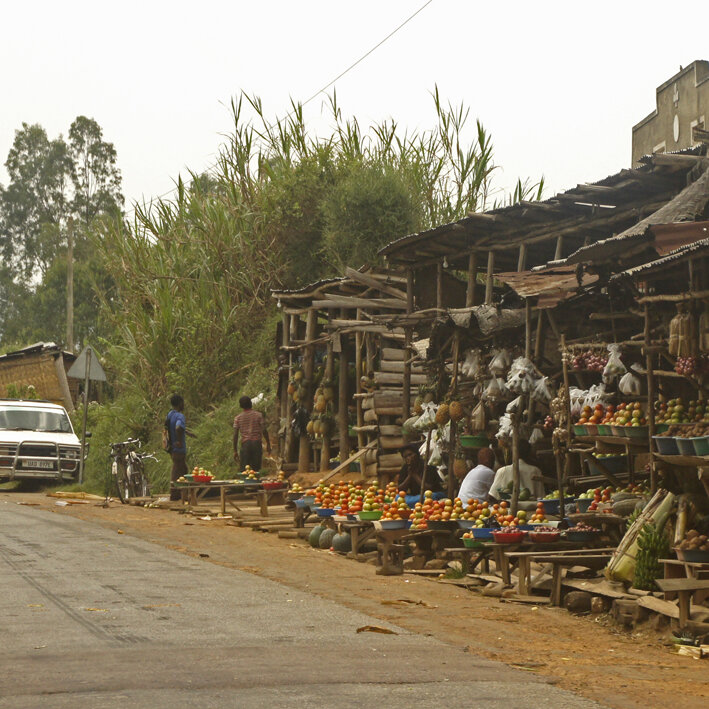
The main roads are mostly paved. The side routes are laterite, the red earth you're still finding in your pockets weeks after a trip to Uganda. In the dry season it makes dust: anyone driving behind a truck sees only red for minutes. In the rainy season the same earth turns to soft soap. A truck stuck sideways in a bend can then block an entire stretch for hours, and everyone stands around arguing about whose fault it is. Usually the rain's.
You notice it especially on the way to the Ishasha sector of Queen Elizabeth Park, where the tree-climbing lions live, and on the mountain roads around Bwindi. It's narrow, steep and winding there, and after a downpour every kilometre takes its time.
For you that means: in the rainy season the driving days run longer than the map claims. A good driver plans for it, sets off early and has a plan B. A bad driver has a satnav. We take the first one ;-)
Safari, Chimpanzees and Birds: When What Is Best
Uganda isn't only gorillas. Anyone who comes only for them misses half of it.
Savanna: Murchison Falls and Queen Elizabeth
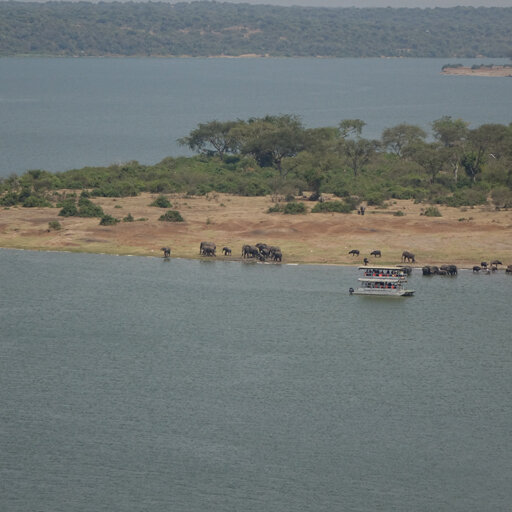
For the classic game drive, the old rule applies: dry season is animal season. The grass is short, the animals gather at the Nile, at the Kazinga Channel and at the lakes. Elephants, buffalo, giraffes and lions are then easiest to see. At Murchison Falls the Nile squeezes through a gap in the rock, and the boat trip there is a treat for the ears in every month.
Chimpanzees in Budongo and Kibale
The chimpanzees behave like the gorillas: they stay in the forest, all year. In the dry season the trails are easier, in the rainy season the forest has more fruit and the animals are often more active. They're always loud. Anyone who has ever heard a group of chimpanzees scream knows why you whisper in the forest.
Birdwatching
For birds, the rainy season is the better time. From November to April the migratory birds arrive from Europe, many species wear their breeding plumage, and at Lake Mburo and in the wetlands the shoebill shows itself, with a bit of luck. If you travel with binoculars and a bird guide, don't shy away from the rainy season. If you only want a lion in a tree, rather do.
Which Tour in Which Season
Our Uganda tours are spread across the year. Here are the three that best cover the two dry seasons and the rainy season.
Gorilla Trekking Uganda: Safari Group Tour
The group tour lasts 8 days and costs from 1699 EUR. It takes you to the mountain gorillas in Bwindi, to Murchison Falls, to the chimpanzees in Budongo Forest, to Queen Elizabeth National Park and finally to Lake Mburo. The next departures are in November and early December: the end of the short rainy season and the start of the short dry season. Green landscape, few crowds, and with every week the trails get drier.
Rwanda & Uganda: Gorilla Safari & Wildlife Adventure
The long version with 14 days, from 5190 EUR, for two to four people. Akagera in Rwanda, gorillas in Bwindi, the tree-climbing lions in Ishasha, the Kazinga Channel, chimpanzees in Kibale and Lake Mburo. The next departures are in June and August 2027, right in the middle of the long dry season. If you want to see Uganda for the first time and want the full programme, take this one.
Rwanda & Uganda: Safari, Gorillas & Small Group Tour
The compact small group tour lasts 7 days and costs from 4199 EUR, also for two to four people. It runs in March, April and May 2027, so right in the long rainy season. That's not an oversight but an offer to everyone who doesn't fear mud and would rather stand in the forest with three other people than with three other groups. To be honest: May will be wet. In return the forest is so green then that photos look almost fake.
If you want to combine Uganda with Tanzania and Kenya, the East Africa Safari Tour is the big circuit with gorillas at the end and Zanzibar at the start. A guest wrote afterwards that the pace left enough time for wildlife watching and gorilla trekking without the stress getting out of hand. You can hardly ask more of a long trip.
What You Should Sort Out Before You Leave
Entry, health, money and left-hand traffic are in the Uganda dossier, and there they are kept up to date. Gorilla permits are strictly limited, so for the dry season the rule is: book early. If you want to see the gorillas in July and ask in June, you'll need a lot of luck.
What's in no dossier: pack for Uganda as if you'd experience both in every season. A rain jacket for the forest, a warm layer for the cool mornings in the mountains, and clothes you don't mind getting red afterwards.
One more word about the mornings in the southwest: around Bwindi and Lake Bunyonyi the lodges sit high in the mountains. Anyone who comes to breakfast there in July sits in a fleece jacket in front of their coffee and briefly thinks they've landed in the Alps. By midday they've forgotten it, at the latest on the trail to the gorillas.
If you want to compare Uganda with its neighbours: in the Serengeti everything follows the herd, which our article Serengeti Best Time to Visit explains. And if you're still torn between the two classics, read Kenya or Tanzania. Uganda is the country where after the savanna you go into the rainforest. With mud on your boots, but with a gorilla family in your head that you won't forget.
Answered briefly
Frequently asked questions
- Can you see gorillas in Uganda in the rainy season?
- Yes. The mountain gorillas live in Bwindi all year and don't move away. In the rainy season from March to May, though, the trails are steep and muddy, and the trek takes longer and is more strenuous. In return, far fewer groups are out in the forest.
- Which months are the rainy season in Uganda?
- Uganda has two rainy seasons: the long one from March to May, with the most rain in April and May, and the short one in October and November. In the Bwindi rainforest, however, it rains in every month, even in the dry seasons.
- Is July a good time to visit Uganda?
- Yes, July falls in the middle of the long dry season from June to September. The trails to the gorillas are at their driest, the dirt roads are easy to drive and the animals in the savanna are easy to see. Because everyone knows this, the gorilla permits for this period go early.
- When is the best time for birdwatching in Uganda?
- From November to April. Then the migratory birds from Europe are in the country, many species wear their breeding plumage, and the wetlands are full. At Lake Mburo and in the swamps, with luck, the shoebill shows itself too.
- What are the roads in Uganda like in the rainy season?
- The main roads are mostly paved. The side routes are made of red laterite earth, which gets very slippery after rain. Driving days then take longer, especially in the mountains around Bwindi and on the way to Ishasha.