Everything you need to know about Uganda
Travel map of Uganda by the tour operator Overcross
- General information for Uganda
- Climate in Uganda
- Geography in Uganda
- Flora and fauna in Uganda
- National parks and nature conservation in Uganda
- Population in Uganda
- Politics and economy in Uganda
- Transport network in Uganda
- Cities and regions in Uganda
- Culture and sights in Uganda
- Public holidays in Uganda
- Medical information for Uganda
- Travel information for Uganda
- Foreign representation in Uganda
- Sources of information for Uganda
1. General information for Uganda
| Continent: | Africa |
| Geographical location: | Eastern Central Africa, located on the equator |
| Highest elevation: | Mount Stanley massif (Margherita Peak, 5110 m.a.s.l.) |
| Longest river: | Nile (Victoria Nile and Albert Nile) with Kegera (length of flow in Uganda 770 km) |
| Form of government: | Republic |
| System of government: | Presidential system |
| Languages: | Swahili and English |
| Neighboring countries: | South Sudan, Democratic Republic of the Congo, Rwanda, Tanzania, Kenya |
| Capital: | Kampala |
| Area: | Approx. 241,000 km² |
| Population: | Approx. 47,120,000 people (2023) |
| Population density: | 196 inhabitants per km² |
| Religions: | Approx. 85% Christians (39% Roman Catholic, 32% Protestant), 12% Muslims, 1% traditional African religions |
| Currency: | Ugandan shilling (UGX); 1 EUR is approximately 4.2 UGX. You can find current exchange rates at oanda.com |
| Climate: | Tropically warm, significantly cooler in higher altitudes |
| Time zone: | UTC + 3 |
| International dialing code: | +256 |
| Country code: | UG |
| Electricity: | In Uganda, type G sockets are used. The mains voltage is 3 x 240V with a 50Hz alternating interval. A travel adapter is recommended. An overview of the sockets and plugs used in our travel countries is available at wikipedia.de |
2. Climate in Uganda
The climate in Uganda is tropical-warm, but since the majority of the country is at an altitude of over 1000 m, it is neither excessively hot nor particularly cold. Temperatures fluctuate between 25 and 30 °C during the day, and at night it is usually a cool 17 °C. Extreme values range between 10 and 35 °C. While in the past it used to rain in Uganda almost all year round except for two periods with less precipitation, nowadays especially in the north of the country, there can be years without any rainfall at all. Large parts of the country are increasingly dependent on the monsoon, with only one rainy season per year.


3. Geography in Uganda
Uganda is located in eastern, central Africa, directly on and north of the Equator.
To the north, the country borders South Sudan, to the west the Democratic Republic of the Congo, to the southwest and south on Rwanda and Tanzania, and to the east on Kenya.
The geography of Uganda, with a land area of approx. 241,000 km², is shaped on the one hand by the large lakes, belonging to the Central African Rift System (Lake Victoria, Lake Albert, Lake Edward, and Lake Kyoga) and on the other hand by extensive rainforests and savannas. The northeast of the country, however, is desert-like. To the north, west, and east, the country is bordered by mountain ranges, which rise at the western border with the Democratic Republic of the Congo with Mount Stanley in the Rwenzori Mountains to over 5,000 m (Margherita Peak 5,110 m a.s.l.) and are partly covered by glaciers. The lowest area of Uganda is the region around Lake Albert at 620 m a.s.l. and the lower course of the Albert Nile flowing north from there. However, the average land area, about one sixth of which is covered by water, is over 1,000 m high. Uganda is one of the few countries on the African continent where a variety of landscapes can be found, ranging from glacial areas and deserts to tropical rainforests.
The White Nile, with its two tributaries, the Albert Nile and the Victoria Nile, forms the main outflow system, which drains the country via the Nile northward over 6,000 km to the Mediterranean Sea.
Uganda has important mineral resources such as copper, cobalt, limestone, nickel, and rock salt. In addition, large deposits of oil and natural gas have been discovered in Uganda in recent years.
4. Flora and Fauna in Uganda
The savanna of East Africa transitions from the northeast in Uganda into the rainforests of Central Africa, resulting in a sudden increase in the diversity of plant and animal species. Thus, Uganda possesses a rich fauna and flora. Uganda's plant life depends on the prevailing rainfall conditions in the different regions of the country. Due to its fertile soils and immense richness of vegetation, Uganda was already called the "Pearl of Africa" by Winston Churchill.
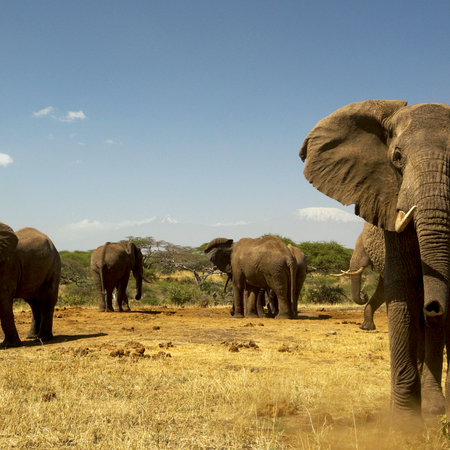
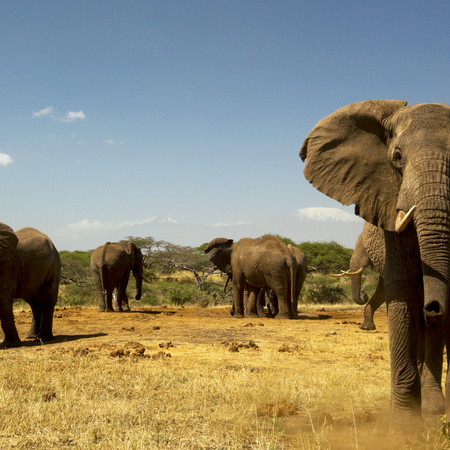
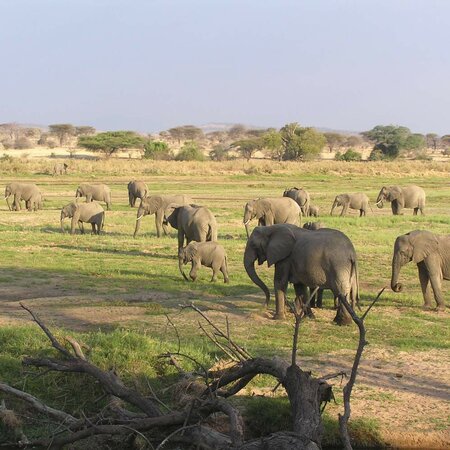
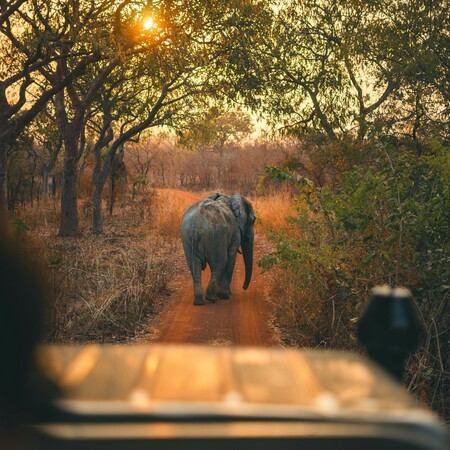
The original fauna has been severely affected by the developments of civil wars in recent years. In the national parks, animals are still relatively widespread and can be observed on corresponding game drives. Almost endemic to Uganda is the Uganda kob, an antelope species from the waterbuck genus. In Uganda’s extensive wetlands, hippos, crocodiles and pelicans can be observed. Uganda grass antelopes, African buffaloes, oribis, elephants, lions and banded mongooses also belong to the inventory of the large national parks, as well as up to 500 bird species, including kingfishers, African fish eagles, and Goliath herons. The heraldic animal, the grey crowned crane, is still particularly common around Lake Victoria. In Uganda’s rainforests live chimpanzees, mountain gorillas, and a whole range of other primates.
5. National Parks and Nature Conservation in Uganda
With the designation and protection of 10 national parks and additional wildlife reserves, Uganda has made some efforts to repair the wildlife damage caused by the civil unrest and to promote or protect the development of the remaining biodiversity of living creatures in Uganda. These include the Queen Elizabeth National Park, the Rwenzori Mountains National Park, the Bwindi Impenetrable National Park, the Kibale National Park, the Kidepo Valley National Park, the Lake Mburo National Park, the Mgahinga Gorilla National Park, the Mount Elgon National Park and the Semliki National Park, with Queen Elizabeth National Park and Rwenzori Mountains National Park certainly being the best-known wildlife parks in Uganda. The national parks are spread throughout the country, mostly near the borders and less in the center of the country, which protects different landscapes and communities.
The drainage of wetlands, deforestation and overgrazing have had harmful effects on nature and the environment in the past, as well as the introduction of non-native animal and plant species such as water hyacinths and Nile perch in Lake Victoria, which led to the extinction of numerous endemic fish species.

Murchison Falls National Park in Uganda
6. Population in Uganda
In 2023, Uganda recorded 47 million inhabitants, distributed among ethnicities of over 60 peoples, each with its own language, culture, and in some cases, its own religions.
The main ethnic groups are the Bantu peoples in the south of the country and the Nilotes and Nilo-Hamites in the north. The Bantu, accounting for 17% of the population, form the largest ethnic group in Uganda. Communication is very diverse with over 40 languages in the country. English and Swahili are the two official languages. However, Swahili is mainly used by the police and military and has little relevance in civil administration. In addition, Luganda is the official language of the autonomous kingdom of Buganda in central Uganda, which has existed since pre-colonial times. In everyday life, however, local languages are used, such as other languages of the Niger-Congo language group, as well as Nilo-Saharan languages and, to a lesser extent, Arabic.
The average age of the population is 15.5 years, making Uganda the country with the youngest average population in the world. At the same time, the country has a rapid population growth rate of 3.3%. Only very few Ugandans have paid employment, most inhabitants struggle for daily survival.
7. Politics and Economy in Uganda
The Ugandan leadership employs both authoritarian and democratic elements in its governance. Politically, only one ruling party, the National Resistance Movement Organization, is still effective in parliament. Additionally, the military also plays a significant role in the government. In 2005, for the first time, a clear majority of Ugandan voters supported the opening of the political space. This was an important step towards a democratic multiparty system.
Tutsi, Hutu, Lendu, Hema (Hima) and other ethnic groups, associated rebels, armed gangs, and various government troops operate in the Great Lakes region between Uganda, Congo, Rwanda, and Burundi to gain control over densely populated areas and economic resources. One danger is that individual ethnic groups dominate, which in turn leads to the rebellion of the disadvantaged. Uganda's government is involved in this conflict with money, military aid, trainers, and at times even direct military operations.
Despite promising mineral resources in copper, cobalt, limestone, nickel, rock salt, as well as energy sources such as oil and natural gas, only gold mining contributes to Uganda’s mineral export economy. Otherwise, Uganda’s still prospering economy is mainly based on agricultural products. The main export is—just as in the British protectorate era—coffee, accounting for 20–30% of export revenues. Additionally, tea, fish from Lake Victoria, tobacco, cocoa, and bananas are exported, with Uganda’s share of banana production at 11% of global output.
8. Transportation Network in Uganda
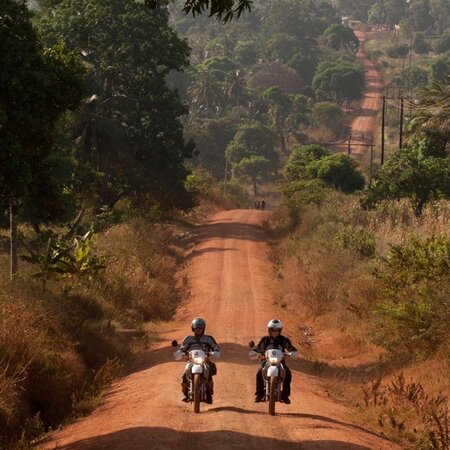
The transport infrastructure in Uganda is generally well developed by African standards, but much better in the south than in the north of the country. Traveling through Uganda is possible by various means of transport. Uganda's road network, where driving is on the left, is relatively dense especially in the south and covers a total length of just under 29,000 km. The country's main roads are mostly in good condition. From the capital Kampala, main roads lead to all major cities in Uganda. However, the further north you go, the more both the number and quality of roads decrease. Secondary roads and sand tracks, which are still reasonably passable during the dry months, can become impassable during the rainy seasons.
Rail transport in Uganda today is mainly limited to the Uganda Railway to Kenya, which connects Uganda via Nairobi with Mombasa on the Indian Ocean, and a remaining section of the Tororo–Arua Mine railway line. The condition of the approximately 1,240 km of railway tracks in Uganda is poor. Only the sections from Kampala to the Port Bell harbor on Lake Victoria, from Kampala to Kenya, and from Tororo to Opit are still used for freight transport. Passenger transport in Uganda only takes place from Monday to Friday as a suburban connection between Kampala and the industrial district of Namanve.
In Uganda, buses run from Kampala to all regions of the country. They are very inexpensive, but for that reason also usually extremely crowded. There is no reliable timetable.
Notable shipping traffic mainly takes place on Lake Victoria.
Of the 26 airports in Uganda, only four have a paved runway. The most important airport is the international airport in Entebbe near Kampala.
9. Cities and Regions in Uganda
The division of administrative units in Uganda, with the former provinces Nile, Northern, Karamoja, Western, Eastern, North Buganda, Busoga, Central, Southern, and South Buganda, has—after numerous reforms (most recently in 2018), which took into account the former distribution areas of various ethnic groups—grown to a total of 127 districts and the city of Kampala. The districts, mostly named after their capitals, are grouped into four regions—North, East, West, and Central—according to the cardinal directions, which, however, have no particular administrative significance.
Kampala
Kampala is both the capital of Uganda with about 1.5 million inhabitants and the district of the same name with a total of nearly 3 million inhabitants, and is located a few kilometers from Lake Victoria on an area of 195 km². The original settlement of the Luganda is one of the fastest-growing metropolises in the world. Since ancient times, Kampala has been a center of Christian mission. Sacred buildings include, among others, the Roman Catholic Rubaga Cathedral and the Anglican Namirembe Cathedral, each seat of a bishop; the Islamic Kibuli Mosque, Sikh and Hindu temples, as well as the only Bahai House of Worship in Africa. With financial support from former Libyan head of state Muammar al-Gaddafi, the large Gaddafi National Mosque was built, from whose minaret the city center can be well overlooked. A few kilometers outside the city center of Kampala are the Kasubi Tombs, the burial sites of the Kings of Buganda, which were included in the UNESCO World Heritage list in 2001. In 2010, the main burial site, as the most important cultural and historical attraction of the city, burned down under as yet unexplained circumstances.
Gulu
In the northwest of Uganda lies the city of Gulu, which with about 150,000 inhabitants (2023) is the second largest city in Uganda. It is the capital of Gulu District and one of the centers of the Acholi. Gulu is connected to the capital via a railway line to the Kenyan border and the second largest airport in Uganda, which also serves international flights. Gulu is also the seat of the Catholic Archbishop of Gulu and has one of the total five public universities in Uganda.
Lira
Lira (also called Lila) is, with an estimated 120,000 inhabitants (2023), the third largest city in the country and lies in the north of Uganda. The district of the same name is the settlement center of the Langi people. The city is theoretically connected to the Uganda Railway from Pakwach to Mbale and can be reached by domestic airlines via an airstrip. Buses run daily to Kampala and other larger cities in Uganda.
Lira is also a Roman Catholic bishop’s seat and has a religious university. During the 20-year civil war, Lira was repeatedly the scene of fighting between hostile ethnic groups, and even during the dictatorial reign of terror, there were regular violent clashes here between the Ugandan government army and rebels of the Lord’s Resistance Army.
Jinja
The fourth largest city in Uganda has an estimated 100,000 inhabitants (2019) and lies in the south of the country on Lake Victoria. Jinja is connected by a railway line to Nairobi and Mombasa on the Indian Ocean as well as to the capital Kampala, though this is only used for freight transport. The city has one of the few inland ports in Uganda, which is used for goods transport across Lake Victoria.
Entebbe
Until 1962, Entebbe was the capital of Uganda and today has about 70,000 inhabitants (2023). The city is about 40 km south of Kampala and picturesquely located on a peninsula on Lake Victoria. Entebbe has the largest airport in Uganda, which is also regularly served by international airlines. A special attraction in Entebbe is the Botanical Garden.

The botanical garden in Entebbe
10. Culture and Sights in Uganda
Uganda's main attractions primarily include the national parks and protected areas, where you can experience the rainforests with their rich inventory of diverse living beings, as well as the variety of different landscape types, especially in the higher mountain regions and lake areas, in an impressive way.
Above all, Lake Victoria in the south of Uganda offers particularly attractive shore sections with numerous opportunities for nature observation.
Cultural and historical sights in Uganda, such as the Bugandan royal palaces, the tombs of the Buganda kings, the parliament buildings, or numerous places of worship, are mostly limited to the capital, Kampala, and its surroundings. Also worth experiencing is the Owino Market in the capital.
The local cultural life is shaped by its great ethnic and linguistic diversity. The focus is on music, dance, and theater. Institutions of the Bantu kingdoms of Buganda, Toro, Busoga, Bunyoro, and Rwenzururu see themselves as guardians of traditional culture. In the capital Kampala, other fields such as painting, film, and literature are also represented, influenced by Western elites and thanks to foreign inspiration. In the field of music, a vibrant hip-hop scene has developed in Kampala.
11. Public Holidays with Fixed Dates in Uganda
| 1 Jan | New Year's Day |
| 26 Jan | Liberation Day |
| 16 Feb | Memorial Day for Archbishop Janani Luwum |
| 8 Mar | International Women's Day |
| 1 May | Labour Day |
| 3 Jun | Martyrs' Day |
| 9 Jun | National Heroes' Day |
| 9 Oct | Independence Day |
| 25 Dec | Christmas |
| 26 Dec | Boxing Day |

Uganda's capital Kampala
12. Medical Information for Uganda
For legal reasons, as a travel agency we are not permitted to provide binding medical information and therefore refer to the information from the Federal Foreign Office of the Federal Republic of Germany, the Robert Koch Institute and the German Society for Tropical Medicine and International Health.
13. Travel Advice for Uganda
Current travel and safety advice, information on entry and exit as well as special criminal law information and behavioral recommendations for your stay in Uganda can be obtained from the Federal Foreign Office of the Federal Republic of Germany.
14. Foreign Representation in Uganda
| Embassy of the Federal Republic of Germany in Uganda | |
| Jurisdiction/ Consular district: |
Uganda. The mission supports the embassy in Juba (South Sudan), which is currently only operational in a limited capacity, in legal and consular matters. |
| Location: | Kampala |
| Street address: | 15 Philip Road, Kololo, Kampala, Uganda |
| Postal address: | Embassy of the Federal Republic of Germany, P.O. Box 7016, Kampala, Uganda |
| Telephone: | +256 41 450 11 11 or +256 41 777 61 00 |
| Fax: | +256 41 450 11 15 |
| E-mail: | Contact form |
| Website: | http://www.kampala.diplo.de |
| Official languages in the host country: |
English |
| Embassy of the Republic of Uganda in Berlin (There are also honorary consulates in Hamburg, Leipzig and Munich) |
|
| Location: | Berlin |
| Street address: | Ulmenallee 42a |
| Postal address: | Axel-Springer-Straße 54A, 10117 Berlin |
| Telephone: | 0 30 30 206 09 90 |
| Fax: | 0 30 30 240 475 57 |
| E-mail: | [email protected] |
| Website: | https://berlin.mofa.go.ug |
15. Sources of information for Uganda
German Weather Service
Federal Foreign Office of the Federal Republic of Germany
Wikipedia