At a glance Contents
- The contradiction everything revolves around
- Dry season from May to October: why it wins for motorcycles
- Rainy season: the mirror Salar and what it costs
- Month by month: the overview
- Death Road, Lake Titicaca and Potosí: what the season changes there
- What the season means for luggage and riding style
- How early you should plan
- Which tour fits which month
- How to decide
- Frequently asked questions
The contradiction everything revolves around
Ask when the best time to visit Bolivia is and you get two answers, and both are right. The highlands, the Altiplano, want the dry season. The tracks are firm, the sky is deep blue, the passes are open. The country's most famous photo, the sky reflected in the Salar de Uyuni, only happens after rain. When it's dry, the Salar is a dazzling white expanse with hexagons in the ground. When it's wet, it's a mirror, and for motorcycles it is then anything from difficult to closed, depending on the water level.
This is not a detail, it is the whole plan. On a motorcycle trip, what lies under your tyres comes first. That's why we sort the months here by the ground and not by the weather forecast, which you'll be watching anyway.
You'll find the official key facts about the country, such as the dry season at a glance, in our Bolivia travel information. It also covers everything about entry, documents and health, which we deliberately don't repeat here, because it changes and that page is kept up to date.
Dry season from May to October: why it wins for motorcycles
The dry season is the high season, and for good reason. In the highlands there is hardly any rain in these months. The gravel tracks around Potosí, the routes to the lagoons in the southwest and the mountain passes stay dry, and visibility often stretches to the horizon. That is exactly why people go to Bolivia in the first place.
The price you pay is the cold. At this altitude, winter nights drop well below freezing, there is frost on your seat in the morning, and your hands will thank you more for good gloves than for any suspension setting. During the day the sun shines with a strength you don't know from the lowlands. So you ride in layers, taking them off one by one through the day and putting them back on in the evening.
One more point: the dry season is also when other travellers are on the road. Accommodation in the well-known towns tends to be full, and tours are well booked. If you book a fixed group trip you'll hardly notice, but if you plan independently, you should reserve early.
Early dry season: May and June
The landscape is still green from the rainy season, the air is clear, and the highland nights are not yet at their coldest. Many riders consider these weeks the best compromise between riding fun and comfort. Our Amazon motorcycle tour in Bolivia starts at the end of June, when the lowlands around Rurrenabaque are also drier and therefore more pleasant to ride.
Middle of the dry season: July and August
This is the coldest and driest phase. The light is hard and clear, the dust on the tracks is finer, and the nights are very cold. In return, the chance of stable conditions is highest. If you handle the cold well and value reliable planning, this is the right time for you.
Late dry season: September and October
The days get warmer, the nights milder, and towards the end of the period the first showers can appear in the lowlands. In the highlands it usually stays dry. October is therefore a good month for anyone who wants to ride the Altiplano without freezing in winter. Our programme The Highlander Two Extreme has a departure in early October.
Rainy season: the mirror Salar and what it costs
The rainy season lasts roughly from November to March. In the highlands the rain mostly falls in the afternoon in heavy showers, while the mornings are often still clear. In January and February a thin layer of water stands on the Salar de Uyuni in places, and that is exactly when the mirror appears. Sky and clouds lie on the ground, the horizon disappears. If you want to experience that, come in these weeks.
The other side belongs to an honest answer. The approaches to the Salar can turn soft, rivers carry water, and some stages in the south can then not be done at all, or only with detours. Salt water is also hard on motorcycles: it attacks brakes, chain and paintwork, and if you don't rinse thoroughly afterwards, you get surprises when you ride on. The tour leader decides on the spot whether and how far to ride. That is not a weakness of the planning, but the only sensible way to deal with an expanse whose condition changes from day to day.
Keep two things in mind: first, there is no guarantee of a perfect mirror. It needs water, but not too much, and wind ripples the surface. Second, the rainy season is much wetter in the lowlands. The tracks there are muddy, and if you are planning jungle and Death Road, you will be riding through slippery terrain at that time.
For the Chiquitania in the east, with its Jesuit missions and lower altitudes, something else applies: it lies much lower, is less cold and can be ridden for more of the year. Our Jesuit Mission tour therefore also has a departure in spring, in mid-March.
Month by month: the overview
The table shows the tendency, not a promise. Weather in the Andes doesn't follow calendars, and individual years differ.
| Period | Highlands (Altiplano) | Salar de Uyuni | Lowlands and Yungas |
|---|---|---|---|
| December to February | Afternoon showers, mild | Mirror possible, access uncertain | Very wet, muddy |
| March to April | Rain eases off, green | Mirror fades, ground dries | Still damp, getting better |
| May to June | Dry, clear, cold nights | Dry, rideable | Easy to ride |
| July to August | Dry, very cold at night | Dry, rideable | Easy to ride, dusty |
| September to October | Dry, warmer | Dry, rideable | First showers possible |
| November | Rain sets in | Mostly still dry | Changeable |
If you take only one thing away: the span from May to October is the safe choice. Anything before or after is a conscious risk with a possible reward, namely the mirror, or a gain in quiet, because fewer travellers are on the road.
Death Road, Lake Titicaca and Potosí: what the season changes there
The Death Road, the route down into the Yungas, is perhaps the best-known stage in the country. It leads from cold, windy altitude into tropical green. In the dry season the road is dusty, the view into the depths is clear, and the route is easier to judge. In the rainy season clouds hang in the gorges, the surface is slick, and the view you came for disappears at times. If this route appeals to you, the dry season has a clear advantage.
Lake Titicaca and the Island of the Sun and Island of the Moon are fresh but bright in the mornings in the dry season. The snow-capped peaks on the horizon are best seen then. Potosí, the highest city, is cold all year round, and so are the old silver mines. Warm underwear belongs there whatever the month.
If you ride Bolivia not on its own but as part of a longer route through the Andes, keep the neighbours in mind too. How the seasons are spread across the neighbouring countries is covered in our posts on the best time to visit Machu Picchu and the best time to visit Chile. The two interlock as soon as a tour links several countries, like our Inca Trail trip, which also crosses the Salar.
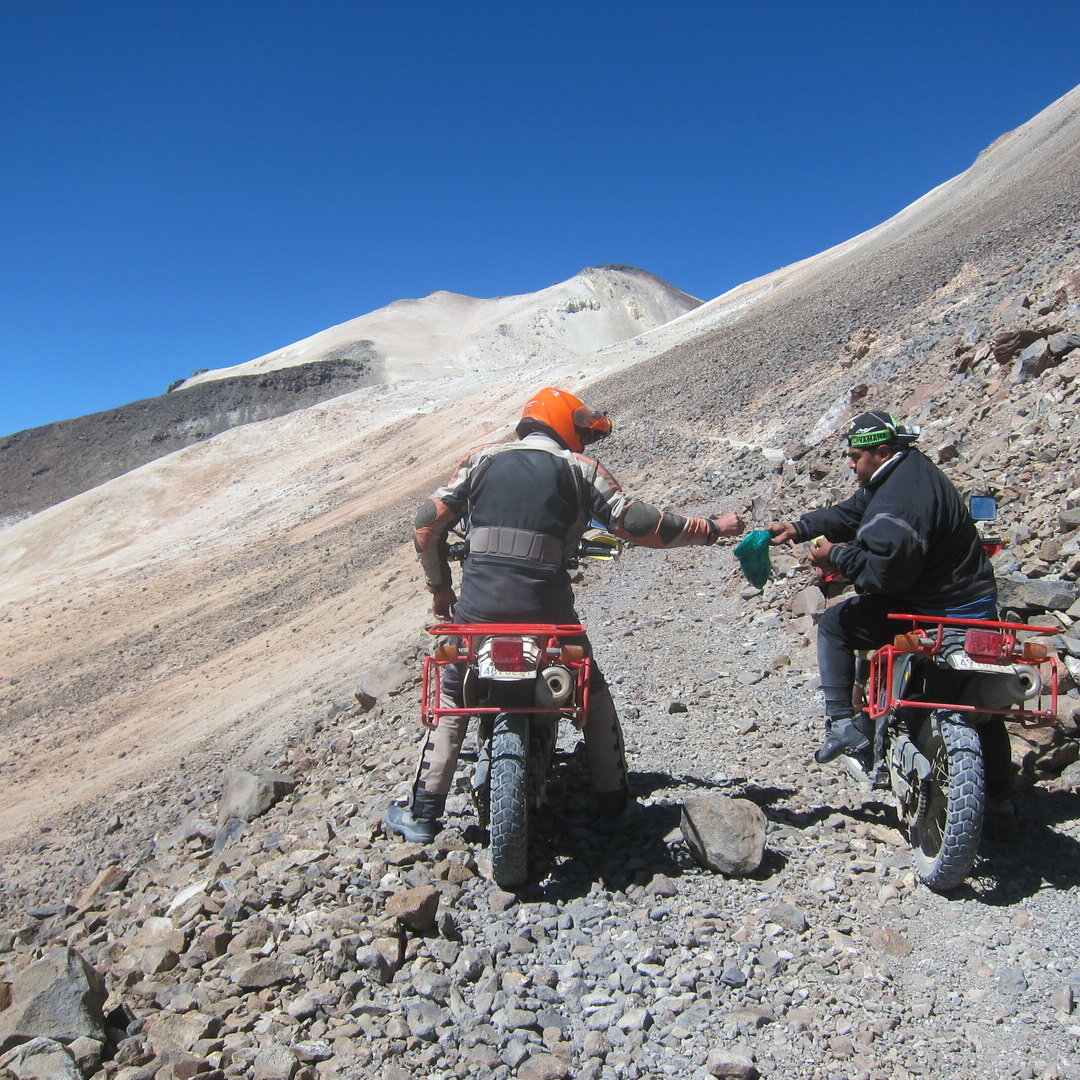
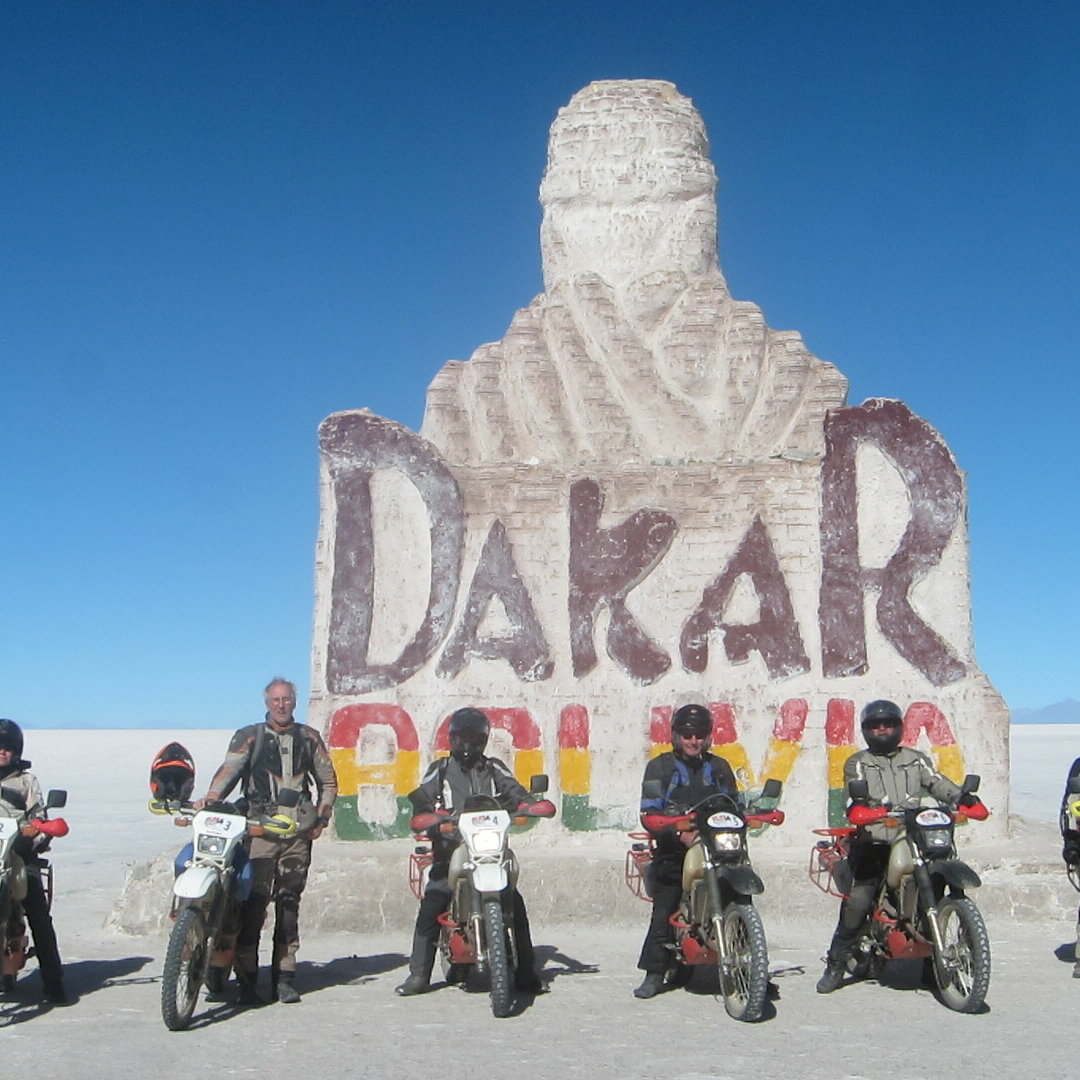
Highland tracks like this are the reason the dry season is the rule for motorcycle riders.
What the season means for luggage and riding style
The travel season decides not only where you ride, but how. In the dry season you pack for big temperature swings: a warm liner that you take out again during the day, windproof gloves, a balaclava and sunglasses that also protect from the side. The sun in the highlands burns even when it's cold, and an unprotected face notices that in the evening. The dust on the tracks makes a ventilated visor and a neck scarf sensible, and a hydration pack on your back saves you stops where you'd only be freezing anyway.
In the rainy season the kit changes. Waterproof outer layers, a chain you look after in the evening and tyres with decent tread matter more than extra warmth. You ride slower, with more distance, and with the readiness to cut a stage short. On wet clay and salt, a feel for the rear wheel counts for more than courage, and that is exactly where you see how useful a group with a support vehicle and local leadership is.
The motorcycle itself also reacts to altitude. A carburettor or fuel injection without adjustment loses noticeable power as the air gets thinner. That is the same in both seasons, but in the cold dry season you also get thick oil and an engine that is hard to start in the morning. So allow a buffer in the morning before the group sets off, and give the engine a few minutes until it runs smoothly.
Finally, the body. The thin air makes you tired, and headaches and sleep problems in the first nights are common. Plan quiet days at the start, drink plenty and don't head for the highest passes on your first night. Everything medical belongs in the hands of professionals and in the travel information, not in a blog post.
How early you should plan
Good travel times fill up quickly, and in Bolivia this is doubly true, because the groups are small. Our highland trip for up to six riders and the jungle tour with the same group size have few places per departure. If you are planning for the months June to October, you should allow a good lead time of several months, especially if several people want to ride together and places should be next to each other.
The shoulder months, on the other hand, are often more relaxed. Departures in March or at the end of April are less often fully booked, offer green landscape after the rain and fewer other travellers. The price is a higher weather risk, which you should take on consciously. If in doubt, ask us what the conditions were like in recent years at that date. We'll tell you honestly if a period suits adventurous riders better than those who want to relax.
And one more piece of advice on duration: plan one day more than you think. Bolivia rewards a buffer. A closed route, a strike on the main road or a morning when the fog doesn't lift are part of the country and are hard to absorb in a tight schedule. If you have one or two spare days at the end, you ride more relaxed and make better decisions.
Which tour fits which month
Rather than deciding in the abstract, it pays to look at what you want to ride. The following three trips cover different seasons.
- Highlands and Salar in spring or autumn: The Highlander Two Extreme lasts nineteen days and takes you over the Death Road, the Salar de Uyuni, Potosí and Lake Titicaca, mostly off-road. There is a departure at the end of April, at the edge of the dry season, and one in early October, in the middle of the stable phase. This is the trip for riders who take the highlands seriously.
- Jungle in early summer: The Amazon motorcycle tour lasts fourteen days, leads over the Death Road to Rurrenabaque and brings you to capybaras, caimans and freshwater dolphins. The departure at the end of June falls in the dry period, when the lowlands are at their most rideable.
- Culture and a milder climate: The Jesuit Mission tour in the Chiquitania lasts ten days, is rated easier and has departures in November and in March. It is a good choice if you want to be on the road during the northern hemisphere's winter without having to go up high.
Altitude, by the way, is the factor many people underestimate. Plan time to acclimatise at the start before you head onto the high routes.
How to decide
Ask yourself in this order. First: do you want the mirror at any price? Then plan January or February, accept that stages will be changed at short notice, and book a trip with experienced leadership that decides on the spot. Second: do you want as much distance as possible and as few surprises as possible? Then ride between May and October. Third: do you handle the cold badly? Then take the edges of the dry season, that is May, June, September or October, rather than July and August.
If you can't decide, take the middle. A dry, cold, clear day on a highland track is rarely a disappointment. A rainy day on a soft road is much more likely to be. And the mirror can be made up for later, the mountains aren't going anywhere.
For entry, documents and health, please read the Bolivia travel information before booking, it is the reliable place for that.
Answered briefly
Frequently asked questions
- Can I ride the Salar de Uyuni by motorcycle in summer?
- In the dry season, yes, the surface is then hard and white. In the rainy season there is water on the salt, which creates the mirror, but whether you can ride it depends on the water level. The tour leader decides on the spot, and salt water calls for thorough care of the motorcycle afterwards.
- Which month is best for the mirror?
- Usually January and February, when enough rain has fallen but the water stands only thinly. There is no guarantee, because wind and water level change the picture daily. Plan buffer time and expect stages to be adjusted at short notice.
- Is the Death Road more dangerous in the rainy season?
- Yes, noticeably. The surface gets slick, clouds hide the views into the depths, and sections can be slippery or blocked. In the dry season it is dustier but more predictable. If you want to enjoy the route, ride it between May and October.
- When is it coldest in the highlands?
- In July and August. The days are clear and sunny, but the nights are very cold, and there is often frost in the morning. If you handle the cold badly, choose the edges of the dry season, that is May, June, September or October, and pack layers.
- Which Bolivia tour suits the northern hemisphere's winter?
- The Jesuit Mission tour in the Chiquitania. It lies in the lower east, is milder and is rated easier, with departures in November and in March. For the Salar and the highlands, on the other hand, the dry season from May to October is the better choice.
- Where can I find information on entry and health?
- In our Bolivia travel information. It is kept up to date and contains everything on entry, documents and health. We deliberately don't cover these topics in blog posts, so you never rely on outdated details.