Travel Information Bolivia

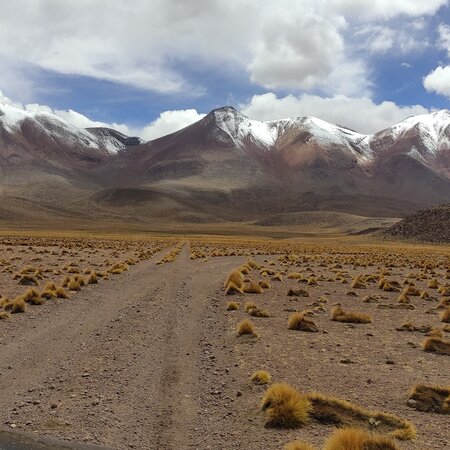
Bolivia: Experience magical heights and fascinating cultures!

Everything you need to know about Bolivia

Reisekarte von Bolivien des Reiseveranstalters OVERCROSS

Reisekarte von Bolivien des Reiseveranstalters OVERCROSS


1. Allgemeine Informationen
2. Klima
3. Beste Reisezeit
4. Wichtige Städte und Regionen
5. Politik und Wirtschaft
6. Flora und Fauna
7. Kulinarisches
8. Unsere Reisen in Bolivien


Landesinformationen Bolivien

Kontinent: Südamerika
Regierungsform: Präsidialsystem
Landessprache: Spanisch, Aimara, Quechua
Geographische Lage: Bolivien teilt seine Grenzen im Westen mit Peru im Osten und Norden mit Brasilien im Südosten mit Paraguay im Süden mit Argentinien sowie im Südwesten mit Chile.
Nachbarländer: Brasilien, Argentinien, Paraguay, Peru, Chile
Hauptstadt: Sucre
Fläche: 1.098.581 km²
Bevölkerung: 11.736.400 (Volkszählung 2022)
Religion: Römisch-Katholisch 95%, 5% Protestantisch  
Währung: Boliviano (BOB)
Klima: Tropisch - Polarklima
Zeitzone: UTC-4
Vorwahl: +591
KFZ-Kennzeichen: BOL
Stromadapter: 220 oder 230 V Wechselstrom / Stromadapter mitnehmen


Das Klima Boliviens

Temperatur in Santa Cruz Jan Feb Mär Apr Mai Jun Jul Aug Sep Okt Nov Dez
Tagestemp. 30 31 30 28 25 23 24 28 29 30 31 31
Nachttemp. 21 21 21 19 17 15 15 16 19 20 20 21
Regentage 14 11 12 9 11 9 6 4 6 7 9 12

Trips to Bolivia can be undertaken at any time of the year. The Andean region is most beautiful during the dry season from about May to October, the South American winter. Lots of sun and very dry air with daytime temperatures of about 20-25 degrees, with nighttime temperatures often sinking below freezing. In terms of clothing, the "onion principle" has proven effective—putting on or taking off layer by layer. In contrast, the Amazon lowlands have a tropical, humid, hot climate with abundant rainfall year-round. The desert-like coastal strip in Peru has a dry and sunny climate with temperatures around 25 degrees. The basin of Lake Titicaca forms a special climatic oasis.  


Best time to travel

The optimal travel time for Bolivia is likely to be the winter from May to October


Important cities/regions

  • La Paz seat of government and largest agglomeration of Bolivia, picturesquely situated in a mountain valley
  • Sucre the official capital
  • Santa Cruz second largest city in Bolivia and center of economy and industry
  • Cochabamba third largest city, located at the foot of the Pre-Andes
  • Oruro metropolis of southwest Bolivia, with a famous carnival
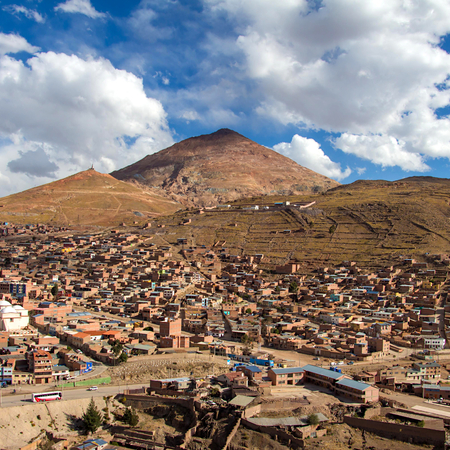
  • Potosi known as the "city of silver," the highest situated major city in the world and largest city in southern Bolivia, with the grandest colonial center in Latin America
  • Tarija in the south near the border with Argentina, known as the "most European" city in Bolivia.
  • Trinidad capital of the Department of Beni.
  • Cobija capital of the Department of Pando, bordering Peru and Brazil. The region's main export product is Brazil nuts


Politics & Economy

It all began around 1800. The number of Creoles and the mixed population increased sharply. However, these people were denied access to higher government and economic offices. In 1809, the call for freedom was heard for the first time. After long efforts, Bolivia became an independent state on August 6, 1925. The name "Bolivia" comes from the Venezuelan liberator "Simón Bolivar".

Despite its wealth of mineral resources, Bolivia is one of the least developed countries in South America. Even though the biggest mining companies were nationalized in the 1950s, the Bolivian government has actively promoted the development of private industry and foreign capital investment. Bolivia’s economy is almost entirely dependent on mining, which accounts for around 80 percent of total export volume. The gross domestic product amounts to 12,189 million US dollars.
Almost half of all workers are employed in agriculture; they generate 14 percent of the gross domestic product (2021). A particular problem here is the illegal cultivation of coca shrubs. The low productivity in the agricultural sector is due to outdated farming methods, extreme weather conditions and soil erosion, as well as insufficient transport infrastructure. Although Bolivia today can cover its needs for traditional foods (potatoes, cassava, and grains) without foreign aid, it is still dependent on the import of certain foods. The most important Bolivian agricultural products are potatoes, sugar cane, cotton, coffee, corn, rice, wheat, and quinoa.


Flora & Fauna

Aufgrund der verschiedenen Höhenstufen kommen in Bolivien nahezu alle Vegetationszonen vor. Das baumlose, zentrale Hochbecken wird von Gräsern und Zwergsträuchern bewachsen, es geht in Wüste über. Im Bereich des Gran Chaco im Süden besteht trockenes Buschland. Im Nordosten des Landes wächst tropischer Regen- und Bergwald mit über 2 000 Baumarten. Alpakas, Vikunjas und Guanakos leben in der Hochebene; das Lama, die Haustierform des Guanakos, dient als Lasttier und bietet Milch, Fleisch und Wolle. Neuweltaffen wie Tamarine, Kapuziner-, Totenkopf-, Nacht-, Woll- und Klammeraffen, Raubtiere wie Pumas, Jaguare und Ozelots, Gürteltiere sowie eine Vielzahl von Reptilien-, Vogel- und Insektenarten sind hauptsächlich in den tropischen Regenwäldern beheimatet. In den Savannen leben Nandus, Schlangen und Termiten. Kondore, die größten flugfähigen Landvögel, sind in den Anden und dem Hochland zu Hause.

Bolivien verfügt über 59 Millionen Hektar bewaldeter Flächen, die insgesamt 53,5 Prozent (2021) der gesamten Landesfläche von Bolivien bedecken. In den achtziger Jahren des 20. Jahrhunderts schrumpfte der Waldbestand Boliviens als Folge der Entwaldung jährlich um etwa 800 000 Hektar. Zwischen 1990 und 1995 verringerten sich die Waldgebiete um weitere drei Millionen Hektar. In Bolivien erfolgt die Abholzung von Wäldern vor allem zur Gewinnung neuer Flächen, die als landwirtschaftliche Anbauflächen, Weideland und für den Anbau tropischer Hölzer für den Export verwendet werden. Eine kleine Minderheit innerhalb der einheimischen Bevölkerung wohnt in den riesigen Regenwäldern im Tiefland Boliviens. Diese Menschen leben ausschließlich von Viehzucht und Landwirtschaft. Überweidung und traditionelle Bewirtschaftungstechniken wie die


Kulinarisches

In Bolivien wird viel Matetee getrunken und Kokablätter gekaut, im Touristenviertel von La Paz findet man normale europäische Speisen, Cocktails und Nachtisch, doch etwas außerhalb isst man auch gerne mal ein Lama Steak oder einen der berühmten bolivianischen Eintöpfe, bzw. Suppen


Weitere Bolivien Reisen


Karte von Bolivia

×

Send request

Adventure

How did you
hear about us?

Ask a Route Expert

How do you want to travel?