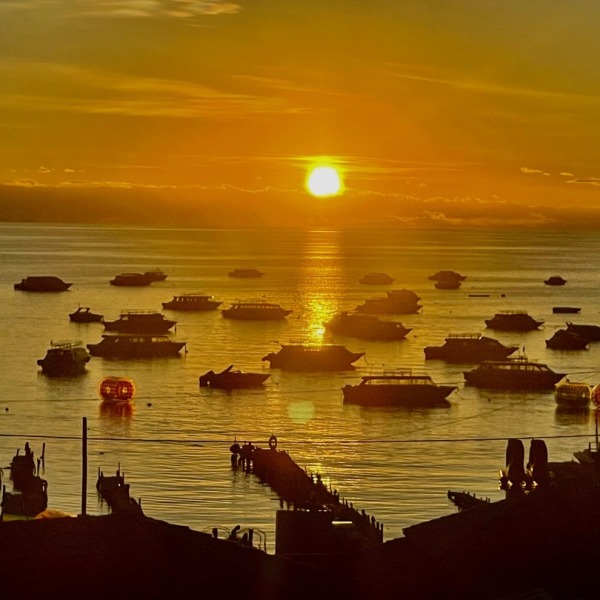
In Peru, there is much to experience such as the mysterious Nazca Lines and Lake Titicaca. Furthermore, the country impresses with its many significant archaeological sites, from the time of the Incas to the colonial period. We leave Lake Titicaca southwest towards Arequipa, also known as the white city. From there, it is 'only' about 125 km to the Pacific coast. Along the coast, we drive until we reach the Nazca Plain, where we will explore the world-famous drawings (geoglyphs) from the air during a round flight. We continue along the rugged coast until we reach the capital, Lima. In Lima, we will try a typical 'Seviche' in the evening on the Pacific coast. Halfway to Trujillo, we leave the coast and drive into the western Andes up to Huaraz. Near Huaraz lies Pierina at an altitude of 3,800 to 4,200 m, which used to be one of the largest gold mines in Peru and had to endure numerous social conflicts. When the then largest gold producer in South America, Barrick, acquired the promising deposit in 1996 by purchasing Arequipa Resources, a young Canadian 'junior' exploration firm, for an seemingly exaggerated price of about a billion dollars, the mere announcement of the deal caused Barrick's stock market value to more than double! Meanwhile, Barrick has risen to become one of the two largest gold producers in the world. The mine is now closed and in the process of recultivation. After visiting the huge open-pit mines, we make our way back to the Pacific coast through the 'Duck Gorge'. In Trujillo, we visit the famous clay ruins of Chan Chan and in the evening we eat grilled fish nearby in Huanchaco. A few minutes' walk from our hotel in Cajamarca is the room where the Incas filled gold for Pizarro to free King Atahualpa. Also from Cajamarca, we take a detour to Yanacocha, the largest gold mine in South America and one of the highest (on average 4,000 m). The mine is still in open-pit mining and will soon transition to underground mining. Over 10 tons of gold are produced there each year. On our further journey through the mountains, first to the east, then to the north, we pass several Inca settlements. In Leymebamba, we make a short stop at the mummy museum. Revasch and Karajia are on our way and Kuelap, the Machu Picchu of the north, one of the most important fortifications from the Inca era.