Travel Information

Zimbabwe: best time to visit, entry, travel facts

When Zimbabwe shows the most wildlife, what the climate in Hwange looks like month by month, and what you need for the visa, the border and riding in on your own motorcycle.

View tours
Visa
Visa on Arrival approx. 30 USD (Single Entry)
KAZA UniVisa 50 USD also covers Zambia, exact USD cash required
Passport validity
Valid for the whole length of your stay; at least 6 months' remaining validity is the southern African standard
Best time to travel
April to October (dry season)
Currency
US Dollar (cash) - the ZiG is barely relevant for tourists
Time zone
UTC+2 (CAT), no daylight saving
Side of the road
Drive on the left
Helmet & gear
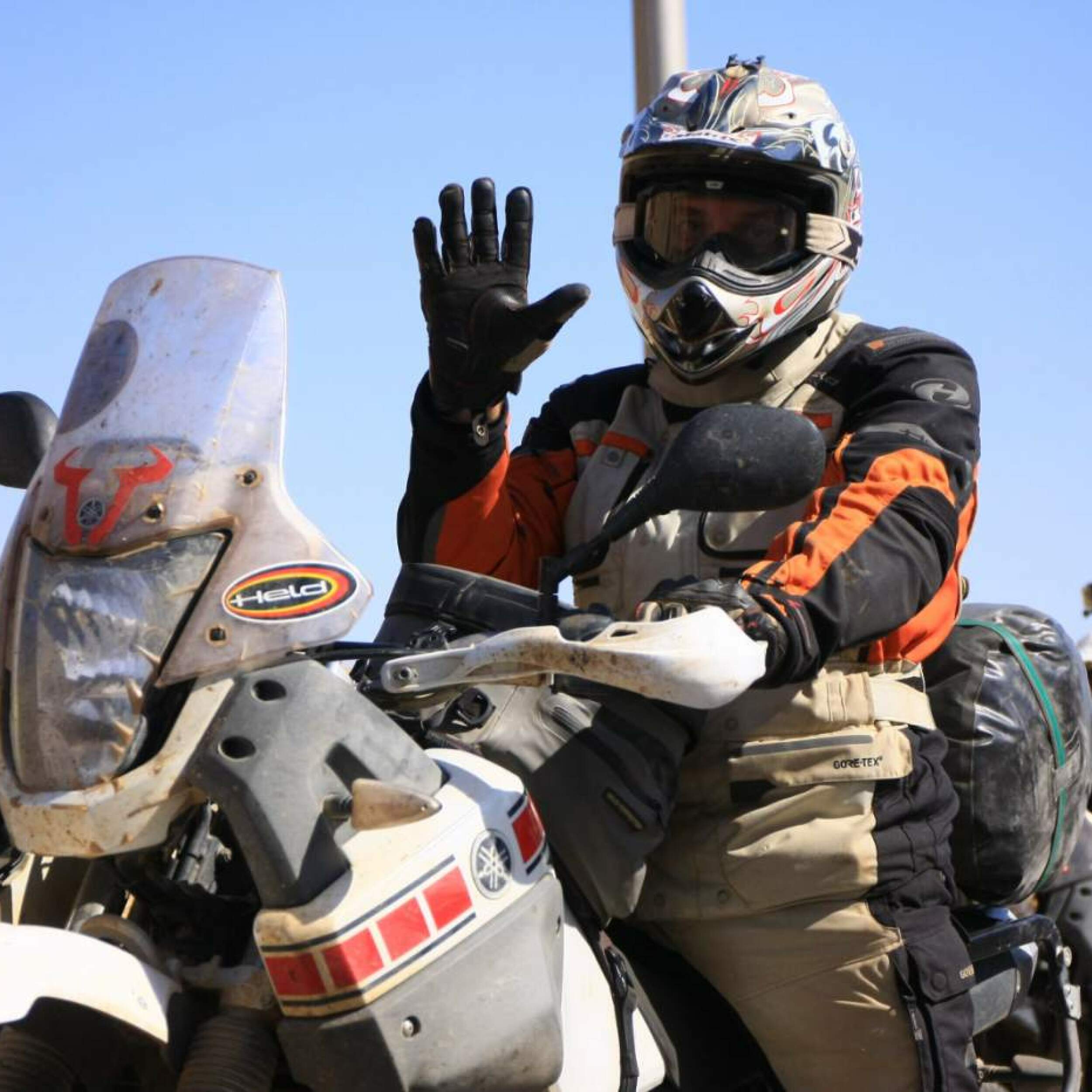
Helmet mandatory for rider and passenger
Main road
A4 (Beitbridge-Masvingo) and A8 (Bulawayo-Victoria Falls) paved, A8 currently heavily potholed
Fuel
Cash USD only now, reliably available since the currency switch
Int'l driving permit
International driving permit recommended, carry alongside your national licence

Wildlife viewing in Zimbabwe: dry season or wet season

Water decides: when Hwange, Mana Pools and Gonarezhou show the most animals, and why the wet season still has its own case.

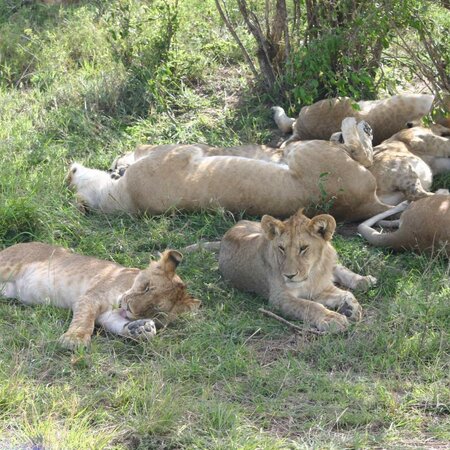
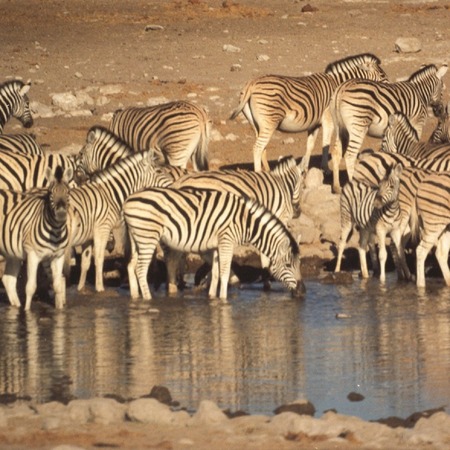
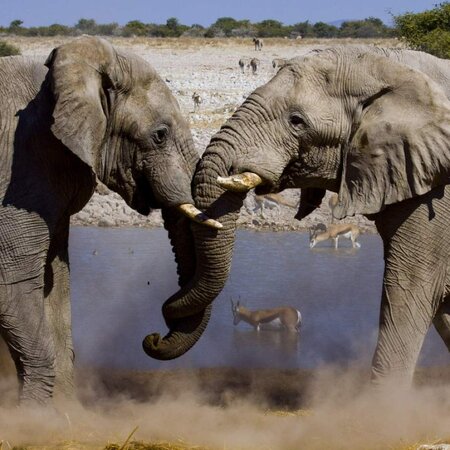
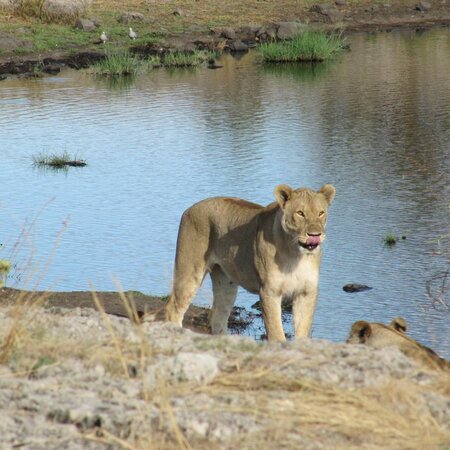
For game viewing in Zimbabwe, water decides, not the calendar. In the dry season from May to October practically no rain falls for 5 months, the natural pans dry out and the animals gather at the few remaining water sources. In Hwange National Park, at around 14,600 km² the largest park in the country, more than 50 waterholes are kept full by solar and diesel pumps. From August to October, herds of 200 to 300 elephants stand at a single pan during the day, joined by buffalo, zebra, giraffe and sable antelope. The grass is short and yellow, you can see a long way, and lions often lie right beside the track in the morning. Hwange's elephant population is estimated at about 45,000 animals.

Mana Pools on the lower Zambezi runs on its own rhythm: the park sits in the Zambezi valley at about 350 m, the access tracks are mostly impassable from December to April and most camps close for that period. Things start again in May; the best time is September and October, when the elephants stand on their hind legs to reach the pods of the ana trees. Mana Pools is the only park in Zimbabwe where you may walk without a guide.

The wet season from November to April is calving time: impala, wildebeest and zebra drop their young in the first weeks after the first rains, usually late November to December. The grass then stands up to 2 m high, the animals spread across the whole park, and a lion in the green 50 m from the track is almost impossible to see. In return, around 400 bird species are about in Hwange and more than 350 in Mana Pools, among them the migrants from Europe and central Africa, which stay from November to March.

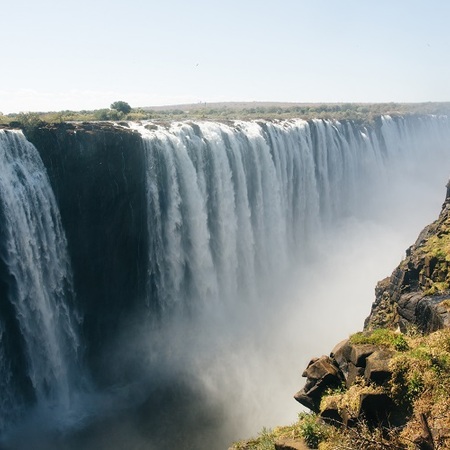
Gonarezhou in the south-east, with its red Chilojo Cliffs, is most rewarding from June to October; in the wet season the fords across the Runde and Save rivers are often impassable. Matusadona on Lake Kariba is best visited by boat, and in September and October elephants and buffalo stand right on the shoreline. Zambezi National Park at Victoria Falls is open all year, and the best time for animals there is also August to October; the Falls themselves carry the most water in March and April.

Region Jan Feb Mar Apr May Jun Jul Aug Sep Oct Nov Dec
Hwange National Park
Mana Pools (lower Zambezi)
Gonarezhou National Park
Matusadona and Lake Kariba
Zambezi National Park (Victoria Falls)
Best sightings Good chances Few sightings

What guests say about their trip to Zimbabwe

★★★★★

Andreas S.

Die Tour durch Simbabwe, insbesondere vom Hwange-Nationalpark zu den Victoriafällen, stellt einen erhöhten Schwierigkeitsgrad dar. Die unterschiedlichen Geländetypen und die 4x4 Safari-Fahrzeuge ermöglichen es, verschiedene Landschaften und Tierarten, einschließlich der Big 5, hautnah zu erleben. Zu beachten ist die körperliche Anstrengung in den frühen Morgenstunden...
★★★★★

Matthias W.

Die Gruppenreise im Botswana und an den Victoriafällen fokussiert sich auf ein intensives Erlebnis der Tierwelt und Landschaften in Botswana. Die anspruchsvollen Aktivitäten, insbesondere die Tierbeobachtungen während der Mahangu Game Drive und die Bootsfahrten auf dem Zambezi, erforderten sowohl physische Fitness als auch Anpassungsfähigkeit an...

★★★★★

Wolfgang R.

Die Tour führt durch Tansania und Sambias beeindruckende Landschaften, insbesondere im Mikumi Nationalpark und am Lake Malawi. Die technische Vorbereitung war durch die Nutzung eines 4x4 Overlandtrucks klar strukturiert. Tägliche Briefings und genaue Streckenführung sorgten für Sicherheit und Orientierung. Die Gruppengröße von maximal 20 Personen...

Climate and weather in Zimbabwe, month by month

Zimbabwe lies south of the equator, so the seasons are the reverse of Europe's. The year has 3 parts: the cool dry season from May to August, the hot dry season in September and October, and the wet season from November to April. The table shows Hwange Main Camp at about 1,000 m, the starting point of most safaris.

Altitude makes the difference. On the Highveld around Harare and Bulawayo (1,300 to 1,500 m) it mostly stays below 32 degrees even in October. In the Zambezi valley at Mana Pools and on Lake Kariba, 350 to 500 m above sea level, October reaches 38 to 40 degrees. Victoria Falls at 900 m sits in between, with 34 to 35 degrees normal in October.

In June and July the nights in Hwange drop to 5 to 7 degrees, and there is ground frost on the open pans. The 6 a.m. game drive in an open vehicle then calls for a hat, gloves and a windproof jacket; by midday it is 24 degrees. Rain falls almost entirely from December to February, mostly as an afternoon thunderstorm of 1 to 2 hours, rarely as steady rain.

Month Max °C Min °C Rain days Humidity % Sun hours
Jan Wet season 30 18 13 70 7
Feb 29 18 11 72 7
Mar 29 16 8 65 8
Apr Dry season 28 13 3 55 9
May 26 9 1 45 10
Jun 24 6 0 40 10
Jul 24 6 0 38 10
Aug 27 9 0 33 10
Sep 31 13 1 30 10
Oct 33 18 4 35 9
Nov Wet season 32 18 10 55 8
Dec 30 18 13 68 7

Best Time for Zimbabwe Motorcycle Tours

Why the dry season here is not just more pleasant, but measurably safer to ride.

6 Ideal
Best time to travel
April to October (dry season)

In the dry season the A4 and A8 are free of water damage, and unpaved tracks around Hwange are firm and rideable.

Region Jan Feb Mar Apr May Jun Jul Aug Sep Oct Nov Dec
Southern & Western Zimbabwe (Beitbridge-Masvingo-Bulawayo-Hwange-Victoria Falls)
Ideal Doable Not passable

Zimbabwe follows the classic dry-season pattern of southern Africa: from April to October, almost no rain falls, unpaved tracks around Hwange are firm and rideable, and low water levels at fords and low-level bridges along the Masvingo-Bulawayo route make it predictable. The rainy season from November to March turns loose surfaces into mud and makes them noticeably more slippery. This matters especially on the badly potholed section of the A8 between Bulawayo and Victoria Falls: rainwater fills the holes and hides their true depth, making them harder for riders to judge than in the dry season, when you can see them and ride around. October is also the hottest month before the rains set in, with daytime temperatures that can be exhausting on open, shadeless stretches. This trip deliberately schedules the ride in the dry season.

Best time to go, depending on what you are after

Seeing animals: August to October

The 3 months at the end of the dry season bring the highest density of animals at the waterholes. In Hwange, elephant herds of several hundred now stand at the pumped pans; in Mana Pools, elephants, buffalo and lions can be reached on foot. The grass is short, the trees are bare, you can see 200 m. Expect full camps, and in October daytime highs above 33 degrees in Hwange and up to 40 degrees in the Zambezi valley.

If you cope badly with heat: May to July

24 to 26 degrees by day, 5 to 9 degrees at night, no rain, no mosquitoes: the southern African winter is the most comfortable time for long days in an open vehicle. The animals are not yet as concentrated as in September, but visibility is good and the wild dogs in Hwange have their pups. Bring a warm jacket for the morning drive; in July there is occasionally frost on the grass in Hwange.

The most popular time: July to September

The European summer holidays coincide with the end of the southern African winter, which is why July, August and September are the months with the most visitors in Victoria Falls and Hwange. The camps in Mana Pools are often fully booked 12 months ahead for August and September. The weather is stable, dry and pleasant at 27 to 31 degrees by day; the Falls still carry enough water for the rainbow, but no longer so much that the spray blocks the view.

Birds and green landscape: December to March

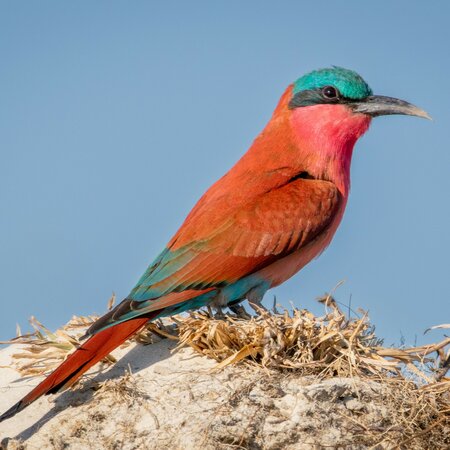
After the first rains the bush is green within 2 weeks, the antelope have their young at foot, and more than 100 migrant bird species from Europe and central Africa are in the country. Around 400 species can then be seen in Hwange, among them carmine bee-eaters, swallow-tailed bee-eaters and the bateleur. The afternoon thunderstorms last 1 to 2 hours; the mornings are mostly clear. Mana Pools is closed in these months, while Hwange, Matobo and Victoria Falls stay open.

Photographers: September and October, otherwise May

In September and October there is dust in the air that turns the sun red in the morning and evening, and the animals come to the waterholes in lines around 4 p.m. This is the time for elephants against the light and for shots from the hides at the pans of Hwange. If you want colour and a clear sky, come in May: the grass is still golden, the air is clean after the rains, and the view reaches the horizon.

Visa for Zimbabwe Travellers

What Germans, Austrians and Swiss actually need at the border post.

German, Austrian and Swiss nationals fall into Category B and get a Visa on Arrival right at the border post: Single Entry 30 USD, Double Entry 45 USD. Alternatively, the eVisa can be applied for online in advance - worthwhile if you want to avoid waiting at the border. Since this trip continues over the Victoria Falls Bridge into Zambia, the KAZA UniVisa for 50 USD is usually the better choice: it covers Zimbabwe and Zambia with multiple entry over 30 days and allows day trips into Botswana via Kazungula. Payment is exclusively in US dollar cash - bring the right notes, since change is rarely given at border posts. Your passport must be valid for the whole length of your stay; a remaining validity of at least 6 months is the standard in southern Africa and is often asked for at borders, even though Zimbabwe itself does not prescribe an exact number of months. Keep at least one blank double page ready for stamps.

Visa typeStayCostWhere to applyValidity
Visa on Arrival Single Entryup to 30 days30 USDat the border post (cash)single entry
Visa on Arrival Double Entryup to 30 days45 USDat the border post (cash)two entries
KAZA UniVisa (Zimbabwe + Zambia)30 days50 USDat selected border posts (incl. Victoria Falls, Kazungula)multiple entry Zimbabwe/Zambia, day trips to Botswana via Kazungula
eVisa (apply online in advance)up to 30 dayssame as Visa on Arrivalapply online before departuresingle/double entry depending on type

Entering with Your Own Motorcycle

No Carnet needed, but a Temporary Import Permit - what to actually do at the border post.

You do not need a Carnet de Passages for Zimbabwe - instead, the motorcycle is imported using a Temporary Import Permit (TIP), issued free of charge right at the border post. Anyone wanting to save time can apply for the TIP in advance online through the ZIMRA eTIP portal. You need to carry your passport, the vehicle registration document (registration book) and - if you are not riding your own motorcycle - a power of attorney from the owner, which is regularly asked for at the border. In addition to the TIP, a Road Access Fee of 10 USD applies per entry. Third-party insurance is mandatory: either buy it for 30 USD per month directly at the border post, or already travel with a valid COMESA Yellow Card, which is recognised in Zimbabwe. If the motorcycle stays in the country for more than a month, a Carbon Tax of 10 USD per month is added on top. The Beitbridge crossing from South Africa is considered one of the busiest in the region - expect a wait and paperwork in several steps (customs, immigration, vehicle clearance); the smaller crossing over the Victoria Falls Bridge into Zambia is usually much quicker.

0 / 6
Without a power of attorney from the owner, a motorcycle not registered to you will not get through the border - this document is consistently required in Zimbabwe.

Driving Licence and Checkpoints

What the checkpoints along this route actually ask you to show.

Officially, a national motorcycle licence alone is enough for short stays, but in practice police checkpoints regularly also want to see an international driving permit (IDP) - carry it within reach, along with the registration document and TIP. On the route from Beitbridge via Masvingo and Bulawayo to Victoria Falls, police and occasionally military checkpoints are common; they generally check driving licence, vehicle papers and roadworthiness, and run routinely. Helmets are mandatory for rider and passenger.

0 / 4

Road Conditions: A4 vs A8 Compared

Two main routes shape this trip - and they are currently in very different condition.

Zimbabwe's highway network is paved throughout, but condition varies considerably by section and maintenance cycle. The two routes on this trip could not be more different: the A4 south of Masvingo is in reasonable shape, while the A8 north towards Victoria Falls carries the worst potholes on the whole route, only partly resurfaced so far. The basic rule on both: fuel up whenever a station appears, and ride during the day - at night, potholes, broken-down vehicles with no warning triangle and wildlife on the road are a real hazard, and the consequences of hitting an animal or a pothole at speed are considerably worse on two wheels than in a car. Police and occasionally military checkpoints are common on all main routes and are generally routine, rarely taking more than a couple of minutes if your papers are in order.

1
A4: Beitbridge - Masvingo (incl. Great Zimbabwe)
290 km
100% paved

Paved, good to fair condition, occasional potholes on some stretches - noticeably better than the A8 further north

After rain
Barely affected, no known flood spots on this route
Realistic daily distance
250 to 300 km
Fuel stops
Fuel stations in Beitbridge, Masvingo and along the way in larger towns, no long gaps
Passes
No notable passes, flat to hilly bushveld
Permits
None, the TIP and Road Access Fee are already settled at the border
2
A8: Bulawayo - Hwange - Victoria Falls
440 km
100% paved

Officially paved, in practice heavily potholed over long stretches - a resurfacing programme has been running in eight roughly 51-km sections since July 2025, not yet finished by summer 2026. Ride noticeably slower and more cautiously on this section than the map distance suggests.

After rain
Potholes fill with rainwater and become invisible - ride especially carefully after rain, since a water-filled hole cannot be judged for depth from outside
Realistic daily distance
150 to 250 km, considerably less than the pure distance suggests depending on roadworks
Fuel stops
Fuel stations in Bulawayo, around Hwange and in Victoria Falls; no reliable supply on the open stretch in between, fill up before departure
Passes
No mountain passes, but wildlife crossings in the Hwange National Park area
Permits
None for through traffic; park fees only for a safari drive into Hwange
3
Tracks inside Hwange National Park (optional safari drive)

Unpaved sand and gravel tracks, usually only driven with a park vehicle and guide - your own travel enduro stays parked for this part, the game drive is organised separately

After rain
Softened in places during the rainy season, drives then restricted
Realistic daily distance
Depends on the safari route, no continuous riding distance
Fuel stops
No fuel stations in the park, fill up beforehand
Passes
none
Permits
Park entry for Hwange National Park required, arranged as part of the guided safari

Fuel and Refuelling Stops

What really matters at Zimbabwe's fuel stations today: the currency, not the availability.

Zimbabwe's years-long fuel shortages are now a thing of the past: since fuel stations sell almost exclusively in US dollars, supply has been reliable. Payment is in cash, in USD - small notes are useful, since fuel stations rarely give change. On the main route Beitbridge-Masvingo-Bulawayo-Victoria Falls, fuel stations are spaced at manageable distances in every larger town; on the Bulawayo-Hwange-Victoria Falls section, it is still worth using every opportunity to fill up, since the distances between towns grow larger. Diesel is widely available for support vehicles, and petrol for motorcycles just as much.

Safety on the Road in Zimbabwe

Checkpoints are routine, emergency numbers only partly reliable.

Police and occasional military checkpoints are part of everyday life on all main routes and generally run routinely: have your driving licence, vehicle papers and TIP ready. The nationwide toll-free emergency number 999, along with the network-dependent short numbers (112 on Econet, 114 on NetOne, 911 on Telecel), do not work reliably everywhere, especially outside the big cities and in park areas like Hwange. In practice, contacting your own lodge, safari guide or local tour operator is often the faster and more reliable option than an emergency call - save these numbers before departure. Wildlife crossing at dusk and at night is a real hazard, especially around Hwange; avoid riding after dark wherever possible.

Health and Vaccinations

What to clarify with your doctor and insurer before departure.

Zimbabwe lies in a malaria area, especially in the lower, warmer regions such as the Zambezi Valley and around Victoria Falls - malaria prophylaxis should be checked with a doctor before departure. A yellow fever vaccination certificate may be required for entry from a yellow fever endemic area; it is not mandatory from Europe itself. Medical care outside Harare, Bulawayo and Victoria Falls is limited; for more serious injuries, evacuation by air is often the practical route, which is why travel insurance with a repatriation clause should be mandatory for a motorcycle trip.

0 / 4
Most standard travel insurance policies exclude riding a motorcycle over 125cc - take out a policy with explicit motorcycle cover before the trip, or nobody pays out in an emergency.

Money and Payment on the Ground

US dollar cash is the practical standard on the road, not the local ZiG.

On this trip, payment is practically always in US dollar cash - lodges, fuel stations and most restaurants price in USD. The local currency, the ZiG, plays almost no role for tourists. ATMs are unreliable and mostly dispense only ZiG, occasionally USD in Harare and Victoria Falls, but without any guarantee. Credit cards work in better hotels and larger supermarkets; smaller shops and fuel stations on the road are cash-only businesses. Bring clean, undamaged USD notes, ideally from series after 2013 - older or damaged notes are frequently refused.

Mobile Network and Internet

Network coverage along the main route is good, but there are real gaps off it.

Econet is the market leader with the best area coverage; along the main route Beitbridge-Masvingo-Bulawayo-Victoria Falls, reception is reliable in the towns, but the network drops out at times on the long stretches in between and in parts of Hwange National Park. A local SIM card is easy to buy at the airport or in larger towns; for short stays, international roaming is often enough. For the park areas, it is worth saving important contacts and map material offline in advance.

On the Road in Zimbabwe

What really matters at checkpoints, borders and in everyday dealings with people.

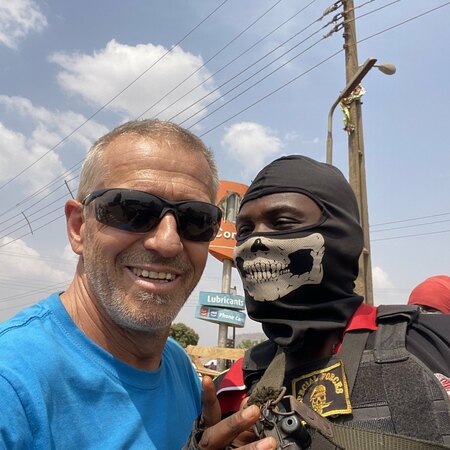
Zimbabwe drives on the left. Police checkpoints are everyday business and generally unremarkable - friendly, patient and with the requested papers ready, you get through fastest. The Beitbridge border crossing is the busiest in the country; arriving early in the day avoids the longest queues. Photographing police, military, border facilities and government buildings is sensitive and should be avoided. Tipping is customary for guides, in Hwange National Park and at lodges, usually given in small USD notes. At the Victoria Falls Bridge itself, border traffic and bungee tourism create a busy scene - allow enough time for photos and the border crossing.

Packing List: Zimbabwe Extras

What this route adds to your normal riding gear, not the whole list.

0 / 6

Photos from Zimbabwe

Joe Küster
Author
Joe Küster
Founder & Creative Engine of Overcross

"Jack of all trades, almost all!" The driving force and idea machine behind Overcross.

Languages: de, en
×

Send request

Adventure

How did you
hear about us?

Adventure truck Road path Palm tree
Ask a Route Expert

How do you want to travel?