Tunisia from 2.050 €

Germany from 299 €

Peru from 2.379 €

South Africa from 869 €

Namibia from 1.129 €

Greece from 1.579 €

Switzerland from 1.289 €

Senegal from 4.729 €

Mauritania from 4.729 €

Nigeria from 9.899 €

India from 2.469 €

France from 270 €

Spain from 1.239 €

Italy from 1.079 €

Chile from 2.819 €

Morocco from 2.059 €

Kenya from 1.899 €

Austria from 2.679 €

Tanzania from 2.369 €

Ukraine from 2.060 €

Cameroon from 9.899 €

Congo (DR) from 9.899 €

Western Sahara from 4.729 €

Balkan from 669 €

China from 8.899 €

Travel Information South Africa

Discover the diversity of nature and cultures!

Everything you need to know about South Africa

Travel map South Africa of the tour operator Overcross


Travel map of South Africa from the tour operator OVERCROSS


  1. General information about South Africa
  2. Climate in South Africa
  3. Geography in South Africa
  4. Flora and Fauna in South Africa
  5. National Parks and Nature Conservation in South Africa
  6. Population in South Africa
  7. Politics and Economy in South Africa
  8. Transport network in South Africa
  9. Cities and Regions in South Africa
  10. Culture and Sights in South Africa
  11. Public holidays in South Africa
  12. Medical information for South Africa
  13. Travel information for South Africa
  14. Foreign representation in South Africa
  15. Information sources for South Africa


1. General travel information about South Africa

Continent: Africa
Geographical location: Southernmost country of Africa on the Atlantic and Indian Ocean
Highest elevation: Mafadi, 3450 m​
Longest river: Orange, approx. 1860 km
Form of government: Federal Republic​
Government system: Parliament-bound executive power
Languages: Afrikaans, English, Southern Ndebele, isiXhosa, isiZulu, Northern Sotho, Sesotho, Setswana, Siswati, Tshivenda, Xitsonga (official languages)
Neighboring countries: Namibia, Botswana, Zimbabwe, Mozambique, Eswatini, Lesotho
Capital: Pretoria
Area: Approx. 1,219,912 km²
Inhabitants: Approx. 60,600,000 (2023)​
Population density: 49.7 inhabitants per km²
Religions: 75% various Christian churches, 2% African religions, 1.4% Hindus, 1.4% Muslims​
Currency: Rand (ZAR), 1€ is approximately 19 ZAR,​​ you can find the current exchange rate at oanda.com
Climate: Arid desert climate to subtropical
Time zone: UTC+2
Dialing code: +27
Country code: ZA
Electricity: In South Africa, sockets of type M, D, C or N are used. The mains voltage is 3 x 220/230V with 50Hz AC interval. A travel adapter is an advantage. An overview of the sockets and plugs used in our travel countries can be found at wikipedia.de
Opening hours: Generally weekdays 9.00-17.00, Saturdays until 17.00, Sundays 10.00-15.00 (in urban areas)

back to top


2. Travel climate in South Africa

Due to its geographical location in the southern hemisphere of the globe, the seasons in South Africa are opposite to our European conditions, i.e. when it is summer here, it is winter for South Africans and vice versa. While the summers are consistently very warm, winter in South Africa, especially on the southern and western coasts, can be cold and rainy, while in the interior lower temperatures with snowfall are also possible. Only on South Africa's east coast are air temperatures of around 25 - 35 °C found all year round.
The climate in South Africa, as well as the vegetation zones, is differentiated according to the geographical and geomorphological differences and is also influenced by the temperatures of the surrounding ocean currents. While arid climate conditions prevail on the interior plateau and especially in the Kalahari and Karoo, coastal weather patterns are maritime, which provide a semi-humid climate especially in the southeast of the country. The clouds of the moist sea air warmed by the Agulhas Current already precipitate at the coast before the mountain belt of the Drakensberg. In the Cape region, Mediterranean climatic conditions are characteristic. The Drakensberg Mountains are an exception, where due to the exposed altitude, cooler temperatures up to snowfall can be found in the higher summit regions. Roughly summarized, the climate, starting from the wetter coast in the southeast, becomes increasingly hotter and drier in a northwesterly direction towards Namibia.


Travel climate chart for Cape Town by the tour operator Overcross


Travel climate chart for Port Elizabeth by the tour operator Overcross


Travel climate chart for Johannesburg by the tour operator Overcross


Travel climate chart for Kimberley by the tour operator Overcross


back to top of page


3. Geography in South Africa

South Africa covers the southern tip of the African continent over an area of approx. 1,220,000 km², from Cape Agulhas at the southern tip about 1800 km in a northeasterly direction to the border of the northern neighboring countries Zimbabwe, Mozambique, Botswana and Namibia. The over 2500 km long coastline is bordered in the west by the Atlantic Ocean and in the south and southeast by the Indian Ocean. Both oceans, with the cold Benguela Current of the Atlantic and the warm Agulhas Current of the Indian Ocean, meet at Cape Agulhas.
Most of the central land area is occupied by the Highveld plateau, which falls from an average of 1000 - 2000 m above sea level over the 20 - 250 km wide, large rim step down to the coasts.
The mountain range of the Drakensberg runs through the country from the northeast to the Lesotho enclave in the southeast and forms with up to 3482 m a.s.l. (Thabana Ntlenyana in Lesotho) the highest elevations in southern Africa. Most of South Africa's rivers originate here, draining the country in a southeasterly direction towards the Indian Ocean. Only the Orange River, South Africa's most powerful river, flows after more than 1860 km in a westerly direction through all of South Africa at the border with Namibia into the Atlantic.

back to top of page


4. Flora and Fauna in South Africa

Due to the climatic and geomorphological differences of the country, South Africa is characterized by different vegetation zones, ranging from the deserts of the Kalahari in the northeast to the rainforest belts on the mountain slopes of the south coast of the country. The predominant plant type in South Africa is evergreen hard-leaved plants. Sugar bushes of the genus Protea are characteristic of South Africa's flowering plants, with around 130 species dominating the vegetation of the country with a great variety of different plants. Continuous forest areas, on the other hand, are rare in South Africa and are limited to the humid zone of the southern and southeastern coasts.
In the desert zones, in addition to thorn plants, various types of water-storing succulents such as aloes and spurges (Euphorbia) can be found. To the east, the desert areas of the Kalahari transition into grass and thorn savannas, which further to the northeast become moist savannas with denser growth.
In the area of the Karoo, a 500,000 km2 large dry zone behind the coastal mountains, which takes up almost a third of South Africa's land area, semi-deserts with the characteristic Karoo shrub vegetation are formed. An area with particular diversity of water-storing plants, the Succulent Karoo, is among the biodiversity hotspots of the world.
Grassland forms the main vegetation of the central plateau in the country's interior with various grasses, shrubs, and acacias.
Typical of the winter-wet Cape region is the Fynbos, a dense ground cover of a multitude of partly endemic herbs, bushes, ferns, and flowering plants, which give the landscape a unique visual appeal especially during the flowering season. Among the various plant species of the Fynbos is, among others, rooibos, whose leaves are used as rooibos tea, one of the most important agricultural exports of the Cape region.
The unique Cape flora, also called Capensis, is the smallest but most species-rich of the six floral kingdoms of the earth. On an area of just 90,000 km2 more than 9000 species of flowering Fynbos plants thrive, 70% of which are found nowhere else in the world. The Cape region is world-famous for its fascinating diversity of flowering plants and its incredible beauty, and was declared a World Natural Heritage site by UNESCO in 2004.

Just like the plant world, the animal world of South Africa is also incredibly diverse and fascinating. South Africa is home to over 300 different mammal species, more than 500 bird species, over 100 types of reptiles, and of course, numerous insect species. The number of predators alone is exceptionally high in South Africa, with nearly three dozen species of predators living in the country.
The best-known animals are probably the so-called Big Five: rhino, lion, elephant, leopard, and buffalo, which we will get to see on our numerous safaris. In particular, the northern savannas are home to a wide variety of antelope species, such as impala, wildebeest, kudu, or waterbuck. The springbok is also characteristic of South Africa.
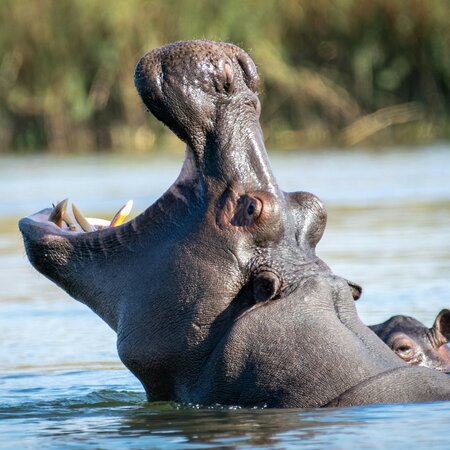
Besides the Big Five, other large animal species, such as giraffes, warthogs, meerkats, zebras, hippopotamuses, cheetahs, hyenas, and wild dogs, can be found in South Africa.
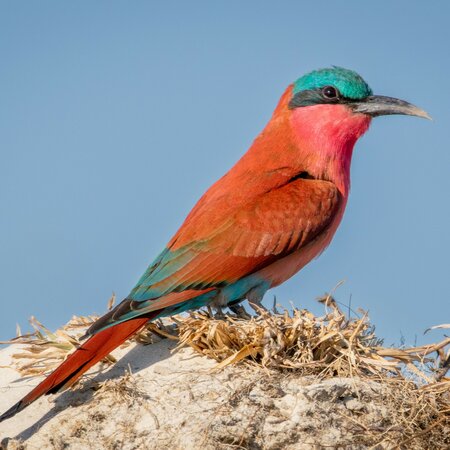
Among the bird species, ostriches and flamingos are especially noteworthy. Of particular note are the 170,000 African penguins, who live in the coastal areas and on the islands and are strictly protected by conservation laws.

back to top of page


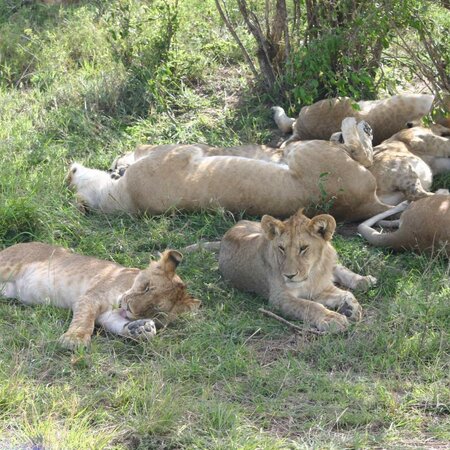
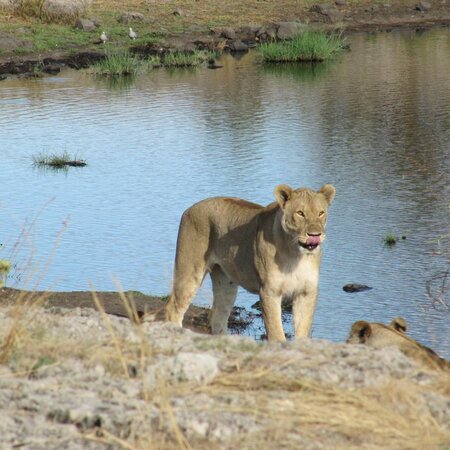
Lions in Kruger National Park

Experience the incredibly fascinating animal and plant world of South Africa


5. National Parks and Conservation in South Africa

With many nature reserves, an attempt is being made in South Africa to preserve and protect the unique animal and plant life. In South Africa, there are several state national parks and smaller wildlife reserves, some of which are privately owned, where the wildlife of South Africa can be well observed.

Kruger National Park
The Kruger National Park is the largest and most famous of these nature reserves. It is located in the northeast of the country and, with an area of just under 20,000 km², is one of the largest in all of Africa. It is home to 147 mammal species including the Big Five, 507 bird species, 114 reptile species, 49 fish species, and 34 amphibian species. The largest rivers crossing the park are the Luvuvhu, the Shingwedzi, the Letaba, and the Timbavati. Today, the park is one of the most famous safari destinations in the world, with all the facilities and amenities one would expect from a world-class destination. Nevertheless, the wild and untouched environment has been preserved, allowing visitors to experience Africa as one imagines it at home.

Table Mountain National Park
Table Mountain National Park is also internationally renowned and the landmark of the South African Cape region. Located at the southwestern tip of Africa, this national park was established in 1998, covering an area of 221 km² including Table Mountain and the Cape of Good Hope, and is regarded as a UNESCO World Natural Heritage Site due to its unique fynbos vegetation.

Addo Elephant National Park
Another interesting national park in South Africa is Addo Elephant National Park. This park was established in 1931 to protect the last eleven surviving elephants in the region. The Royal Natal National Park and the Rugged Glen Nature Reserve are also two very special nature reserves. Together, they cover a large part of the Drakensberg and offer nature lovers truly unique landscapes.

Tsitsikamma National Park
Tsitsikamma National Park stretches along the Garden Route between the sea and the Tsitsikamma mountains and protects one of the most beautiful stretches of coastline in the world. The park covers an 80 km long coastal strip between Natures Valley and Storms River Mouth and includes various rainforest ecosystems, fynbos and coastal landscapes, enabling beautiful hikes. The national park includes not only the land area, but also a marine protected area. The protected coastal waters are one of the world's largest “No Take” (including for fishing) marine reserves and place 11% of South Africa's rocky south coast under protection.

In addition to the more than 20 national parks in South Africa, there are other wildlife reserves and nature reserves. Most wildlife reserves are located in the savanna or semi-desert. These areas are home to the heaviest land mammals in the world, such as elephants and rhinos, which require special protection.

back to top of page


6. Population in South Africa

South Africa is often referred to as the Rainbow Nation because few other countries are home to so many different people of all races and skin colors as here. With around 60 million inhabitants, it is the most populous country in Southern Africa.
Until 1991, the population of South Africa was divided by constitution into four main classes: Blacks, Whites, Coloureds, and Asians. Although this classification no longer officially exists, many South Africans still consider themselves part of one of these groups, and government statistics continue to use these categories. Black Africans make up about 70% of the population. They are further subdivided by origin into Zulu, Xhosa, Basotho, Venda, Tswana, Tsonga, Swazi, and Ndebele. In addition, there are a few million refugees from Zimbabwe and other parts of the continent, some of whom live illegally in South Africa.
The inhabitants of European descent make up about 9% of South Africa’s population and are mainly descendants of Germans, British, French, and Dutch. This means the country has the largest population of European origin on the entire continent. Since the 1990s, however, the number of Whites in South Africa has steadily decreased. Another ethnic group, making up about 9% of the population, is the so-called “Coloured People.” The people in this group have European and non-European roots, mostly descendants of the first settlers, their slaves, and European immigrants.

A wide range of different national languages is used in South Africa. About 0.7% of Blacks and 59% of Whites speak Afrikaans as their mother tongue, and Afrikaans is also predominantly the mother tongue of the Coloureds. English is spoken at home by 0.5% of all Blacks and about 40% of the Whites. The remaining tribal languages such as Southern Ndebele, isiXhosa, isiZulu, Northern Sotho, Sesotho, Setswana, Siswati, Tshivenda, and Xitsonga are spoken as mother tongues by the black Bantu population. Only about 0.3% of the black population and 1% of the Whites do not speak any of the eleven official national languages as their mother tongue.

As multicultural as the South African population is, so diverse are the religious groups and communities in South Africa. Most South Africans are Christians, but there are countless different churches in the country, whose memberships are not uniformly organized and therefore difficult to keep track of. With around 2.5 million members, the Afrikaans-speaking Nederduits Gereformeerde Kerk (NG Kerk, Dutch Reformed Church) is the largest religious community in the country. Overall, 75% of the inhabitants can be classified as belonging to a Christian denomination. The majority of Christians belong to the so-called “Independent Black Churches,” which have their roots partly in the Christian-Protestant faith, but also in traditional African beliefs, such as ancestor worship.
In addition to Christianity, South Africa also has an influential Jewish community and a Hindu community in Durban. There are also about 350,000 Muslims in South Africa, mainly in the Cape region.

back to top of the page

The Port of Cape Town

The Port of Cape Town


7. Politics and Economy in South Africa

South Africa is the most economically stable and successful country in Africa. Although only 2.4 percent of South Africa's GDP comes from agriculture, the country is the third largest exporter of agricultural products in the world. The main products are grains (mainly corn and wheat), sugar cane, fruit and vegetables, meat and wine. In addition, South Africa has rich deposits of natural resources and minerals, especially in the Witwatersrand region, which once made the country famous and wealthy. Of particular note are the diamond deposits near Kimberley and the gold and precious metal concentrations in the Witwatersrand sediments near Johannesburg, as well as the rich ore deposits of uranium, platinum, palladium, chromium, nickel, vanadium, tin, and other metals in the pluton of the world-famous Bushveld Complex between Pretoria and Pietersburg. In addition, there are other mineral resources, including coal deposits in South Africa's subsoil.

Many other economic sectors, such as finance and transport, are also well-developed and contribute to the country's economic stability. Furthermore, in recent years, a tourism boom has developed in southern Africa with fully organized visitor programs, from which South Africa benefits in particular. In addition to the financial gains, the improvement of South Africa's entire infrastructure is a positive aspect for the country. Above all, the road network has seen significant improvements. The intensity of tourism is mainly concentrated on the coastal regions of South Africa as well as on well-known attractions such as Kruger National Park. For the 2010 FIFA World Cup, significant further investment was made in the country's infrastructure, especially through the construction of stadiums and transport routes.

Despite economic growth and success, there are still social injustices and political failings in the country. Thus, relatively high unemployment, crime, and corruption are among South Africa’s major problems. The economic and political consequences for population groups disadvantaged by the apartheid policy have not been sufficiently redressed to this day. Large portions of the poorer Black population still live under precarious conditions in slums, the so-called townships, and unemployment among the Black population is around 34%. To solve the problem of injustice in the country, "Broad-Based Black Economic Empowerment" (B-BBEE or BBBEE for short) was established, a program to achieve economic equal opportunities for previously disadvantaged citizens in South Africa.

back to top


8. Transport Network in South Africa

In South Africa, there is left-hand traffic. The country has a well-developed road network and highways. The longest highway is the National Route 3 between Johannesburg and Durban. The entire road network comprised about 358,596 km in 1996, of which only 59,753 km are paved. For our enduros and Landrovers, however, this is no problem; on the contrary, driving on tracks in South Africa is where the real fun begins.

Rail transport on the approximately 24,000 km railway network in South Africa is primarily used for freight transport. Long-distance trains for passenger transport run regularly between the big cities as well as on some branch lines, for which the Passenger Rail Agency of South Africa is responsible. Commuter trains are also in operation in the metropolitan areas of Johannesburg/Pretoria, Durban, Cape Town, and Port Elizabeth/East London. Due to the Cape gauge used in South Africa, rail transport is not particularly fast.
Long-distance transport in South Africa is also served by international bus lines such as Intercape Mainliner, Translux, Greyhound Coach Lines, Intercape, or the Baz Buses.

The most important airport in South Africa is OR Tambo International Airport near Johannesburg. It is the busiest airport in Africa and the hub of the largest African airline SAA (South African Airways). It is also the airport of the capital Pretoria.
The second largest airport in South Africa is the Cape Town International Airport (CPT), which opened in 1955. The airport, located 22 km from Cape Town city center, is to be directly connected to Cape Town by metro in the future.

back to top of page


9. Cities and Regions in South Africa

South Africa is divided into 9 provinces. Each of these individual provinces differs from one another in size, geography, population density, prosperity, and economy. The 9 provinces are called Limpopo Province, Northern Cape Province, Gauteng, Mpumalanga, Free State, North West Province, Western Cape Province, Eastern Cape Province, and KwaZulu/Natal. Although many cities in South Africa were renamed with African names after the abolition of apartheid laws, quite a few settlements still have such familiar names as Frankfort, Heidelberg, or Heilbron.

Province Gauteng
The most important economic and urban center of South Africa is located in the province of Gauteng, with Johannesburg as the core city, closely followed by Pretoria. Gauteng is also considered the financial center of South Africa and translates as "place of gold," referring to the gold industry that originated in the Witwatersrand in 1866. Gauteng contributes about 40% to the gross domestic product.

Johannesburg
Johannesburg is one of the largest and wealthiest metropolises in Africa, has the "most famous" townships of South Africa, and offers a very diverse cultural scene. The city is divided into several districts, which differ greatly from one another and each of which offers interesting insights into South African history, culture, and lifestyles. The history of apartheid can, for example, be particularly well studied and understood in Sophiatown; Alexandra is a district where few from the black population were allowed to own property. Today, there are still about 500,000 people who share the small area of 8 km² and live in quite poor conditions.
The image of the city center is shaped by skyscrapers, which are mainly used as office buildings. However, Johannesburg also has some remarkable architectural projects and buildings in the Art Deco style to offer. In the south lies Gold Reef City, a large entertainment complex and theme park revolving around mining and "mining" in the region.
Johannesburg is also known for the world's largest man-made forest with over 10 million trees imported from other countries, which were planted by European settlers as a replacement for the then-cleared original forest in a belt around the city. Many of these introduced tree species, however, proved to be problematic from ecological and geophysical perspectives, so that programs have now started to help restore the original tree population.

Pretoria
Pretoria is South Africa's official capital and at the same time the core city of the City of Tshwane Metropolitan Municipality, a union of 13 cities and municipalities in the region around Pretoria. However, parts of the state administration are also located in Cape Town (seat of parliament and half-yearly seat of government) and Bloemfontein (seat of the supreme court of appeal). Since the name Pretoria strongly reminded people of the dark times of apartheid policy, the city was supposed to be renamed Tshwane in 2005, but the corresponding city council resolution has not yet become legally valid due to several objections to the renaming, so Pretoria is still considered the official name of the capital. About 750,000 people live in the city center.
Kerkplein (Church Square) forms the historic center of Pretoria and is surrounded by several historical and architectural landmarks such as the old parliamentary building, the palace of justice, the old Capitol Theater, and the main post office of the city. This square has been the center of the city for more than 130 years. Adjacent to Church Square are important buildings such as the former parliamentary building, the justice square, the old state bank, and the main post office of Pretoria. The Union Buildings, built in the neoclassical style in the northeast of the city center, serve as the current half-year seat of parliament. A variety of museums on the history and natural history of South Africa as well as several museums and visitor-accessible forts from the time of the gold rush and Jameson Raid shortly before 1900 complete the sightseeing program. Like Johannesburg, Pretoria is also known for its predominantly South American 70,000 jacaranda trees, which line a large part of the city's roads.

Province Western Cape
The 129,462 km² large province of Western Cape makes up a little over a tenth of the size of South Africa. It stretches from the Cape of Good Hope about 400 km north and about 500 km east along the coasts of both the Atlantic and Indian Oceans. In the north, Western Cape borders the province of Northern Cape, to the east the province of Eastern Cape. Most of the climatically very diverse province is characterized by a warm temperate climate with cool, wet winters and hot, dry summers, comparable to the climate of the Mediterranean. The cold Benguela Current cools the climate at the Cape of Good Hope, so that despite its northern location, the Western Cape is suitable for viticulture.

Cape Town:
Cape Town lies at the southernmost tip of South Africa and, besides being an important government, trade, and financial center, is one of the most important seaports in the world. However, Cape Town is above all the most visit-worthy city in South Africa and, as is well known, one of the most beautiful cities in Africa. It is often compared to Rio de Janeiro or San Francisco because of its multicultural, open, and interesting ambiance.
With the fascinating silhouette of Table Mountain in the background, the harbor with its surrounding promenades and green spaces, as well as both historical and modern buildings in the city center, the city has a unique flair that draws tourists from all over the world in droves. In addition to numerous interesting museums, monuments, and historically interesting sites, parks and green spaces, such as the parliamentary garden or Kirstenbosch Botanical Garden, also invite you to linger. A very well-known museum is the District Six Museum and definitely worth a visit is the Castle of Good Hope, an old castle built in 1666 by Dutch colonists. In fact, there is something to discover and experience on every corner of the city. Popular beach sections are the promenades of Sea Point, Clifton Beach, or the neighboring Camps Bay.
A visit to Cape Town should not miss a tour of Table Mountain. With a Table Mountain cable car, you have the opportunity to comfortably reach the summit of the mountain and enjoy the incredible view over the whole city and the beautiful coast. On Table Mountain itself, you can also visit the Table Mountain National Park and learn a lot about the history and the formation of the mountain and the city. At the harbor of the city lies the Victoria & Alfred Waterfront, one of the city's largest tourist attractions. The waterfront gets its name from two harbor basins named after Victoria, the Queen of England, and her son Alfred. Around the basins is an immense entertainment and shopping district. Here you can dine every evening in elegant and also unusual restaurants, listen to music from different artists, and enjoy the view of the sea. Even in the immediate vicinity of the city, you can find numerous interesting places. Robben Island is a small island in Table Bay, about 12 kilometers from Cape Town. Today, the island is a world-famous natural and national monument and was formerly a prison island. Nelson Mandela spent almost two decades as a prisoner on this island.

Province Eastern Cape
The province of Eastern Cape in the southeast of South Africa with the capital Bhisho covers an area of about 169,580 km² and has around 6.6 million inhabitants.

Port Elizabeth
With about 312,000 inhabitants, the city of Port Elizabeth, located on the southeast coast on the Indian Ocean, is one of the largest cities in South Africa and the largest city of the Nelson Mandela Bay Municipality metropolitan area, which in total is home to about 1.2 million inhabitants. In South Africa, the city is known as both The Windy City and The Friendly City. Port Elizabeth is said to be South Africa's city with the most sunny days, and there are also some very beautiful and popular beaches in the city area. Recreation and especially water sports are a big priority in Port Elizabeth, and there is a wide range of activities which attract numerous tourists from both at home and abroad to the city every year. In March/April, the Ironman South Africa takes place annually in Nelson Mandela Bay.
Port Elizabeth was founded in 1820 from already existing settlements by the governor of the Cape Colony, Sir Rufane Donkin, who gave the city the name of his wife, who died young. Attractions include the oceanarium and natural science museum, Market Square, and the City Hall, rebuilt in 1977, as well as numerous public buildings in the Victorian style.

Durban
Together with the surrounding cities, Durban forms the eThekwini metropolitan municipality and, with over 3.4 million inhabitants, is the third largest city in South Africa after Johannesburg and Cape Town and at the same time the capital of the province of KwaZulu-Natal. Durban is named after a British governor of the Cape Colony, Benjamin D’Urban, during whose time around 1830 the former settlement and refuge Port Natal became a proper town. Durban, located on the Indian Ocean on the east coast of South Africa, is now an important industrial and port city with the largest harbor in Africa and, owing to its popular beaches and subtropical climate, a highly frequented holiday center of the country. Durban is also a popular area for surfers, kite surfers, and bodyboarders, despite the existing danger from sharks.
The old town of Durban is on the one hand characterized by Victorian buildings from the former colonial times; at the same time, however, you will also find numerous temples, bazaars, and mosques as an expression of Indian culture. Together with the beautiful beaches, lush vegetation, and tropical colors, a very special flair is created in this interesting South African city.
The city is known for its many markets such as the Victoria Street Market, where all imaginable spices and Indian food are offered for sale. Museums such as the Old Courthouse Museum in the City Hall in the city center are also worth a visit. From Barea, a district located high up on a north-south running ridge with beautiful old villas, considered Durban’s oldest and most desirable residential area, you have a fascinating view over the whole city.
Durban’s lifestyle takes place on the beachfront or the Golden Mile with numerous shops, bars, and restaurants. The Gateway shopping center is the largest shopping center in South Africa.

Plettenberg Bay
Plettenberg Bay is a picturesque small town at the mouth of the Keurboom River on the Garden Route, known for its dreamlike beaches and natural impressions. The Keurboom River forms a lagoon here. Not far away, west of the city, lies the Robberg Peninsula, a nature reserve that is home to a large seal colony. About 15 km east lies the well-known Natures Valley with the lagoon and the beautiful primeval forest.

back to top of page


Cape Town - an adventurous city at the southern tip of South Africa

Arguably the most beautiful city in South Africa - Cape Town


10. Culture and Sights in South Africa

The culture of South Africa is incredibly diverse due to the many different African tribes, the influence of European settlers, and the high proportion of foreign population. The most diverse influences have united here to form a uniquely South African mix. Depending on the region, African, or Indian, Dutch, English, or French influences dominate. But wherever you are, the cosmopolitan trend is unmistakable. There are a total of 11 official languages. Most South African residents identify with the Christian faith, but some also with Islam, Judaism, and Hinduism.
The terms South Africa and freedom are inevitably linked with the freedom fighter Nelson Mandela, who in 1944 founded the ANC Youth League together with his friend Oliver Tambo and other political companions such as Walter Sisulu and Anton Lembede. Mandela was a leading South African activist and politician in the decades-long resistance against apartheid. Because of his activities, he was imprisoned by the apartheid government from 1963 to 1990. After his release, he was elected as the chairman of the ANC party and, from 1994 to 1999, as the first black president of his country.

Drakensberg Mountains
The Drakensberg Mountains form the highest mountain range in South Africa. They stretch for over 1000 km in a south-north direction from the Eastern Cape to Mpumalanga in the northeast of the country. The highest peak is Thabana Ntlenyana (3482 m) and is located in Lesotho. In 2000, parts of the range were declared a UNESCO World Heritage Site as the Ukhahlamba-Drakensberg Park. Especially in the high southern Drakensberg, many routes have been prepared for hikers in South Africa and are marked with brown signs displaying a bearded vulture. For hiking and climbing, the 3,194 meter-high Cathkin Peak is the most suitable. One of the most spectacular natural wonders in South Africa is the Blyde River Canyon in the northern Drakensberg. This approximately 26 km long gorge is up to 800 meters deep in some places and is predominantly formed from red sandstone.

Kruger National Park
Founded in 1898 to protect the wildlife of the South African Lowveld, this national park, with almost 2 million hectares, is unique in the diversity of its wildlife and is globally leading in advanced environmental management techniques and principles. About 145 mammal species, over 500 bird species—some of which cannot be observed anywhere else in South Africa—and 336 tree species make this their home. Today, the park is one of the most famous safari destinations in the world, with all the facilities and amenities expected from a world-class national park. Nevertheless, the wild and untouched nature has been preserved, so that one can still experience Africa as imagined from home.

Sudwala Caves
The Sudwala Caves are a cave system in the South African province of Mpumalanga. The rock consists of over three billion year old Precambrian dolomite, and the cave itself formed about 240 million years ago. The largest cavity is 18 meters high with a diameter of 66 meters and is occasionally used for concerts.

Cape of Good Hope
The Cape of Good Hope is located at the southwestern end of Africa and was once very feared by sailors, as ships were often driven by strong winds against the cliffs and the extensive rocks lying just below the water's surface, where they would run aground and sink. At least 23 wrecks lie there as witnesses of numerous human fates on the seabed. In 1488, the cape was sighted for the first time by a European, the Portuguese Bartolomeu Diaz, who was on a secret voyage of discovery at the time.

The breathtaking Drakensberg Mountains of South Africa

The fantastic Drakensberg Mountains belong to the most impressive natural beauties of South Africa


Cape Point
Cape Point refers to the cliff at the southern end of the Cape Peninsula and offers a view of the Cape of Good Hope, which is 1 kilometer away. The highest point of the cliff is crowned by a lighthouse built in 1859, which, at 238 m above sea level, is often shrouded in fog. After the Lusitania with over 700 people on board sank in 1911, a second lighthouse was built, located closer to the water and outside the fog zone.

Castle of Good Hope
This fortress complex was built between 1666 and 1679 and is the oldest European building in South Africa still preserved in its original form. As early as 1652, a wooden version of the complex was built by Jan van Riebeeck on behalf of the Dutch East India Company. The Castle of Good Hope was replaced shortly afterwards by a more modern pentagon-shaped fortress.

Victoria & Alfred Waterfront
The Victoria & Alfred Waterfront is a shopping and tourist center located at the harbor of Cape Town and, in addition to countless shops and restaurants, also houses a seawater aquarium. It is named in honor of British Queen Victoria and her second son Prince Alfred, who laid the foundation stone for an over one kilometer long wall in front of the harbor during a trip in 1860. This breakwater protects the ships anchored there and the harbor basin. After Apartheid, the harbor and shipyard district was extensively restored and now offers numerous leisure and entertainment options.

The Winelands South Africa's wine growing tradition is over 300 years old and in the wines you can "taste" the classic tradition of the Old World. The wine regions can be divided into two main zones, the Coastal Region, which is the rainy region on the coast, and the Breed River Valley, the hot interior. The most famous growing areas include Stellenbosch, Paarl, Worcester or Little Karoo. Various wine tours are offered.
Robben Island

This island, about 3.5 x 1.5 km in size and located in Table Bay, has been a natural and national monument since the mid-1990s. Robben Island was used as a penal colony and leper colony as early as the 17th century. This island became sadly famous for its most prominent prisoner, later President of South Africa and Nobel Peace Prize winner Nelson Mandela, who spent almost two decades here in a single cell of just 4 m².

Garden Route - Dream Road on the Indian Ocean
Along the south coast, on the national road N2, runs the famous Garden Route from Cape Town to Port Elizabeth. The classic Garden Route stretches from Mossel Bay to the Paul Sauer Bridge and is about 300 km long. Mountains alternate with steep coasts, lonely beaches, forests and semi-deserts and, again and again, you will come across a dreamy seaside resort or a pretty little town. In autumn, whales come to the coast of the Garden Route to give birth to their young and can be observed very well. Extensive virgin forest stands are found on the coastal mountains’ slopes facing the sea at Knysna and in the area of Nature’s Valley.


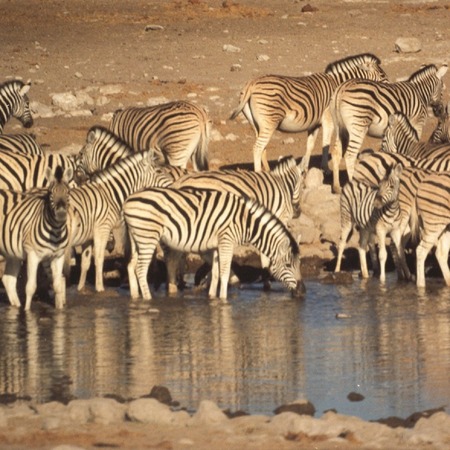
Zebras in Kruger National Park

Zebras in Kruger National Park


Stellenbosch
Stellenbosch is the second oldest European colony in the Western Cape after Cape Town. The city was founded in 1679 by the governor of the Cape Colony, Simon van der Stel. He named the city after himself – Stellenbosch means “(van der) Stel’s forest.” The first settlers were encouraged to plant oak trees, which is why the city also became known as the “City of Oaks” (in Afrikaans “Eikestad”). Stellenbosch lies on the banks of the Eerste River. The river was called “Eerste” because it was the first river Simon van der Stel found and followed from Cape Town across the Cape Flats to the region that today forms Stellenbosch. The Dutch were skilled hydraulic engineers and built water channels from the Eerste River through the city to Mill Street, where a mill was erected. Among the first settlers were, among others, French Huguenots who brought viticulture to this fertile area, soon making Stellenbosch the center of the South African wine industry.

Oudtshoorn – Ostrich Metropolis of the World
Oudtshoorn is known as the ostrich metropolis of South Africa. The city was founded in 1847 and lies 300 m above sea level, bordered by the Swartberg mountain range to the north and the Outeniqua mountains to the south. Ostrich feathers were an essential fashion must before the First World War. The feather boom began around 1870. At its peak, about 750,000 ostriches and around 450,000 kg of feathers were exported per year. Then came the First World War and many farmers went bankrupt. Years later the industry experienced another upswing and the demand for feathers, biltong, eggs and leather once again increased. Today there are about 90,000 ostriches in the area known as the Little Karoo.

Cango Caves
It has been proven that the caves were already used by the San people in the Stone Age. In the 19th century, entrance to the caves cost 5 Rix Dollars – equivalent to ZAR 500 – which, however, still did not stop some tourists from breaking off parts of the beautiful stalactites and stalagmites to take home, or from carving their names into the walls. In response to the destruction of the caves, the governor of the Cape Colony, Lord Charles Somerset, enacted the first laws for the preservation of the caves in 1820. These were the first laws to protect natural resources in South Africa and they prohibited the collecting of souvenirs and set penalties as well as entrance fees. The entrance fee had to be paid to the District Officer, who was also responsible for enforcing the laws.
Some of the most significant discoveries were made by the first official cave guide, Johnnie van Wassenaar, who worked here for 43 years, from 1891 until his retirement in 1934. He opened many of the side chambers and led thousands of visitors into Cango 1, which is still the only chamber open to the public today. It was only between 1972 and 1975 that the caves Cango 2, 3, 4, and 5 were discovered and explored, but these are now closed for conservation reasons.

Knysna
The Knysna Lagoon is an excellent place for a variety of activities or just to relax and enjoy the beauty of the so-called Knysna Heads. The lagoon is framed by two rocky cliffs, known as “The Heads.” Especially from the eastern side of the Heads, there is a fantastic view.
The Knysna Lagoon has an oyster farm, one of the few worldwide. In addition, the city is also known for its beer, made in Mitchell’s Brewery. The city’s museums are also worth a visit, the Milwood House Museum and the Angling Museum in the Old Gaol complex. Other attractions include the dense rainforest, the nearby Buffalo Valley Game Farm, Featherbed Nature Reserve as well as Noetzie Beach and numerous restaurants and local art markets. The Knysna forest is one of the largest primeval forest areas in South Africa and is so densely overgrown that it is impassable in some parts.

Greater St Lucia Wetland Park
Recently renamed Isimangaliso Wetland Park, this subtropical paradise covers an area of 240,000 hectares and is the largest river mouth system in Africa. The park includes the southernmost outcrops of coral reefs on the African continent and stretches for 220 km along the east coast from St. Lucia to the border with Mozambique. Isimangaliso encompasses a large diversity of habitats, dunes, bog and coastal forests to rocky coasts and beaches, coral reefs and underwater canyons, mangroves, savanna, grassland, bush and forests. This is the largest protected wetland in southern Africa with a large number of nesting turtles on the beach as well as many whales, dolphins, and whale sharks near the coast.


back to top of page


An adventure trip along South Africa's Garden Route

Garden Route - an adventurous exploration of one of South Africa's highlights


11. Public holidays with fixed dates in South Africa


1 Jan New Year's Day
21 Mar Human Rights Day
27 Apr Freedom Day (Anniversary of the first democratic elections 1994)
1 May Labour Day
16 Jun Youth Day (Anniversary of the start of the Soweto uprisings 1976)
9 Aug Women's Day (Anniversary of the women's demonstration against the Pass Laws 1956)
16 Dec Day of Reconciliation (Anniversary of the Battle of Blood River 1838 between Boers and Zulu)
25 Dec Christmas Day
26 Dec Boxing Day


back to top of page


12. Medical advice for South Africa

For legal reasons, as a tour operator we are not allowed to provide binding medical advice for South Africa and therefore refer to the information from the German Federal Foreign Office, the Robert Koch Institute, and the German Society for Tropical Medicine and International Health e.V.

back to top of page


13. Travel information for South Africa

Current travel and safety advice, information on entry and exit as well as special legal notes and conduct recommendations for your stay in South Africa can be obtained from the

Karte von South Africa

×

Send request

Adventure

How did you
hear about us?

Ask a Route Expert

How do you want to travel?