Travel Information Botswana

Wildlife Wonders Await in Botswana's Untamed Landscapes!

Everything you need to know about Botswana

Travel map of Botswana by the tour operator Overcross

Travel map of Botswana by the tour operator Overcross


  1. General information for Botswana
  2. Climate in Botswana
  3. Geography in Botswana
  4. Flora and fauna in Botswana
  5. National parks and nature conservation in Botswana
  6. Population in Botswana
  7. Politics and economy in Botswana
  8. Transport network in Botswana
  9. Cities and regions in Botswana
  10. Culture and sights in Botswana
  11. Holidays in Botswana
  12. Medical information for Botswana
  13. Travel advice for Botswana
  14. Foreign representation in Botswana
  15. Information sources for Botswana


1. General information for Botswana

Continent: Africa
Geographical location: Southern Africa, located in the southern hemisphere
Highest elevation: Monalanong Hill (1494 m AMSL)
Longest river: Limpopo (1600km)
Form of government: Parliamentary monarchy
System of government: Executive power bound to parliament
Languages: Official languages: Setswana and English
Neighboring countries: In the south and southeast South Africa, in the west and northwest Namibia, in the northeast Zimbabwe
Capital: Gaborone
Area: Approx. 581,730 km²
Population: Approx. 2,481,301 people​
Population density: Approx. 4.3 inhabitants per km²
Religions: Local traditional faiths 49.2%, Protestants 29.0%, African Christians 11.8%, Catholic 9.4%, others 0.6%
Currency: Pula (BWP), 1 EUR approx. 13.5 (BWP),​​ the current exchange rate can be found at oanda.com
Climate: Semiarid savanna and semi-desert climate
Time zone:  UTC + 2
Country code: +267
Country code: BW​
Electricity: In Botswana, socket types D, G, and M are used. The mains voltage is 3 x 220V with a 50Hz alternating interval. A travel plug adapter is advantageous. An overview of sockets and plugs used in our travel countries can be found at wikipedia.de

back to top of page


2. Travel climate in Botswana

Botswana's central location in southern Africa, far from the coasts, brings a continental-influenced, dry semi-desert climate, which is as typical for the steppe and savannah landscape as it is for the relatively strong temperature contrasts between day and night, which can amount to up to 20 °C and in winter can also be accompanied by frosty nights. In summer, the thermometer climbs up to the 35°C mark during the day, while at night temperatures can drop to single digits just a few degrees above the freezing point.
During the relatively short rainy season between December and March, only about 500 mm of precipitation falls in total; the rest of the year is predominantly dry.

Travel climate diagram for Maun from the tour operator Overcross


back to top of page


3. Geography in Botswana

Botswana is located in the center of the southern African continent and is bordered in the north and west by Namibia, in the south and southwest by South Africa, and in the east by Zimbabwe. Most of the country's 582,000 km² area lies on relatively flat highland with an average elevation of about 1,000 m above sea level and is covered by the steppes and savannahs of the semi-desert, in the south and southwest by the Kalahari. The highest mountain is, at 1,494 meters above sea level, the Monalanong Hill located southwest of the capital Gaborone.
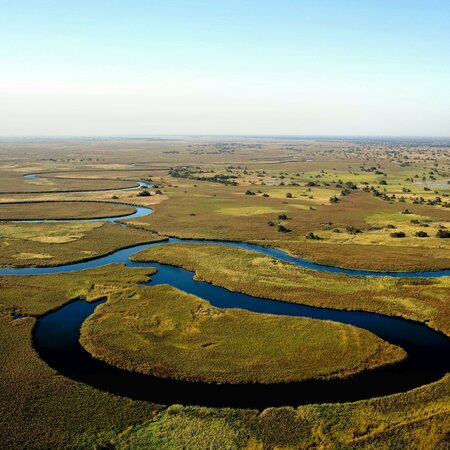
In the northwest lies the basin of the Okavango Delta, into which the Okavango River drains the northern mountains of Zambia and Angola. Due to the heat and dryness, this basin does not form a permanent body of water throughout the year, but instead only experiences periodic flooding followed by silting and drying out of the areas further from the mouth, which has produced living creatures uniquely adapted to such conditions. Because of the complex hydrology of the delta system, there is a flood delay that preserves central parts of the delta from drying out during the dry season.
The other larger outflows such as the Limpopo in the south and the Cuando and Zambezi in the north form part of Botswana's national borders.

back to top of page


4. Flora and Fauna in Botswana

Steppes, thorn and bush savannas, dry woodlands and the semi-desert of the Kalahari shape the landscape of Botswana over four fifths of the country's area. Northeast of the country's center are the extensive salt pan areas of Makgadikgadi, which are mostly vegetation-free salt deserts, but during the rainy season can periodically form bodies of water and then become attractions for numerous bird species. The edges of the salt pans are covered with grass savannas.
Further north stretches the Okavango Delta and the wetlands around the Chobe River. The vegetation here, along the permanently flooded swamps, channels and lakes, forms dense papyrus stands and evergreen forests. In the areas periodically flooded, a very unique vegetation has developed due to the special living conditions, ranging from brightly flowering water lilies to salt-tolerant halophytes on some islands with increased salt concentration in the soil. Common plants in the less frequently flooded areas include the Makalani palm, various fig species, and the sausage tree. Overall, more than 1300 plant species have already been identified in the Okavango Delta.
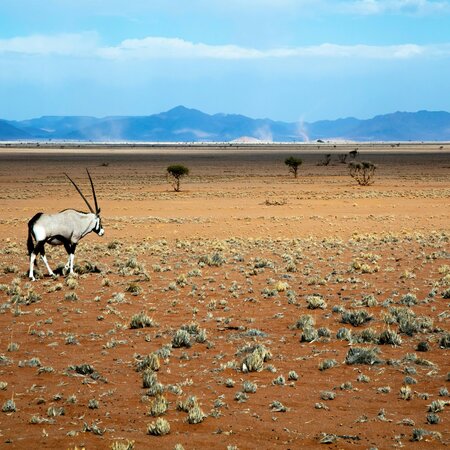
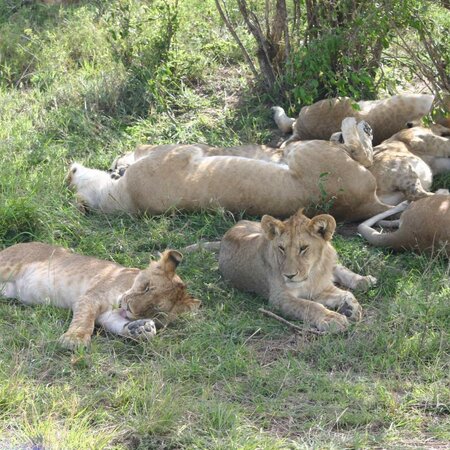
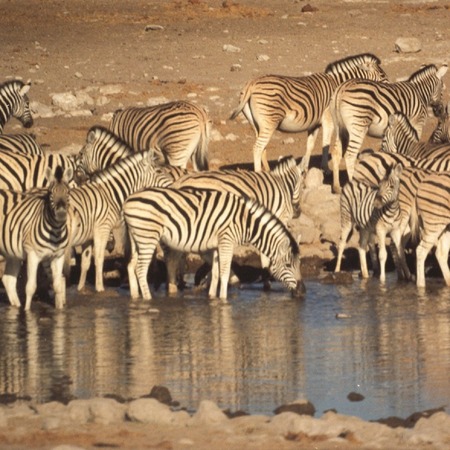
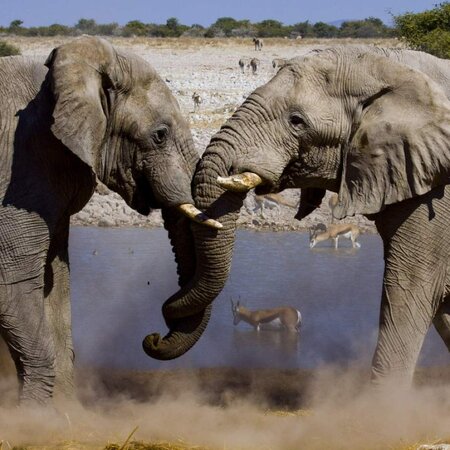
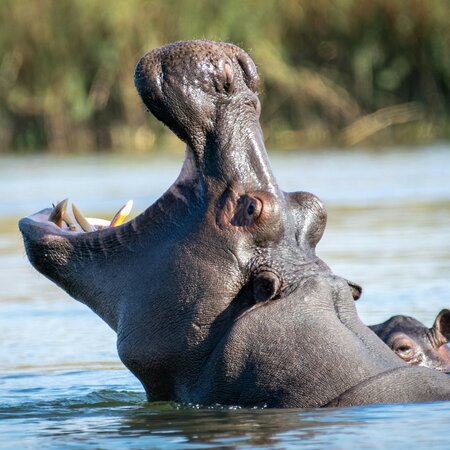
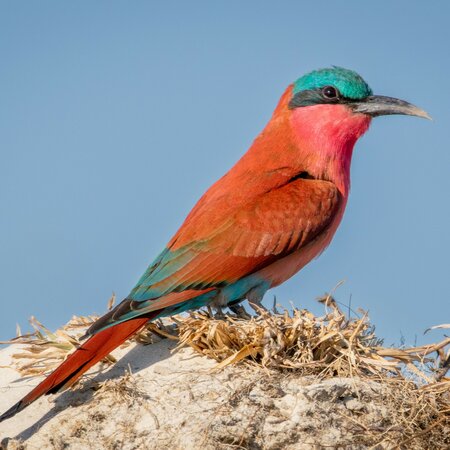
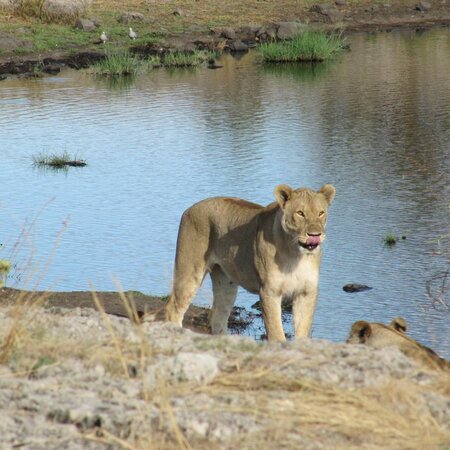
A wide range of African wildlife is represented in Botswana. The "Big Five" lion, rhinoceros, elephant, buffalo and leopard are just as native to Botswana as countless other African animal species. These include the eland, gnu or springbok, cheetahs and rare African wild dogs, striped hyenas, hippos, reptiles, jackals, springboks and of course the zebra, which is also featured on Botswana's national coat of arms. In addition, 500 bird species make their home in Botswana, such as the African ostrich, the stork and flamingos.

back to top of page


5. National Parks and Nature Conservation in Botswana

Botswana protects its considerable biodiversity of living creatures by – uniquely worldwide – placing more than 40 percent of its land area under nature conservation. The most important national parks in Botswana are:

Central Kalahari Game Reserve
The Central Kalahari Game Reserve in Botswana is Botswana’s largest national park and, with an area of almost 53,000 km², is larger than Switzerland. The vegetation consists of large trees, bushes, grass, and sand dunes, and the dry desert, which, far removed from any mass tourism, offers a special experience for individual and adventure travelers. Here you can find a wide variety of wild animals such as wildebeests, giraffes, and herds of springboks and gemsboks. From a distance, you can hear the roar of the Kalahari lion, a "must-hear" on every trip to Botswana. The reserve is also home to the San. These African indigenous people have lived here in southern Africa for about 25,000 years. Tourists have the opportunity to stay in simple or luxurious accommodations.

Okavango Delta World Heritage Site
The Okavango Delta has been under the special protection of the UNESCO World Natural Heritage since 2014. With an area of nearly 20,300 km², the Okavango Delta is Botswana’s second largest protected area. The nature park includes the famous Moremi Wildlife Reserve, which takes up one third of the delta area. The delta, which is actually an alluvial fan in geographical terms, is the largest inland delta in the world and creates not only marshy landscapes but also a unique flora and fauna in an environment shaped by periodic flooding and complete drought.
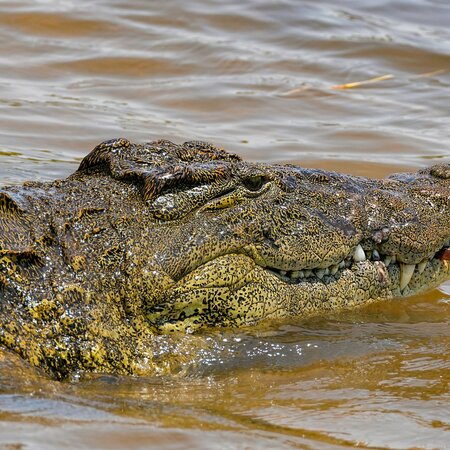
Here, hippos, crocodiles, various species of antelope, buffalo, elephants, and wildebeests can be found, and because of their high population density, also attract hyenas, leopards and lions.
The few, heavily regulated accommodations in the Okavango Delta are mostly luxury lodges and can often be reached only by plane or via adventurous game trails. Camping for self-sufficient travelers is also offered.
The Okavango Delta is also part of the cross-border conservation area Kavango-Zambezi Transfrontier Conservation Area.

Chobe National Park
Northeast of the Okavango Delta connects the Chobe National Park with the floodplains of the river of the same name as the third largest national park in Botswana, with an area of almost 10,000 km². The park contains four ecosystems. In the north lies Botswana’s only larger, contiguous forest area. In the west as in the center of the park lies a large dry savanna. Here you can observe the largest elephant population in Botswana.
The south of Chobe National Park is occupied by the famous Savuti wetland as well as the Linyanti swamps. The Savuti region is known for its annual animal migrations. Wildebeests, impalas, kudus, and zebras as well as various predators roam the country here. Much of the nature remains very original and untouched.

The Khutse Game Reserve
The dry landscape of the Khutse Game Reserve adjoins the area of the Central Kalahari Game Reserve to the south. Many different animal species and birds have settled here despite the dry and vegetation-poor landscape. Wildebeests, antelopes, jackals, leopards, cheetahs, and lions roam the savanna landscape. Vegetation here includes acacias, blackthorn and buffalo thorn, white-stemmed boscia, and camphor bush. The animals can best be observed around the few waterholes.

back to top


6. Population in Botswana

In 2021, Botswana had about 2.54 million inhabitants, which, given the specified land area of 582,000 km², corresponds to a population density of only 4.3 inhabitants per km². This makes Botswana one of the most sparsely populated regions in the world. One third of the population lives in the capital Gaborone, with about 230,000 inhabitants. The official languages are English and Setswana. Around 95% of Botswana’s population belongs to the Bantu-speaking tribes. 75% are Tswana and 12% belong to the Bantu people of the Shona. The remaining population is made up of San, Khoi-Khoi, Ndbele, Whites, Indians, and people of mixed descent. About half of the population adheres to the Christian faith, which is often combined with indigenous religious practices. Religious minorities are Muslims and Hindus.

back to top of page


7. Politics and Economy in Botswana

The country's constitution dates from 1965. The legislative body is the parliament, which, in addition to the 57 members of the National Assembly - all elected every five years - also includes the President, the Speaker of Parliament, and four members appointed by the President. The parliament is supported and advised by the House of Chiefs, which has between 33 and 35 members and is made up of the country's leading tribal representatives. Executive power rests with the President, who combines the roles of head of state and head of government in his person. Botswana is considered one of the most democratically rated states in Africa. The willingness to engage in corruption is considered low.

In the past, Botswana had a much higher economic growth rate compared to other African countries, averaging 9% annually. Thus, the country has transformed from one of the poorest countries in the world into a middle-income country and has the highest credit rating in Africa. The most important source of income for the country is diamond exports, which account for more than 70% of the total export value. In addition, tourism, with estimated revenues of about USD 2.5 billion annually, and meat production are among Botswana’s sources of income.

back to top of page


8. Transport Network in Botswana

The few long-distance roads in Botswana are continuously paved. Secondary roads are mostly more or less stabilized tracks, which can become impassable with regular cars during the rainy season. In particular, the paths in the large national parks are still relatively "natural" and therefore difficult to drive on. The Trans-Kalahari Highway is an international highway that runs through Botswana and connects Johannesburg in South Africa with Walvis Bay in Namibia. As in all former British colonies and protectorates, Botswana drives on the left.
The nearly 700-kilometer railway line of the state-owned Botswana Railways, from the border with South Africa via Lobatse, Gaborone, and Francistown to Zimbabwe, mainly serves freight transport. After passenger trains were initially discontinued in 2009 for economic reasons, passenger trains have been running again on this route since 2016.

Due to the few and poor roads and the train service limited to the eastern part of the country, the airplane is the preferred means of transport in Botswana to bring both people and necessary goods to remote areas. In addition to the partially internationally served airports of Gaborone, Maun, Kasane, and Francistown, there are numerous smaller airfields and landing strips in the interior of the country, which are used by small aircraft.

back to top of page


9. Cities and Regions in Botswana

Gaborone

Gaborone, with over 230,000 inhabitants, is the largest city in Botswana and at the same time the capital. The government district and the only university of the republic are located in the city. Worth seeing are the National Museum with ethnological and archaeological exhibits on Botswana and the artworks in the associated Art Gallery. The international Sir Seretse Khama Airport is located near the capital.

Francistown
The second largest city in Botswana is the former gold mining town of Francistown, with about 100,000 inhabitants, the capital of the North-East region.
Apart from a small museum which provides information about the Kalanga people of Botswana, the city itself has no significant sights to offer, but it is the starting point for safaris to the Makgadikgadi salt pans.

Maun
The core of the city of Maun, with a population of about 50,000 in northern Botswana, consists of the airport, safari offices, cafes, and a hotel complex. The capital of the North-West district is a popular meeting point for safari tourists. Many excursions to the Okavango Basin start from here. In Maun, some traditional round huts built of clay can still be found.

Botswana's Central District
The Central District is located in the east of the republic and is one of the largest regions of Botswana. The capital is Serowe, while other larger towns such as Palapye, Selebi-Phikwe, and Mahalapye are located in the Central District. In Serowe there are several museums, such as the Khama Memorial Museum, in which the history of the Khama family is vividly presented. Exhibits of snakes, insects and other species from the wildlife of Botswana are on display in the scientific exhibitions. 

back to top of page


10. Culture and Sights in Botswana

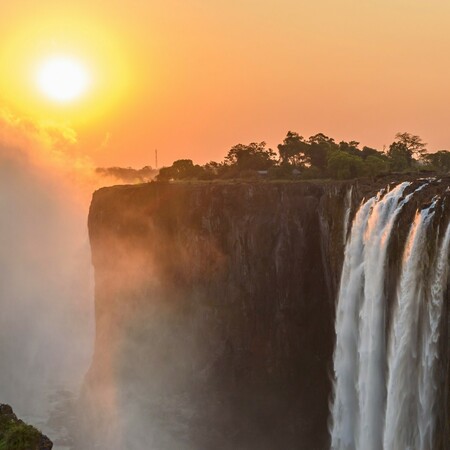
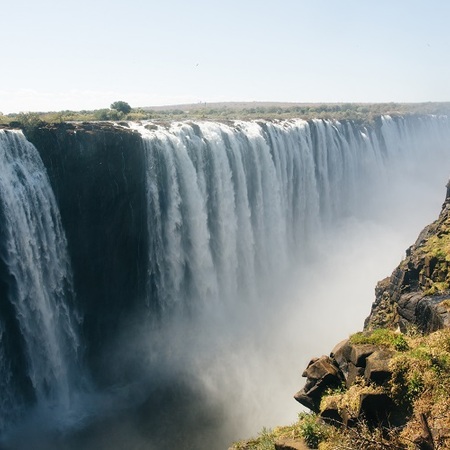
Due to protection treaties that the former Tswana rulers concluded with the British government for protection against the immigrating Boers, Botswana was, from 1885 to 1966, under the name of Bechuanaland, the largest British protectorate in southern Africa. Not much has remained of the former colonial architecture in Botswana. The main attractions in Botswana are primarily the large national parks, the Chobe National Park, the Okavango Delta, the Central Kalahari Game Reserve, the Makgadikgadi and Nxai Salt Pan National Parks, the Savuti region, the Moremi Game Reserve, and the Khutse Game Reserve. The Victoria Falls of the Zambezi, which lie in the northern border region of Botswana in Zambia, are also a very worthwhile excursion destination.

Botswana has produced some notable footballers, including former German footballer Nia Künzer. She was born on 18 January 1980 in Mochudi, Botswana, and played in the German women's national team from 1997-2003.

back to top of page


11. Public holidays with fixed dates in Botswana

1 Jan New Year
2 Jan New Year
1 May May Day
1 July Sir Seretse Khama Day
16 July President's Day
17 July President's Day
30 Sept Botswana Day (may alternatively take place on 1 Oct.)
25 Dec Christmas
26 Dec Boxing Day


12. Medical information for Botswana

Good medical care is available in larger cities such as Gaborone and Francistown; in smaller towns/places there are usually health centers. However, medical care according to European standards is not comprehensively guaranteed. For medical emergencies, insurance can be taken out for the air rescue service MedRescue Service, which can be reached throughout Botswana at number 301 601. Taking out international travel health insurance is strongly recommended.
For certain areas such as the Okavango Delta and Chobe National Park, as well as other areas in swampy surroundings, there is an increased risk of malaria, especially during the rainy seasons. Bilharzia is endemic in almost all fresh water bodies in Botswana. Bathing, diving, and any other water sports in lakes and rivers should therefore be strictly avoided. Due to periodic outbreaks of anthrax infections, contact with animal carcasses should also be strictly avoided.
The Federal Foreign Office recommends checking and updating the standard vaccinations for children and adults in accordance with the current vaccination calendar of the Robert Koch Institute before undertaking a trip.


Further information: www.auswaertiges-amt.de

back to top of page


13. Travel Advice for Botswana

German nationals only need a passport that is valid for at least 6 months to enter Botswana. Occasionally it is checked that there are enough empty pages in the passport for stamps. Since 2016, in addition to a child’s passport, a certified copy of the birth certificate or the original is required for minors. If only one parent is traveling with the child, a certified authorization from the other parent must be provided. For tourist purposes, a visa-free entry permit is issued at the border stations upon arrival. The stay is limited to a maximum of 90 days per calendar year. Proof of yellow fever vaccination is required when entering from a yellow fever endemic area.
Local and foreign currencies must be declared upon entry. Hunting weapons may only be brought in with a fee-based import permit valid for four weeks.
Photography of military and security-relevant facilities, such as the parliament building, is prohibited. According to Botswanan law, homosexuality is considered a criminal offense.

current safety information from the Federal Foreign Office

back to top of page


14. Foreign Representation in Botswana

Embassy of the Federal Republic of Germany in Botswana
Jurisdiction: Botswana
Location: Gaborone
Street address: Queens Road 1079-1084, Gaborone (Main Mall)
Postal address: Embassy of the Federal Republic of Germany, P.O. Box 315, Gaborone, Botswana.
Phone: +27 12 427 89 69
Fax: +27 12 427 89 69
E-mail: Contact form
Website: www.southafrica.diplo.de
Official languages in host country: English


Honorary Consulate of the Federal Republic of Germany in Maun
Location: Maun
Street address: Okavango Air Rescue, Moeti Road Plot No. 448, Maun
Postal address:  Honorary Consul of the Federal Republic of Germany, Okavango Air Rescue, P. O. Box 1966, Maun, Botswana
Telephone: +267 686 16 16
Fax: +49 30 220 731 90
E-mail: [email protected]
Website:  


Embassy of Botswana in Germany
Location: Berlin
Street address: Lennestrasse 5,10785 Berlin
Postal address: Lennestrasse 5,10785 Berlin
Telephone: +49 30 8871 950 10
Fax: +49 30 220 731 90
E-mail: [email protected]
[email protected]
Website: http://embassyofbotswana.de/embassy/


back to top of page


15. Information sources for Botswana

German Weather Service
Federal Foreign Office of the Federal Republic of Germany
Wikipedia

back to top of page

Karte von Botswana

×

Send request

Adventure

How did you
hear about us?

Ask a Route Expert

How do you want to travel?