.JPG)
 Featured

OFFROAD-TRAVEL · AFRICA
Transafrica West Route: Small Group Expedition to Cape Town
An adventure journey from Europe to South Africa as a passenger in the expedition vehicle, over the High Atlas, through the Sahara, along the Ivory Coast and through the green hell to the Cape of Good Hope.This Transafrica journey is one of a kind.
How long?
55 Days
When?
December
Price
€ 16,839
/ Person
The Journey
As a passenger in the expedition vehicle, Europe to South Africa
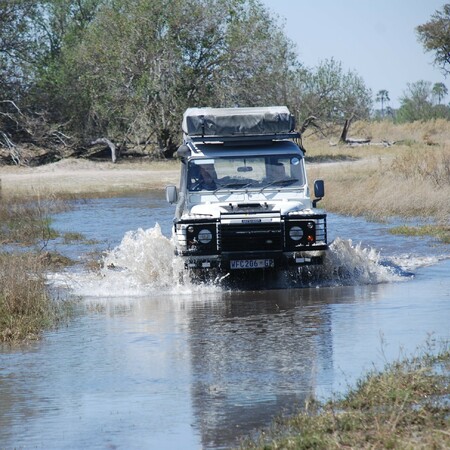
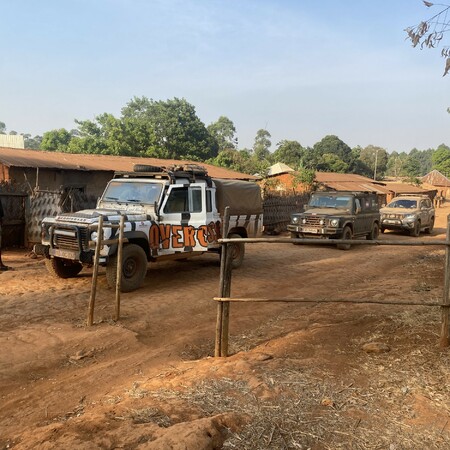
The West Route is the wilder of the two Transafrica variants. It takes you from Tübingen via Gibraltar to Morocco, straight across the Sahara, along the West African Atlantic coast and through the Congo Basin to Cape Town. Along the way, tarmac, corrugated gravel, sand and jungle tracks alternate in a rhythm that no amount of planning can fully anticipate.
You travel as a passenger in the expedition vehicle, accompanied by an experienced guide who organises border crossings, routing and logistics. What awaits you is a genuine crossing of a continent.
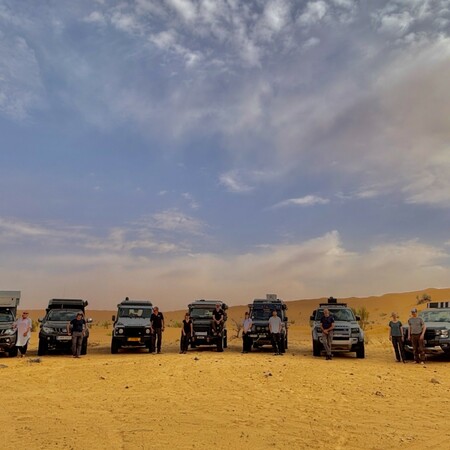
That is exactly what sets this journey apart from the other two versions of the West Route: you need neither your own vehicle nor off-road driving experience, and therefore no Carnet de Passage either. You become part of a small group of six to eight people who plan, wrench, improvise and celebrate together. What is required is patience, physical resilience and a willingness to do without comfort when the route demands it.
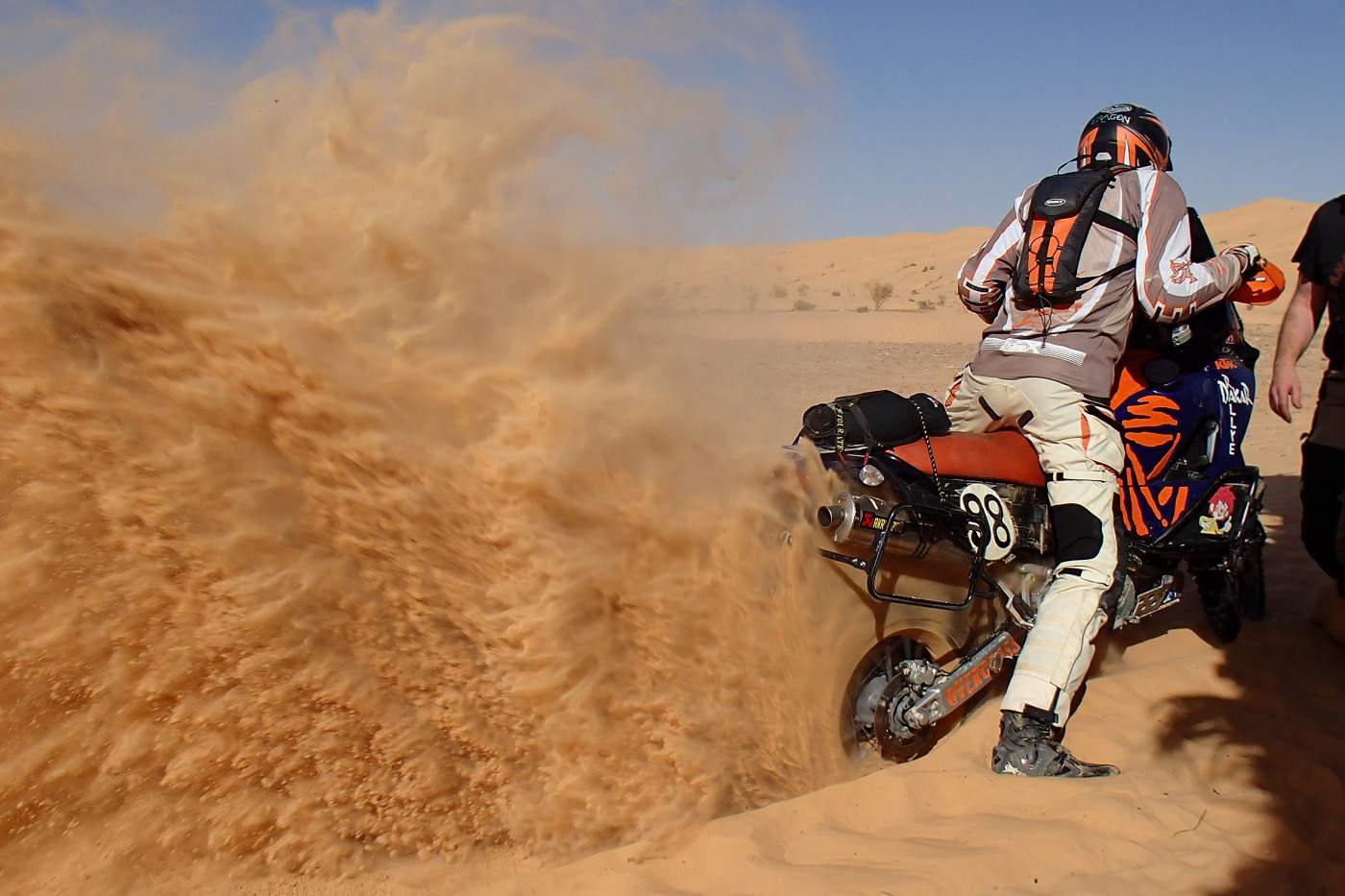
We run the West Route in three variants, depending on how you want to travel. If you want to do the driving yourself, the off-road version is the one for you: see off-road travel in Africa. On two wheels you ride the same route under motorcycle trips in Africa. Every other tour on the continent is collected under experience travels in Africa.
One important point of context: this is an expedition and not a package holiday within the meaning of section 651a of the German Civil Code. OVERCROSS is responsible for planning, expedition leadership, routing and satellite communication. You are responsible for accommodation, transport and meals.
Participation in this Transafrica journey is at your own risk. Every country on the route carries dangers, and on no trip of this kind can we guarantee that the group will reach its destination. Read the safety advice issued by your foreign ministry before you book. Adventurous spirit and mental resilience are required.
At the Cape of Good Hope, one of the most demanding expeditions OVERCROSS has ever run comes to an end. Anyone who has driven this route knows Africa not from a guidebook, but through a windscreen. Do you have questions about the route, the equipment or the preparation? Get in touch and we will go through your planning together.
Key Highlights of the Trip
Key Highlights of the Trip
01
Sahara and High Atlas
01
Sahara and High Atlas
Over the Tizi n'Tichka into the Atlas Mountains and on along old Dakar tracks into the sand of the Sahara.
02
Traces of the Dakar Rally
02
Traces of the Dakar Rally
From Saint Louis to Lac Rose you follow the route of the most legendary rally in the world.
03
Gorillas in Odzala Park
03
Gorillas in Odzala Park
Upriver by boat with rangers to a population of western lowland gorillas.
04
Congo Basin rainforest
04
Congo Basin rainforest
Crossing the second largest tropical rainforest on earth on jungle tracks.
05
Cape of Good Hope
05
Cape of Good Hope
The southernmost point of the expedition and the goal of a crossing of the entire continent.
Germany
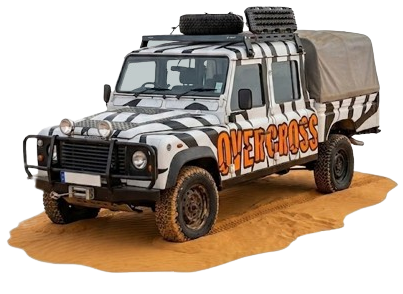
The starting point of the Transafrica adventure: the long western route to Cape Town begins in Tübingen.
Day 1
Tübingen, the expedition sets off
The Transafrica expedition sets off at 5 in the morning from OVERCROSS in Tübingen. We load the last of the equipment, check over the expedition vehicles and roll south. The first day runs through the European winter, with the long western route to the Cape of Good Hope still ahead of us.
France
The journey rolls through France towards the Mediterranean and the warmer south.
Days 2-3
France, south through the Rhône valley
By way of Lyon we roll south through the Rhône valley, past Provence. Motorway kilometres and cold stages are still part of the deal on this first run down. From the passenger seat you watch Europe slowly gain colour, and by evening the Mediterranean coast lies ahead of us.
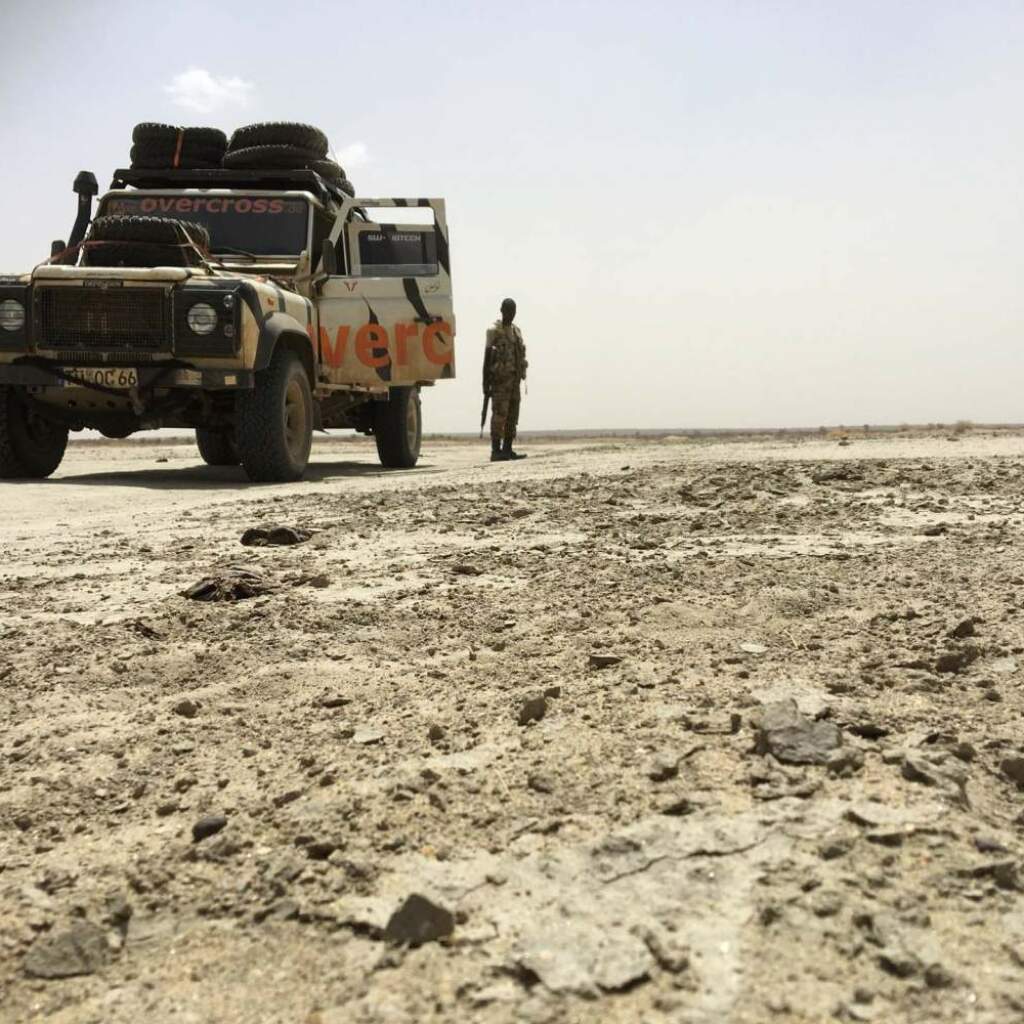
Pyrenees, across the border into Spain
Today we cross the Pyrenees and reach Spain. The journey may begin in Europe, but the climate softens with every pass. We follow the coast through Barcelona and head south, enjoying the first warmer kilometres of the long road ahead.
Spain
By way of Barcelona and Andalusia the route leads to the ferry to Morocco.
Days 4-5
Andalusia, on to Algeciras
The route runs right across Spain by way of Málaga into Andalusia. We cross the wide plains of the Meseta and reach Algeciras, at the meeting point of Atlantic and Mediterranean. Here we get the vehicles and the paperwork ready for the ferry crossing to Africa.
Gibraltar, ferry to Morocco
After roughly 2,500 kilometres we reach Gibraltar and treat ourselves to breakfast in “England” at the foot of the rock, toast included. From there it is only 10 kilometres to the ferry. Within a few hours the continent, the language and the culture all change, and we roll ashore in Morocco.
Morocco
The first African leg: souks, Atlas tracks and the edge of the desert.
Days 6-9
Marrakesh, arrival in Morocco
After the crossing we drive through the green northwest, known as the country's vegetable garden, and reach Marrakesh. A full day is left for the old town, the souks and the tanneries. On the Djemaa el Fna we drift between street performers and spices and stock up for the stages further south.
High Atlas, tracks over the Tizi n'Tichka
The expedition climbs into the High Atlas over the Tizi n'Tichka. Hairpins, loose rock and the first gravel tracks demand full concentration from the driver, while you take the spectacle in from inside the vehicle. On the far side the landscape opens into bare valleys and mud-brick villages on the edge of the desert.
Ouarzazate, heading for the desert south
From Ouarzazate we follow tracks and back roads deeper into southern Morocco, on the trail of the old Dakar pistes. Sand, heat and corrugations take turns. The night is spent in a kasbah in the middle of the desert sand, with a sky full of stars instead of Netflix.
Southern Morocco, on to the Western Sahara border
Along the Atlantic coast the journey closes in on the Western Sahara. The traffic thins out, the space opens up. We fill the tanks to the brim, top up the water and get ready for long stages with no supplies at all in this disputed desert territory.
Western Sahara
Endless straight roads between the Atlantic and the desert define the Western Sahara.
Days 10-12
Western Sahara, the endless coastal track
We pass Tan-Tan and reach the most resource-rich part of the Western Sahara in the Guelmim Oued Noun region. For kilometre after kilometre there is nothing but the Atlantic on the left and the desert on the right. Checkpoints are handled with patience and the paperwork we prepared in advance.
El Aaiún and Dakhla, a stop on the Atlantic
We reach El Aaiún, with around 218,000 inhabitants the largest city in the Western Sahara, and later Dakhla on its narrow spit of land. The Western Sahara is a territory disputed under international law, annexed by Morocco after Spain withdrew in 1975. A ceasefire between the Polisario and Morocco has held since 1991, and the Sahrawi people have been fighting for independence as the Sahrawi Arab Democratic Republic ever since.
Borderlands, on to the Mauritanian frontier
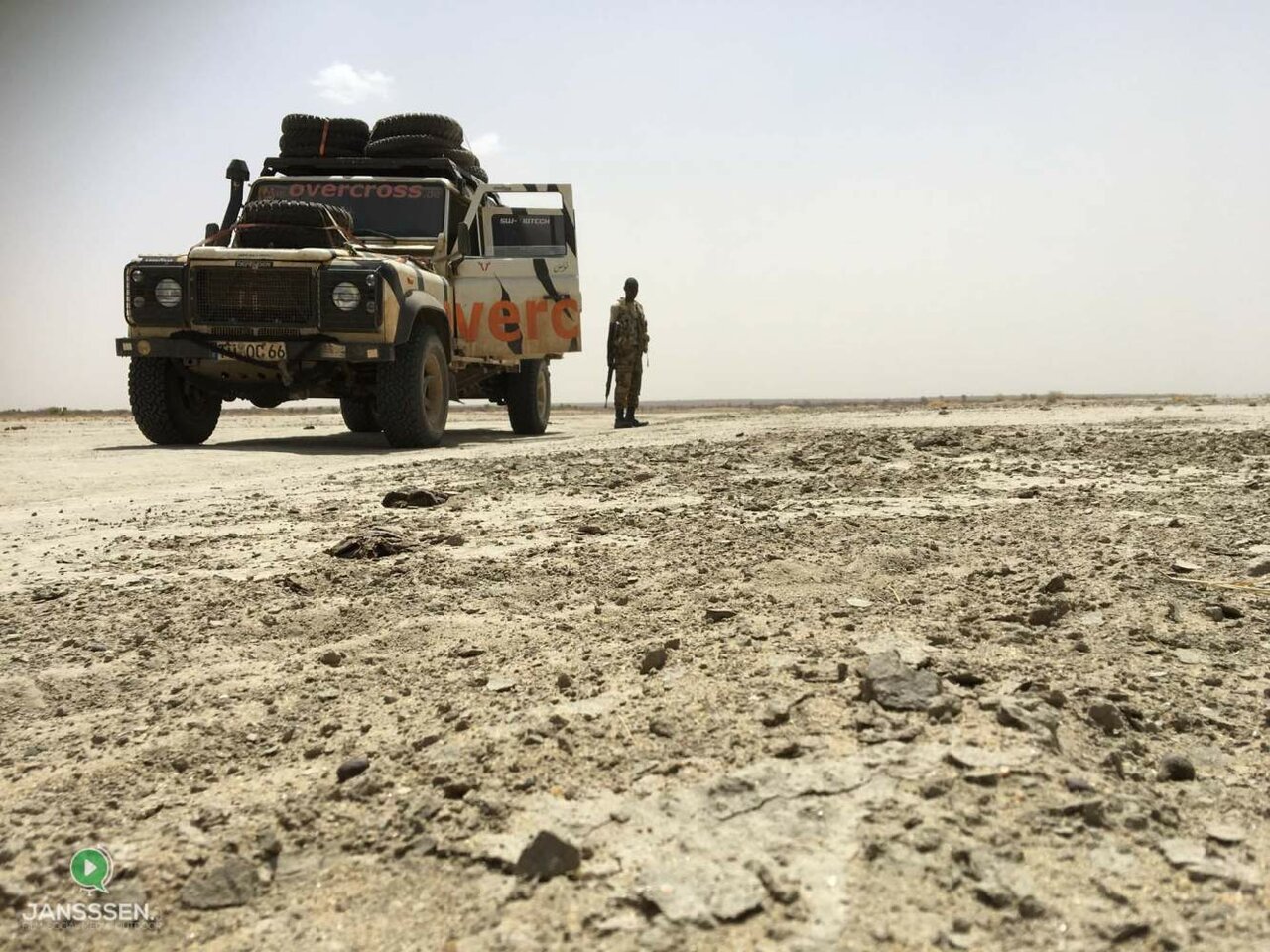
The last stretch of the Western Sahara runs through a mix of sandy plains and rocky desert, on roads that run dead straight for kilometres. Between the border posts at Guerguerat lies a stretch of no man's land lined with mines. Full attention is required here before we reach Mauritanian soil.
Mauritania
Sand, open space and thin supply lines put the expedition to the test in Mauritania.
Days 13-15
Nouadhibou, arrival in Mauritania
The Mauritanian leg of the expedition begins in Nouadhibou. We deal with the formalities and step into a world of sand and open space. On the edge of town the famous ship graveyard rusts away in the Atlantic, and inland runs the iron ore train, which at over two kilometres long is among the longest trains in the world.
Sahara, dunes and corrugated tracks
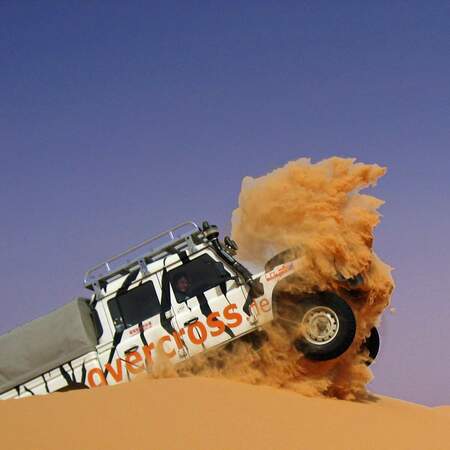
Deep in the Sahara the track takes everything you have. Soft sand, dune fields and corrugations force constant choices of line, and anyone who gets stuck is dug out by the group. Along the coast lies the Banc d'Arguin National Park, where desert and ocean meet head on.
Nouakchott, the capital on the desert's edge
The journey reaches Nouakchott, where desert and sea come together. We restock supplies and fuel and take care of the next visas. In the evening the pirogues land at the fish market with the catch of the day.
Senegal
With Senegal the expedition reaches the green, vibrant West Africa.
Days 16-18
Saint Louis, into Senegal
We enter Senegal at the Diama border post, well away from the notorious commotion at Rosso. The route leads to Saint Louis, a charming colonial town at the mouth of the Senegal River. We are now in the Sahel, the transition between the Sahara to the north and the dry savannah to the south.
Atlantic coast, camp by the ocean
Today the expedition camps right on the Atlantic. A legendary kitchen spoils us with a dinner under the palms that ranks among the highlights of the whole trip. The coffee the next morning is reckoned to be the best on the entire West African coast.
Dakar, visas and logistics
In Dakar we arrange most of the remaining visas, and between offices and embassies there is time to service the vehicles. The city gave its name to what is probably the most legendary rally in the world: the Paris Dakar first set off in 1979 and had its final finish on the beach, not far from Lac Rose, where the salty water shimmers pink in the evening sun. There we raise our glasses to reaching this milestone.
Gambia
A short detour across the Gambia River into the smallest country on the continent.
Day 19
Gambia, ferry across the river
A short detour takes us into Gambia, the smallest country on the continent. We cross the broad Gambia River by ferry. Tropical green and mangroves replace the dry savannah, and the air turns noticeably damper and warmer.
Guinea
Red laterite tracks, green highlands and scarce fuel define Guinea.
Days 20-22
Guinea, green hills and dirt tracks
We enter Guinea at a small border post, a country full of challenges, traditional villages and famously empty filling stations. Fuel has been scarce ever since the main fuel depot in Conakry blew up in December 2023. Red laterite tracks wind through green hills, and sudden downpours turn them into slippery work.
Fouta Djallon, the Guinean highlands
A fuel depot has been laid down for us at a lodge on the Fouta Djallon plateau near the Tinkisso River so that we can get across the country. Waterfalls, escarpments and deep valleys shape the landscape. Not far away lies Dabola, where we go shopping along the railway line to Conakry for African Hermès, Rolex and other luxury brands, which here simply means food.
Southern Guinea, on the way to the border
Depending on fuel availability we reach Kankan, with around 191,000 inhabitants the third largest city in Guinea and a busy hub of markets and mosques. The population is young, hospitable and ethnically diverse, with groups such as the Malinké, Peul and Soussou. In the villages women pound cassava, children wave and laugh, and over open fires steaming pots of rice and smoked fish make an aromatic welcome.
Ivory Coast
Mangroves, cocoa and lagoons accompany the expedition along the Ivory Coast.
Days 23-25
Ivory Coast, arrival among the palms
It does not get any easier. A demanding stretch takes us on to Sopota, a remote oasis in the middle of the wilderness. Palm-lined avenues, cocoa plantations and busy towns line the way ahead, the roads improve and the pace picks up.
Yamoussoukro, through the interior
Passing Yamoussoukro, the expedition rolls through the interior, where the vast basilica appears unexpectedly among the palms. Depending on how the group is feeling we take surfaced link roads or more adventurous routes over sandy tracks and through mangrove forests that run like green veins through the humid lowlands.
Abidjan, a metropolis on the gulf
In Abidjan, the modern economic hub and de facto capital, officially the title belongs to Yamoussoukro, we pause in a genuine city of millions. Tower blocks, lagoons and traffic are a sharp contrast to the desert. We round the day off in a small lodge right on the beach, with freshly grilled fish, good wine and the salt smell of the sea.
Ghana
In Ghana the expedition reaches a milestone on the Gulf of Guinea.
Days 26-28
Ghana, the border and the coast road
Welcome to Ghana. We drive along the South Atlantic through authentic fishing villages. Old slave forts such as Cape Coast are reminders of a dark history, the people are warm, and English makes everyday life easier.
Kumasi, in the heart of Ashanti country
We reach Kumasi, the centre of the Ashanti kingdom. The enormous market has everything from spare parts to fabrics. We use the day to service the vehicles and to immerse ourselves in the lively culture of the interior.
Accra, the milestone at the halfway mark
We fight our way towards Accra through what feels like endless roadworks. In 2025 this turned into a marathon day, a grinding stage that tests you physically and mentally. We spend the night in a simple, clean and lovingly run guesthouse near an industrial estate, unpromising from the outside but surprisingly good inside, and we build in a buffer day for maintenance. A workshop lies a stone's throw away and is the central point of contact for sourcing spare parts.
Questions about the tour itinerary?
Our tour guide is happy to answer any questions about the day-by-day route, stops, and details.
Togo
Togo, the birthplace of the Voodoo religion, is crossed along the coast.
Day 29
Lomé, a short run through Togo
Let's go Voodoo. Togo, the birthplace of the Voodoo religion, is crossed in barely a day. The route follows the coast to Lomé, where palms and Atlantic surf line the capital. At the busy fetish market the region's Voodoo beliefs are on immediate display, before the next border is waiting.
Benin
By way of Porto Novo and Cotonou the expedition rolls towards Nigeria.
Day 30
Cotonou, through Benin to the border
In Porto Novo, the capital of Benin, we pass the parliament building and shortly afterwards reach Cotonou, the buzzing economic centre where mopeds swarm through the streets in their thousands. Another legendary lodge is waiting there, right on the South Atlantic. At sunset we talk through the route ahead together and treat ourselves to a swim in the sea before Nigeria.
Nigeria
Traffic, checkpoints and heat make Nigeria the most demanding leg of all.
Days 31-33
Lagos, the antechamber to hell
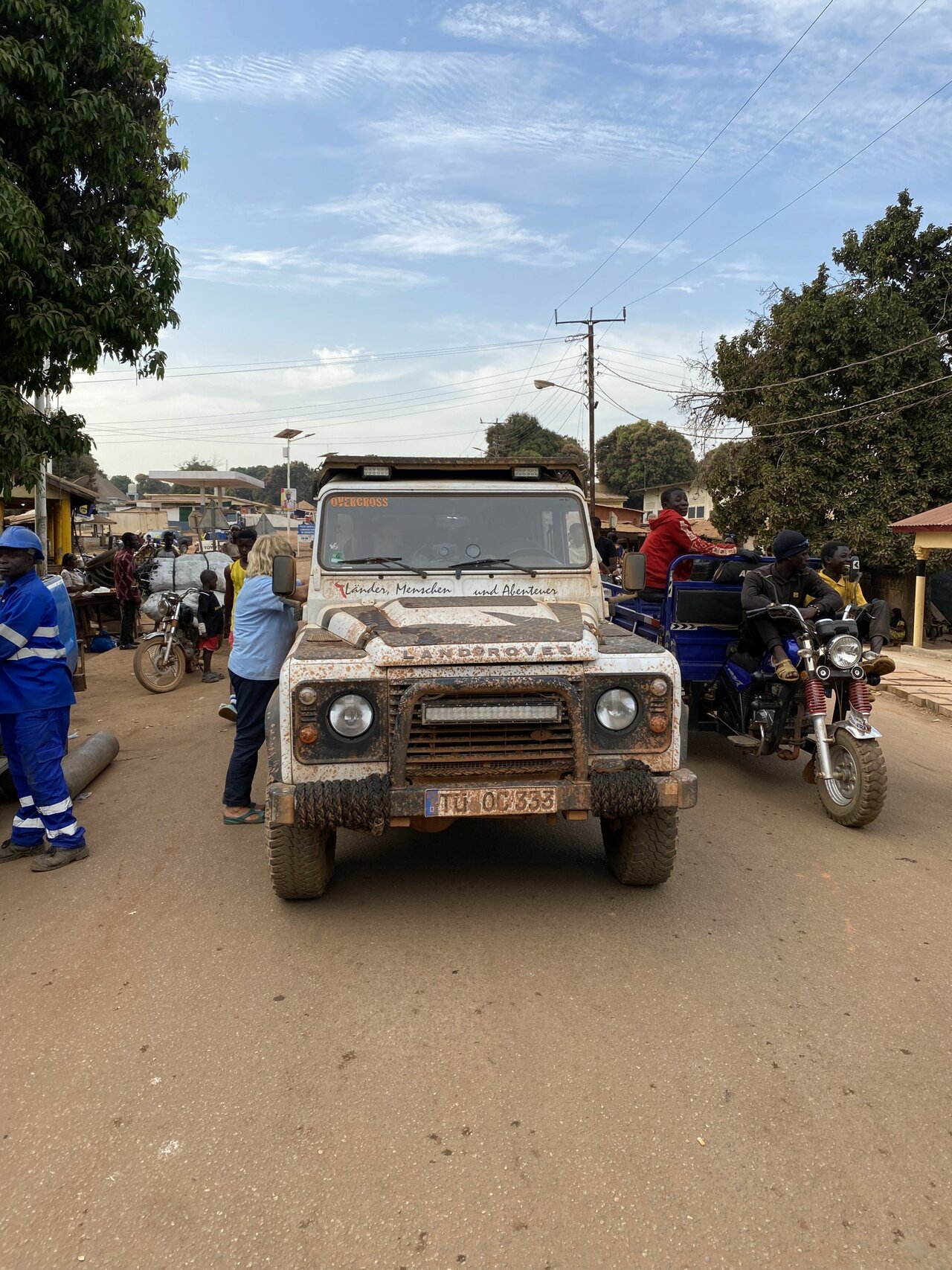
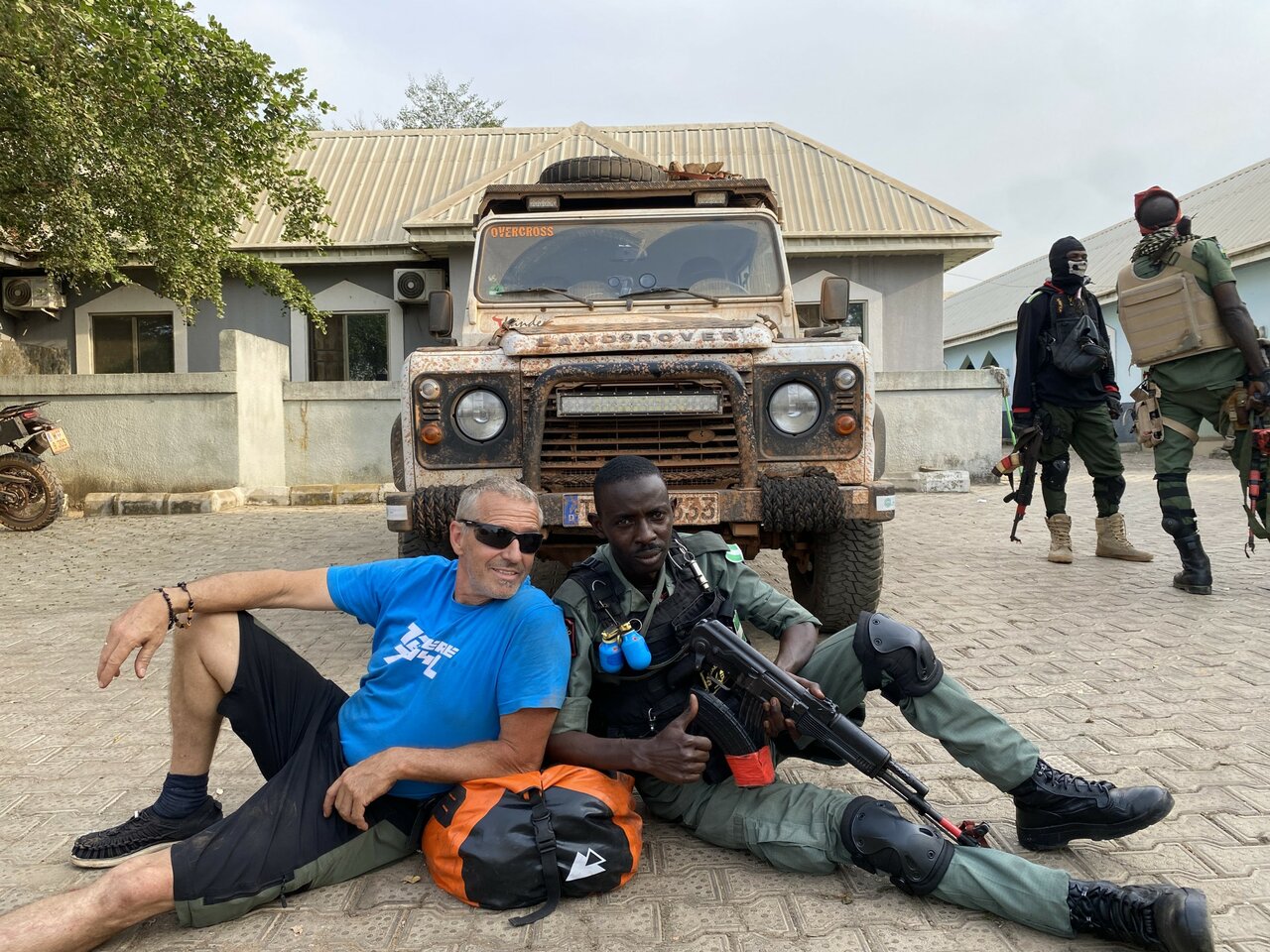
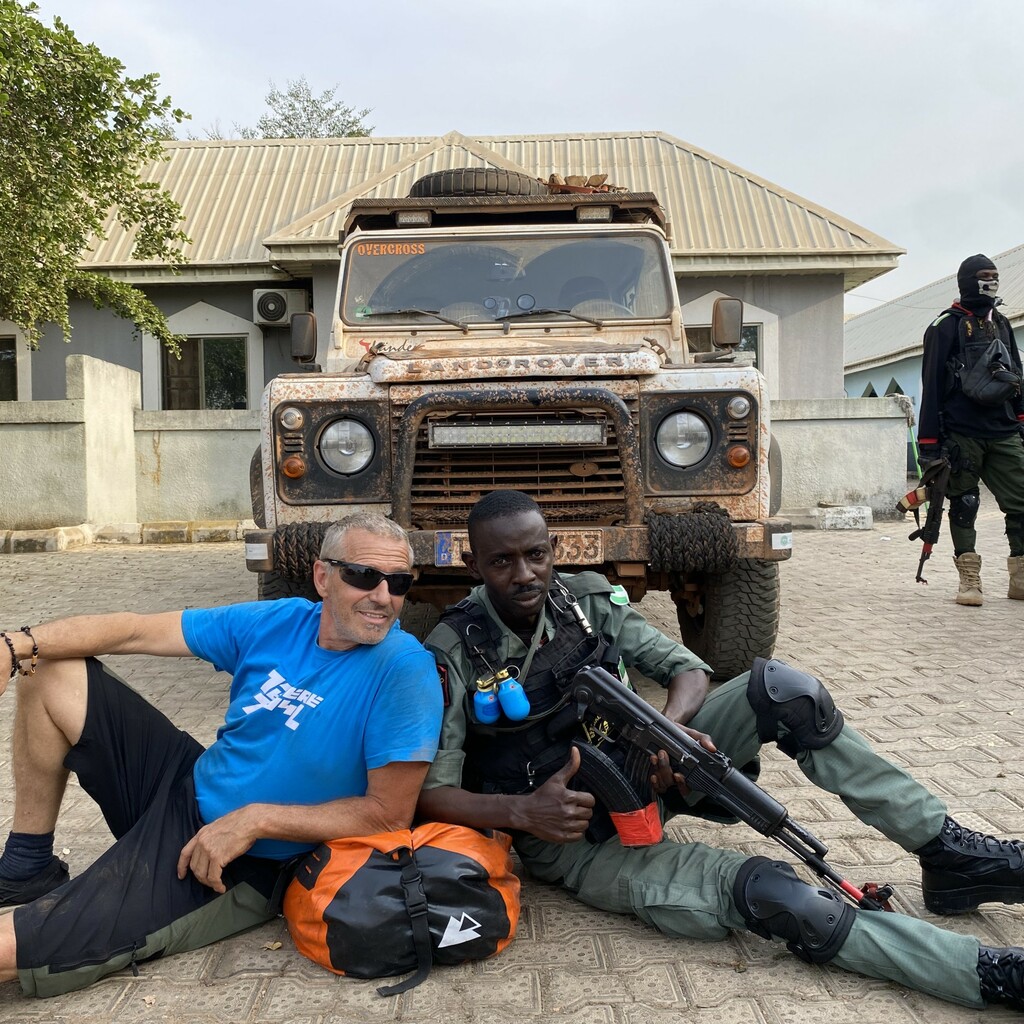
At the border into Nigeria, the most populous country in Africa with around 220 million people, the trick is to keep your nerve. In the late afternoon we reach Lagos, which among ourselves we call the antechamber to hell. The group checks into a well-guarded five-star hotel where the manager is already waiting. He arranges the complex transit through Nigeria in advance, and this is also where the guide meets the local security officer.
Nigeria, through the crowded interior
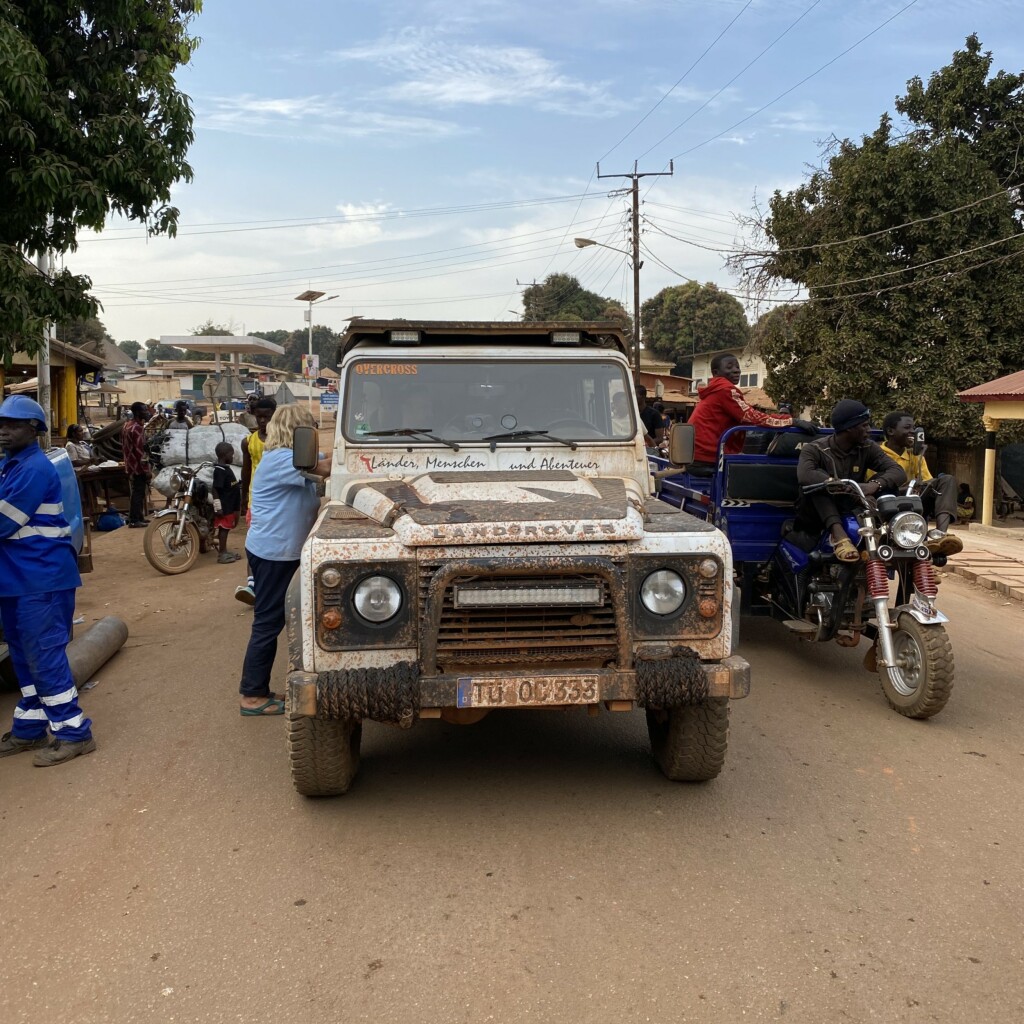
Once the teeming metropolis is behind us, the route runs through varied landscapes and fertile farmland. It feels as though there is a checkpoint every ten kilometres, where the guide produces the papers for the expedition vehicle and you show your passport, often accompanied by drawn out discussions to avoid paying any fees. We are prepared and keep the group close together.
Eastern Nigeria, closing in on Cameroon
We reach the thinly populated regions of the south. Nigeria ranks 161st out of 193 on the Human Development Index, and in these areas that becomes very clear: almost everything you can find on any street corner in Lagos is missing here. The accommodation and camps are correspondingly simple, set along dense rainforest and on the banks of the Ebonyi towards Ugep.
Cameroon
Rainforest, mud tracks and workshop days on the way to Yaoundé.
Days 34-36
The border, the post in the middle of nowhere
In the morning the barrier lifts and we cross into authoritarian Cameroon. After about 20 kilometres we reach a village hut, recognisable as a border station only by its flag, which issues no entry stamps. Without a stamp we drive on and look for somewhere to spend the night.
Cameroon, rainforest and mud tracks
It turns hot, it turns humid, and a spectacular passage awaits through the largely felled jungle of northern Cameroon. Slippery tracks, fallen trees and river crossings make every kilometre hard work. The region is currently being logged and opened up on a massive scale by Chinese investors: huge articulated lorries carrying up to six enormous trunks force their way through the dense rainforest, relics that are in some cases over a hundred years old.
Yaoundé, the capital in the hills
On the way to Yaoundé we spend one more night in the open and use up the last supplies from the expedition kitchen. Once in Yaoundé, after days of dust, sweat and dirt, you treat yourself to a shower and a little recovery in a comfortable four-star hotel. An experienced local mechanic is already waiting here with spanner and hammer in hand to do what needs doing, and depending on the scale of the repairs we schedule a rest day.
Republic of the Congo
In the green heart of Africa: the Congo Basin, gorillas and Brazzaville.
Days 37-39
Congo, the border into the Republic of the Congo
The last and hardest night of the jungle stage comes just before the border, and we get through that one too, true to our motto: no comfort, no compromise. Then the barrier lifts and we are in the Republic of the Congo, also called Congo Brazzaville to avoid confusion with the Democratic Republic of the Congo. We cross the Congo Basin, the second largest tropical rainforest on earth.
Odzala-Kokoua, gorillas in the rainforest
Lowland gorillas still live in Odzala-Kokoua National Park, one of the oldest national parks in Africa. With two rangers we head upriver by boat and after about ten kilometres come across a small gorilla population. Back at camp we leave a donation after dinner. The Republic of the Congo ranks 153rd out of 193 on the Human Development Index, and our visit matters to the rangers because it generates badly needed income.
Brazzaville, on the bank of the Congo
The capital, Brazzaville, is a day's drive away. In this city of more than two million people we restock supplies and fuel. We obtain the visa for the DR Congo, often within an hour, and prepare for the crossing into one of the most demanding regions of the whole journey.
Democratic Republic of the Congo
Rough tracks and Kinshasa test the expedition in the DR Congo.
Days 40-42
Kinshasa, ferry into the DR Congo
Kinshasa lies on the opposite bank of the Congo River. We cross by ferry. Formalities, crowds and traffic call for patience, and even the satellite connection is not always reliable here.
DR Congo, tracks through the south
South of Kinshasa we battle along rough tracks. Bridges are decaying, fuel is scarce, and the distances between villages are long. We travel self-sufficiently, share fuel and water and keep the group close together.
Borderlands, heading for Angola
The final stretch of the DR Congo brings us to the Angolan border. The landscape slowly opens up and savannah replaces the dense forest. After the hard days in the jungle, everyone is looking forward to drier tracks and firmer ground.
Angola
From Luanda across the highlands to the Serra da Leba in the south.
Days 43-46
Angola, the border and wide open country
Once across the border, Angola opens up with wide, thinly populated landscapes. After years of war the country is on the move, and in places the roads are surprisingly good. Broad savannah and baobab trees fill the horizon.
Luanda, coastal metropolis on the Atlantic
On the coast we reach Luanda, the expensive and lively capital of Angola. Tower blocks stand next to markets, with the Atlantic glittering behind them. We stock up, change money and plan the long stages through the south of the country.
Angola, long stages heading south
The route runs for hundreds of kilometres through southern Angola. Filling stations become rare, so we fill the jerrycans. The landscape grows barer and already hints at the desert of Namibia. In the evening we camp far from any settlement.
Lubango, before the Namibian border
Near Lubango the route winds over the Serra da Leba with its famous hairpins, among the most spectacular mountain roads in southern Africa. After that it drops into drier country. We close in on the Namibian border and get the papers and the vehicles ready for the second to last change of country.
Namibia
Wide desert tracks, Etosha and the dunes of the Namib.
Days 47-50
Namibia, the border and the first desert
We reach Namibia, and at once everything becomes wider and emptier: straight gravel roads, endless sky and hardly any traffic. After the chaos of the tropics the country feels like a release. The relaxed part of the journey begins right here.
Etosha, wilderness and wildlife
In Etosha National Park we go on a game drive through the diverse wildlife. The reserve covers around 22,000 square kilometres and is one of the most important wildlife areas in Africa. Elephants, zebras and antelope cross the tracks, and in the evening the salt pan glows in warm light.
Windhoek, supplies before the final leg
After that we carry on to Windhoek, the capital of Namibia. The city offers an interesting mix of African life and clear traces of the colonial era. For us it is an important supply point before the jump onto the last leg into South Africa.
Namib Naukluft, dunes and the Orange
We continue into the Namib Naukluft National Park, one of the most impressive desert regions in the world. Past the red dunes of Sossusvlei and vast granite formations we approach the Orange River, the border with South Africa. The contrast of red sand and blue sky is one of the most striking sections of the whole journey.
South Africa
The finish: across the Orange and over the Swartberg passes to the Cape of Good Hope.
Days 51-55
South Africa, across the Orange River
We cross the border into South Africa and reach Neilersdrift. The landscape along the Orange River is picturesque, with vineyards and farms appearing in the sparse surroundings. Good roads allow brisk progress, but we savour every kilometre, because the final leg has begun.
Swartberg, passes in the hinterland
Heading south we cross the Swartberg region, known for its impressive mountain passes and the historic Swartberg Pass road. Twisting passes and red rock faces define the day. The nights are cool and the space is immense.
Winelands, through the Cape region
We roll towards the coast through the green winelands of the Cape region. After desert and jungle, the vines and mountains feel almost European. We allow ourselves a quiet stage and slowly let the past weeks sink in.
Cape Town, on to the Cape of Good Hope
Finally we reach the southernmost point of the expedition: the Cape of Good Hope, a symbolic milestone and one of the best known sights in South Africa. Table Mountain towers over the city. Here is to completing one of the most demanding expeditions OVERCROSS has run in the past quarter of a century.
Cape Town, farewell and the close of the journey
The last day is a relaxed one. In the morning the group comes together one final time while the OVERCROSS team hands the expedition vehicles back and settles everything else on site. After that you have free time in Cape Town, for Table Mountain, the waterfront or simply a coffee in the sun. Over a celebratory farewell dinner in one of the best restaurants in Cape Town we look back over the entire journey. Anyone who wants to can extend the stay privately before everyone heads home.
Want a detailed description of all tour days?
Our expert will walk you through the full itinerary and answer all your questions.
PRICE
from
€ 16,839
/ person
Price Options
Participants in the expedition vehicle
€ 16,839
Additional Options
All-In Package from PR services
/ Person
€ 2,999
Trip includes
- Your seat in the expedition vehicle for the entire West Route
- Pre-trip briefing for everyone travelling on the expedition
- Online tour guide, connected to us via satellite tracker
- Use of the satellite phone during the trip, or the guide's mobile phone
- Travel security certificate (insolvency protection under section 651r of the German Civil Code) is mandatory on all OVERCROSS trips
- Family and friends receive a location and status report of the expedition from OVERCROSS, on request
- Maps for the crossing of Africa
- Support with visa questions, plus checklist and contacts
- Tour folder with travel information to prepare for the Transafrica Expedition
- Equipment and packing list to prepare for the expedition
- Post-trip reunion of the expedition
- Starting and registration fee for the expedition
Service
Price breakdown of the expedition
Participation fee (starting and registration fee)
- Starting fee for the Transafrica Expedition
- Your seat in the expedition vehicle for the entire West Route
- Organisation of the pre-trip briefing for everyone travelling
- Tour guide for the expedition, on the ground and online via satellite tracker
- Fully equipped expedition vehicle (satellite phone, tools, cool box)
- Day by day expedition routing for the group
- Weekly status report for family and friends via satellite link, on request
- Use of the guide's map material
- Support with visa questions, checklists and contacts
- Tour folder with travel information, equipment and packing list
- Post-trip reunion of the expedition, on request
- Organisation of border crossings and tour logistics by the guide
This participation fee covers only the organisation, running of and participation in the expedition. Taking part does not constitute a package holiday under section 651a of the German Civil Code.
To keep your costs down, the external services listed below are provided by PR-Services, an outside contractor. They are not part of the base package, but we recommend them explicitly.
All-in package from PR-Services: €2999
The services listed below are offered by PR-Services, an outside contractor. They are neither part of the Transafrica Expedition nor bookable as an add-on through OVERCROSS.
- All camping nights in a double room during the expedition
- Hotel and lodge nights, every third night including breakfast as a free upgrade
- Airport transfer in Cape Town for the closed group
- Flight bookings, optional at extra cost
The price for this organisational package is payable directly to PR-Services by invoice and represents a significant financial and logistical saving for you.
FAQS
-
Do I drive myself or travel as a passenger?
On this variant you travel as a passenger in the expedition vehicle. You are part of the group and help with maintenance, loading and camp, but you are not necessarily behind the wheel yourself.
-
What do I need to bring?
You should be physically resilient and mentally stable, able to handle long stages in heat and dust, and prepared to go for days without fixed comfort. Being a team player matters more than driving experience.
-
Is this a package holiday?
No. The expedition is a shared undertaking under conditions that are at times unpredictable, and it does not constitute a package holiday under section 651a of the German Civil Code. Route, stages and accommodation can change at short notice.
-
What travel documents do I need?
You need a passport and visas for every country on the route, which you arrange yourself. We give you a checklist, contacts and support with any questions. You do not need a Carnet de Passage on this variant, because you are not bringing a vehicle of your own.
-
How do we communicate along the way?
The guide is permanently connected to us via satellite tracker. You can use the satellite phone or the guide's mobile. On request, your family receives a regular location and status report.
-
Where do we sleep?
Mostly in camp, sometimes in simple lodges, occasionally in hotels in larger towns. Accommodation is not included in the participation fee, but it can be covered through the all-in package from PR-Services.
OVERCROSS note on itinerary
The above travel description is a non-binding online proposal and does not represent a binding travel itinerary. We expressly reserve the right to make changes to the route, schedule, and accommodations (§ 651d BGB in conjunction with Art. 250 EGBGB). The terms and conditions of OVERCROSS apply.Terms and Conditions of OVERCROSS
Similar Adventures
offroad-travel
6 tours
Featured
 Featured
 Featured
Send request

How did you
hear about us?