
Botswana

An Okavango Delta safari shows you the largest inland delta in Africa. The Okavango River flows 1,600 km from the highlands of Angola and ends in the sand of the Kalahari without ever reaching the sea. Around 11 billion cubic metres of water spread over up to 15,000 km² every year, and 95 percent of it evaporates. The delta has been a UNESCO World Heritage Site since 2014. You experience it from a mokoro, from a 4x4 in the Moremi Game Reserve and from a light aircraft out of Maun.
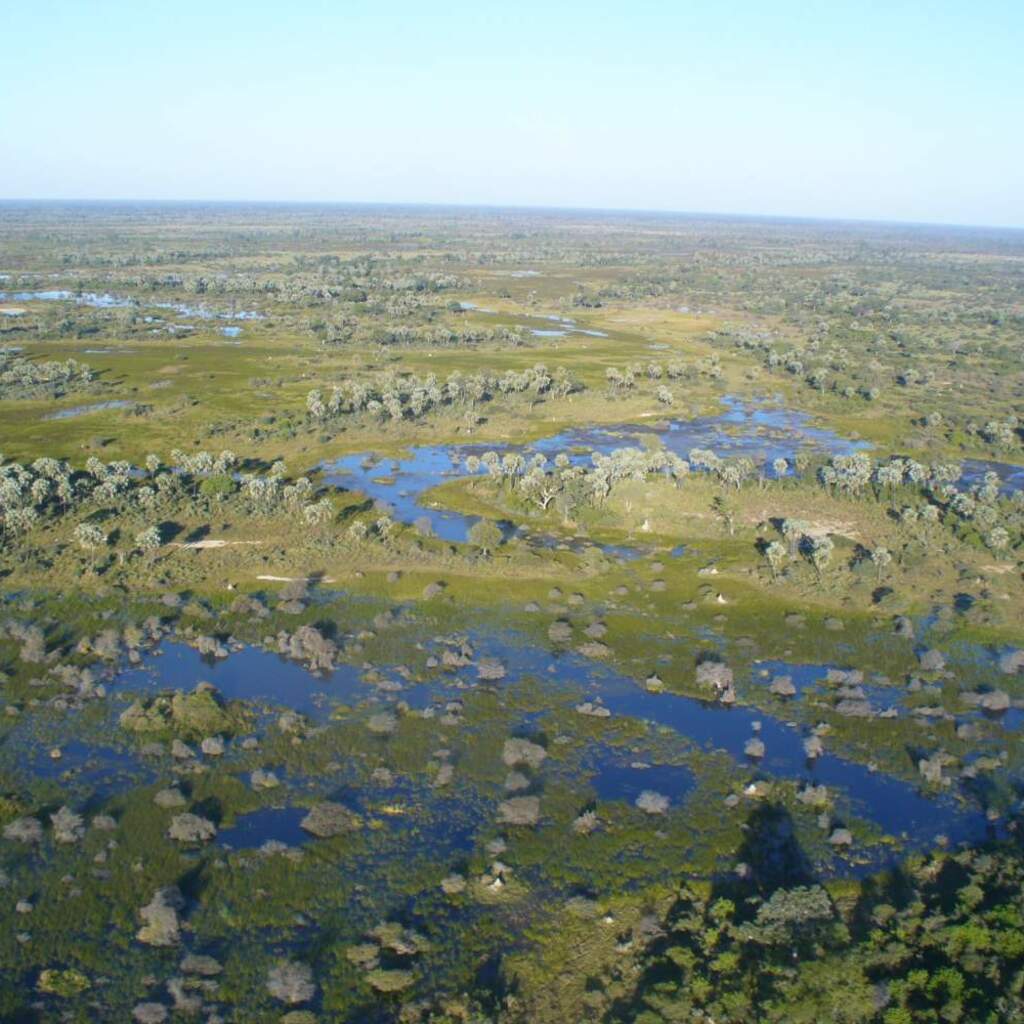
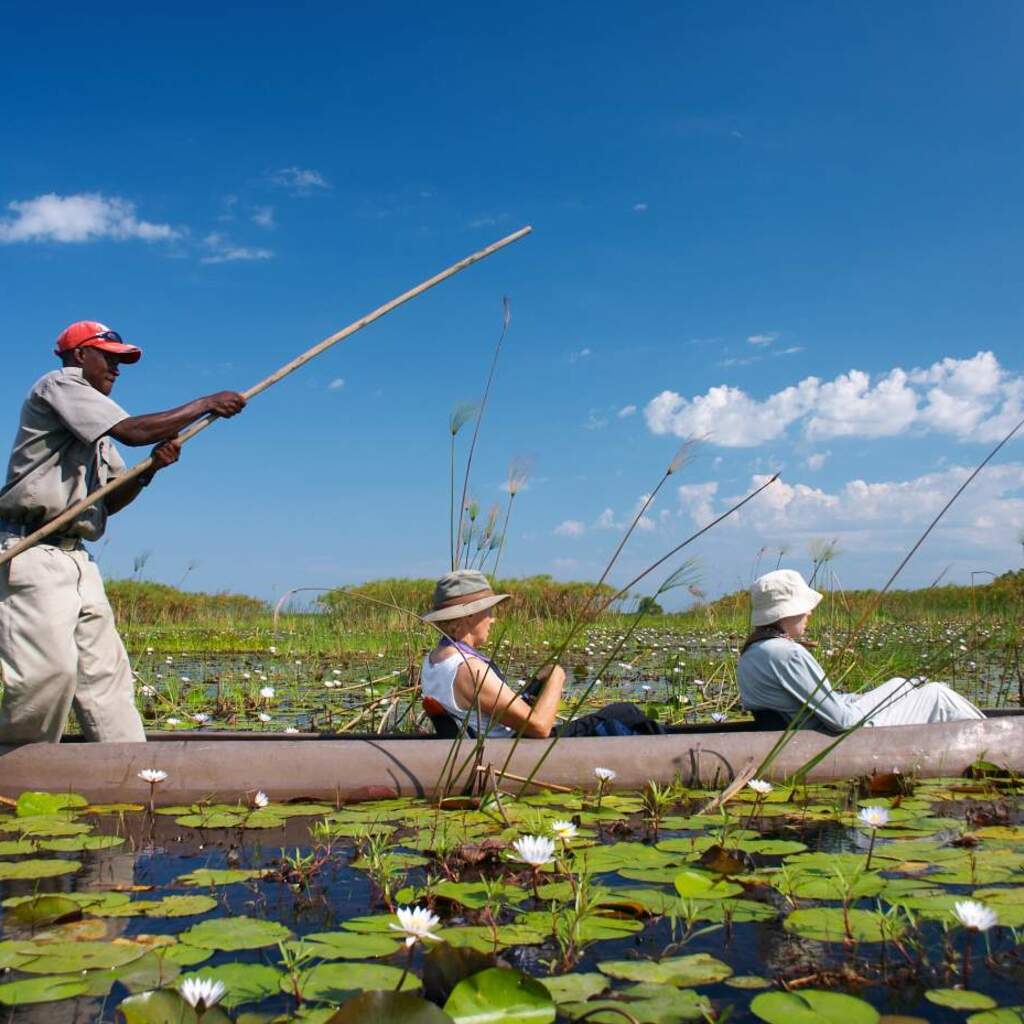
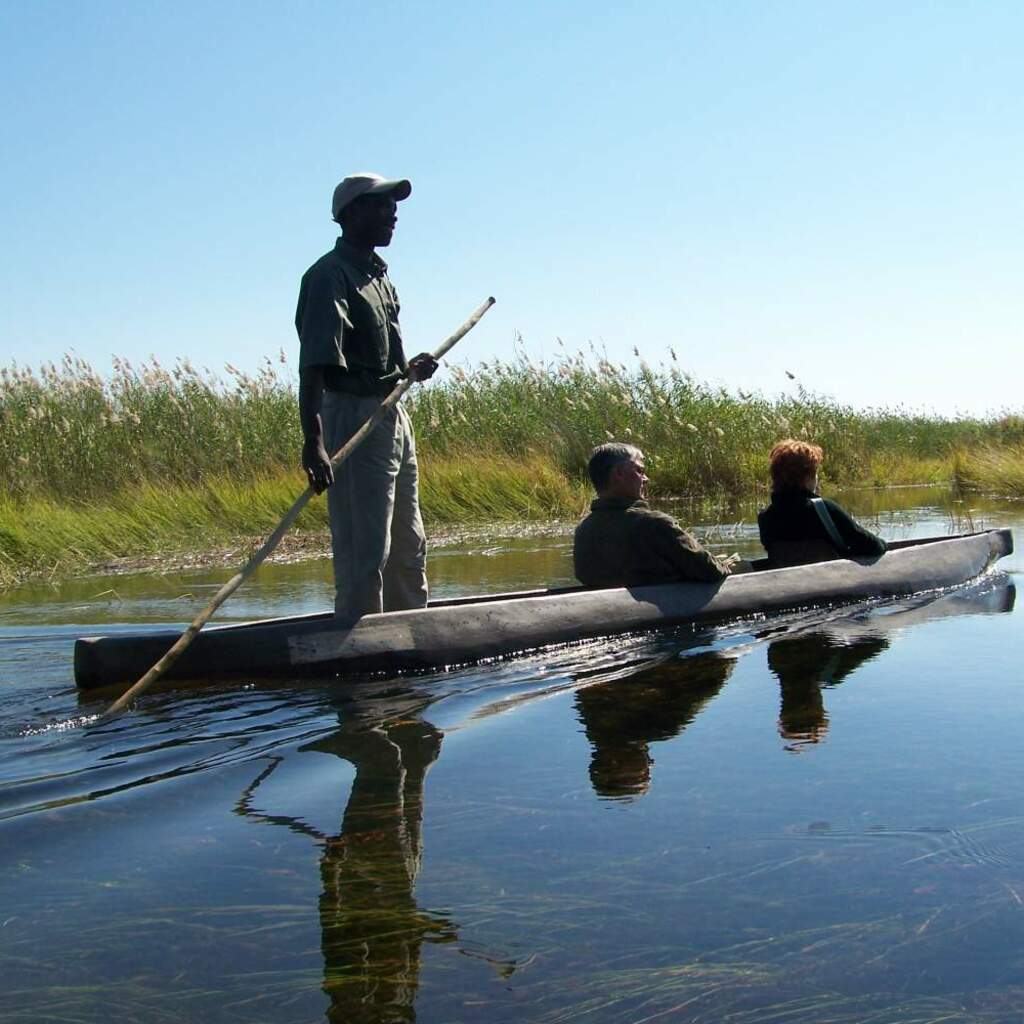
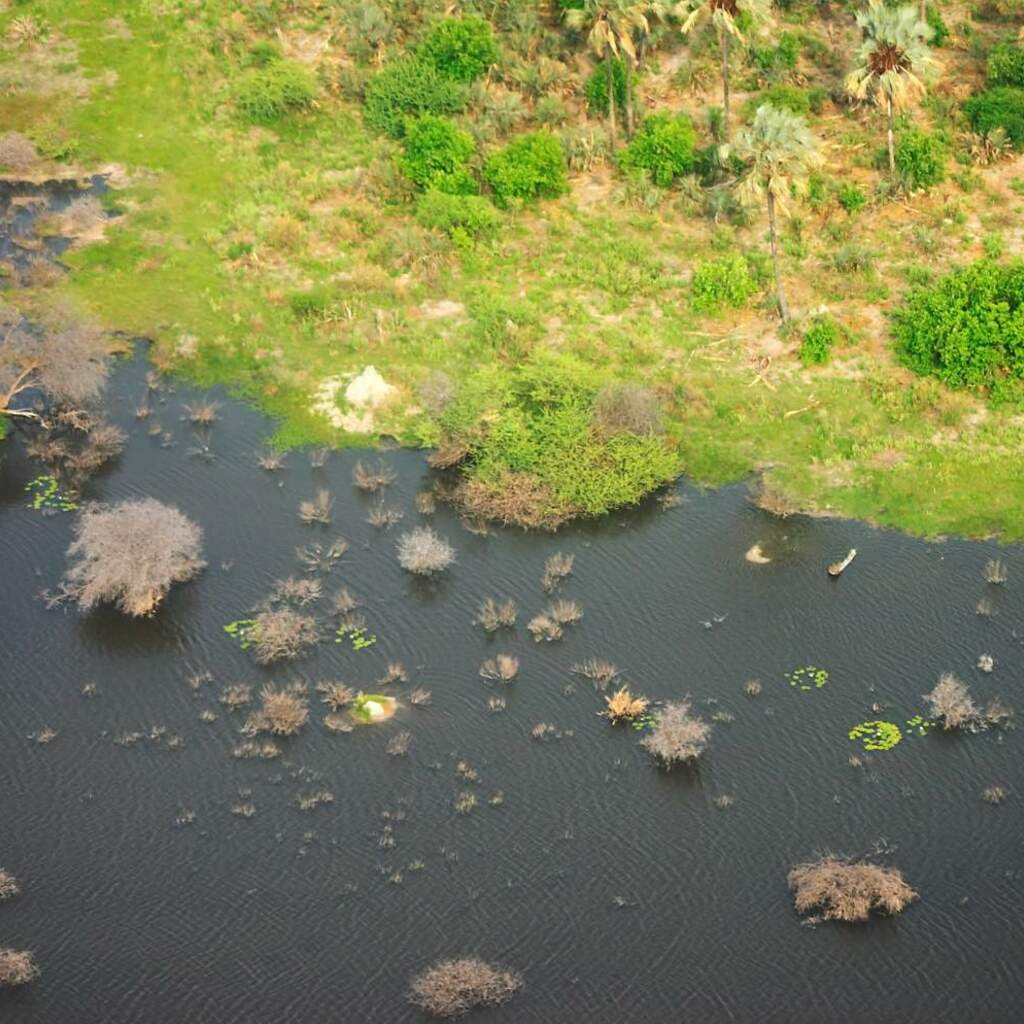
The Okavango enters Botswana at Mohembo as a 15 km wide river lined with papyrus. For the first 100 km, the so-called Panhandle, it stays a single stream. Then it fans out along a fault line into dozens of channels spread over 6,000 km² of permanent swamp and a further 6,000 to 9,000 km² of seasonally flooded plains. In between lie thousands of islands, the smallest the size of a termite mound, which is often where they started, the largest, Chief's Island, around 70 km long and 15 km wide.
On the eastern edge of the delta lies the Moremi Game Reserve, proclaimed by the Batawana in 1963, just under 5,000 km² in size and the only part of the delta with a public track network. The rest is divided into concessions with only 1 to 3 camps each. On a drive through Moremi, mopane woodland, acacia savannah, palm islands and open floodplains follow each other within a few kilometres.
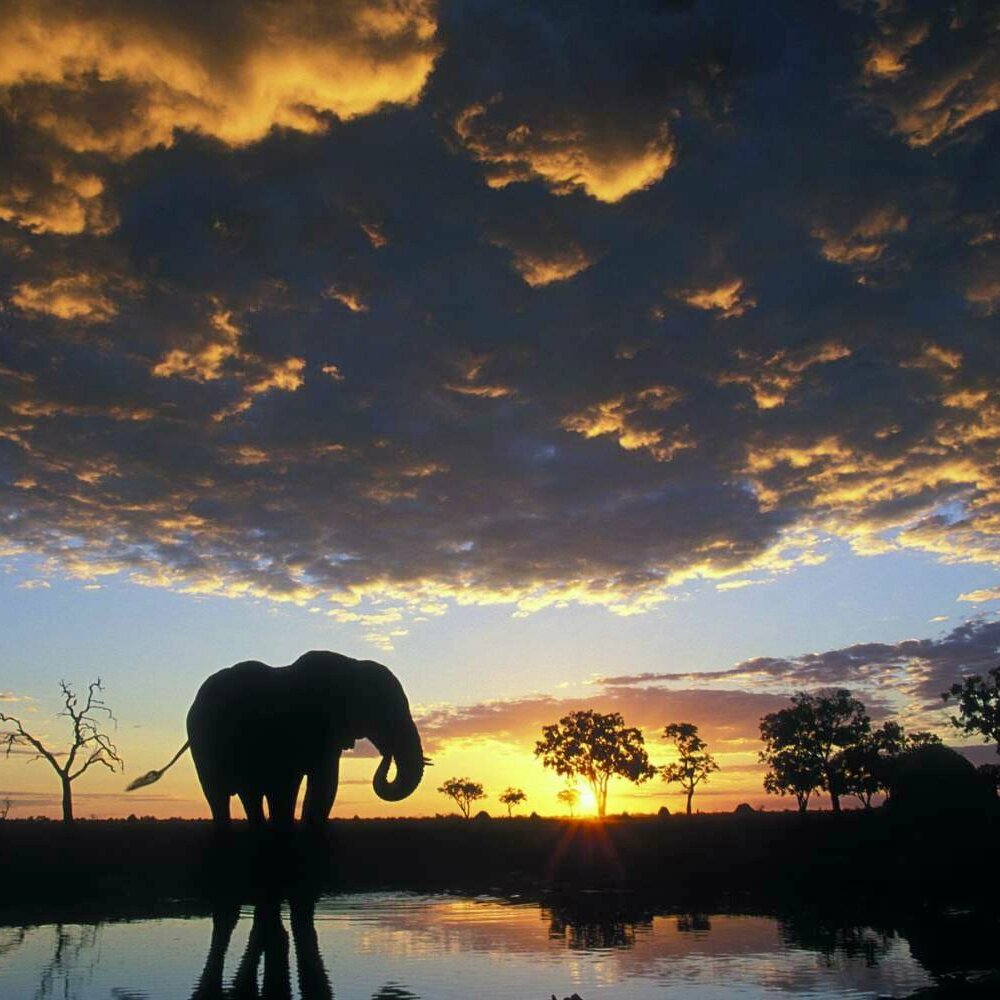
122 mammal species live in the delta. The most common large animal is the red lechwe with around 88,000 animals, an antelope that flees from predators through hip-deep water. Botswana holds the largest elephant population on earth with around 130,000 animals, and in the dry season tens of thousands of them stand along the delta's channels. Buffalo herds reach 1,000 animals. Add hippos and Nile crocodiles in every deeper channel, sitatunga in the papyrus, lions, leopards, cheetahs, spotted hyenas and one of the most stable populations of African wild dog on the continent.
444 bird species have been recorded, among them African fish eagle, wattled crane, carmine bee-eater, saddle-billed stork and Pel's fishing owl, which brings birders from all over the world to Botswana. 71 fish species swim in the channels, the tigerfish at up to 15 kg being the best known. Around 1,300 plant species, 64 reptile and 33 amphibian species complete the list that led to the delta's inscription as the 1,000th UNESCO World Heritage Site in 2014.


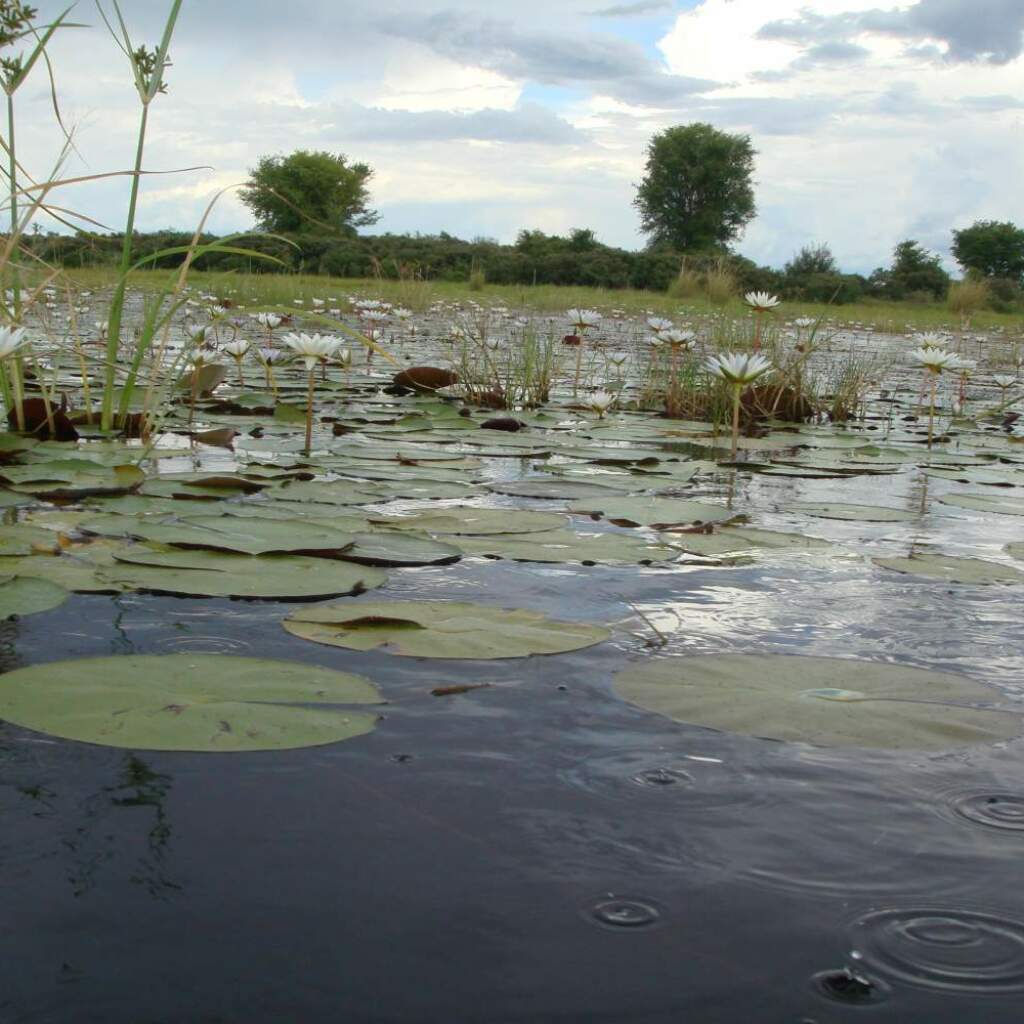
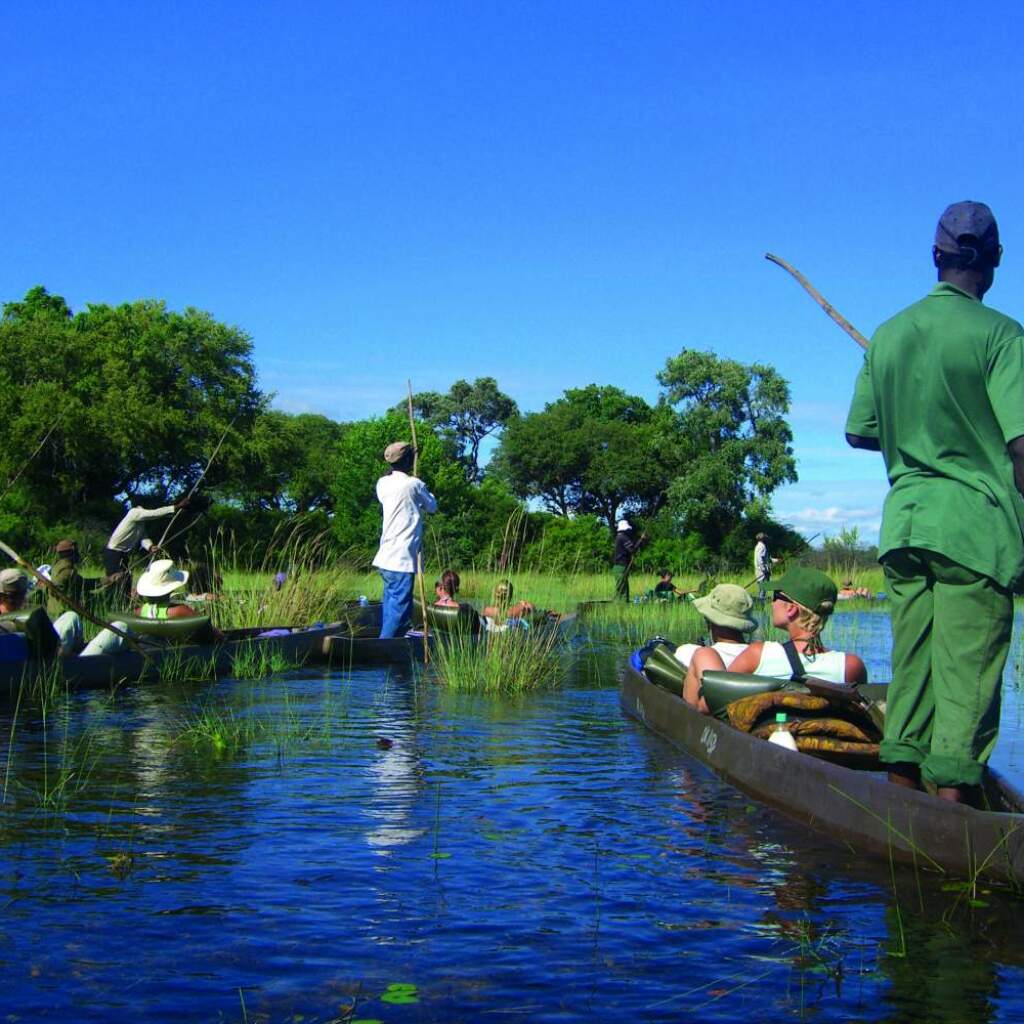
The delta's water comes from the highlands of Angola, where most of the rain falls between January and February. The Okavango needs around one month before the wave reaches the Botswana border at Mohembo 1,200 km further south, usually in March. Then it slows down: with a drop of only around 60 metres over 250 km of delta, the flood takes another 4 months to reach the southern edge at Maun. So the water arrives when the ground is at its driest.
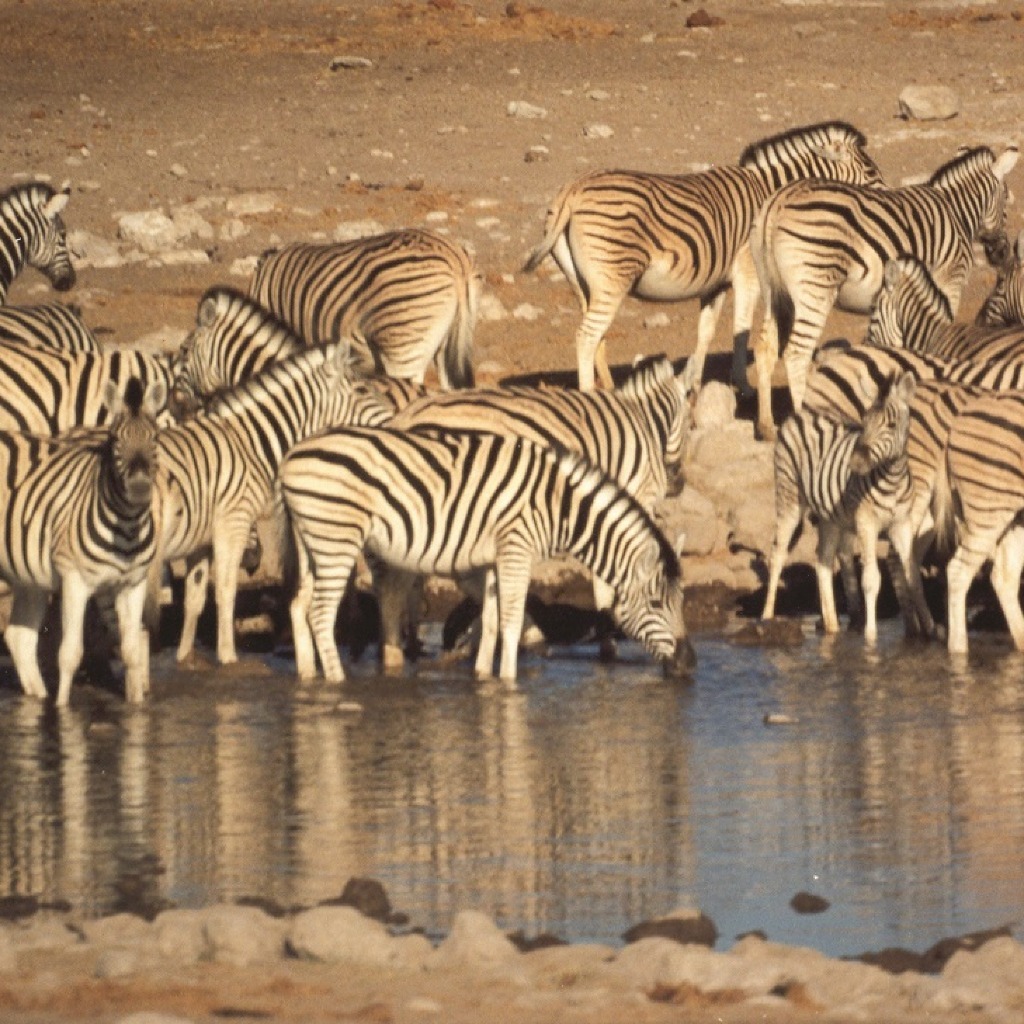
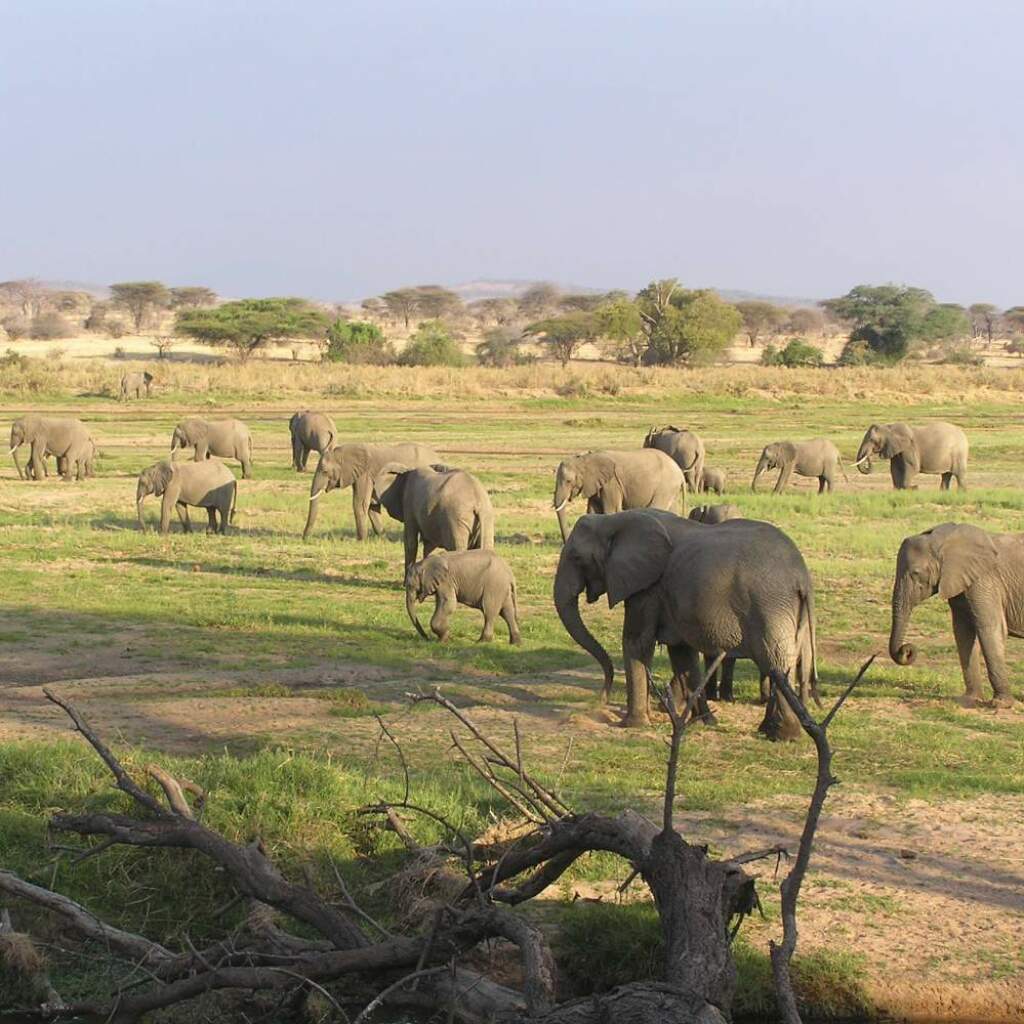
Between June and August the delta is at its highest and widest, in a good year spread over up to 15,000 km². The Kalahari around it has been without rain for months by then, and the animals crowd onto the floodplains. Lechwe herds follow the water's edge metre by metre, elephants stand belly-deep in the channels, buffalo herds of several hundred move back and forth between the islands. For the mokoro these are the best months: shallow channels that were still dry in April can now be poled.

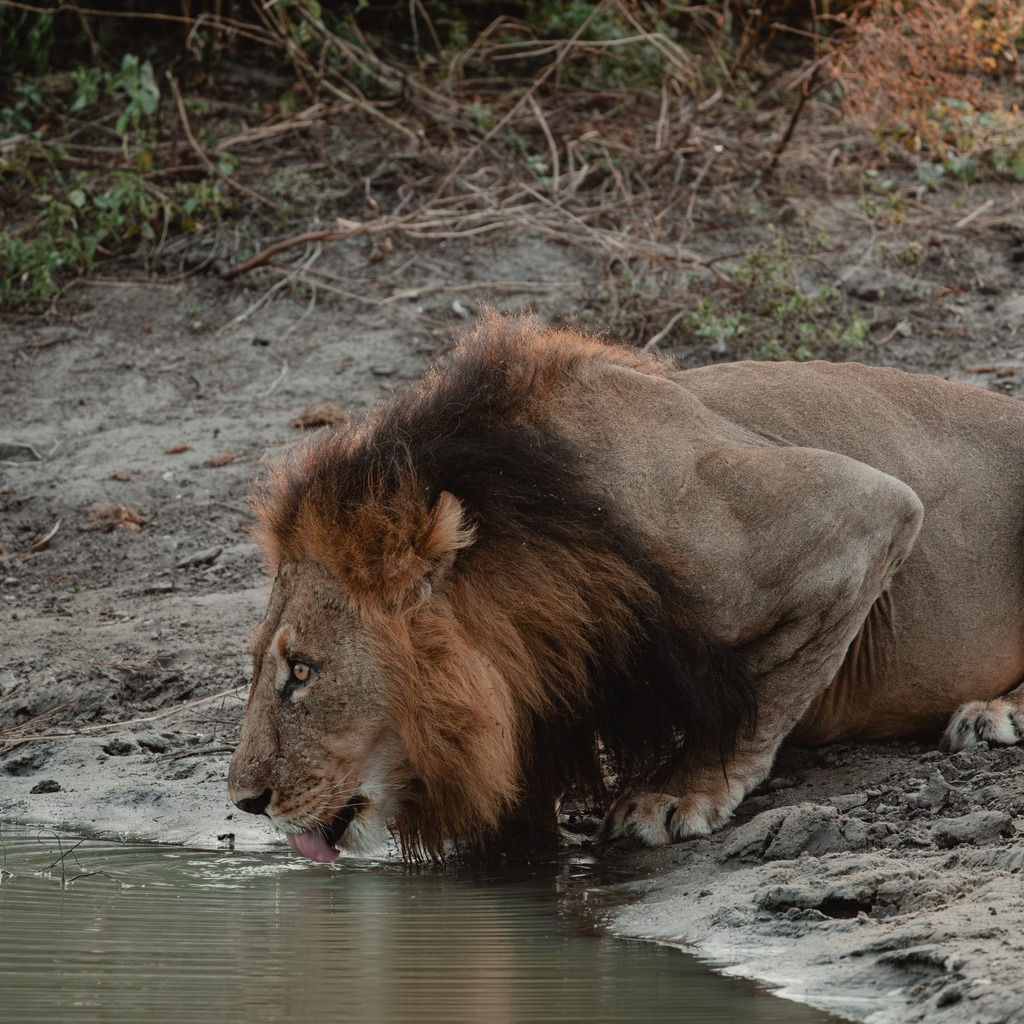
Around 11 billion cubic metres of water flow into the delta every year. About 95 percent evaporates or is taken up by the plants, 2 to 3 percent seeps into the ground, and only the rest leaves the delta via the Thamalakane at Maun and the Boteti towards the Makgadikgadi salt pans. Because the delta has so little outflow, its channels are remarkably clear: the plants filter out sediment and salts, the salt collects in the interior of the islands, and that is why the water in the delta stays fresh and drinkable.
The delta runs on two calendars that work against each other: the local rain and the flood from Angola. The rain falls from November to March, around 450 mm a year on average in Maun, mostly as afternoon thunderstorms. The flood arrives exactly when the rain has stopped: it reaches the upper delta in March and April, stands highest from June to August and recedes again by October.
From May to October the tracks in the Moremi Game Reserve drive best, the days are dry, and the nights in June and July are cool at down to 5 °C. From August to October most animals stand at the water, in October at daytime highs around 40 °C. Mokoro trips depend on the water level: from May to September most channels can be poled, in November and December the edges of the delta can get too shallow.
From December to March Moremi is green, the tracks are muddy or flooded in many places, and driving time between camps doubles. In return these are the months with the most newborn animals, the best birding and the lowest lodge rates. Some camps close in January and February.
The Moremi Game Reserve costs foreigners 120 pula per person per day, around 9 US dollars, plus 50 pula per day for a foreign-registered vehicle. The concession areas around Moremi (the NG areas, Khwai for example) charge their own community levies, and mokoro trips are paid to the polers' village communities. Whether park fees are included in the tour price is listed under the services of each tour. You pay at the gates in pula; cards are not accepted everywhere.
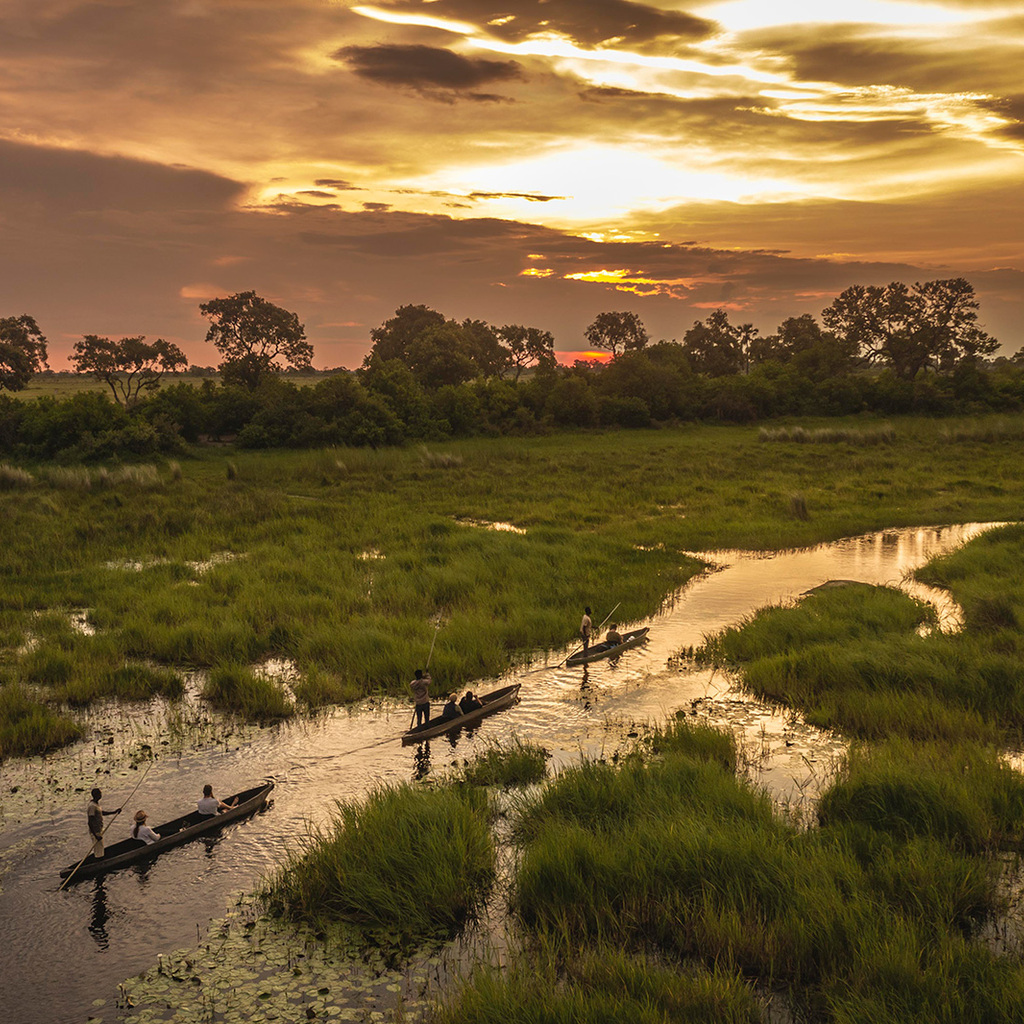
The gateway to the delta is Maun with its airport MUB. From Johannesburg you fly in around 1 hour 45 minutes, from Frankfurt with a change in Johannesburg or Addis Ababa in about 15 hours. From the airport it is 100 km to the South Gate of the Moremi Game Reserve, the last 60 km or so on sand track, so allow 2.5 to 3 hours in a 4x4. The camps in the interior of the delta are reached only by light aircraft, 20 to 40 minutes from Maun. Our group tours start in Maun, Windhoek or Victoria Falls.
Plan at least 3 nights: 2 days of game drives in Moremi and 1 day in a mokoro with a walk on an island. If you want to see the floodplains and the wild dogs of Khwai, stay 4 to 5 nights. Depending on the route, our tours spend 2 to 4 days in the delta and combine it with Chobe National Park, 300 km away, and the Victoria Falls. The scenic flight over the delta takes 45 minutes to 1 hour and is most worthwhile from June to September.
The gates open at 6:00 and close at 18:30, in the winter months from April to September at 6:30 and 18:00. Driving off the tracks is not allowed, and night drives exist only in the private concessions outside the reserve. The speed limit is 40 km/h, and getting out of the vehicle is allowed only at the campsites and the designated spots. The camps are not fenced: elephants and hyenas walk through at night, food stays in the vehicle, and after dark you stay in camp.
The Okavango Delta is a malaria area with the highest risk in Botswana, above all from November to May. Prophylaxis is recommended all year round, plus long clothing from dusk, mosquito repellent and a mosquito net. The water in the delta is unusually clear, but in the camps you still drink filtered water. Some areas have tsetse flies, and dark clothing attracts them. A yellow fever vaccination is only required if you enter from a yellow fever country. The nearest hospital is in Maun.
The camps in the concessions are reached only by light aircraft from Maun. Most have 6 to 12 tents or chalets on wooden platforms, with game drives, boat trips and mokoro included in the rate. Expect 500 to well over 2,000 US dollars per person per night. Our lodge safari uses lodges on the edge of the delta that can be reached by vehicle and cost considerably less.
Permanent tented camps with beds and en-suite bathrooms stand in the Khwai concession on the north-eastern edge of Moremi and around the reserve. Our small group tours sleep in camps like these: you sleep in a tent, elephants stand at the fence post at night, and the food comes from the camp kitchen. The nights in June and July get cold at 5 °C, so a warm sleeping bag belongs in your luggage.
There are 4 campsites in the reserve: South Gate, Third Bridge, Xakanaxa and Khwai North Gate. None are fenced, all have showers and water, and all must be booked months in advance; in the high season from July to October they are full. Our overland tours camp with their own equipment and cook, you only pitch your tent.
June to October. The delta stands highest from June to August, the tracks in Moremi are dry, and the animals gather at the water. In October the density of animals is greatest, but it gets as hot as 40 °C. From December to March it rains, the tracks are muddy, but rates are lower and the birdlife is at its richest.
At least 3 nights: 2 days of game drives in Moremi and 1 day in a mokoro. With Khwai and a scenic flight it is 4 to 5 nights. Our tours spend 2 to 4 days in the delta and continue to Chobe National Park, 300 km away, and to the Victoria Falls.
Yes, the delta is the area with the highest malaria risk in Botswana, especially from November to May. Doctors recommend prophylaxis all year round. Add long clothing from dusk, mosquito repellent and a mosquito net. Talk to a travel doctor 4 to 6 weeks before your trip.
Moremi can be driven in a 4x4 with low range; of the 100 km from Maun, 60 km are sand track, and inside the reserve there is deep sand and water crossings. Campsites must be booked months ahead, and the only fuel is in Maun. If you have no experience with sand, travel in a group with a guide: on our tours you sit in the guide's vehicle.
The Moremi Game Reserve costs foreigners 120 pula per person per day, around 9 US dollars, plus 50 pula per day for a foreign vehicle. The concessions around Moremi charge their own levies, and mokoro trips are paid to the village communities. Whether the fees are included in the tour price is listed under the services of each tour.
Elephants, buffalo, lions and leopards you will see in Moremi with high probability, elephants in the dry season by the thousand. Rhinos are the exception: since 2019 Botswana has lost most of its reintroduced rhinos to poaching, and only a handful remain in the delta. In return there are wild dogs, lechwe, sitatunga and 444 bird species.

How did you
hear about us?