At a glance Contents
- Dry season and rainy season: several climate zones, one calendar
- The height that no one accounts for
- When the crowd is at its largest
- Month by month at a glance
- Which tour suits which season
- Visa, money, and the route beyond Peru
- Sun, cold and dust: what else the dry season brings
- The best time to visit Machu Picchu in one sentence
- Frequently asked questions
Dry season and rainy season: several climate zones, one calendar
Those who ask about the best time to visit Machu Picchu usually get a half answer: dry season. That's true, but it's only half the story, because Peru has several climatic zones along the route that don't follow the same rhythm. This section answers the pure calendar question, the altitude and the crowds follow below, as both change the journey at least as much as the weather.
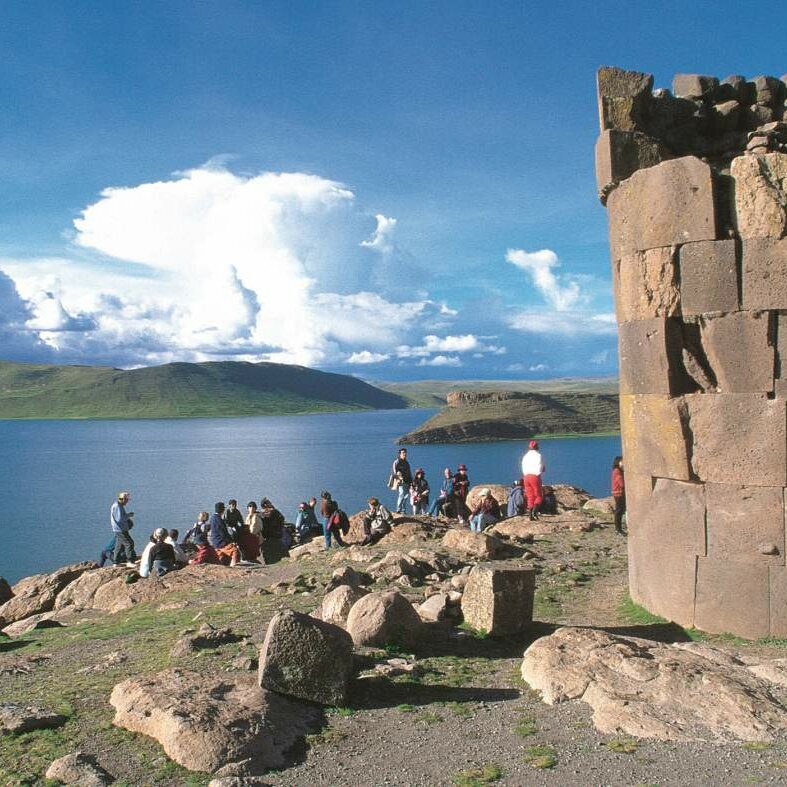
In the region around Cusco and the Sacred Valley, where Machu Picchu is located, the dry season lasts from May to September. During these months, the mountain paths are firm, the sky is mostly clear, and the view of the snow-capped peaks of the Andes is best. From October to April, on the other hand, most of the rain falls: paths become slippery, clouds hang low over the Urubamba Valley, and the view of the peaks is obscured on many days.
If you travel further into the Amazon lowlands, for example to a jungle lodge near Puerto Maldonado, the window shifts only slightly: it is driest there between June and September, while the rainy season in the jungle tends to bring warm, short showers instead of the prolonged Andean rain. Those who connect the Andes and rainforest in a trip like the loop from Arequipa benefit the most from starting right in the middle of this shared window.
A special case is the coastal desert between Lima and Nasca: it practically never rains there, regardless of the month, because the cold Humboldt current off the coast keeps the air dry. Those who travel through this desert first on the large loop from Arequipa before heading into the Andes and further to Machu Picchu often notice the change of climatic zones already on the first day of travel.
Photographically, this makes a real difference: in the dry season, the citadel stands sharp against a blue sky, while in the rainy season, dramatic fog rolls through the valley, which many photographers find just as appealing as clear visibility. Those who are traveling during the rainy months should plan for waterproof clothing and a second packing bag for their luggage, as short, heavy showers in the afternoons are not an exception but the rule. You can find all current entry and climate details for Peru collected in our Travel Information Peru.
The height that no one accounts for
The weather is predictable, but the altitude is often underestimated. Cusco is significantly higher than Machu Picchu itself: The Inca city nestles in the mountain forest, a good bit lower than the city from which most journeys start. Anyone coming directly from Lima or the coast jumps within a few hours from sea level to an altitude where the air is noticeably thinner, and that has nothing to do with the calendar month.
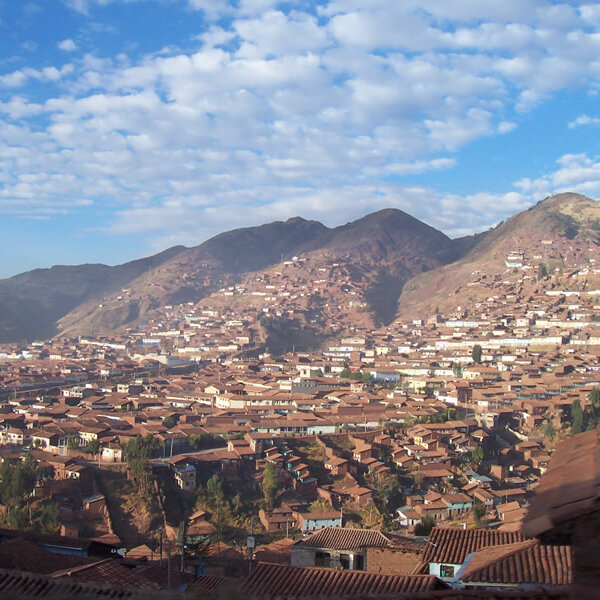
On the drive between Cusco and Lake Titicaca or over the passes towards the Colca Canyon, it goes significantly higher again, to pass altitudes of several thousand meters, where llamas, alpacas, and vicuñas graze, and the nights become distinctly cold, even if the days were warm in the sun. Headaches, shortness of breath, and a faster pulse in the first one to two days are normal and not a sign of an incorrect travel time. That’s why our tours intentionally include days in Cusco or at Lake Titicaca where there is little travel and a lot of acclimatization, regardless of whether you are traveling in May or September.
One participant describes this balancing act like this: “The planning of the daily stages was clear and sensible, which made the more challenging sections, especially the boat trip, significantly easier.”, said Markus S. in his review of the tour.
In practice, this means: on the first day in Cusco or Puno do little, drink plenty of water instead of alcohol, and, as many locals recommend, calmly try coca tea. That’s why we consciously keep the first travel day at high altitude short and calm, so your circulatory system can adjust to the lack of oxygen before heading to the more challenging passes.
Important to know: The altitude affects you equally regardless of the month, while only the weather varies seasonally. Anyone who plans both together, that is, travel with buffer time before the first major passes, will cope better in any season than someone who only looks at the calendar.
When the crowd is at its largest
The dry season is not only the best time to travel by motorcycle, but it is also the peak season for Machu Picchu overall. July and August coincide with the summer holidays in North America and Europe, as well as the winter holidays in South America, when many Peruvians and Argentinians travel. The result: during these two months, there is the most activity at the entrance of the citadel, at the train station in Ollantaytambo, and in Aguas Calientes.
The edges of the dry season, that is, May and June on one side and September on the other, offer almost the same stable weather, but noticeably less crowding. Those who are flexible will find these weeks the most relaxed: clear views of the citadel, firm paths, but time and tranquility at the viewpoints instead of a queue. The transition in October and November, when the first showers begin but the paths have not yet softened, is also popular among more experienced travelers, especially because there are hardly any tourist groups traveling then.
At Machu Picchu itself, another factor comes into play: access to the citadel is divided into time slots and a limited number of tickets per day to protect the ruins. In the peak season, the affordable, early time slots are often booked weeks in advance, while in the quieter months, they remain available for significantly longer. That is precisely why Overcross firmly includes the train and entrance tickets in the trip, rather than organizing them last minute on site.
For you, this primarily means one thing: the closer your desired month is to July or August, the earlier you should book, regardless of how flexible your calendar otherwise is. For context: Visitor numbers fluctuate noticeably throughout the year, even if we deliberately refrain from estimations that change continuously anyway. As a general rule, it holds true: the closer to the South American winter, the fuller, the closer to the edges of the dry season or the early transition, the quieter.
Month by month at a glance
As a quick reference for how weather and crowds are distributed throughout the year:
| Period | Weather in the Andes | Crowds at Machu Picchu |
|---|---|---|
| May, June | Dry, cool clear nights | Increasing, but still moderate |
| July, August | Dry, most stable weeks of the year | Highest of the entire year |
| September | Dry, last quiet weeks | High, but below the July peak |
| October, November | First showers, paths still mostly firm | Notably lower |
| December to April | Rainy season, peak in the midsummer of the southern hemisphere | Lowest, but weather-dependent |
The table shows trends, not guarantees: The Andes are known for short-term weather changes, and even in the safest dry week, an afternoon shower can come through. Therefore, consider it as a decision aid for the month, not as an exact weather forecast for your travel day.
Which tour suits which season
All three Machu Picchu tours from Overcross can be categorized into this calendar image, you just need to know what you are looking for.
- Motorcycle trip Peru: Andes, Inca & Machu Picchu: fourteen days, mostly asphalt, suitable for beginners, from 5,100 euros. The next dates are in November as well as in April and September of the following year, so once at the edge of the rainy season and twice in the dry season.
- Peru motorcycle tour: 7 wonders in 17 days from Arequipa: seventeen days, combining coast, Andes, Amazon jungle lodge, and Machu Picchu, from 6,420 euros. The next date starts in mid-May, in the middle of the common dry window of the Andes and rainforest.
- Peru round trip Machu Picchu & Inca Andes: thirteen days without your own motorcycle, for those who prefer to ride along rather than drive themselves, from 3,049 euros. The next dates are in October and November, so exactly in the quieter transition after the high season.
What this feels like in practice is described by a participant of the round trip as follows: âDuring the tour through Peru, I was impressed by the support from the team. The German-speaking tour guide ensured that all participants were always informed during the historical visits, such as in Cusco and the Inca ruins.â, says Matthias K. in his review.
Important for the choice of dates: In the high season, the smaller groups fill up faster, as more travelers are on the road in Peru anyway. Those who choose May, June, or September usually have more options for room and train bookings in Aguas Calientes as well. In all three tours, Machu Picchu is not an additional date, but the planned highlight of the route, with train, bus, and entrance tickets firmly scheduled.
In summary: Those who want to combine the full dry season with jungle should plan for May to September. Those who want to avoid the greatest crowds and still have fixed routes should aim for the edges of the season or the early transition in October and November.
Visa, money, and the route beyond Peru
For all official information regarding visa, driver's license, vaccinations, and money in Peru applies: This is not the subject of this article, but that of the continuously updated Travel Information Peru, where you will find the binding details before booking. This way you plan realistically, without relying on numbers that change from season to season.
If your route extends beyond Peru further south, for example on one of the tours with Salar de Uyuni and Atacama, it is also worth taking a look at our comparison Best Travel Time Chile: Atacama, Central Chile, and Patagonia in Comparison, because the dry season and altitude are different there.
Sun, cold and dust: what else the dry season brings
No matter if dry or transition season: In the Andes, the sun shines much more intensely at several thousand meters altitude than on the coast, while the nights become noticeably cold even in the South American winter. A day can send you off freezing on your motorcycle in the morning and end with short sleeves in the afternoon, before it gets cold again in the evening.
Sun protection therefore belongs in every season: sunscreen with a high sun protection factor, a head covering under the helmet, and enough fluids, as the dry mountain air robs the body of more water than one realizes at first glance. In the dry season, fine dust on the unpaved roads adds to this, making protective glasses or a buff for the nose and mouth useful, while in the rainy season, rainproof gloves and a visor against splashes are more relevant.
For the clear nights away from the cities, it is also worth taking a look upwards: Far from any light pollution, the Andean sky in the dry season shows a starry sky that most travelers do not know from home, a quiet bonus that does not appear in any weather statistics.
Anyone including the Amazon jungle lodge in their program should also be aware of a weather phenomenon that surprises many: Between the dry season of the Andes and that of the lowlands, cold air masses from the south, a so-called Friaje, can cause unusually cool, sometimes even frosty nights in the middle of the rainforest in certain years. A light fleece layer therefore also belongs in the luggage for the jungle part of the trip, even if there is humid heat during the day.
The best time to visit Machu Picchu in one sentence
If you want the safest weather forecast, travel between May and September. If you also want peace at the viewpoints, choose the edges of this window or the early transition in October and November. And regardless of which month you choose: The altitude in Cusco, at Lake Titicaca, and on the Andean passes remains the same challenge throughout the year.
That's why we plan each of our Peru tours so that weather windows and acclimatization fit together, whether you choose the dry season, the quiet transition, or a combination with the Amazon jungle and coastal desert.
Unsure which month fits your overall annual plan? Our team in Latin America knows the route firsthand and helps you bring together the dry season, altitude profile, and your own schedule before you decide on a date.
Answered briefly
Frequently asked questions
- When is the best time to travel to Machu Picchu?
- The dry season from May to September brings the firmest paths and the clearest view of the citadel. Within this window, May, June, and September are quieter than July and August, when summer vacations in Europe and North America coincide with winter vacations in South America, bringing the greatest influx of the year.
- Is the rainy season completely unsuitable for a visit?
- No. The rainy season from October to April does bring more precipitation and gloomy visibility, but also significantly fewer travelers. Especially the early transition in October and November often still has firm paths with noticeably calmer viewpoints, before the heaviest showers start in the high summer of the southern hemisphere.
- Why does elevation play a bigger role than the weather?
- Because Cusco and the passes towards Lake Titicaca and Colca Canyon are much higher than Machu Picchu itself and the thinner air affects you regardless of the calendar month. Headaches or shortness of breath in the first few days are normal, which is why our tours deliberately incorporate calm acclimatization days, whether you are traveling during the dry season or transition period.
- In which months is it busiest at Machu Picchu?
- July and August are by far the fullest months because they coincide with the summer holidays in Europe and North America as well as the winter holidays in South America. If you want to experience the same stable dry season with fewer people, you should choose May, June, or September.
- What should I wear for the temperature difference between day and night?
- A layered onion system is essential: It gets warm in the sun on the high plateaus, shortly after sunset the temperature noticeably drops. A windproof, water-repellent outer layer, a warm intermediate layer, and gloves for the cool morning hours should always be with you, regardless of the travel month.
- Does the best travel time for Machu Picchu differ from that for the Amazon or the coast?
- Yes. The Andean dry season runs from May to September, the Amazon lowlands are driest between June and September, and the coastal desert around Nasca remains practically dry year-round. Anyone planning a route starting from Arequipa that includes all three zones should best schedule during the common window between June and September.