At a glance Contents
- Steppe and desert are two different destinations
- Spring: when the steppe is green and the tracks still have reserves
- Summer: the desert demands respect
- Autumn: the window for desert, dunes and the Singing Dune
- Winter and transition seasons: when you leave it alone
- What the season does to tracks, light and machinery
- Which trip fits which window
- Typical planning mistakes with the travel season
- How to plan your window
- Frequently asked questions
Steppe and desert are two different destinations
Most climate pages say the same thing about Kazakhstan: May to September. That is true, but on a motorcycle it hardly helps you. The country is huge, and if you treat it as a single climate zone, you will either be baking in the desert in July or standing on a softened track in the north in April.
That is why we separate two worlds. The steppe is open grassland with long horizons, gravel, packed earth and tracks that quickly turn slippery after rain. The desert and semi-desert in the south and southeast offer sand, salt flats, dunes and tracks where heat is the real problem, not rain.
Each has its own window. The steppe's comes earlier in the year, the desert's later. If you want to combine both, choose one of the transitions: end of May to early June, or the first weeks of autumn. The rest of this text explains why, and which trip fits which window.
One caveat up front: we write here from the experience of our groups and guides, not from a climate table. We deliberately do not give concrete temperature values, because they vary strongly from year to year and from place to place. Rely on the general tendency, and ask about the current state of the route before you book.
Spring: when the steppe is green and the tracks still have reserves
In spring the steppe shows its most beautiful face. After the snow melts the grass is fresh, the air is clear, and the days are long enough to cover distance without haste. If you dream of endless space, you now get it in colour and not in beige.
The catch lies in early spring. As long as the ground holds water, clay and earth tracks turn into soap in the rain. That is no drama for experienced off-road riders, but it costs time and nerves, and with a fully loaded adventure bike every puddle becomes a decision. April is therefore a month for riders who like mud, or at least accept it.
From May it gets more reliable. The tracks are firmer, the nights are still cool, the midday heat is bearable. June is the reserve: often still green, but with clearly more warmth and, especially in the south, already a foretaste of summer.
- April: fresh, green, but changeable. For riders who can handle wet tracks.
- May: our favourite for the steppe. Firm tracks, long days, mild weather.
- June: still good, but already warm in the south. Starting early pays off.
One of our trips that crosses Central Asia in spring starts at this time on purpose. More on that below.
Summer: the desert demands respect
July and August are the months in which we recommend a trip through southern Kazakhstan to nobody who is not explicitly looking for heat. On a motorcycle it feels different from the beach: you sit in full protective gear, ride into hot air, and the wind no longer cools you, it blow-dries you. Concentration fades faster, and especially in sand that costs strength you will need later.
Then there is the machinery. Hot engines, soft sand and long stages without shade are a combination in which small mistakes become big ones. Water, breaks and early starts are not a comfort in summer, they are part of safety planning.
The north and the steppe are more pleasant than the desert in summer, but it can get hot there too, and strong thunderstorms sweep across the open land. If you have to ride in high summer, for example because of school holidays, choose the north or the mountain edges in the southeast, ride early in the day and spend the midday hours in the shade.
A rule of thumb that has proven itself: the less shade a route has, the further away from high summer it belongs.
Autumn: the window for desert, dunes and the Singing Dune
If you ask us when the tracks in the south really work, the answer is September. The summer heat eases, the air gets clearer, and the sand is firm enough to ride in the morning without you being exhausted by mid-morning. The evenings become pleasantly cool, which is a blessing for a night in a tent or camp.
This applies especially to the Altyn-Emel National Park in the southeast. That is where the Singing Dune lies, where our groups spend the night in the sand on the route of the Pamir Highway trip. The dune is a migrating hill of fine sand that gives off a deep hum when wind and movement stir it. In autumn you experience all of it without the blazing heat that dominates everything in high summer.
Early autumn is also usable for the steppe: the tracks are hard after the dry summer, the light is soft, and the landscape has the golden-brown tone that many photographers love. You should not expect grass and flowers as in May, though.
From later autumn it tips over. The nights get painfully cold, the wind sharper, and weather changes in the open landscape arrive faster than you would like. October is therefore only for riders who do not shy away from cold and plan flexibly.
- Early September: our favourite for desert and dunes.
- Later September: still good, with cooler nights.
- October: edge season. Weather and daylight run short.
Winter and transition seasons: when you leave it alone
In winter Kazakhstan is not an option for motorcycle trips. Snow, ice, storms over the open steppe and cold that tests machine and rider alike turn a tour into survival training. The roads are partly cleared, the tracks are not, and help is far away. We offer no trips there at this time, and for good reason.
The transitions also need attention. In March and early April spring can strike back once more, and the ground is wet from meltwater. In late autumn it already freezes at night. If you ride in these weeks, you need an extra time buffer and a guide who knows the route and is allowed to re-plan.
One thought that is in no climate table: on a motorcycle, it is not only the weather on the day of departure that counts, but the reliability of the following weeks. A trip with spare days in May or September is more robust than a tight one in high summer, even if the table rates both as good.
What the season does to tracks, light and machinery
The travel season decides not only your comfort but the character of the ride. The same track feels different in May than in September, and if you know that beforehand, you pack and ride better.
Ground. In spring the steppe holds moisture. Clay sticks, ruts fill up, and braking distances get longer than you know from dry gravel. In autumn the same ground is hard and dusty. Dust is the new problem then: behind the rider ahead you see little, so keep your distance and ride staggered.
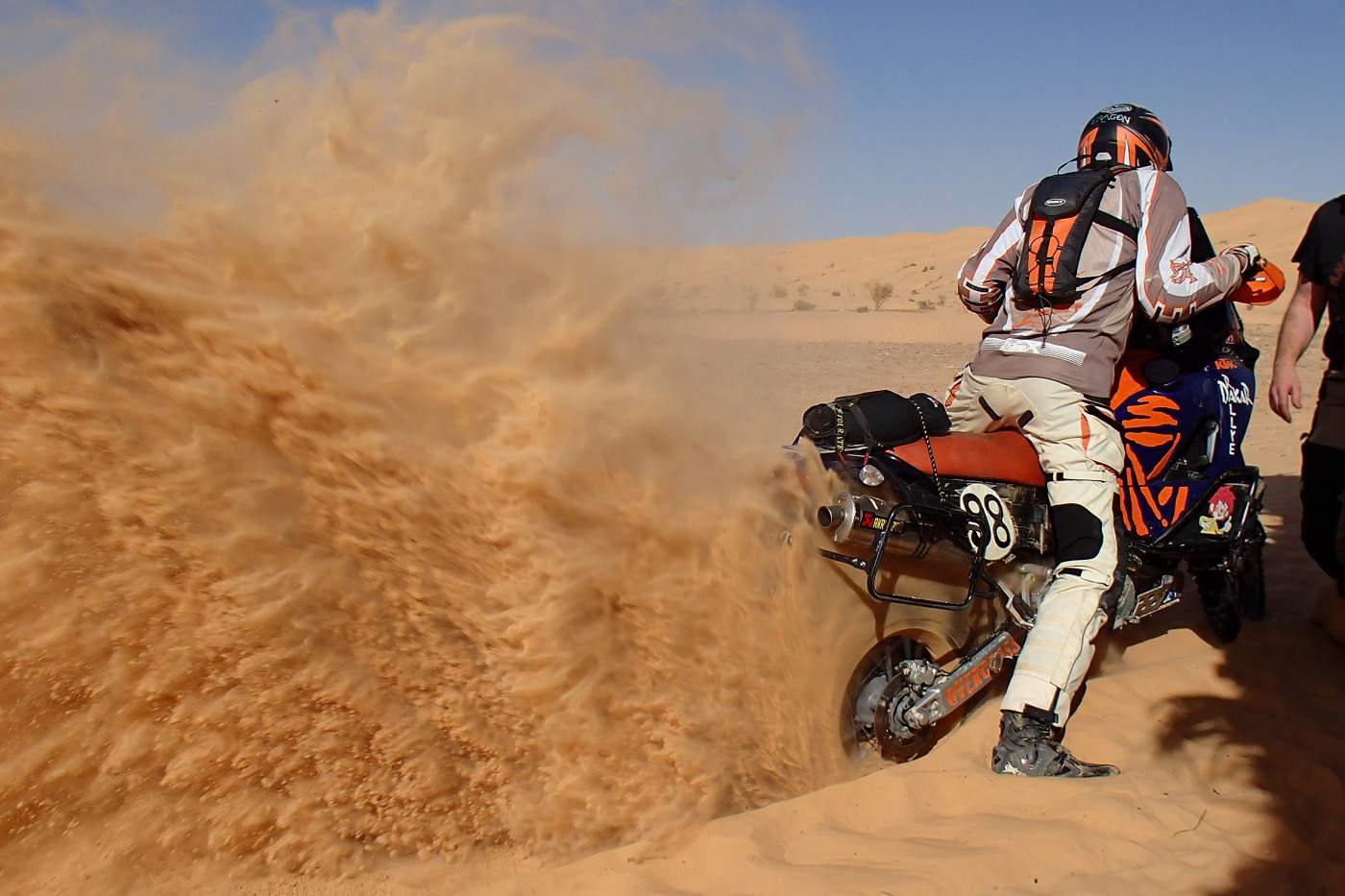
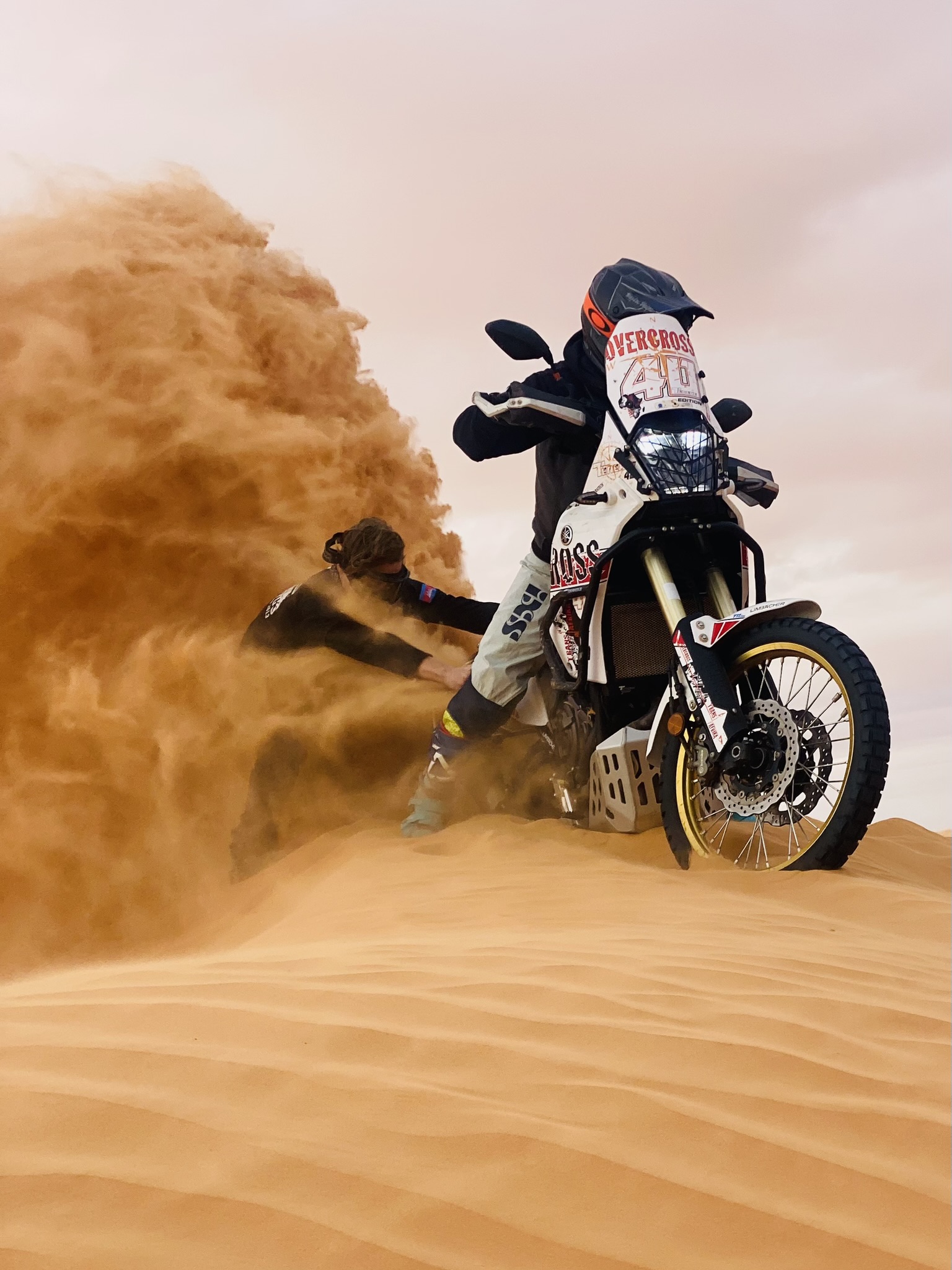
Sand. The desert is friendliest in the morning. Cool air, firm ground, low sun. As the heat rises the sand gets softer, the tyres sink deeper, and the bike demands more throttle and more attention. If you ride early, you save strength for the afternoon.
Light. In May the days are long, and you have room for breakdowns and detours. In late September and in October that room shrinks. When twilight comes earlier, the stage ends earlier, and the daily goal has to be more realistic. That is no disadvantage as long as you plan for it.
Machinery. Heat demands cooling, air filters and tyre pressure. Cold demands battery, gloves and heating. A good team checks both every morning and takes this worry off your hands, but you should know why.
People and landscape. In spring the steppe is full of life, herds move to fresh pastures, and encounters by the wayside are frequent. In autumn it is quieter, and the land feels wider and emptier. Both have their charm, but it is not the same trip.
Which trip fits which window
We have exactly one trip that includes Kazakhstan itself, and two neighbours that you can see as a complement. We tell you openly what lies where.
In Kazakhstan: Go West along the Pamir Highway
The Transcontinental Motorcycle Tour Go West - Pamir Highway lasts 28 days and leads from Mongolia over the Altai Mountains and through the Altyn-Emel National Park to the Singing Dune, on over the Pamir Highway, the Silk Road with Samarkand and Bukhara, and through Turkmenistan and Iran to Erzurum in Turkey. The group is small, at least four and at most eight riders. Kazakhstan is only one section here, but a formative one, and the dune chapter belongs in the autumn window. Currently no dates are entered on our sheet. Ask us for the next start date.
Next door, from Germany: the Eastern Europe and Central Asia expedition
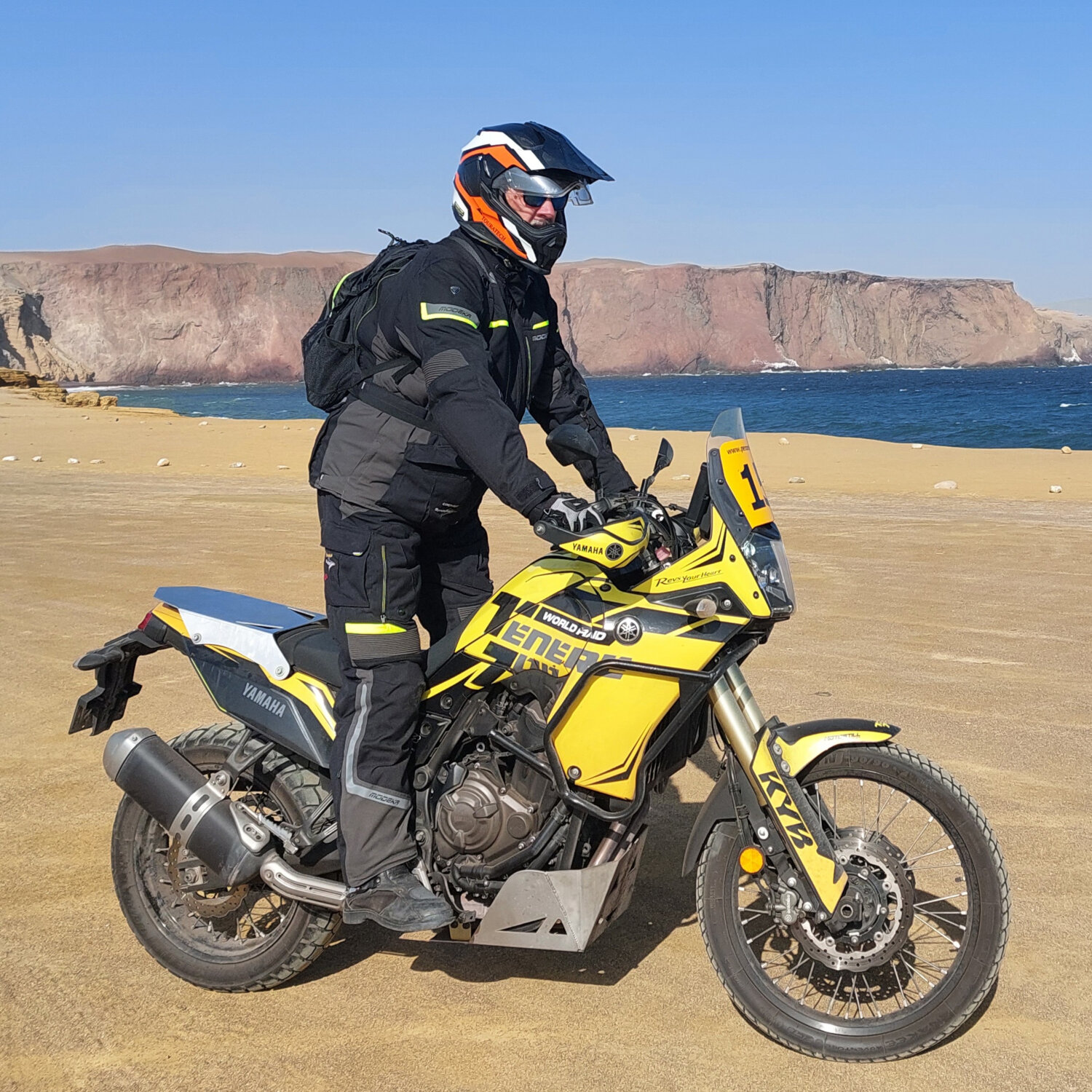
Not in Kazakhstan, but beside it: the Transcontinental Motorcycle Expedition Eastern Europe & Central Asia lasts 33 days and leads from Germany through Russia and Siberia into the Mongolian steppe, with off-road sections in the Altai. It starts on 24 April 2027 and is thus an example of a spring trip that experiences the steppe landscape of Central Asia in the green window. The rules of the Siberian and Mongolian steppe apply here, not those of the Kazakh desert.
Next door, in Kyrgyzstan: the Silk Road westwards
Not in Kazakhstan, but in the neighbouring country, the Motorcycle Tour Kyrgyzstan - Turkey starts: 14 days from Osh via Uzbekistan with Samarkand and Bukhara and through Iran to Erzurum. The next date is 19 September 2027, exactly in the autumn window that is also good for the desert regions nearby.
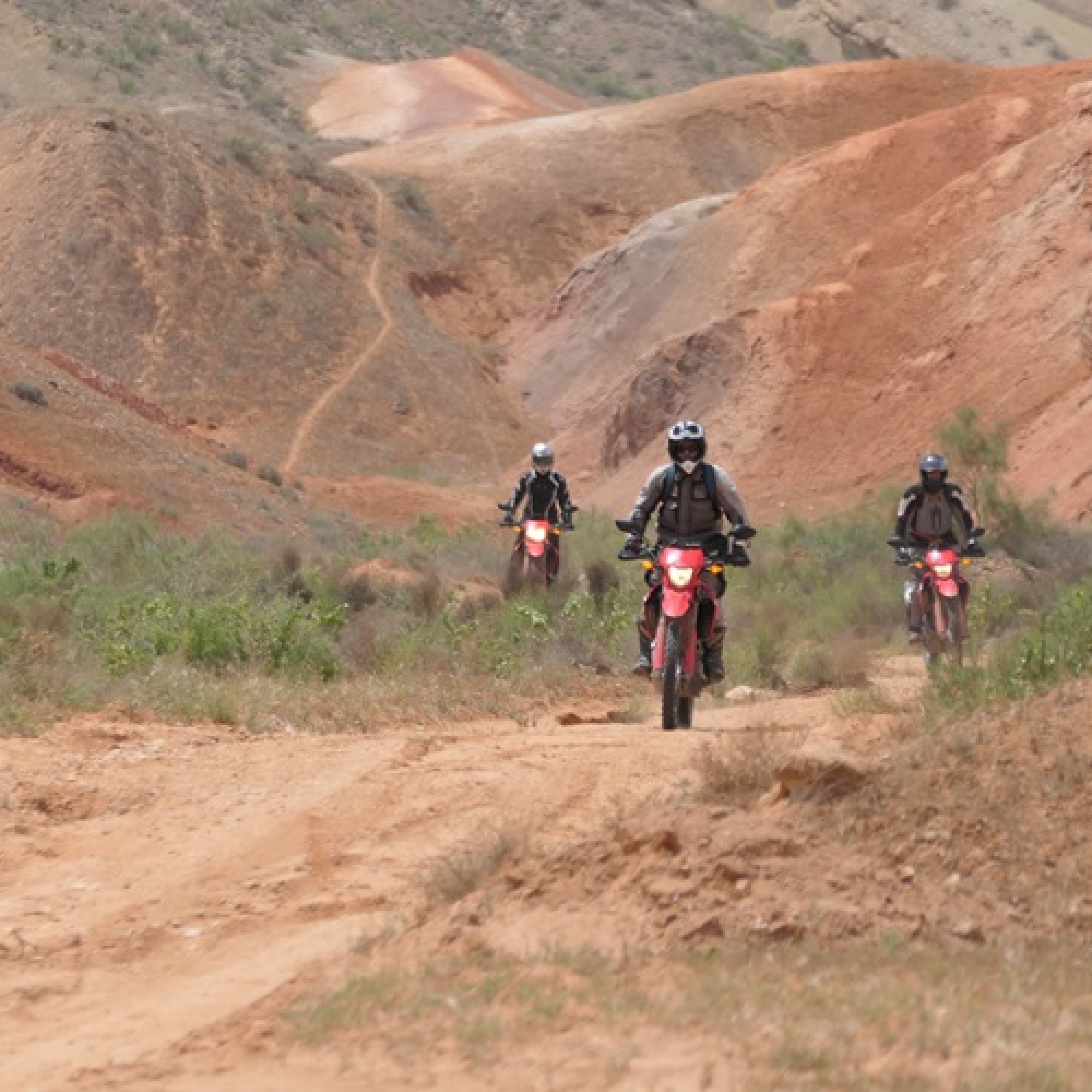
Important: all three are Central Asia trips and not a pure Kazakhstan tour. If you are looking for a country with more days in it, write to us, and we will tell you honestly whether we have something suitable.
Typical planning mistakes with the travel season
From conversations with riders who write to us before booking, a few misconceptions keep repeating. They rarely cost the whole trip, but often nerves.
- One month for the whole country. If you book "Kazakhstan in July", you get the heat in the south and perhaps thunderstorms in the north. Always ask about the region, not just the country.
- April as a safe spring. It is beautiful, but wet. Without buffer time a stage quickly becomes a fight with the mud.
- October as an extension of September. It is not. The nights and the light change noticeably.
- No spare days. Long distances, little infrastructure: a breakdown or a storm needs air in the plan.
- Wrong bike, wrong tyres. Sand, mud and gravel demand different setups. Discuss the ground of your travel season with the team.
The common denominator: the season is not a detail but the basis of planning. If you fix it first, everything else is decided more easily.
How to plan your window
A simple plan follows from everything above. Decide first what you want to see, then the month.
| You want | Best time | Why |
|---|---|---|
| Green steppe, long horizons | May, early June | Firm tracks, fresh grass, mild heat |
| Desert, dunes, sand tracks | Early to mid September | Less heat, clear air, cool nights |
| Both on one trip | End of May or early autumn | Compromise between warmth and firmness |
| High summer | Only north and mountains | Avoid the desert, ride early |
A few things help in every window. Plan spare days, because a single rain front can close a track for a day. Choose tyres and luggage to suit the terrain: in sand every kilo counts, in mud every tyre. And set off early, in every season, because the morning hours are the calmest and most reliable in Kazakhstan.
Everything about entry, papers, health and money does not belong in this text, but in the current travel information that we maintain. Read it before booking and ask us if anything remains unclear.
And if you are unsure whether steppe or desert suits you better: the steppe is the easier introduction, the desert the stronger impression. Both are worth it, just not in the same month.
Answered briefly
Frequently asked questions
- Which month is best for Kazakhstan by motorcycle?
- For the steppe in the north, May; for desert and dunes in the south, the start of September. If you can only choose one period, take the end of May or early autumn, because then heat and track conditions are most likely to match.
- Is summer in Kazakhstan too hot for a motorcycle trip?
- In the south and the desert, yes, especially in July and August. In the north and on the mountain edges it is more bearable. If you have to ride in high summer, start early, plan long midday breaks in the shade and avoid shadeless sand stages.
- Can you go to Kazakhstan in April?
- Yes, April is green and fresh, but changeable. After rain, earth tracks quickly turn slippery, so you need a time buffer and off-road experience. For beginners, May is more reliable.
- When is the best time to visit the Singing Dune?
- In early autumn, when the blazing heat has eased and the nights are pleasantly cool. The Altyn-Emel National Park is then easy to ride, and a night in the sand is a pleasure instead of an effort.
- Do you ride through Kazakhstan in winter?
- No. Snow, ice, storms and long distances without help make winter unsuitable for motorcycle trips. Our Central Asia trips run in spring and early autumn.