At a glance Contents
What awaits you in the Atlas
The Atlas is not a single mountain range, but a bundle of the High, Middle and Anti-Atlas. For you as a motorcyclist, that means three very different characters. The High Atlas delivers the big passes with long switchbacks and wide views. The Middle Atlas is rougher: scree tracks, nomad paths and caravan routes that have been used for over 1000 years. Beyond it begins the Anti-Atlas, where the landscape gets drier and merges into the Sahara.
The riding heart of many routes is the Tizi n'Tichka, the classic link from Marrakesh towards Ouarzazate. Further south waits the Tizi n'Test, which is considered more demanding and is expressly mentioned by participants of our Marrakesh-Dakar tour. If you know the gorges of Todra and Dadès, you understand why riders keep coming back: red rock walls, tight bends, hardly any traffic.
Important for planning: the Atlas is big, and the distances in between are long. You don't ride from pass to pass in an hour, but from valley to valley, often with photo stops, tea breaks and a village that looks nothing like it does on any map. This very pace is what makes it so appealing.
Road or track: what suits your skill level?
The honest question before booking is not whether you can ride the Atlas, but how. On asphalt, the passes are doable for experienced touring riders. As soon as it turns to gravel, your off-road skill decides whether the day is fun or turns into an exam.
- Road with culture: passes, royal cities, kasbahs. You are in the saddle, but the day stays relaxed.
- Enduro, mixed terrain: around 60 % of the route away from asphalt, long gravel tracks, plus sandy sections. You should be able to last a whole day in the saddle.
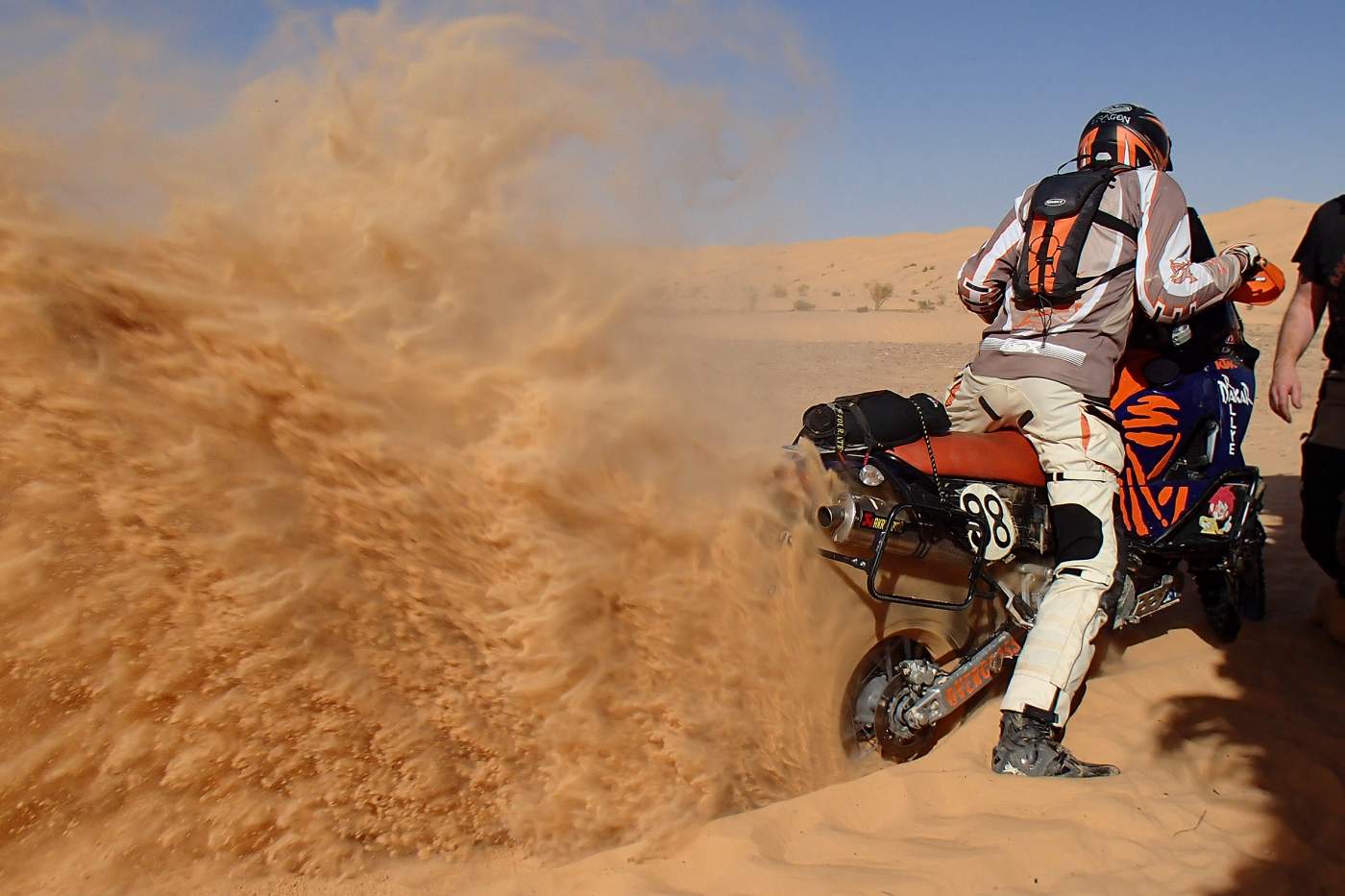
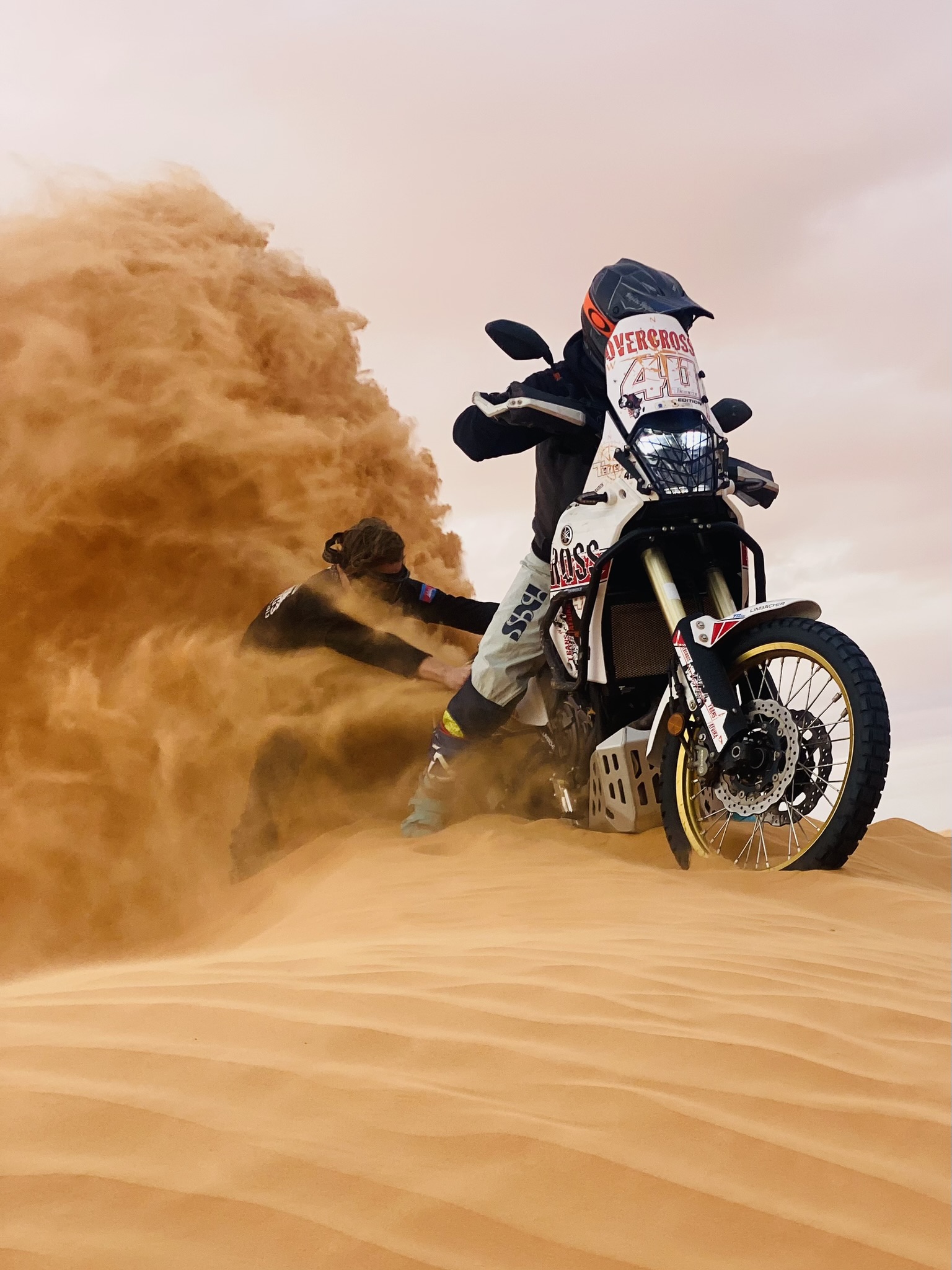
- Enduro expedition: deep sand, wild camping, high dunes. This is the level for experienced off-roaders.
If you are unsure, rather choose the level below. An Atlas day with six hours of gravel is more tiring than it looks on the map, and Morocco rewards riders who arrive fresh. On loose ground it is also worth paying attention to your tyre pressure and to whether you ride confidently standing up, because that is exactly where routine and tension part ways off-road.
Three tours that ride the Atlas
Kasbah Enduro Tour: short and focused
The Kasbah Enduro Tour lasts 7 days and costs from 2640 €. Five full riding days of 260 to 300 km link the passes of the High Atlas with the sandy edge of the Sahara, without city tours and sightseeing stops. In the evening a kasbah or riad with dinner awaits. With 4 riders or more you travel as a self-guided rider, with 6 riders or more a guide and a support vehicle with a mechanic accompany you. In his review, Florian H. praises above all the daily briefings that explain each stage in detail.
Royal cities and Sahara: road travel with depth
The motorcycle tour from Marrakesh lasts 13 days and costs from 3579 €. It leads over the Tizi n'Tichka to the dunes of Erg Chebbi and connects Fès, Marrakesh and Meknes with the James Bond filming locations around Ouarzazate. You ride a rental bike or your own motorcycle, which we transport to Marrakesh on request.
Atlas Sahara Enduro: the expedition
The Atlas Sahara Enduro lasts 15 days and costs from 2989 €. Panoramic passes, demanding gravel tracks, the Todra and Dadès gorges, then Erg Chegaga and Erg Chebbi with deep sand and wild camping. This is the hardest of the three tours and is intended for experienced enduro riders. Participant Andreas H. highlights the stage over the High Atlas to Taliouine and the clear GPS tracks.
A riding day in the Atlas: how it goes
A typical day begins with the briefing at breakfast. The guide explains the route, the surface and the key spots, you get the GPS track, and then you set off. In the morning the passes or the first track sections usually come up, while your concentration is fresh. At midday there is a longer break in the shade, before the afternoon continues with gravel or sand.
On the long enduro stages, the group plays a big role. After the Atlas Sahara Enduro, Tobias S. describes how all riders found the right pace with the help of the guide, even though the tour is designed for experts. That is the reason we keep the groups small and insist on briefings: nobody should have to decide alone off-road whether to ride a section or go around it.
In the evening, recovery counts. Kasbahs and riads offer a shower, food and rest, and on the expedition the camp under the open sky replaces the accommodation. Both belong to the Atlas, and both let you get back on the bike the next morning.
Typical planning mistakes
The most common mistake is underestimating the stages. If you see the Atlas as a detour of a few hours, you quickly notice that tracks, altitude gain and breaks fill the day. A second mistake: too little buffer. A pass can take longer because of weather or roadworks, and a trip with a fixed guide and support vehicle absorbs that, going it alone does not.
Third point: the wrong tour for your own level. Better to book one level easier and enjoy the tracks than to reach your limit in deep sand. And fourth: luggage. Less is more, because you feel every kilo on gravel in every corner.
Best time to travel and preparation
The best months for the Atlas are spring and autumn. In summer it gets very hot at lower elevations, and in winter the high passes can have snow and ice. You can find the exact times, entry rules and practical tips in our travel information on Morocco, which we keep up to date.
For the tracks, plan on protective gear that really protects you even in a fall on gravel, and practise riding standing up beforehand. With a guide and clear briefings in the morning, you ride far more relaxed, because navigation and track conditions don't depend on you.
Answered briefly
Frequently asked questions
- Which passes in the Atlas are particularly rewarding for motorcyclists?
- The Tizi n'Tichka between Marrakesh and Ouarzazate is considered the classic route with long switchbacks. The Tizi n'Test is more demanding. Add to that the gorges of Todra and Dadès with tight bends between red rock walls.
- Do I need off-road experience for the Atlas?
- Not necessarily. The main passes are paved, and a guided road tour is quite doable with touring experience. For gravel tracks and sand, however, you need off-road skill, and the expedition tour is aimed at experienced enduro riders.
- Do I ride my own motorcycle or a rental bike?
- On the tour from Marrakesh you can do either. We provide rental bikes and transport your own bike to Marrakesh on request. On the enduro tours, you talk to us beforehand about which machine suits the route.
- Is one week enough for the Atlas?
- Yes, if you make full use of it. The seven-day Kasbah Enduro Tour has five full riding days of 260 to 300 km and links the High Atlas with the sandy edge of the Sahara. For culture and cities you need more time.
- When is the best time to travel to the Atlas?
- Spring and autumn are ideal, because it is mild on the passes and the tracks are firm. You can find the current details in our travel information on Morocco.