Everything you need to know about Morocco
Travel map of Morocco by tour operator Overcross
- General travel information for Morocco
- Travel climate in Morocco
- Geography of Morocco
- Flora and fauna in Morocco
- National parks and nature conservation in Morocco
- Population of Morocco
- Politics and economy in Morocco
- Transport network in Morocco
- Cities and regions in Morocco
- Culture and sights in Morocco
- Public holidays in Morocco
- Medical information for Morocco
- Travel advice for Morocco
- Foreign representations in Morocco
- Information sources for Morocco
1. General travel information for Morocco
| Continent: | Africa |
| Geographical location: | Northwest Africa, on the Mediterranean coast and the Atlantic |
| Highest point: | Jabal Toubkal (4167 m a.s.l.) |
| Longest river: | Oum er Rabia (555 km) |
| Form of government: | Hereditary monarchy |
| System of government: | Constitutional monarchy |
| Languages: | Arabic and Tamazight |
| Neighboring countries: | Western Sahara (occupied by Morocco) and Algeria |
| Capital: | Rabat |
| Area: | Approx. 447,000 km² |
| Inhabitants: | Approx. 37 million people (2024) |
| Population density: | 83 inhabitants per km² |
| Religions: | Approx. 99% Muslims, small minorities of Christians and Jews |
| Currency: | Dirham; 1 EUR is about 11.1 MAD. The current exchange rates can be found at oanda.com |
| Travel climate: | Mediterranean and continental-arid influenced travel climate |
| Time zone: | UTC +1 (during daylight saving time UTC +2) |
| Dialing code: | +212 |
| Country code: | MA |
| Electricity: | In Morocco, the socket types C and E are used. A travel adapter is advantageous. The mains voltage differs by region, either 127 or 220V with 50Hz alternating interval. An overview of the sockets and plugs used in our travel countries can be found at wikipedia.de |
2. Travel climate in Morocco
The climate in Morocco ranges from Mediterranean conditions in the northwest to continental and Sahara-influenced climates in the southeast and south of the country. These two climate zones of Morocco are strictly separated by the main ridge of the Middle and High Atlas and thus also cause significant differences in vegetation on either side of the mountains.
In the northwest of the country, average summer temperatures reach 29°C and it is very dry, while temperatures in January average 10°C. Winters are mild and rich in precipitation, with the amount of rainfall decreasing towards the south. Towards the interior of the country, the sea quickly loses its influence in favor of the continental climate spreading from the Sahara, which prevails in the central Meseta and in the Atlas Mountains. In Marrakech, which already has an average summer temperature of 31°C, it can get as hot as 46°C on some days, while in winter temperatures can often be around freezing point. Rainfall is rather low here, at 250 mm per year. In contrast, the western slopes of the mountains receive an average of 1000 mm of rainfall per year, which is due to orographic rainfall and can also fall as snow above 1000 m altitude.
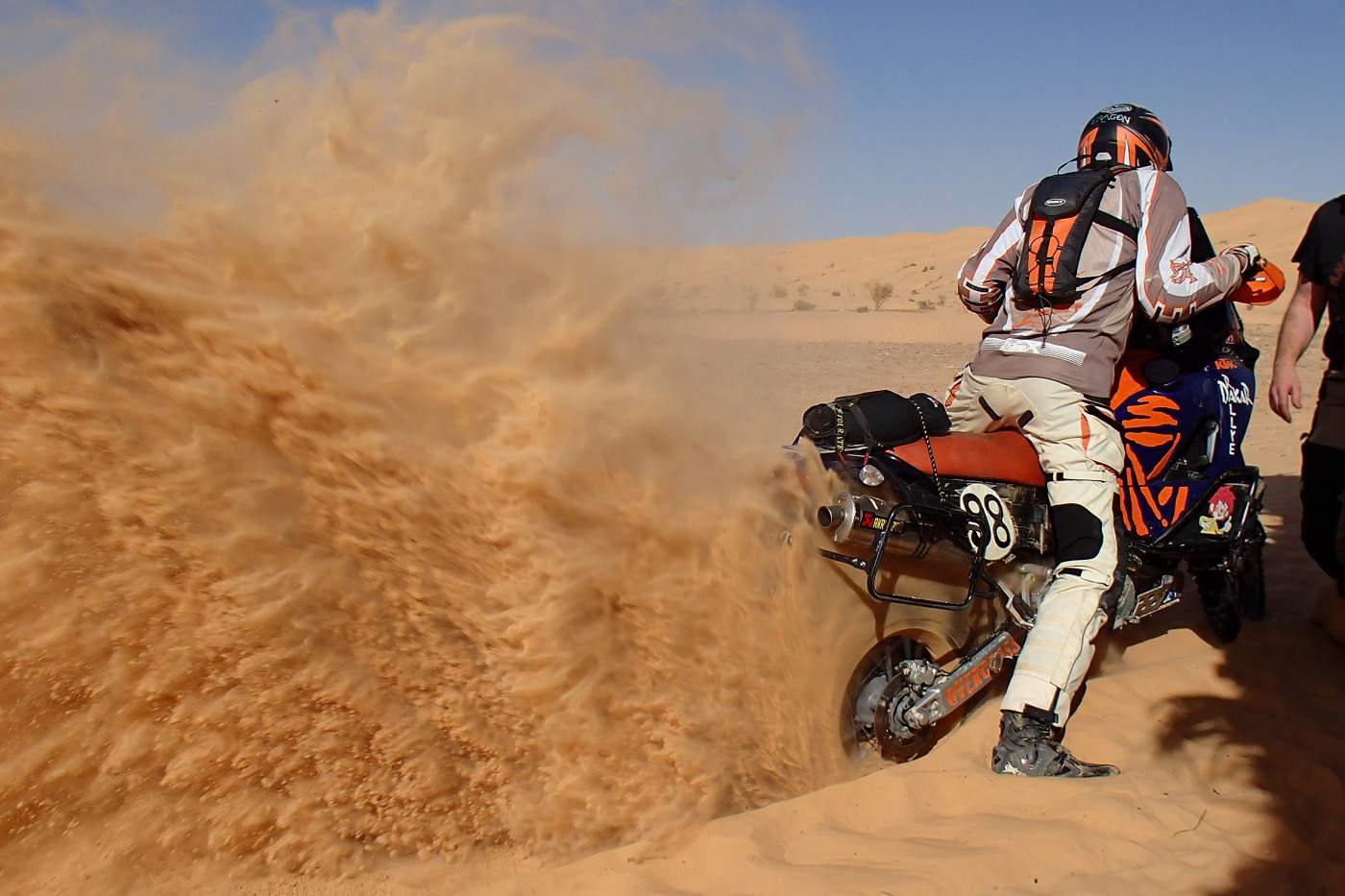
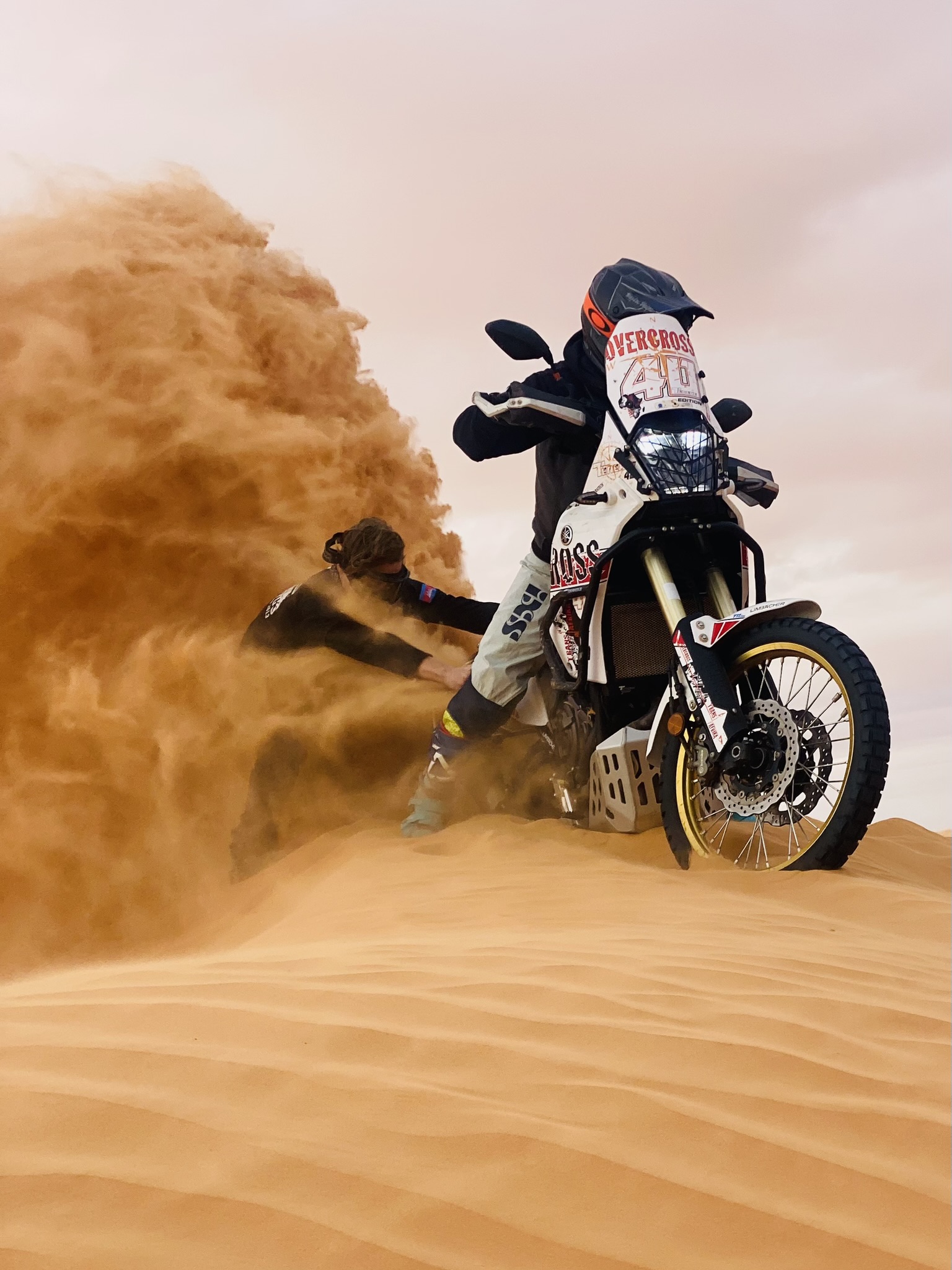
South of the Atlas Mountains, an extremely dry and hot desert climate prevails, with very irregular precipitation that rarely reaches 200 mm a year. During the summer months, the Sirocco, a hot, dusty wind from the Sahara, blows from time to time, which on our adventure trips can sometimes make motorcycling difficult and, even in a 4x4 off-road vehicle, can rob you of visibility.


3. Geography in Morocco
Morocco's land area of nearly 450,000 km² features a highly varied surface form and landscape, making it a popular destination for adventure travel. Geographically, the travel destination Morocco can be divided into the coastal regions in the north and west, the mountain regions with the High and Middle Atlas and the Rif Mountains, the Atlantic region with the Moroccan plateau called Meseta, the transmontane regions with the plateaus in the northeast, and the basin landscape on the edge of the Sahara and the Anti-Atlas.
On the land side, Morocco borders Algeria to the east and the territory of Western Sahara to the south and southeast, which has been partially annexed by Morocco, but whose political future and internationally recognized affiliation remain unclear or disputed.
In the north and northwest, Morocco, with its coastal regions popular for travel, borders the Mediterranean and Atlantic. The Mediterranean coast, which curves in a sickle shape with its northwestern tip facing Europe, mostly presents itself as steep and rocky with its many capes and bays, while the Atlantic coast, by contrast, is very flat with many sandy beaches.
The Meseta, which rises eastward from the Atlantic, is framed in the south and east by the distinctive mountain ranges of the High and Middle Atlas, which serve as important climate divides and shield the Atlantic-Mediterranean-climate Morocco from the arid-influenced regions of the Sahara. The Atlas Mountains equally form the morphological backbone of the country and represent both a natural and an economic-cultural barrier. The High Atlas stretches for about 800 km in a gentle arc from southwest to northeast. Its rugged and steep peaks give it a high-mountain character. The 4167 m high Jabal Toubkal is the highest elevation in Morocco and also the highest mountain in all of North Africa. To the north, the Middle Atlas joins for 300 km, rising to elevations over 3000 m above sea level. The Rif Mountains, up to 2456 m high, form the northern part of the Moroccan Atlas Mountains. Earthquakes, such as the Agadir quake of 1960, show that the mountain-forming processes in this region still continue to this day.
Southeast of the Atlas Mountains, Morocco's surface gradually transitions across the transmontane region into vast, steppe-like plateaus. South of this, and in the region of Western Sahara reaching to the Atlantic, stretch the edge landscapes of the Sahara, which are predestined for adventurous desert journeys, with idyllic oases and sandstone plateaus furrowed by wadis.
The snow-covered peaks of the High Atlas in Morocco
4. Flora and Fauna in Morocco
The climate differences between the northern and southern parts of Morocco caused by the Atlas Mountains also have effects on the plant world of the travel destination. While traveling through Morocco northwest of the Atlas, predominantly Mediterranean plant species can be found, to the southeast desert steppe spreads. Dense forests are found in the rainy mountain zones and western plains of the country. Here, you will find among others holm oaks and cork oaks, Aleppo pines, or Atlas cedars. The forest areas cover only about one-tenth of the country's area. Southeast of the Atlas Mountains, you will find dry steppes covered with bunchgrasses and thorn bushes, and in the northeastern high steppe also the resilient esparto grass. In the southern coastal area, argan trees and jujube trees grow, while in the rest of Morocco’s coastal areas, the original Mediterranean vegetation has, due to human impact, been replaced by tree heaths, strawberry trees, pistachios, juniper species, and dwarf palms. In the few oases, date palms are cultivated.
Most wild animals have retreated to the more sparsely populated areas of Morocco. On our journeys, numerous mammals such as Barbary macaques, gazelles, hyenas, jackals, or even the fennec fox can be observed. Reptiles such as snakes, turtles, lizards, or even chameleons are also well represented. Some of the animal species living here, such as the leopard or the caracal, are threatened with extinction. Half of the 452 bird species also regularly breed in the country; in addition, particularly in winter, many migratory bird species visit Morocco.
5. National Parks and Nature Conservation in Morocco
A number of protected areas and national parks now safeguard the unique landscapes and habitats for Morocco’s animal and plant world. The Toubkal National Park in the High Atlas, with the over 4000m high summit Jabal Toubkal, was declared a national park as early as 1942. The Tazekka National Park was established in 1950 as Morocco’s second national park in the northeastern Middle Atlas and protects the forest and cave systems worth seeing on trips, including North Africa’s largest dripstone cave, around the area of the 1,980 m high Jbel Tazekka. Other national parks in the Atlas and Rif Mountains are the impressive Talassemtane National Park, the Ifrane National Park, and the Haut Atlas Oriental National Park. For trips to Morocco’s Mediterranean coast, the Al Hoceima National Park is of interest. On the Atlantic coast in southwestern Morocco, the abundant birdlife of the surrounding deserts can be observed in Souss Massa National Park around the mouth areas of the rivers Oued Souss and Oued Massa.
The desert landscapes of Morocco are opened up for travelers by the national parks D’Iriqui on the border with Algeria, Bas Draa, and Khenifiss on the Atlantic. Added to this is the Dakhla National Park in the disputed Western Sahara territory.
Mountain landscape on a journey through Morocco
6. Population in Morocco
Between 1950 and 2024, the population of Morocco has grown from 9 million to currently around 37 million people. Currently, Morocco's population is growing at about 1.2% per year with an average age of 30 years. The main population centers are the coastal areas in the north and northwest and the Sebou lowlands, while the mountains, desert steppes, and desert regions are only sparsely populated. Approximately half of Morocco's inhabitants are ethnically Berber, of whom again half are Arabized Berbers who no longer speak any Berber languages and have adapted to the Arab way of life. The Berbers in Morocco, contrary to their originally nomadic lifestyle, are today primarily sedentary farmers and are mainly concentrated in the steppe-like south of Morocco, centered around Marrakesh. However, on some of our adventure trips to the remote areas of the Middle Atlas or on the eastern high plateaus, we also encounter people who still live as nomads or semi-nomads and from whom we learn about their fascinating way of life.
The rest of the inhabitants of the ethnically interesting travel destination of Morocco consist mainly of Arabs, Mauritanians who have immigrated from Mauritania, and to a lesser extent from southern European as well as North African foreigners.
Moroccan Arabic is spoken by about 90% of all Moroccans and is therefore the most important language in the country. In addition, about half of the population is fluent in various Berber languages, such as Maziric, Ghomara, or Tashelhit.
French is used throughout the country as the language of commerce and education. In addition, Spanish is spoken in northern Morocco, the Western Sahara, and around Sidi Ifni. English is becoming increasingly important for the educated youth. Therefore, when traveling through Morocco, you can communicate quite well depending on the region in French, English, or Spanish.

Market scene in Rabat, Morocco
7. Politics and Economy in Morocco
Even after several amendments to the constitution adopted in 1992, Morocco maintains a constitutional monarchy as its system of government, in which the king holds extensive powers and authority compared to European monarchies, with only limited separation of powers. Thus, the king is not only the commander-in-chief of the armed forces but also appoints the prime minister as well as the individual ministers and must approve the formation of the entire cabinet. In addition, he has the right to dissolve parliament at any time and declare a state of emergency.
However, following a constitutional reform confirmed by referendum in 2011, the king gives up part of his previous rights to parliament and the prime minister and commits himself to selecting the head of government from the party with the most parliamentary seats. Morocco now has a bicameral system consisting of the National Assembly, whose members are directly elected every five years, and the Senate. In total, 395 parliamentary seats are distributed, with 305 seats allocated via party lists in 92 constituencies and 90 further seats elected from a national list. 60 seats are reserved for women and 30 seats are reserved for young deputies under 40 years old. Morocco's government system, which is assessed as only partially free, contains both democratic and authoritarian elements, something one should keep in mind when traveling to Morocco.
Agriculture and mining are considered the mainstays of the Moroccan economy. The extracted raw materials are primarily phosphate (about 75% of the world market), oil and natural gas, coal, salt, iron ore, lead, silver, gold, copper, zinc, manganese, nickel, and cobalt, with additional phosphate deposits in the disputed territory of Western Sahara and larger oil and gas reserves suspected. However, Morocco can only cover 12% of its energy needs with its own resources. In order to become less dependent on fossil energy imports, the country is investing in the expansion of wind and solar energy. By 2030, half of the electricity is to be generated from solar, wind, and hydropower plants.
Even though agriculture in Morocco only accounts for 17% of the gross domestic product, it is considered the most important economic sector, since over 40% of the working population are farmers. On the arable land, which makes up about 18% of the country, cereals (wheat, barley, corn, millet, rice), legumes, sugar beets, dates, sunflowers, peanuts, olives, citrus fruits (mainly oranges), cotton, wine, almonds, apricots, strawberries, early potatoes, asparagus, artichokes, and tobacco are cultivated. In addition, cannabis is also grown in Morocco and processed into hashish, with about 200,000 farmers and their families living from cannabis cultivation.
For some time now, Morocco has been seeking to attract foreign investors in order to advance industrialization.
8. Transport network in Morocco
In particular, the northwest of Morocco has good roads that can be traveled easily with normal cars. Altogether, the travel destination Morocco has 62,000 km of roads, of which about 30,000 km are paved and approx. 1,450 km are developed as motorways. In metropolitan areas, the roads are partially overloaded due to heavy traffic. Toward the south, in the mountains and desert regions, the road network becomes significantly thinner and for adventure trips off the main roads, off-road vehicles are required.
The backbone of the Moroccan railway network, with about 2,100 kilometers of track, is the line from Oujda on the Algerian border via Fes and Casablanca to Marrakesh, from which several branch lines lead to important towns. Half of the railway lines are electrified. In addition to passenger transport, mining products, particularly phosphates, are transported by rail to the seaports on the Atlantic and Mediterranean.
With 15 international airports, various destinations in Morocco are easily accessible to travelers from abroad. After the largest airport in Casablanca, Agadir Airport is the most important tourism hub for travel in and to Morocco.
In addition to the seaports of Casablanca, Safi, and Agadir, one of the largest port projects in the Mediterranean region was realized in Tangier, with a deep-water container terminal and terminals for bulk cargo, general cargo, oil and gas, as well as a ferry port for 5 million passengers and 500,000 vehicles per year.
The Ouzoud Waterfalls in Morocco
9. Cities and Regions in Morocco
The Moroccan national administration is divided into the 12 regions of Tanger-Tétouan-Al Hoceïma, Oriental, Fès-Meknès, Rabat-Salé-Kénitra, Béni Mellal-Khénifra, Casablanca-Settat, Marrakesh-Safi, Drâa-Tafilalet, Souss-Massa, Guelmim-Oued Noun, Laâyoune-Sakia El Hamra and Dakhla-Oued Ed-Dahab, which are subdivided into a total of 13 prefectures and 62 provinces and each governed by a governor appointed by the king. A special feature of Morocco are the so-called imperial cities of Marrakesh, Meknès, Fès, and Rabat, each of which, throughout Morocco's eventful history, was the capital of one of the great dynasties and was lavishly expanded by the respective ruling families. The imperial cities, therefore, are among the most important tourist attractions for cultural trips in Morocco.
The six largest and most important cities for travel in Morocco are Casablanca with over 3.7 million inhabitants, Rabat with around 1.9 million inhabitants, Fès with over 1.1 million inhabitants, Marrakesh with just under 1.1 million inhabitants, Tangier with about 800,000 inhabitants, and Agadir with about 780,000 inhabitants.
Casablanca
The area of today's Casablanca was, with the verifiable settlement of Anfa from the 8th century, for a long time the main place of the Berghouta Berbers and developed over time through various conquests into an important trading hub for grain, but simultaneously also into a feared base for pirates. The Hassan II Mosque, only completed in 1993, is today the main attraction of the city for cultural travelers and, with a capacity for 25,000 people and a 210m high minaret, is the fifth largest mosque in the Islamic world. Southwest of the port, the luxurious bathing and entertainment district extends along the Boulevard de la Corniche on the coast. Today's Anfa is a central villa district located between the entertainment district and the city center. The city particularly gained fame through the 1942 film Casablanca, shot in Hollywood.
Rabat
Rabat, one of Morocco's four imperial cities, has only been the capital of Morocco with the seat of government and the king's residence since 1956. The city, located on the Atlantic coast north of Casablanca, has a core population of around 600,000, which, together with the surrounding agglomeration, totals about 1.9 million inhabitants, some of whom are still descendants of Andalusians who migrated from the Iberian Peninsula in the 17th century. From the 12th century to the 19th century, the Islamic border fortress Rabat, built by Zanta Berbers in the 10th century, was an important trading city and flourished in the 17th century with the foundation of the independent pirate republic of Bou-Regregim. On journeys through Morocco, the medina of Rabat, noteworthy as a tourist attraction, is surrounded on three sides by the city wall completed by the Almohads in 1197. Parallel to the wall is the Great Mosque from the 14th century, rebuilt in 1882 and 1939. Also noteworthy is the unadorned gate Bab el Had made of rammed earth in the Almohad wall. The whitewashed houses in the winding, pedestrian alleys of the Kasbah des Oudaias, with the representative city gate Bab el Oudaias, are carefully restored. Within this popular destination for cultural trips is the oldest mosque in the city from the 12th century (Jama al Atiq). Below the entrance gate to the Kasbah, a forewall conceals the Musée des Oudaias, which displays arts and crafts. The “Andalusian Garden” was laid out during the French colonial period. During the French occupation, a spacious colonial new city with magnificent apartment blocks was built in Rabat, which is separated from the old town by the Andalusian wall from the 17th century. Parallel to this wall runs the main shopping street of the French new city with numerous hotels, banks, the main post office and in the south, the Rabat Ville railway station. The oldest buildings were erected in the 1920s in the sweeping Art Deco style. Southeast of the Almohad wall, the high, crenellated rammed earth wall of the Chellah with a monumental stone portal from the 14th century surrounds the Merinid necropolis. Next to it is the necropolis established from the end of the 13th century, where several Merinid sultans and Islamic saints are buried.
Marrakesh
Also known as the “Red City,” “Ochre City,” or “Pearl of the South,” the imperial city of Marrakesh in southeastern Morocco lies at about 450 m on a plain north of the High Atlas and has just under a million inhabitants. Founded in 1070 by the Almoravids, the capital of the Almoravid Empire was significantly expanded by the next generation and surrounded by a city wall that has survived to this day, until Marrakesh was conquered by the Almohads in the 12th century. Under the rule of the Almohads, the famous Koutoubia Mosque was built after the religious secular buildings of the Almoravids were destroyed. Over the eventful history of Marrakesh, the capital status of Morocco alternated several times between Marrakesh and Fès. Due to the multitude of architecturally significant buildings, including besides the Koutoubia Mosque, the Kasbah from the 12th century and the Medersa Ben Youssef from the 14th century, the old city, together with the Agdal Gardens and the Menara Garden, was declared a UNESCO World Heritage Site. Therefore, Marrakesh is a particularly worth visiting destination for cultural trips.
Fès
With about 1.1 million inhabitants, Fès is the third largest city in Morocco. It is located at the foothills of the Middle Atlas and Rif Mountains in the fertile Sais plain in the north of Morocco, on the main line connecting Quida in the east to Rabat on the Atlantic coast.
Fès is the oldest of the four imperial cities of Morocco and dates back to the founding of the settlements Al-Aliya and Medinat Fas on the banks of the Wadi Fès around the year 800 AD. With the immigration of Andalusian and Tunisian refugees came great technical and artisanal skills as well as experience in urban development, which contributed significantly to the combined settlements developing into the cultural and religious center of Morocco. With the construction of the Al-Qarawiyin University Mosque around 860, Fès became one of the most important centers of spirituality and culture in Islam. Under Merinid rule, Fès, conveniently located at the crossroads of important trade routes, became the capital of Morocco in 1276 with the construction of a new city, experiencing its real cultural boom at the beginning of the 14th century. The University of Fès was world-famous at this time.
During subsequent periods of various conquests and changes of power, Fès initially lost its capital status to Marrakesh, but then regained it until the beginning of the French protectorate in 1912, after which it finally relinquished it to the royal city of Rabat. Nevertheless, Fès, as the cultural center of the country with international flight connections, forms an important hub for travel to Morocco. The king also continues to reside in Fès and still often stays at the palace there.
Due to its early and eventful past, the cityscape of Fès offers travelers numerous cultural sights. The old city, which is considered a model example of an Oriental city and a UNESCO World Heritage Site, consists of the district around the Qarawiyīn Mosque and University and is enclosed by the city wall. On the hills above the old city are the citadels Borj Nord and Borj Sud, built in Saadian times. In the center of the medieval new city stand the royal palace and the Jewish quarter. The new city, initially built during the French protectorate as a residential quarter for Europeans near the fortress Dar Debibagh, developed into a modern Arab city with newer villa districts and corresponding boulevards and promenades.
adventurous piste ride through the Moroccan steppe
10. Culture and Sights in Morocco
As in every country, culture in Morocco is shaped by the people who live there. In today's Morocco, many cultures have blended and mutually influenced one another over the centuries. Originally, Morocco's population consisted of Berbers, who traditionally lived either as settled farmers in clay-built villages or as nomadic wanderers. In the eighth century, Arab troops conquered the region as part of the spread of Islam, which from then on played a major role in Morocco's cultural development, and the Islamic mosques and palaces are still among the country's most impressive buildings for travelers today. In addition, the Berbers have largely managed to preserve their cultural identity, but today the majority of Moroccans still profess Islam.
A great many cultural sights are recommended for trips through Morocco.
- Chefchaouen: This small town in northern Morocco is also called 'the blue city.' The reason is the blue paint of the house facades, which bathes the entire city in this color.
- Imperial cities: There are 4 imperial cities in Morocco, each with its own history and associated attractions, and all of them are worth visiting on a trip through Morocco. They include Marrakesh, Fès, Meknès, and Rabat.
- Essaouira: This former hippie town is located on the Atlantic coast north of Agadir.
- Sidi Ifni: Also known as the 'gateway to the Sahara,' this small coastal town lies 160 km southwest of Agadir.
In addition to its cultural sights, the diverse landscapes are also worth discovering on a trip through Morocco. Hollywood has already discovered these unique Moroccan backdrops for its films. For example, scenes from the movies 'Alexander,' 'Gladiator,' 'Jesus of Nazareth,' or 'Kingdom of Heaven' were filmed here, in which the local population provided authentic extras. The most interesting landscape and nature areas are now protected by noteworthy national parks. For adventure trips to Morocco, the following natural experiences should especially be planned:
- Jebel Toubkal: The highest mountain in North Africa at 4,168 m offers an exciting ascent and an even more breathtaking view. Around Imlil at the foot of the mountain, tourists and travelers are well accommodated.
- Ouzoud Waterfalls: In the Moroccan steppe, at the foot of the Middle Atlas Mountains, the Oued Ouzoud river thunders about 100 m down over three cascades. A breathtaking natural spectacle that should not be missed on any trip through Morocco.
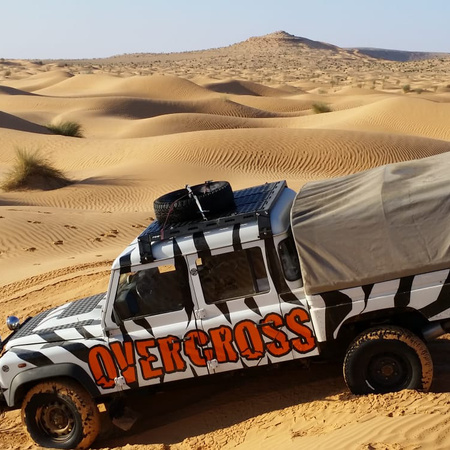
- Erg Chebbi & Erg Chegaga: Both sand dune areas formed by the wind offer very impressive dune landscapes. The approximately equally high dune ridges in these travel areas, however, require different efforts to reach. While Erg Chebbi is very easily accessible via asphalt roads and surrounded by three villages with over 80 tourist accommodations, the uninhabited Erg Chegaga can only be reached by off-road vehicles on a difficult 54 km sandy track, which is why this remote area is among the preferred destinations on our adventure trips.

The dunes of the Erg in the Moroccan desert
11. Public holidays with fixed dates in Morocco
The date of Islamic holidays is based on the Islamic lunar calendar and therefore shifts from year to year
| 1 Jan | New Year |
| 11 Jan | Manifesto of Independence |
| 1 May | Labor Day |
| 30 July | National Holiday |
| 14 Aug | Day of Integration of Western Sahara |
| 20 Aug | Revolution Day |
| 15 Oct | Youth Day |
| 06 Nov | Anniversary of the Peace March |
| 18 Nov | Independence Day |
12. Medical Information for Morocco
For legal reasons, as a tour operator we are not allowed to provide binding medical advice for the destination country Morocco and therefore refer to the information provided by the Federal Foreign Office of the Federal Republic of Germany, the Robert Koch Institute and the German Society for Tropical Medicine and International Health e.V.
13. Travel Information for Morocco
Current travel and safety information, details on entry and exit as well as specific legal notices and behavioral recommendations for your stay in Morocco can be obtained from the Federal Foreign Office of the Federal Republic of Germany.
14. Foreign Representation in Morocco
| Embassy of the Federal Republic of Germany in Rabat (There is an honorary consulate on Djerba) | |
| Jurisdiction/ Consular District: |
Kingdom of Morocco. |
| Location: | Rabat |
| Street address: | 7, Zankat Madnine, Rabat |
| Postal address: | Ambassade de la République fédérale d'Allemagne, B.P. 235, 10001 Rabat, Morocco |
| Telephone: | +212 537 21 86 00 |
| Fax: | +212 537 70 68 51 |
| E-Mail: | Contact form |
| Website: | http://www.rabat.diplo.de |
| Official languages in the host country: |
French and Arabic |
| Embassy of the Kingdom of Morocco in Berlin (Additional honorary consulates exist in Bremen, Düsseldorf, Kassel, Frankfurt am Main, and Tutzing near Munich) |
|
| Location: | Berlin |
| Street address: | Niederwallstraße 39 |
| Postal address: | Niederwallstraße 39, 10117 Berlin |
| Telephone: | 030 20 61 24 0 |
| Fax: | 030 20 612 420 |
| E-Mail: | [email protected] |
| Website: | http://www.botschaft-marokko.de |
15. Sources of Information for Morocco
German Weather Service
Federal Foreign Office of the Federal Republic of Germany
Wikipedia