
Namibia

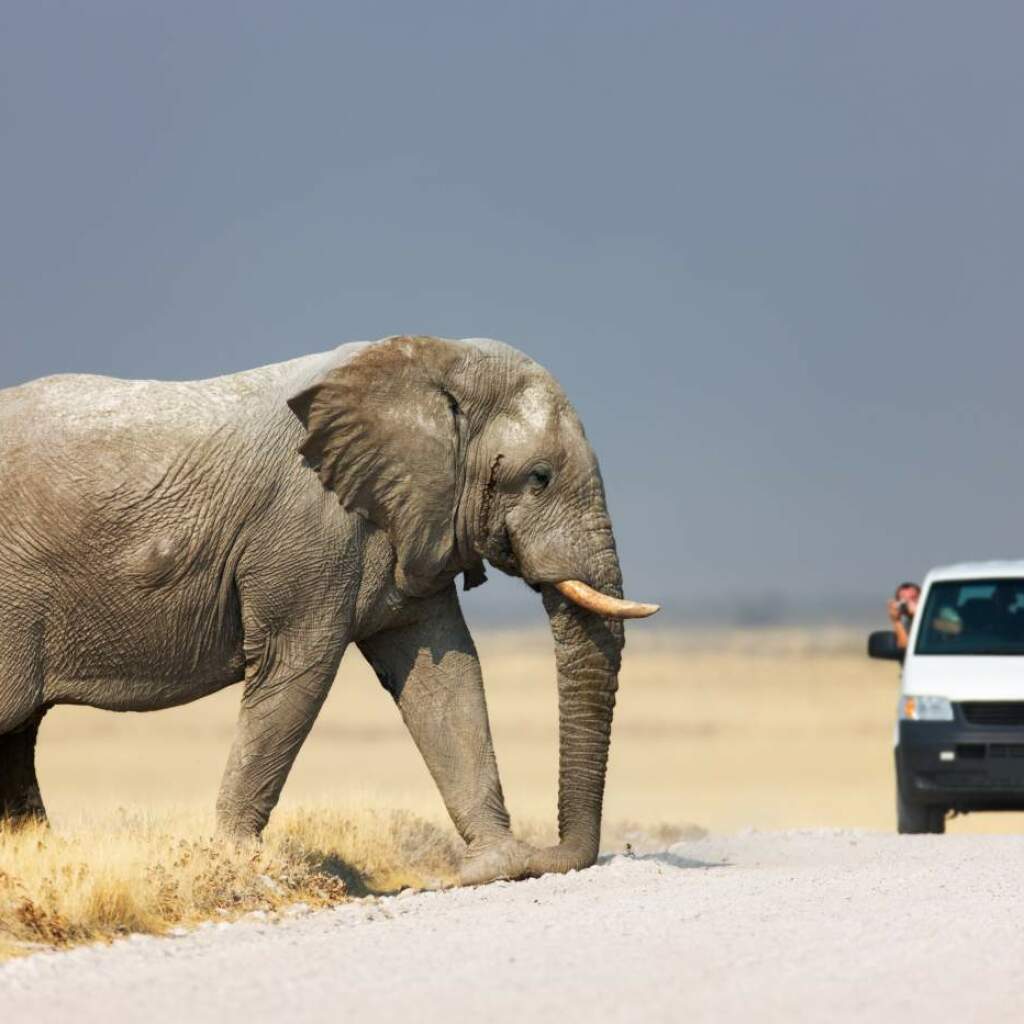
Etosha National Park lies in northern Namibia, 400 km from Windhoek, and 4 of our safaris cross it. Its 22,270 km² are home to 114 mammal species, among them elephant, lion, black rhino and giraffe. At its centre is the Etosha Pan, a salt pan of 4,760 km² that covers 23 percent of the park. In the dry season from May to October the animals gather at the waterholes along the gravel roads, and you watch them from the vehicle without a long search.
The Etosha Pan is the heart of the park: about 130 km long, up to 50 km wide and 4,760 km² in size. For most of the year it lies dry, a white plain of salt and clay with the air shimmering above it. After good rains between January and March, water stands in the pan for a few weeks, and flamingos and pelicans arrive in their thousands to breed.
Around the pan, mopane woodland, thornbush savanna and open grassland take turns. In the west, around Dolomite and the Galton Gate, the ground turns hilly, with dolomite outcrops and moringa trees. The east around Namutoni is flatter and more densely wooded. Water is available all year only at the waterholes: natural springs along the edge of the pan and boreholes with pumps run by the park. About 30 of them lie along the roads between Okaukuejo, Halali and Namutoni.
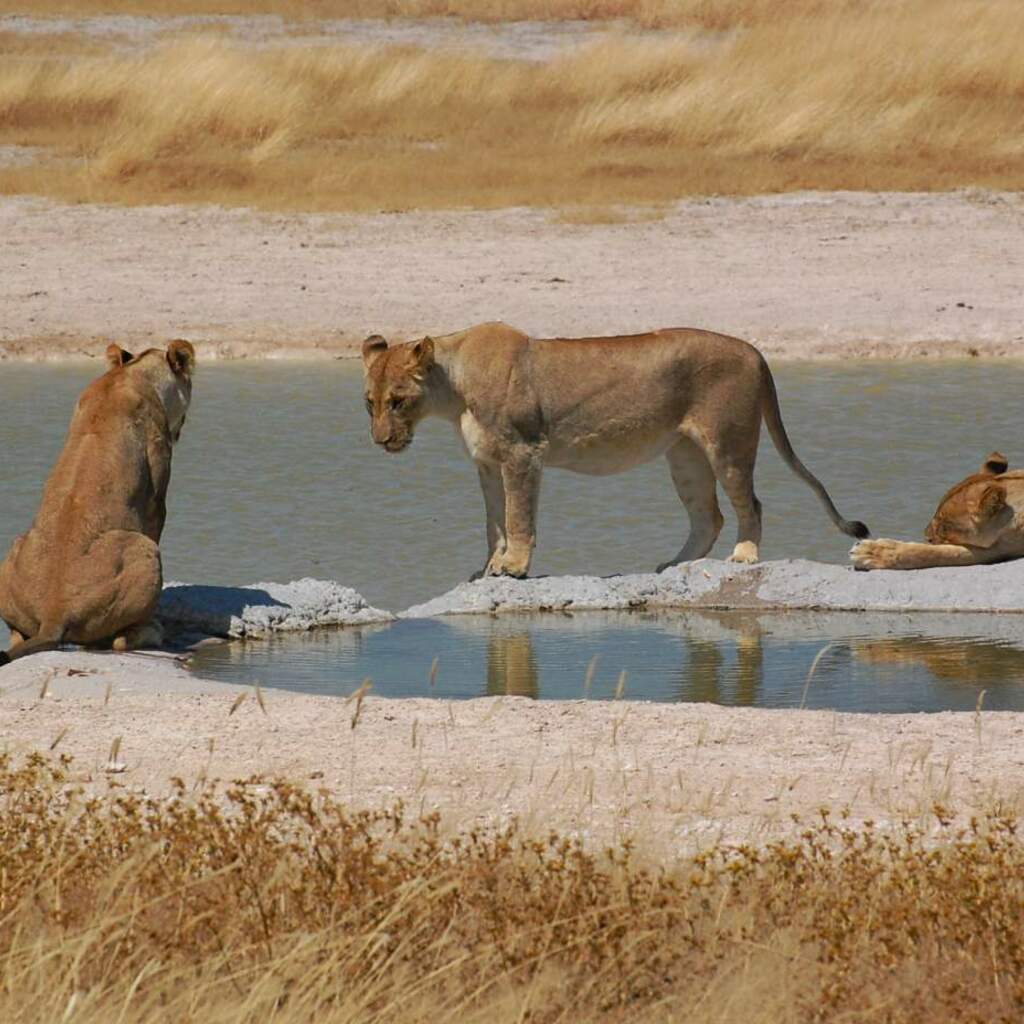
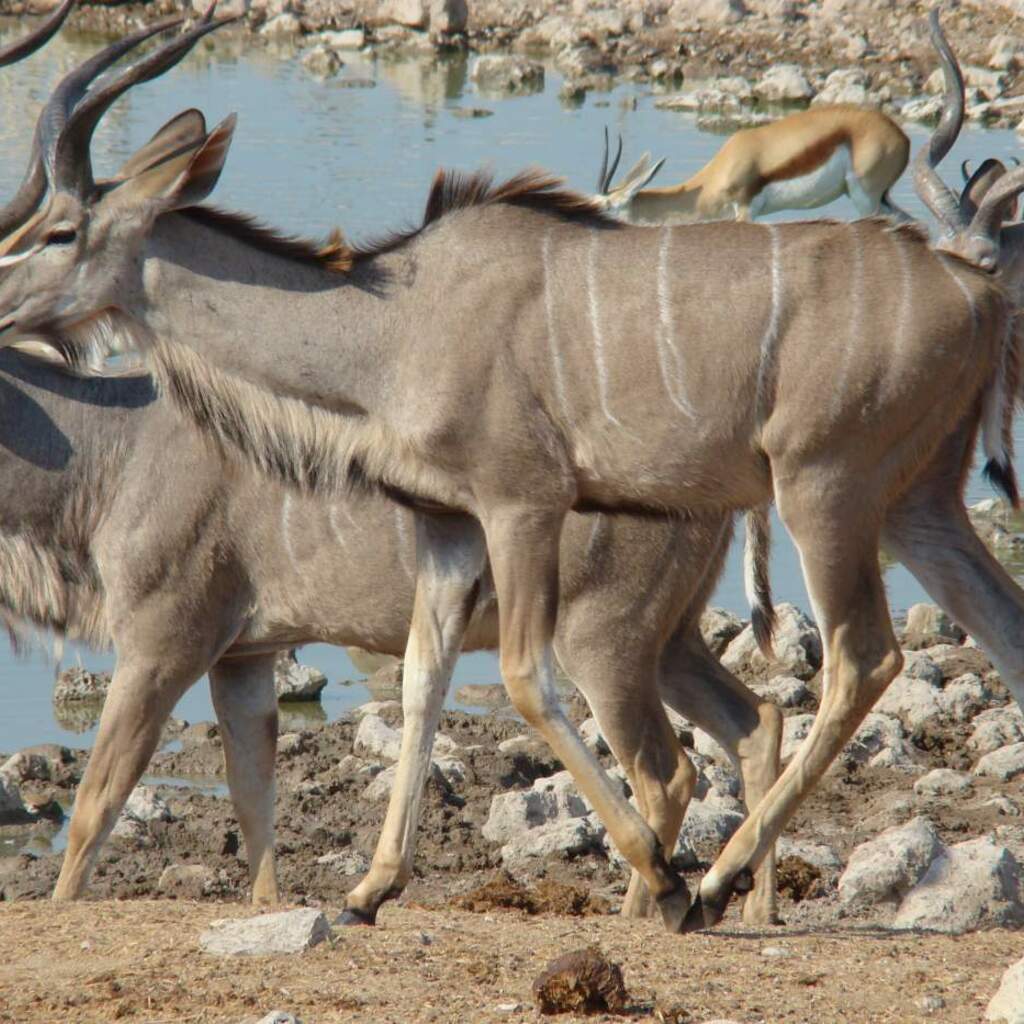
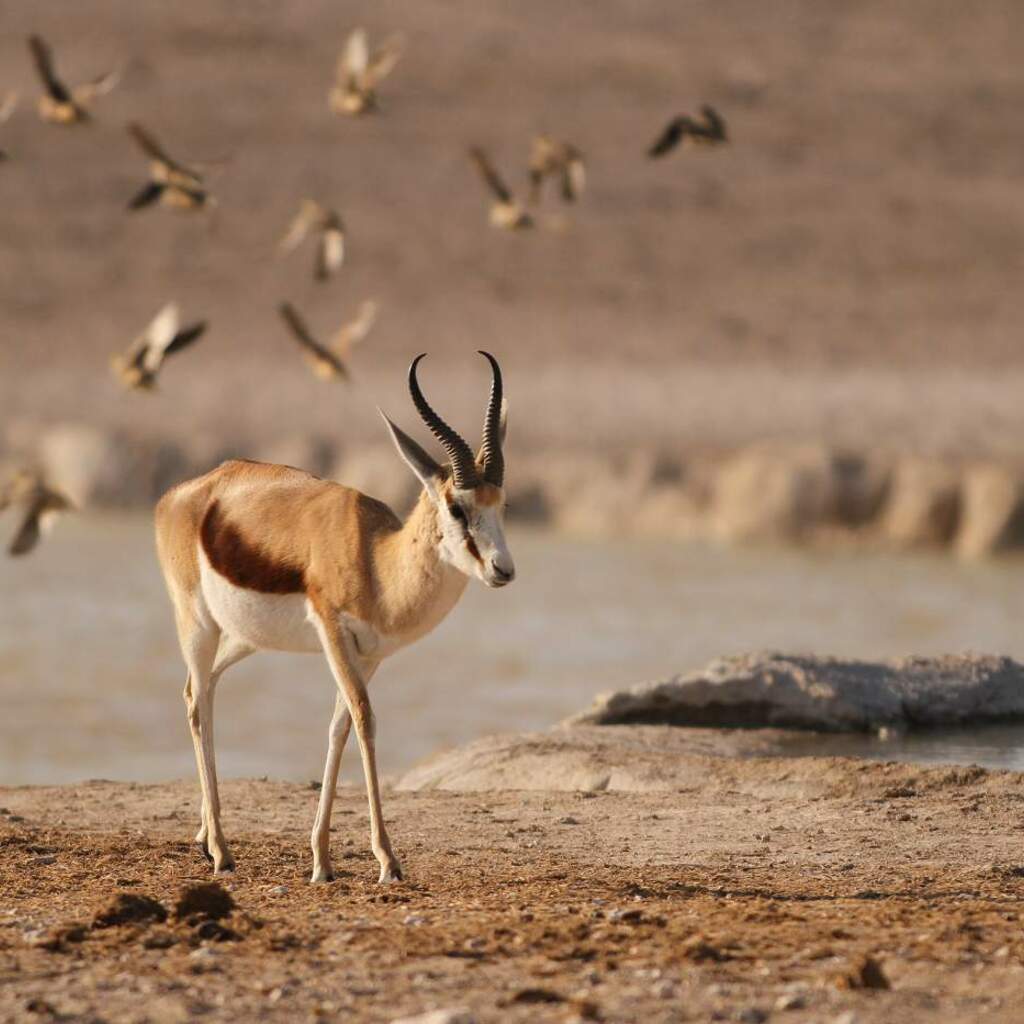
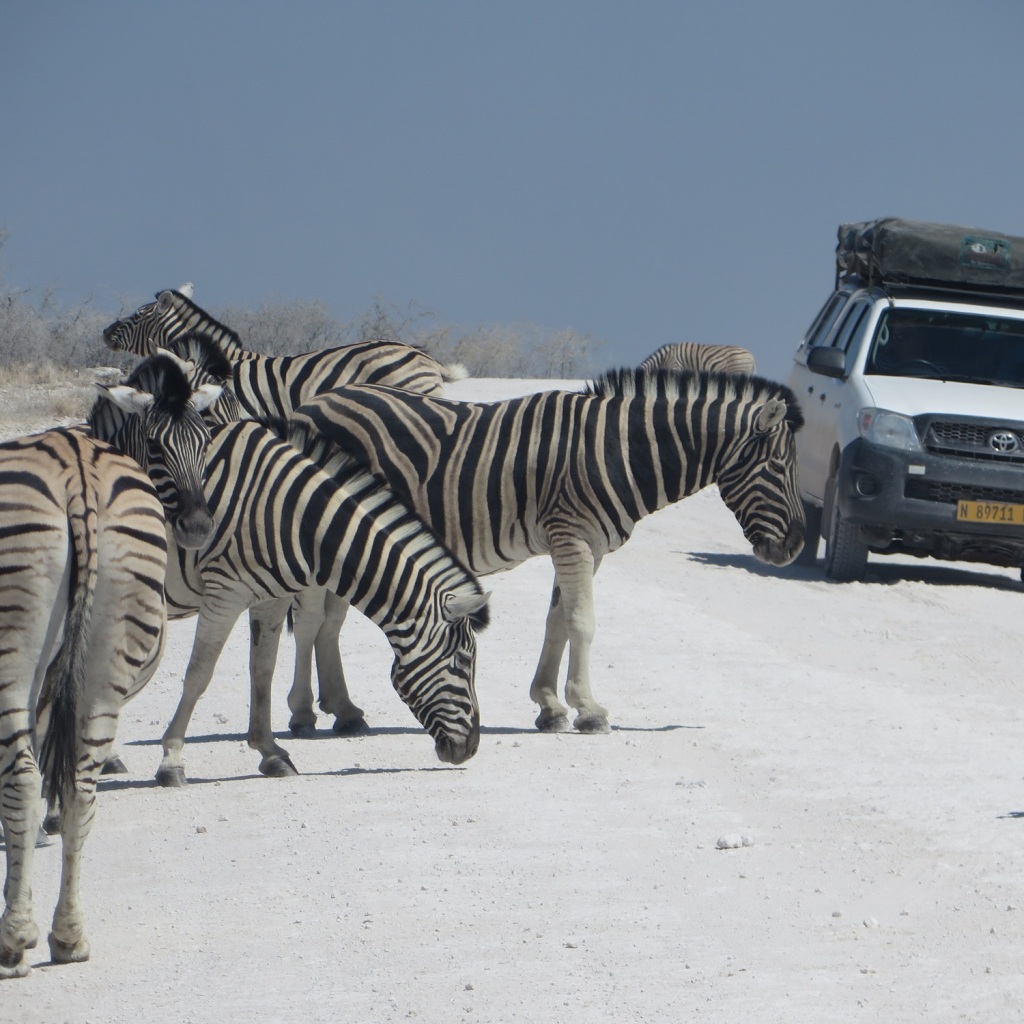
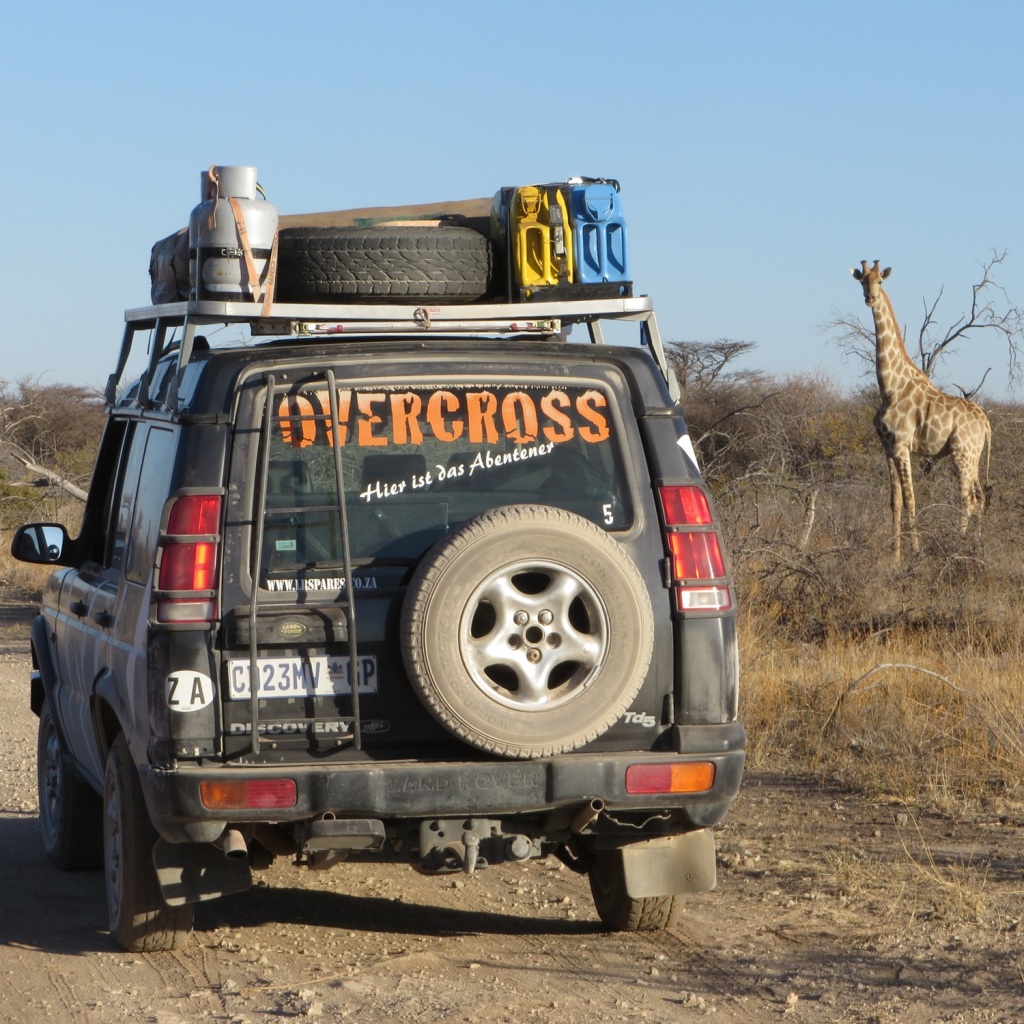
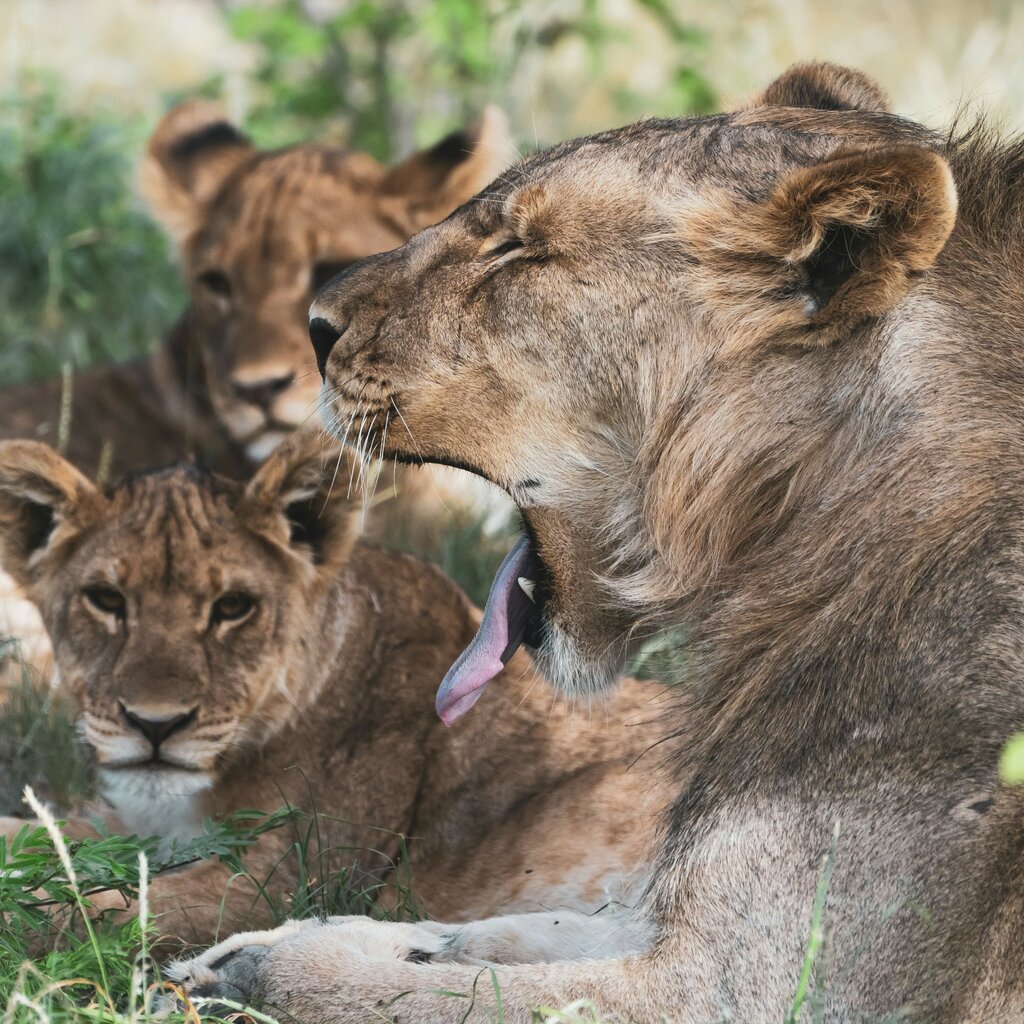
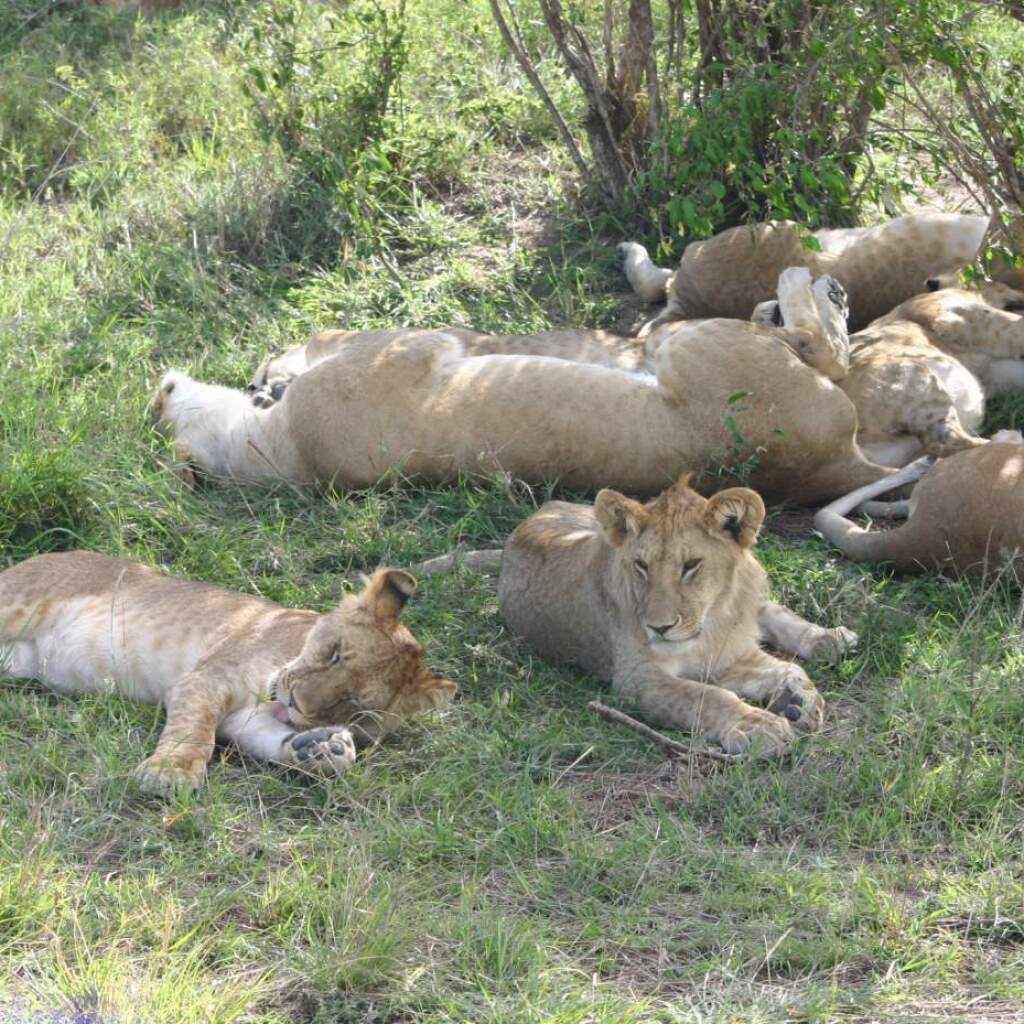
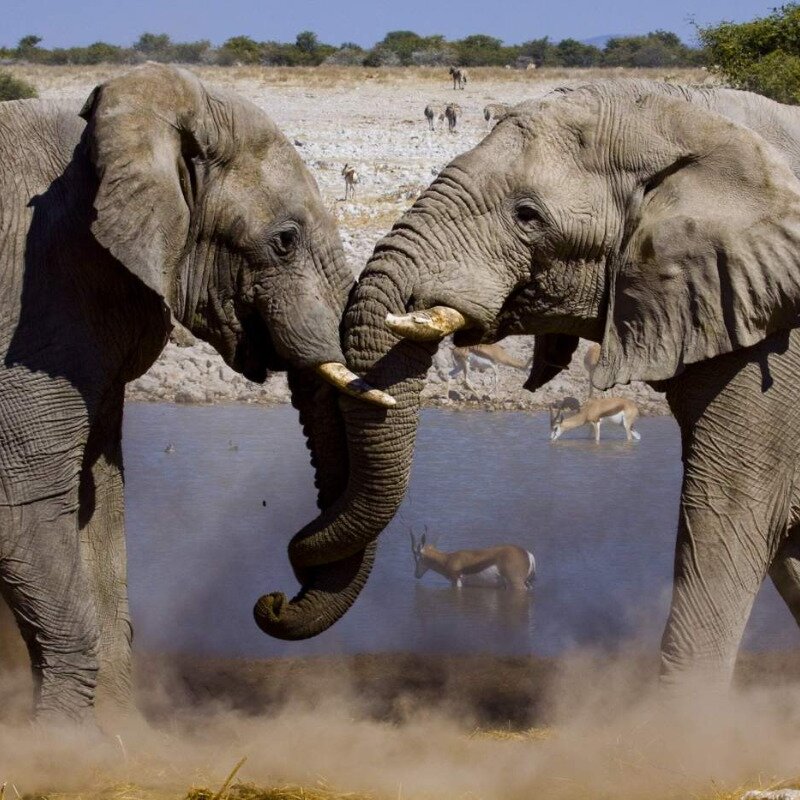
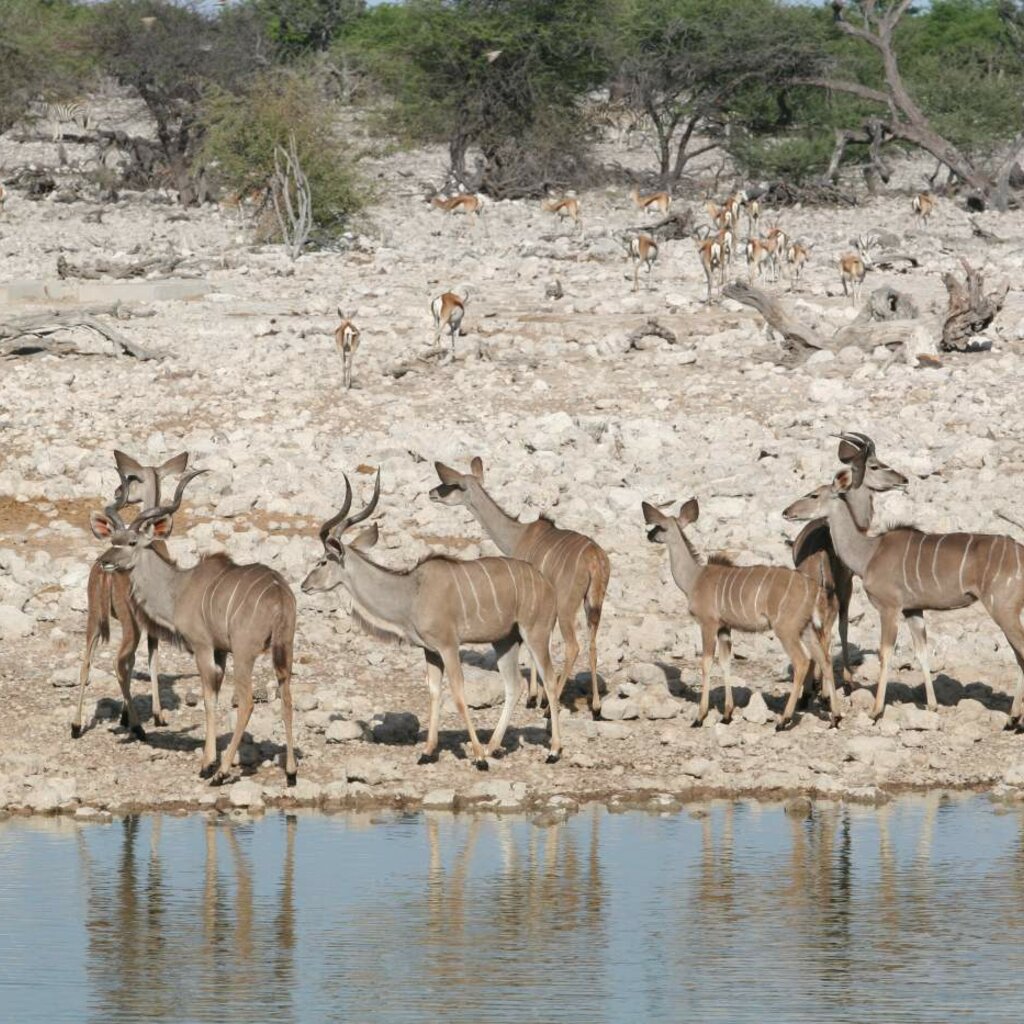
The park holds 114 mammal species, about 340 bird species, 110 reptile species, 16 amphibian species and 1 species of fish. The larger animals include more than 2,000 elephants, several hundred lions and one of the largest black rhino populations in the world. Add giraffe, plains zebra, oryx, kudu, blue wildebeest, eland and springbok in herds of several hundred. Only here and in the adjoining north-west of Namibia lives the black-faced impala, a subspecies of its own with a population of a few thousand. Leopard, cheetah and spotted hyena are present but seen less often.
What Etosha lacks: buffalo, hippo and crocodile, because there is no permanent river. If you are counting the Big Five, you will find 4 of them here.


The waterhole at Okaukuejo camp is floodlit at night and lies a few metres beyond the camp fence. Between 8 pm and midnight, black rhino, elephant and, in the dry season, lion come to drink here regularly. You sit on a stone bench, keep quiet and wait, nothing more is needed. In the high season from August to October there are evenings with 3 to 5 rhinos at the water at the same time. Halali (Moringa) and Namutoni (King Nehale) also have floodlit waterholes, with fewer people on the benches.
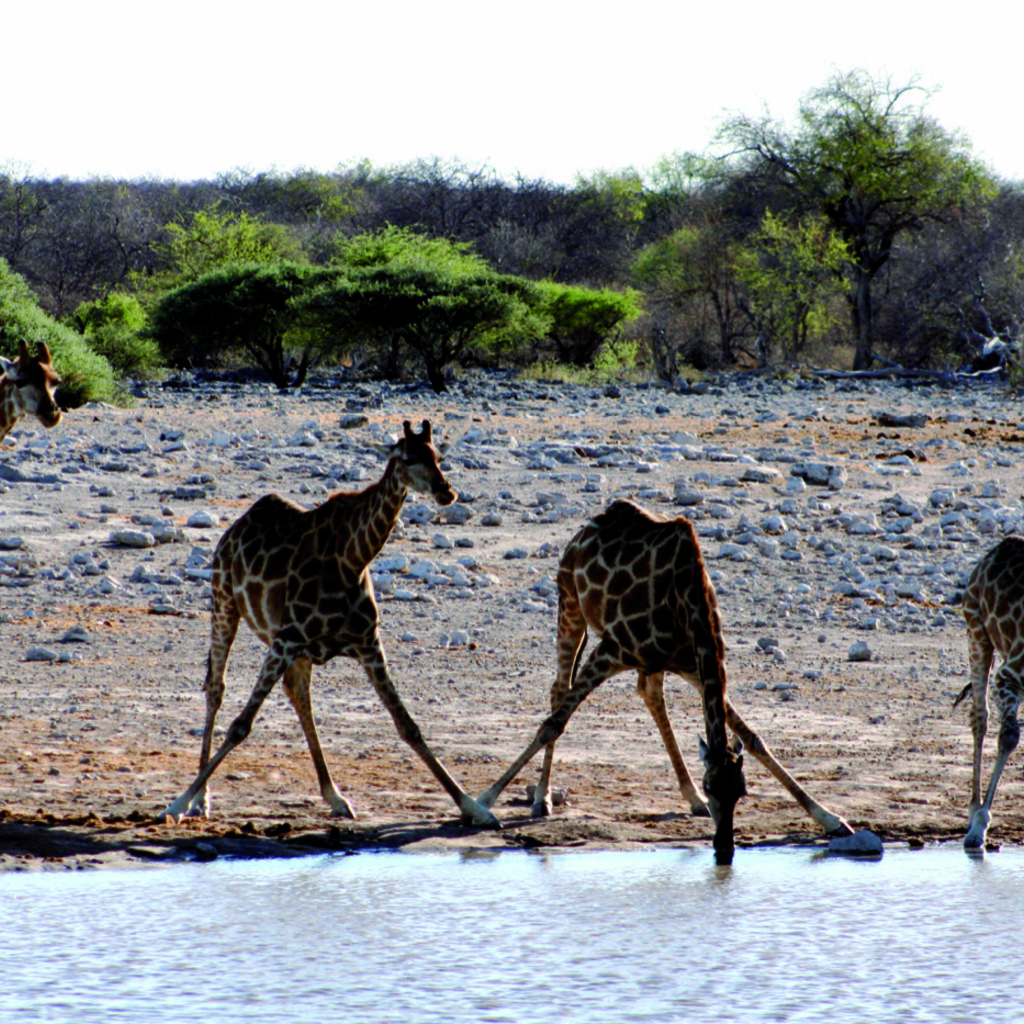
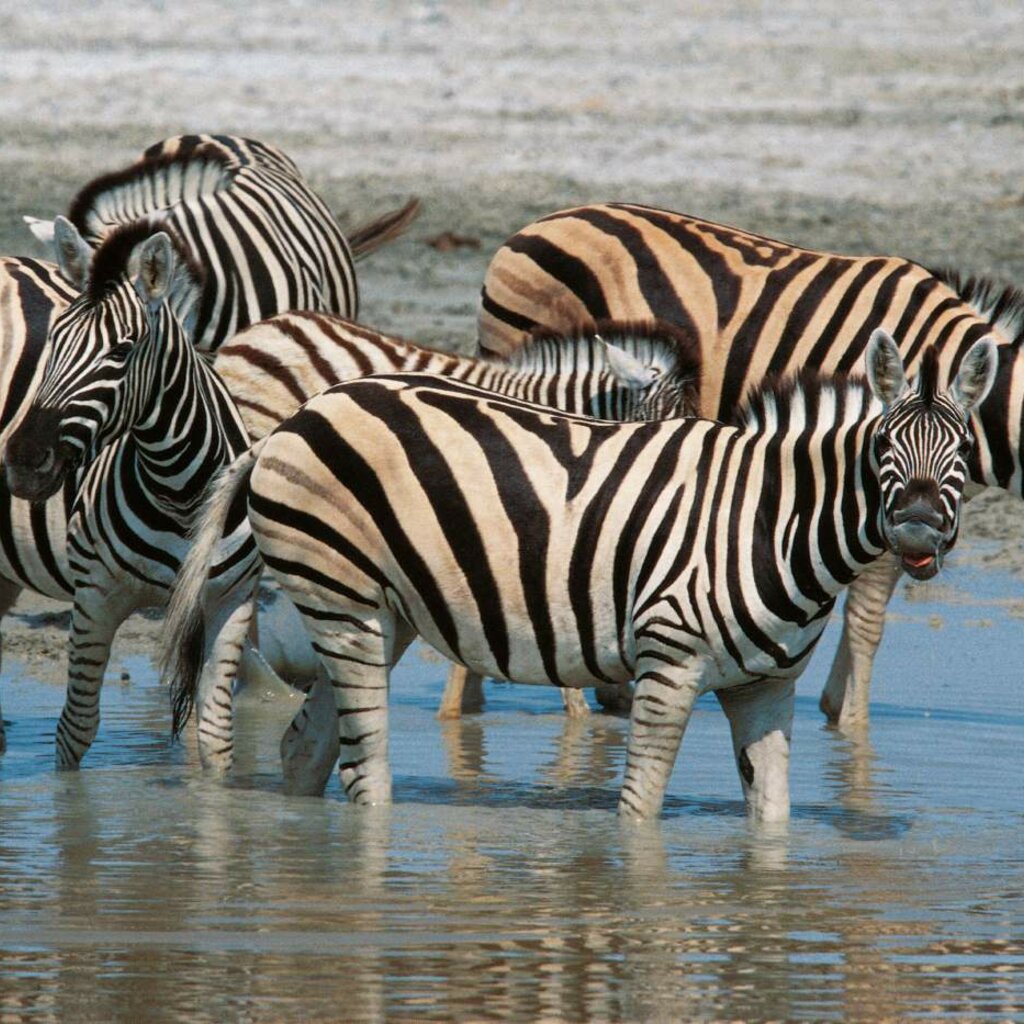
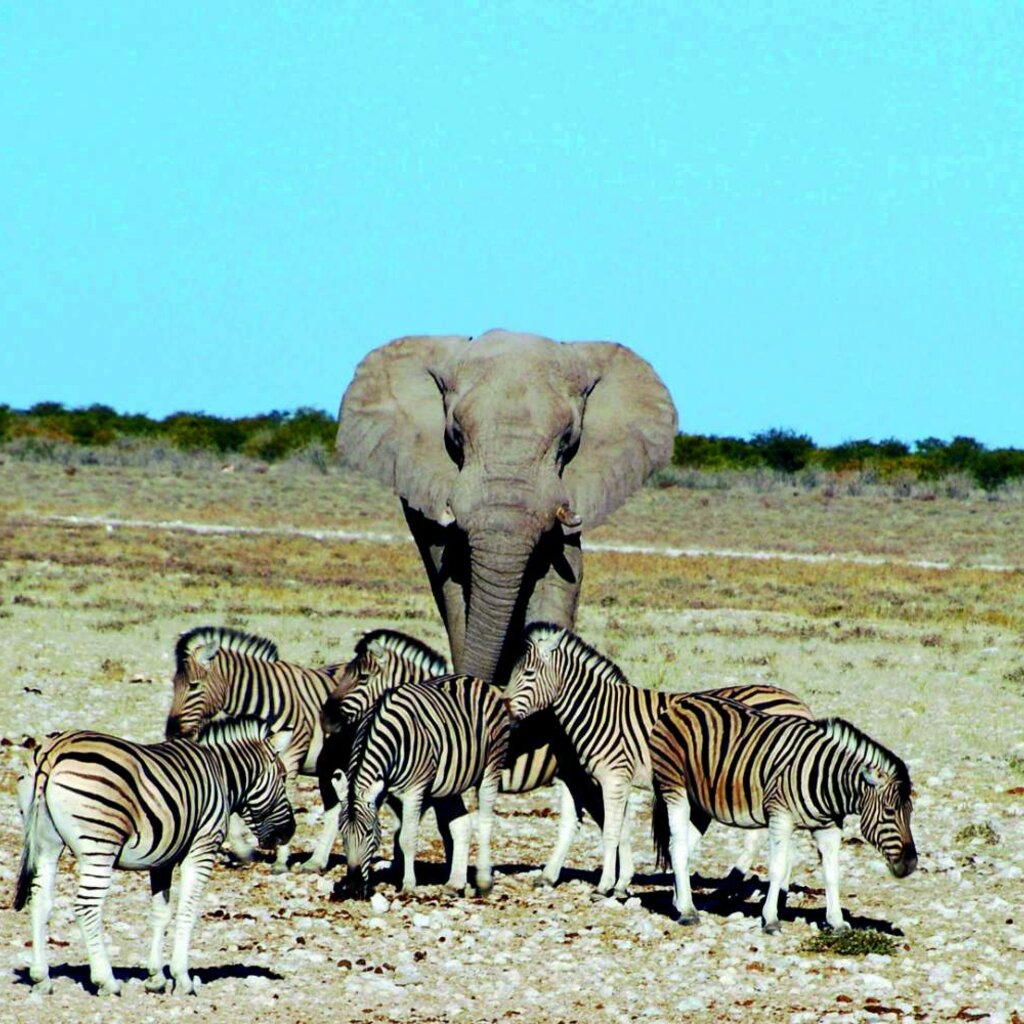
Etosha has no permanent river. Water is found at natural springs along the edge of the pan and at boreholes that the park runs with solar and diesel pumps. Because the animals have nowhere else to drink in the dry season, the game does not spread over 22,270 km² but gathers at about 30 waterholes along the roads. That is why Etosha is known as the park where you see animals most reliably: you drive from waterhole to waterhole, switch off the engine and wait 20 to 30 minutes. On a good day in September, elephant, zebra, giraffe, oryx and springbok stand at a single waterhole at the same time.
After good rains between January and March, water stands in the Etosha Pan for a few weeks, only a few centimetres deep but over many square kilometres. Then lesser and greater flamingos arrive in their tens of thousands to breed, joined by great white pelicans. It does not happen every year, and the colony lies far out on the pan. From the Etosha Lookout north of Halali a track leads straight out onto the pan, and you see the white plain to the horizon, with or without water.
Etosha has two seasons, and they decide what you see. Dry season, May to October: no rain, the grass is short, the natural waterholes dry up and the animals gather at the pumps. June and July are cool, around 25 °C by day and close to 0 °C at night in Okaukuejo. August to October is the best time for wildlife: warm, dusty, up to 40 °C at midday from October, but elephant, zebra and giraffe stand at the water in their hundreds.
Rainy season, November to April: afternoon thunderstorms, on average 418 mm of rain a year, almost all of it between December and March. The park turns green, springbok and wildebeest drop their young, migrant birds arrive, and with some luck there is water in the pan. In return the game is dispersed, the grass is high, and a few minor tracks in the west and north are closed after heavy rain. The main roads between Anderson Gate, Okaukuejo, Halali and Namutoni are gravel and stay open all year.
For a first safari we recommend June to October. If you prefer birds, green landscapes and empty camps, come in February or March.
Park entry for foreign visitors costs N$ 150 per person per day, about US$ 8 or 7 euros. A vehicle with up to 10 seats adds N$ 50 per day. You pay at the gate or in the camps, by card or in Namibian dollars; South African rand is accepted 1:1. Whether park fees are included in the trip price is stated under Services on each trip.
From Windhoek airport it is about 400 km to Anderson Gate in the south, 4.5 to 5 hours on the B1 and C38 via Okahandja and Outjo. To Von Lindequist Gate in the east near Namutoni you drive about 530 km via Otjiwarongo and Tsumeb. The park has 4 gates: Anderson (south), Von Lindequist (east), King Nehale (north) and Galton (west, only for guests of Dolomite Camp). All gates open at sunrise and close at sunset; anyone outside a camp after that pays a fine. Our trips travel there from Windhoek by minibus or safari truck.
2 nights are the minimum, 3 nights are ideal: one at Okaukuejo for the night waterhole, one at Halali or Namutoni for the east. The road from Okaukuejo to Namutoni is about 140 km long and takes a full day with stops at the waterholes. Our trips spend 2 to 3 days in the park, each with game drives in the early morning and late afternoon, when the animals are active.
Speed limit 60 km/h. Outside the fenced camps and the marked toilet stops you stay in the vehicle, even for a photo. No feeding, no hooting, no drones. The camps are fenced and the gates locked at night. There is mobile coverage in the camps, hardly any on the roads. Fuel is available at Okaukuejo, Halali and Namutoni.
Etosha lies in a malaria area with a seasonal risk. The risk is highest in the rainy season from November to June and low in the dry season from July to October. Talk to a travel doctor about prophylaxis before the trip, and in any case pack long sleeves for dusk and a mosquito repellent with DEET. A yellow fever vaccination is not required for Namibia if you arrive directly from Europe or North America.
The three state-run camps lie inside the park and are the only way to experience a night waterhole. Okaukuejo has the best-known floodlit waterhole, Halali lies in the middle, Namutoni inside a German fort from colonial times. All three offer campsites with ablution blocks, chalets, a restaurant, a fuel station and a shop. Our camping safaris pitch their tents here, with two-person tents, mattresses and a kitchen on the truck.
Small-group trips sleep in permanent tented camps or chalets with a bed, shower and toilet, inside or on the edge of the park. You get the sounds of the night without the work of pitching a tent. Onkoshi on the edge of the pan and Dolomite in the west are the two small camps inside the park, with around 15 to 20 units each and no day visitors.
Around Anderson Gate and Von Lindequist Gate there are private lodges, 10 to 30 km from the park, with a pool, a restaurant and their own game-drive vehicles. Advantage: more comfort and quiet nights. Disadvantage: you have to drive to the gate first in the morning and miss the first half hour after sunrise inside the park. The lodge versions of our trips use houses in this position.
June to October. In the dry season the animals gather at the roughly 30 waterholes, the grass is short, and you see elephant, rhino, lion and giraffe almost guaranteed. August and September are the months with the most sightings; October is very hot at up to 40 °C. The rainy season from November to April is green, full of birds and empty, but the game is dispersed.
2 nights are the minimum, 3 nights are ideal. The park is about 140 km long from Okaukuejo in the south to Namutoni in the east, and with stops at the waterholes that is a full day. Our trips spend 2 to 3 days in the park, with game drives in the morning and late afternoon.
114 mammal species, among them more than 2,000 elephants, several hundred lions, black rhino, giraffe, zebra, oryx, kudu, wildebeest and springbok. Leopard, cheetah and hyena are present but seen less often. Buffalo, hippo and crocodile are absent because the park has no permanent river. Add about 340 bird species, in the rainy season also flamingos on the pan.
Yes, Etosha lies in a malaria area with a seasonal risk. It is highest in the rainy season from November to June and low in the dry season from July to October. Talk to a travel doctor about prophylaxis before the trip and pack long sleeves and a repellent with DEET for dusk.
N$ 150 per person per day for foreign visitors, about US$ 8 or 7 euros, plus N$ 50 per day for a vehicle with up to 10 seats. You pay at the gate or in the camp, by card or in Namibian dollars. Whether park fees are included in the trip price is stated under Services on each of our trips.
Yes, Etosha is a self-drive park with gravel roads that a normal car can handle in the dry season. Speed limit 60 km/h, the gates close at sunset. On our trips a guide drives, someone who knows the waterholes and where the lions were lying in the morning; you sit in the minibus or truck with a view to all sides.

How did you
hear about us?