At a glance Contents
- The short answer: yes, but different from summer
- Light, rain and tracks: what changes in October
- Two faces of the island: coast and Barbagia
- Motorcycle in October: asphalt, gravel and the cold factor
- 4x4 in October: more protection, more responsibility
- An example week in October: how we would lay it out
- Planning your own trip in October
- October or September: an honest comparison
- Frequently asked questions
The short answer: yes, but different from summer
Anyone planning Sardinia in October usually asks the same thing: is it still worth it, or is the island closed after the season? It is not closed. The Sardinia dossier gives April to June and September/October as the best time to travel, and that matches what we know of the island: the summer heat is gone, the coastal roads are free, and the interior shows its quiet side.
To be honest, though: October is not a month where you should count on stable conditions. The days are noticeably shorter than in midsummer, the first rain fronts roll in, and they like to get stuck on the high ground of the Gennargentu. That changes the character of a trip. You plan shorter stages, keep some slack in your daily schedule and give yourself more time on the tracks than you think you need.
And one more thing before you read on: our guided tours to Sardinia run in September. The next departures are in the calendar for 4 and 5 September 2027, not in October. This article therefore describes October as a month for making your own way there by ferry with your motorcycle or 4x4, and tells you what you can take from our tours for your own planning. If you would rather ride guided and are not tied to autumn, September is the right window.
Light, rain and tracks: what changes in October
Three things set October apart from summer, and all three affect how you ride.
Shorter days
In summer you can ride into the evening without any surprises. In October the sun sets much earlier, and in the mountains it gets dim even sooner because the valleys lie in shadow. If you plan a day stage on gravel in the Barbagia, set it up so the last third is on asphalt or a surfaced road. A breakdown on a lonely track just before dark is the classic situation that leads to the stories nobody likes to live through.
The first rain
Rain in Sardinia is not a permanent state, it comes in fronts. It falls first and hardest where the air has to rise: on the flanks of the Gennargentu massif and in the Supramonte. The coast can be sunny at the same time. That makes planning appealing, because you can switch between mountains and coast according to the forecast instead of grinding through a fixed route.
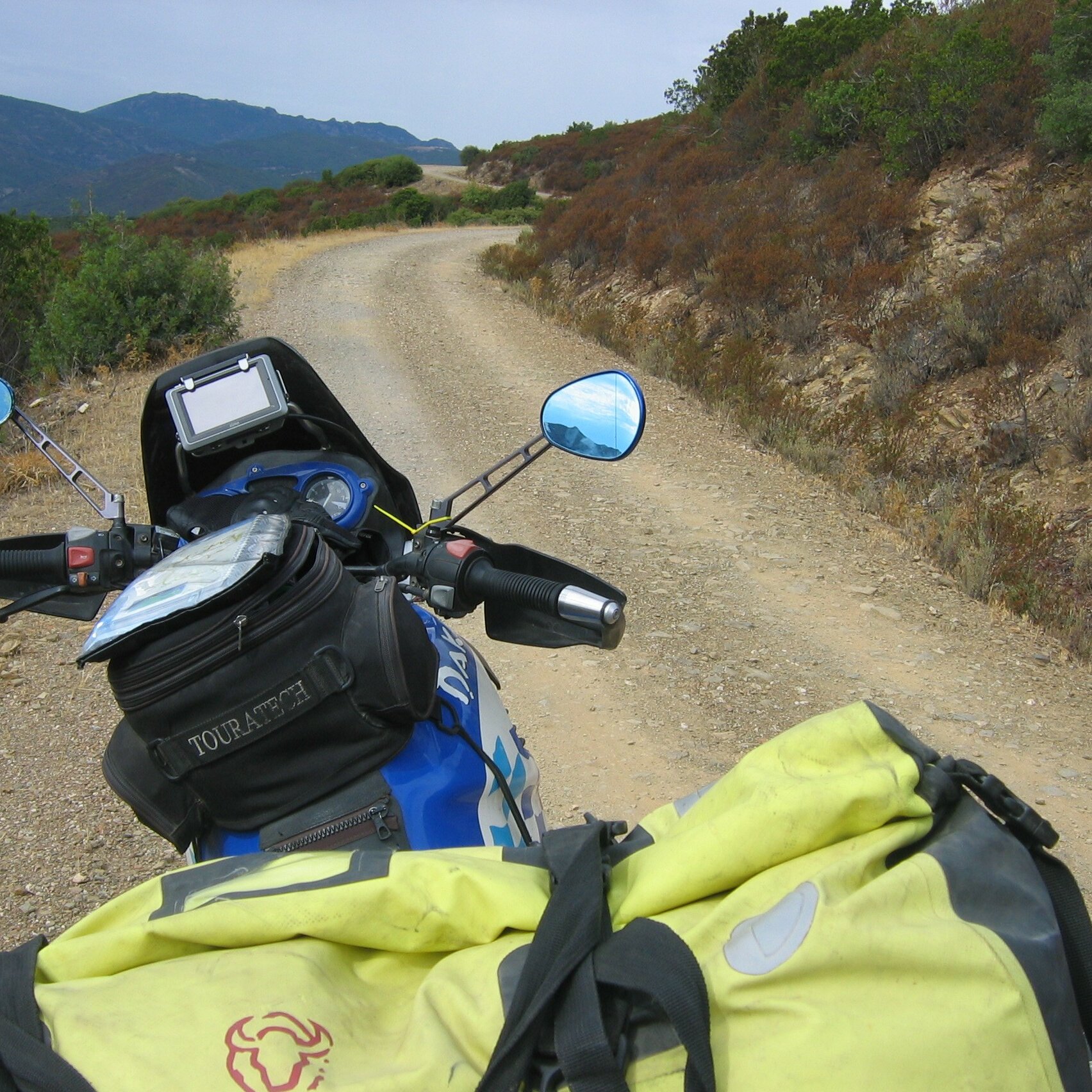
What rain does to the tracks decides how much fun you have. Dry gravel is predictable. Wet clay in the dips, washed-out gullies and swollen stream crossings are not. The participants of our 4x4 tour describe the terrain in the Gennargentu and the Supramonte as very demanding anyway, with narrow gravel tracks and mountain roads that require constant concentration. When it is wet, that demand goes up. If you are out there in October, check the route beforehand and, if in doubt, keep an asphalt alternative in your pocket.
Empty roads, closed houses
The flip side of the quiet: not every guesthouse and not every restaurant on the coast is still open in October. The further you get from the big holiday scene, the more likely you are to need to call ahead. Inland this is less of a problem, because people live there all year round, but the same applies: petrol stations are rarer and have break times. That is in the dossier and is no different in October. Fill up early, not at the last opportunity.
Two faces of the island: coast and Barbagia
In autumn Sardinia is two destinations in one. If you combine both, you turn the uncertain October weather into an advantage.
Coastal roads for cruising
The coast at the Costa Smeralda and around Capo d'Orso, the Bear Cape, is what many riders travel here for in the first place: winding coastal roads with wide views of the sea. The dossier describes the coastal roads as well built. In October you have them to yourself, without the columns of motorhomes and rental cars that set the pace in summer. The light is softer, the colours are richer, and the beaches at the bays are empty.
The water has still stored some warmth after the summer. Exactly how warm depends on the year, and we deliberately give no figure here that we cannot back up. For a rest day at the beach it is usually enough if the sun plays along. On our enduro tour such a rest day is firmly planned, with white beaches, swimming or a boat trip. In your own October planning, too, you should build in a buffer day that has exactly this job: waiting out the weather or recovering.
Barbagia: narrower, twistier, slower
The interior, the Barbagia, is according to the dossier full of bends and narrower than the coastal roads. This is where Orgosolo, the bandit village with its murals, and Fonni, the highest village on the island, are found. The murals in Orgosolo tell of the lives of the shepherds and the fight over land, and in autumn they are a good reason for a riding day where the track is not the main focus. At Lake Flumendosa you find quiet views, and from there it is not far to the nuraghi, the tower-like stone structures of the Bronze Age that are UNESCO World Heritage.
In October the Barbagia is the region where you depend most on the weather. Plan it for the days when the forecast is dry, and put the coastal stages on the days in between. If you stay flexible, you have a better chance of a trip without frustration.
Motorcycle in October: asphalt, gravel and the cold factor
On a motorcycle October feels different from September. Mornings in the mountains are fresh, the air is damp, and in shaded spots the asphalt can stay wet for a long time. This affects cornering above all in the Barbagia, where the roads are narrow and leaves, sand or sheep can be on the road. Expect layers under your jacket, a rain suit that is really waterproof, and tyres that work outside summer too.
If you travel with your own motorcycle, you have the advantage of knowing your machine. If you want to ride gravel, a lighter enduro will serve you better in October than a heavy adventure bike, because wet tracks are less forgiving of weight. On the guided enduro tour in Sardinia you ride nine days between the Gennargentu, the Supramonte and the coast, with daily briefings and precise GPS tracks, as participants stress in their reviews. You need exactly this preparation when riding alone, too: load the tracks beforehand, mark alternatives, plan your fuel stops.
For those who want less off-road, the guided tour with a rental motorcycle offers a calmer variant. It is meant for beginners off-road, leads nine days across the Supramonte and the Costa Rei and combines winding coastal roads with Orgosolo and Capo d'Orso. The principle transfers well to October: asphalt and easy tracks, stages that are not too long, a clear plan for bad weather.
4x4 in October: more protection, more responsibility
In a 4x4 you are less at the mercy of the weather, but not independent of it. Rain makes gravel tracks slippery, and a heavy vehicle in mud is harder to recover than a motorcycle. In the Gennargentu especially you should know the condition of the tracks before you drive in, and never roll alone into remote terrain when the forecast is uncertain.
The 4x4 tour through Sardinia leads nine days over small gravel tracks and winding back roads, through the Gennargentu and Supramonte massifs and over sand tracks to lonely bays. The group is limited to a maximum of eight vehicles, and you stay at campsites with breakfast, with the option of guesthouses or hotels. Camping is a good reference point for your own October planning: in autumn a roof over your head is worth gold on the wet days, and if you plan with fixed lodging anyway, your daily schedule stays more flexible.
Participants describe the terrain as demanding and the tour as one for experienced drivers who bring concentration and stamina. In October that applies twice over. If this is your first time off-road, autumn is not the month to learn driving technique on wet gravel. September with a guided group is the better choice for that.
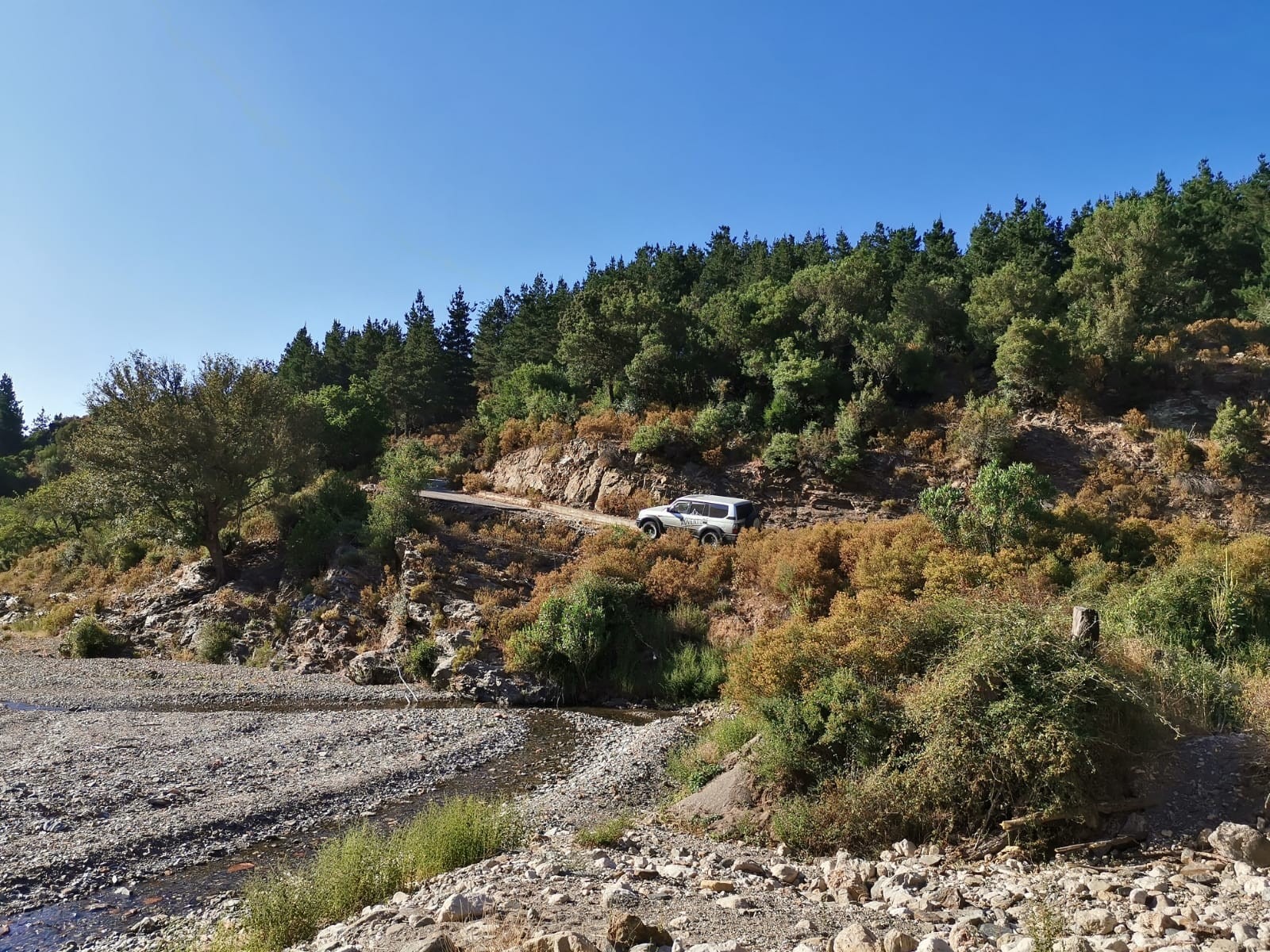
An example week in October: how we would lay it out
So that this does not stay abstract, here is a thought model for a week that plays with the weather instead of against it. It is not a bookable tour but a thinking aid, based on what the island has to offer.
Start on the coast. The first one or two days are for arriving after the crossing: coastal roads, short stages, early at your lodging. You get used to the light, the traffic and the quirks of the roads, and you see how the weather develops. After that you decide based on the forecast. If it looks dry, you ride inland: Orgosolo, Fonni, Lake Flumendosa, maybe the nuraghi. If a front is moving in, you stay on the coast and ride the route at Capo d'Orso or around the Costa Rei.
The middle of the week is your buffer. Deliberately plan the day there where you have nothing on, and use it as needed as a beach day, a workshop day or an extra gravel stage if the weather is surprisingly good. The end belongs to the coast again and the way back to the ferry, with reserve so that a rainy last day does not endanger the crossing.
This structure is the real difference between a good and an annoying October trip: not the route, but the willingness to swap it.
Planning your own trip in October
Because our tours do not run in October, here are the points you should sort out for a trip of your own. The most important first: everything concerning papers, entry, driving licence, money and emergency numbers is kept up to date on our page Travel information Sardinia. We do not repeat it here so that nothing goes out of date.
- Book the ferry early: Even after the high season, crossings with a vehicle are not available at will, and timetables thin out in autumn. Check times and conditions with the operator in good time.
- Plan buffer days: At least one day with nothing planned. It either saves you a rained-out stage or gives you the beach day.
- Tracks and alternatives: Load every gravel stage as a track and mark an asphalt bypass. In the mountains you do not have reception everywhere.
- Fuel and provisions: Inland, petrol stations are rare and take breaks. Fill up whenever you have the chance, and carry water and something to eat.
- Check lodgings: On the coast not all houses are open. Call ahead before you drive a detour.
- Equipment: The dossier recommends protective gear; in October rain protection and warm layers are part of it.
We have one firm rule of thumb after the first rainy days: never ride a stage that you could not finish in the wet. If you take that as a principle, you spare yourself most of the problems.
October or September: an honest comparison
If you are flexible, you should weigh both months against each other. September is on average more predictable: longer days, warmer mornings, more stable tracks. On top of that, our guided dates are exactly there, with practised groups, briefings and people who know the routes. October, by contrast, is the month for those who seek quiet, who ride alone or with friends anyway and who can cope with changeable weather.
| Criterion | September | October |
|---|---|---|
| Guided tours | Yes, departures 2027 | No, own travel only |
| Daylight | Longer | Shorter, tighter stages |
| Rain risk in the mountains | Lower | Higher, especially Gennargentu |
| Coastal roads | Well visited | Very quiet |
| Lodgings on the coast | Mostly open | Check beforehand |
Our advice: if you want to ride off-road and have little experience, take September and a guided group. If you already know Sardinia or mainly want coastal roads and villages, October is a very good time, as long as you plan buffers and alternatives. And if you only want to see the island briefly in autumn, a long weekend on the coast without gravel is perfectly enough.
Answered briefly
Frequently asked questions
- Can you still ride a motorcycle in Sardinia in October?
- Yes. The coastal roads are well built and much emptier in October than in summer. In the mountains you have to expect shorter days, damp asphalt and the first rain fronts. Plan shorter stages and buffer days.
- Does OVERCROSS offer tours to Sardinia in October?
- No. Our guided Sardinia tours run in September, and the next departures are at the start of September 2027. In October you travel on your own, for example by ferry with your own motorcycle or 4x4.
- Where does it rain first in Sardinia in autumn?
- Rain falls first on the flanks of the Gennargentu massif and in the Supramonte, because the air rises there. The coast can be sunny at the same time. That is why it pays to swap mountain and coastal stages depending on the forecast.
- Are gravel tracks harder in October?
- When wet, yes. Clay in the dips, washed-out gullies and swollen stream crossings make the tracks in the Gennargentu more demanding. Only ride stages you could also finish in the rain, and keep an asphalt alternative ready.
- Where do I find information on entry, papers and emergencies?
- All details on entry, driving licence, money and emergency numbers are kept up to date in our travel information on Sardinia. They are current there, so we do not repeat them in this article.