Travel Information

South Africa: best time to visit, entry, travel facts

When safari, the Cape and a motorcycle tour in South Africa work best, what entry requires, and what you need to know about roads, fuel and emergency numbers.

View tours
Visa
Visa-free for up to 90 days for travellers from DE, AT, CH and the EU
Since 1 July 2026, a digital Traveller Declaration is mandatory before entry; a return ticket is often required
Passport validity
Valid at least 30 days beyond departure, 2 blank pages
Best time to travel
May to September (dry season in the northeast/Kruger region)
Currency
South African rand (ZAR); card almost everywhere, cash for rural petrol stations and toll booths
Time zone
SAST (UTC+2), no daylight saving
Side of the road
Drive on the left
Helmet & gear
Helmet with chin strap mandatory for rider and pillion (ECE 22.06)
Main road
N2 Garden Route, N1/N3/N12 - consistently well-developed tarred network
Fuel
95 octane nationwide, 93 near the coast
In the Karoo/Northern Cape, sometimes 150-200 km between petrol stations
Int'l driving permit
International driving permit (1949 Geneva Convention) recommended
Only covers the vehicle classes on your home licence, valid 1 year

Safari season in South Africa: when you see the animals

Dry season means short grass and busy waterholes, wet season means newborns and green bush. Which months for which park, and what the Cape adds in winter.

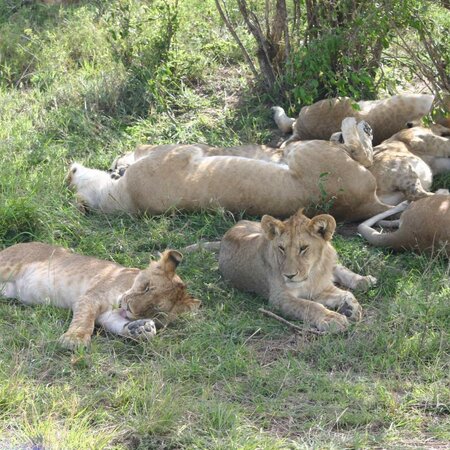
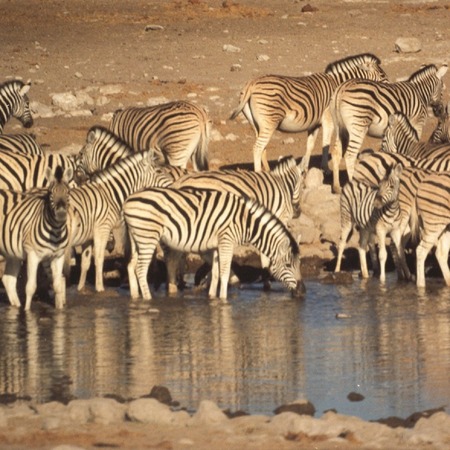
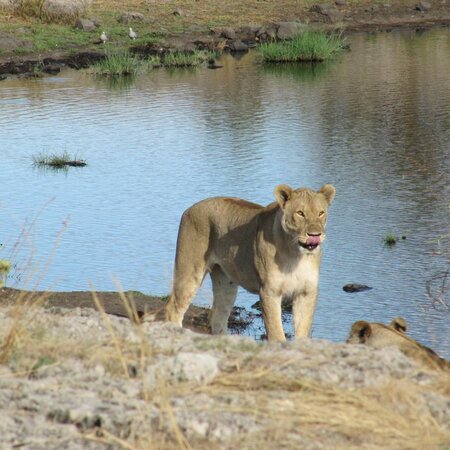
Game viewing in the Kruger National Park follows the rain, not the calendar. From May to October the Lowveld gets almost no rainfall (Skukuza: 8 to 25 mm a month), the grass is grazed down to knee height, the trees are bare, and the animals walk to the few remaining water points on the Sabie, the Olifants and at the boreholes. Visibility then reaches 100 to 200 m into the bush, and lions, leopards and wild dogs can be waited for at the water. September and October are the driest weeks and the most productive for predators, but also the hottest: 30 to 34 degrees in the afternoon.

With the first thunderstorms in November the park changes colour. The grass grows to 1 to 2 m within 3 weeks, the waterholes lose their pull, and the herds spread across the full 19,485 km². Sightings become rarer and shorter, but the impala lambs arrive: most births fall into a window of 3 to 4 weeks around the turn of November and December, and hyenas, leopards and jackals follow. For birders, December to March is the best time, because the migrants from Europe and central Africa join in; the park lists over 500 species.

There is no migration like in East Africa; fences and waterholes keep the herds inside the park all year. What the country has instead are two events at sea: southern right whales off Hermanus and De Hoop from June to November, peaking in September and October, and the Sardine Run along the KwaZulu-Natal coast in June and July.

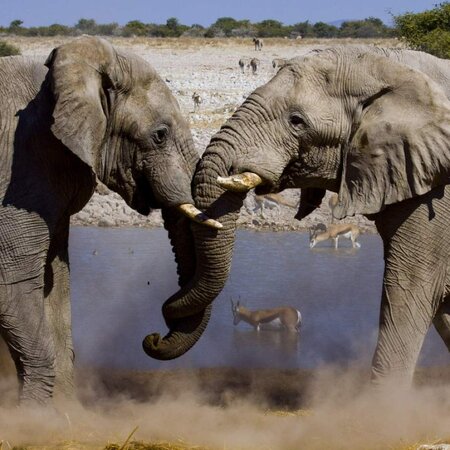
Park by park: Kruger, Hluhluwe-iMfolozi and Madikwe from May to September or October; Addo Elephant Park in the Eastern Cape all year, with the best elephant sightings at the waterholes from June to September; Kgalagadi in the Kalahari between March and May and again September to October, when daytime heat stays below 35 degrees. Malaria matters only in Kruger and northern KwaZulu-Natal, mainly in the rainy season from October to April; Madikwe, Pilanesberg and Addo are malaria-free.

Region Jan Feb Mar Apr May Jun Jul Aug Sep Oct Nov Dec
Kruger National Park (south and centre, Skukuza to Satara)
Northern Kruger (Letaba to Pafuri) and Limpopo valley
Hluhluwe-iMfolozi and iSimangaliso (KwaZulu-Natal)
Madikwe and Pilanesberg (malaria-free, north-west)
Addo Elephant Park (Eastern Cape)
Best sightings Good chances Few sightings

What guests say about their trip to South Africa

★★★★★

Andreas W.

Die Betreuung durch die hochqualifizierten Guides in der Region Greater Krüger war durchweg professionell. Ihre fundierten Kenntnisse über die Tierwelt und ein ausgewogenes Verhältnis von geführten Pirschfahrten und Naturschutzaktivitäten sorgten für eine effektive Lernerfahrung.
★★★★★

Peter M.

Die Tour durch Südafrika, Lesotho und Eswatini forderte ein gewisses Maß an Fitness, insbesondere während der zwei Tage im Krüger-Nationalpark, wo wir früh aufbrechen und uns über lange Strecken im 4x4 Overlandtruck bewegen mussten. Die hügeligen Landschaften und das Wechseln zwischen Camping und Lodges verlangten...

★★★★★

Matthias B.

Die Routenplanung der Gruppenreise von Kapstadt nach Dar es Salaam ist klar strukturiert und nachvollziehbar. Die Etappe durch die Cederberg Region und die anschließende Passage durch das Namaqualand mit seinen beeindruckenden Wüstenausblicken bieten eine abwechslungsreiche Kulisse. Die Planung ermöglicht den Teilnehmern, sowohl Natur- als auch...

Kruger National Park climate: monthly figures for Skukuza

The table shows the figures for Skukuza in the south of the Kruger National Park, 260 m above sea level and home to most of the safari camps. Summer from November to March is hot and humid: 31 to 33 degrees in the afternoon, 8 to 9 rain days a month, mostly as late-afternoon thunderstorms, and around 450 of the 550 mm of annual rainfall come down in those 5 months. In winter from May to August it hardly rains at all, days sit at 25 to 27 degrees and nights cool to 7 to 11 degrees; on a sunrise game drive in an open vehicle you need a jacket and a beanie.

Two corrections for the rest of the country: Cape Town has the reverse pattern, with winter rain (June to August, 10 to 12 rain days) and a dry, windy summer at 26 degrees. The Highveld around Johannesburg sits at 1,750 m and gets night frost in winter (0 to 5 degrees) but sunny days at 17 to 20 degrees. The Kalahari and northern Kruger regularly reach 38 to 40 degrees between October and February.

Month Max °C Min °C Rain days Humidity % Sun hours
Jan Wet season 33 21 9 70 8
Feb 32 21 8 72 8
Mar 31 19 7 70 8
Apr Dry season 29 16 4 65 8
May 27 11 2 60 9
Jun 25 7 1 58 9
Jul 25 7 1 56 9
Aug 27 9 2 52 9
Sep 29 13 3 52 9
Oct Wet season 30 16 6 58 8
Nov 31 18 9 65 8
Dec 32 20 9 68 8

Best Time to Travel in South Africa

The Cape region and the northeast of South Africa sit in entirely opposite climate zones

12 Ideal
Best time to travel
May to September (northeast/Kruger)

Dry season in the northeast with dust-dry tracks and low water levels at fords; the Cape region is then cooler and wetter.

Region Jan Feb Mar Apr May Jun Jul Aug Sep Oct Nov Dec
Northeast (Kruger, Lowveld, KwaZulu-Natal, Sani Pass)
Cape Region & Garden Route
Ideal Doable Not passable

South Africa has two opposite climate zones, which makes a single travel-season recommendation for the whole country dishonest. The northeast - the Kruger area, Lowveld, Mpumalanga, KwaZulu-Natal and the Sani Pass - lies in the summer-rainfall zone: most rain falls from November to March, gravel tracks and river fords become muddy to impassable, and the heat makes long stages tiring. The dry season from May to September is the reliable riding season here: firm tracks, clear visibility and the Sani Pass without risk of slipping.

The Cape region and the Garden Route, by contrast, lie in the winter-rainfall area - a Mediterranean climate with the opposite rhythm. From November to April it is warm and dry, ideal for the coastal roads along the Garden Route. From June to August, winter brings rain, and at the highest elevations (Swartberg, Franschhoek Pass) occasionally snow or black ice on a few days of the year - the tarred roads themselves stay rideable throughout, only gravel side routes need extra caution after heavy rain. Anyone wanting to combine both regions on one tour won't find a month that's optimal for both - May and September are the best compromise.

Best time to go, depending on what you are after

Seeing wildlife

June to September in Kruger, Hluhluwe-iMfolozi and Madikwe: the grass is short, the trees are bare, and the animals stand at the waterholes because there is no other water. Expect 25 to 27 degrees by day and nights around 7 to 10 degrees. If you want the driest and most game-rich weeks, take September or October, but plan for afternoons of 32 to 34 degrees.

If you cope badly with heat

May to August. In the Lowveld the thermometer stays below 28 degrees, humidity sits at 55 to 60 percent, and malaria mosquitoes are rare. Avoid October to February in Kruger, the Kalahari and the Limpopo valley: afternoons there run at 35 to 40 degrees. Summer alternatives are the Cape region at 26 degrees with a sea breeze, or the Highveld around Johannesburg at 1,750 m.

The most popular time

July and August, plus the Christmas weeks from 15 December to 10 January. In July and August the European school holidays coincide with the dry season; SANParks opens bookings 11 months ahead, and popular camps such as Lower Sabie or Satara are gone for those weeks within days. Over Christmas South Africa itself travels, the Garden Route and the coast are full, and Kruger is hot and green. For quiet with still good visibility: May, June and September.

Birds and green landscapes

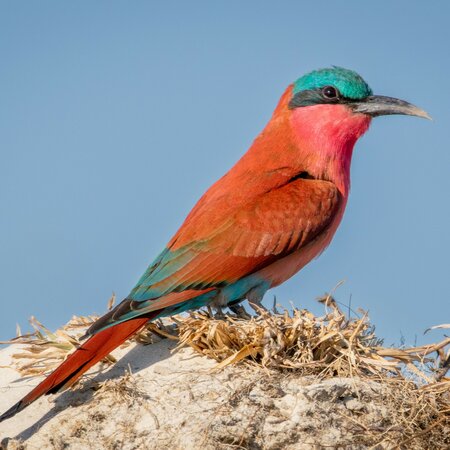
November to March. After the first rains the bush comes into leaf within 2 to 3 weeks, the rivers carry water, and around 100 migrant bird species arrive: bee-eaters, cuckoos, orioles, storks. Over 500 species are then about in Kruger, plus the impala lambs from mid-November. The price: predator sightings are rarer, and malaria protection is a must in Kruger in these months.

Photographers

Two windows. May and June give clear, low-dust light, green in the riverbeds and animals at the waterholes at 25 degrees. September and October bring the densest concentrations of game and dust that turns the evening light red, plus the southern right whales off Hermanus. For landscapes with storm skies and saturated colour: January to March, with thunderstorms from 3 pm and sunrise around 5:15 am.

Visa & Entry Requirements

What EU citizens need for a visa-free entry into South Africa

Nationals of Germany, Austria, Switzerland and most EU countries enter visa-free and receive a Visitor's Permit for up to 90 days at the border post or airport - the day of entry and the day of departure both count. Your passport must still be valid for at least 30 days at departure and have two blank visa pages; a machine-readable document is required.

Since 1 July 2026, South Africa requires all arrivals - whether by air, car or at a land border post - to complete a digital Traveller Declaration in advance. It is filled in online and must be shown at passport control; without it, entry is delayed or refused.

A return flight ticket or proof of onward travel is often also requested, and for longer stays, proof of sufficient financial means as well. Anyone wanting to stay longer than 90 days must have the Visitor's Permit extended before it expires at a Home Affairs office - experience shows this takes several weeks and should not be left until the last minute.

Visa typeStayCostWhere to applyValidity
Tourist entry (Visitor's Permit)Up to 90 daysFreeBorder post or airport on entryOnce per entry
Extension of the Visitor's PermitA further up to 90 daysFee, form BI-1738Department of Home Affairs, apply before it expiresAt the authority's discretion, several weeks' processing time
Temporary Import Permit (TIP) for your own motorcycleTied to the validity of the Visitor's PermitFreeCustoms post at the land border crossingUp to 90 days, extendable at SARS

Entering with Your Own Motorcycle

Carnet, insurance, vehicle papers and the common border crossings

For entry via a land border crossing - for example from Namibia via Vioolsdrif, from Botswana via Skilpadshek/Martin's Drift, from Zimbabwe via Beitbridge, or from Mozambique via Lebombo - South Africa does not require a Carnet de Passages. Instead, a Temporary Import Permit (TIP) for the motorcycle is issued free of charge at the customs post, tied to the validity of the Visitor's Permit. A Carnet only becomes necessary if the motorcycle is imported by air or sea freight, for example when shipped to Cape Town or Durban for a trans-Africa route.

Separate third-party motor insurance is not required for entry: South Africa covers personal injury from road accidents through the state Road Accident Fund (RAF), funded by a levy on every litre of fuel - this applies to all road users, including foreign riders. Anyone continuing on from South Africa towards Mozambique, Zambia, Malawi or Zimbabwe usually needs a COMESA Yellow Card there, which can be bought at many South African border posts or in advance from an insurer.

You need to carry the original vehicle registration document plus a copy, your passport with sufficient remaining validity, and, if the motorcycle is not registered to the rider, a notarised power of attorney from the owner - without it, entry with a borrowed or rented motorcycle is refused at some border posts. Anyone who doesn't want to ship their own motorcycle will find several rental agencies for adventure bikes in Cape Town and Johannesburg, which is often the simpler and cheaper solution for a pure South Africa round trip.

0 / 8
South Africa does not require a Carnet de Passages at a land border crossing - the free Temporary Import Permit at customs is enough. A Carnet is only needed for air or sea freight, and thanks to the Road Accident Fund, you don't need separate liability insurance either.

Driving Licence & Documents

National licence plus an international driving permit under the Geneva Convention

South Africa generally recognises a valid national motorcycle licence, provided it is issued in English or carries the holder's photograph and signature. In practice, traffic police on rural roads are often unfamiliar with foreign licences, which is why an International Driving Permit (IDP) under the 1949 Geneva Convention is strongly recommended - it is valid for one year from issue and is readily accepted by South African police.

The IDP only authorises the vehicle classes that your national licence also covers - if you don't have a motorcycle class at home, you won't be able to rent a motorcycle in South Africa even with an IDP. Keep the original and the IDP stored separately from your luggage; an extra photocopy or a photo on your phone is helpful if you lose them.

0 / 3

Roads & Mountain Passes in South Africa

From the tarred sweepers of the Garden Route through the Karoo to the gravel Sani Pass

South Africa's national roads (N1-N12) are tarred throughout and in good condition, as are most regional roads (R-roads); together they form one of the most developed road networks on the continent, well suited to covering long distances quickly. Toll plazas appear at regular intervals on several N-roads and accept both cash and card, so keep some ZAR in cash handy on routes such as the N1 and N3.

Pure gravel or off-road tracks are the exception here and are usually sought out deliberately - for example the Sani Pass towards Lesotho or side routes in the Baviaanskloof, rather than being unavoidable stretches on the way between towns. The segments below cover a cross-section of what to expect, from the sealed sweeping bends of the Garden Route to the short gravel climb up the Sani Pass.

Important for route planning: the Kruger National Park is legally off-limits entirely to motorcycles, quads and bicycles (fine up to 1,500 ZAR) - the park is explored with a safari vehicle, and the motorcycle stays at the gate or at the lodge for the duration of the visit.

1
N2 Garden Route: Cape Town to Storms River
600 km
100% paved

Consistently well-developed, winding tarred road between Wilderness and Knysna

After rain
No restriction, the tarmac dries quickly
Realistic daily distance
250 to 300 km with stops along the way
Fuel stops
Petrol stations every 30 to 60 km along the route
Passes
Outeniqua Pass, Robinson Pass
Permits
none
2
Sani Pass: Underberg (RSA) to the Lesotho border
14 km

Steep gravel/loose-rock track with tight hairpins, a popular pass ride for adventure motorcycles

After rain
Slippery in the rain, rockfall on the upper hairpins - the climb is then not recommended
Realistic daily distance
A pure pass ride, approx. 1.5 hrs for the 14 km, not a stage on a longer route
Fuel stops
Last petrol station in Underberg, none after that until Lesotho
Passes
Sani Pass, 2876 m (South Africa's highest rideable pass crossing)
Permits
No permit needed, but border formalities on both sides right at the pass
3
R62 Karoo Route: Oudtshoorn to Barrydale
190 km
100% paved

Little traffic, wide bends through the Little Karoo, sometimes heat and crosswind

After rain
No restriction
Realistic daily distance
200 to 250 km
Fuel stops
Petrol stations in Oudtshoorn, Calitzdorp, Ladismith, Barrydale, every 40 to 60 km
Passes
Seweweekspoort (optional gravel side route)
Permits
none
4
N9/R61 Karoo Crossing: Graaff-Reinet to Cradock
150 km
100% paved

Lonely tarred road through the semi-desert, hardly any towns

After rain
The tarmac remains fully rideable, fords on side roads can briefly carry water after heavy rain
Realistic daily distance
300 km and more possible, hardly any bends
Fuel stops
Petrol station gaps of up to 150-200 km, fill up in good time
Passes
none worth mentioning
Permits
none

Fuel, Range & Payment

Fuel quality, payment methods and distances between petrol stations

Coastal stations mostly offer 93 and 95 octane unleaded; in the highveld (Johannesburg, Pretoria, Highveld from around 1500 m), 93 octane predominates, since engines need less knock resistance there due to the altitude. Smaller stations off the main routes often carry only one grade plus diesel - if your route needs premium fuel, it's worth asking ahead.

The big chains (Shell, Engen, Sasol, Caltex, BP) take Visa and Mastercard without any trouble, American Express less often. In remote areas - the Karoo, Northern Cape, rural Eastern Cape - card terminals occasionally fail, so cash in small notes is essential kit there. Rural stations sometimes close as early as 6pm and have reduced hours on Sundays.

On routes through the Karoo and the Northern Cape - for example between Springbok and the Namibian border at Vioolsdrif - up to 150-200 km lie between two petrol stations. As a rule: top up to more than half whenever you get the chance, once a longer Karoo stage is coming up.

GradeAvailability
95 octane unleadedAvailable nationwide, the standard grade
93 octane unleadedCoastal regions and highveld from approx. 1500 m
DieselNationwide, also available as a low-sulphur variant

Staying Safe on South African Roads

Emergency numbers to know and how to behave on the road while riding

The emergency numbers are the same nationwide: 10111 for the police, 10177 for the ambulance service, both also reachable free of charge from a landline. 112 works from any mobile phone - even without a SIM card or credit - and is routed to a central emergency centre that coordinates police, fire and sea rescue. Cape Town additionally has its own municipal emergency number, 107.

Don't stop in unfamiliar places, not even for apparently broken-down vehicles or hitchhikers - staged breakdowns are occasionally used for robberies. Avoid night riding outside towns and on side roads where possible: roads outside settlements are often unfenced, and free-roaming animals are a real danger in the dark. During power cuts (load shedding), traffic lights go out - in practice, right-of-way then works like an unmarked crossing, and not every road user follows that rule.

Health and Vaccinations in South Africa

Malaria protection, vaccinations and the gap in many travel insurance policies

Malaria risk exists in the Lowveld/Kruger region, in the north of KwaZulu-Natal and in the northeast (Limpopo, the Mpumalanga lowveld) - prophylaxis or at least a stand-by medication is recommended for these areas, while malaria is not an issue in Cape Town, the Garden Route or the southern highveld. Vaccination cover for hepatitis A/B and tetanus should be up to date; a yellow fever vaccination is only required when entering from a yellow-fever-endemic area.

0 / 4
Many travel insurance policies exclude riding motorcycles over 125cc, or require an add-on module - check this before booking, not after an accident.

Money and Payment Methods on the Road

The rand, card payments in towns, and cash you will need out in the countryside

The payment currency is the South African rand (ZAR). Cards are accepted everywhere in cities, at petrol stations of the big chains and at toll booths, but you should still carry cash in small notes in rural areas and at smaller petrol stations. Cash machines are available in every larger town, but thin out quickly beyond that - withdraw in good time before longer Karoo or bush stages.

Mobile Coverage and Internet Access

Network coverage, eSIM options and planning around scheduled power cuts

Vodacom has the best coverage nationwide, including in many rural areas, and MTN is on a par with it in the cities. A physical prepaid SIM requires ID plus proof of a local address under the RICA law; a travel eSIM avoids that and is often the simpler choice for a short stay. Remote routes - parts of the Kruger surrounds, the Drakensberg and the Northern Cape/Karoo - have gaps or only slow coverage.

Scheduled power cuts (load shedding) also temporarily knock out mobile masts and WiFi; a power bank for your phone and an offline map app as a backup are worthwhile on longer stages.

Traffic Rules and Local Etiquette

Driving on the left, four-way stops and staying alert around minibus taxis

South Africa drives on the left. At unmarked four-way crossings ("4-way stop"), the rule is: whoever stops first goes first - if it's simultaneous, the vehicle to the right has priority. Traffic lights are colloquially called "robots"; they often fail during power cuts, so enter such junctions with extra caution.

Minibus taxis shape city traffic and often stop abruptly and without warning at the roadside to pick up passengers - keep your distance and expect sudden braking. Other road users occasionally flash their headlights to warn of a speed trap or a hazard ahead - an informal gesture common among locals.

Extra Kit for Your South Africa Trip

What South Africa adds on top of your standard motorcycle packing list

0 / 6

Photos from South Africa

Joe Küster
Author
Joe Küster
Founder & Creative Engine of Overcross

"Jack of all trades, almost all!" The driving force and idea machine behind Overcross.

Languages: de, en
×

Send request

Adventure

How did you
hear about us?

Adventure truck Road path Palm tree
Ask a Route Expert

How do you want to travel?