Tunisia from 2.050 €

Germany from 299 €

Peru from 2.379 €

South Africa from 869 €

Namibia from 1.129 €

Greece from 1.579 €

Switzerland from 1.289 €

Senegal from 4.729 €

Mauritania from 4.729 €

Nigeria from 10.089 €

India from 2.469 €

France from 270 €

Spain from 1.239 €

Italy from 1.079 €

Chile from 2.819 €

Morocco from 2.059 €

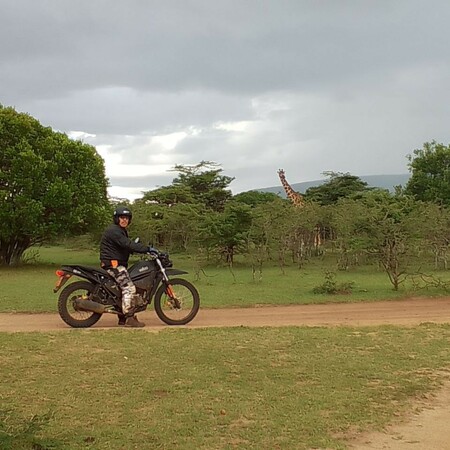
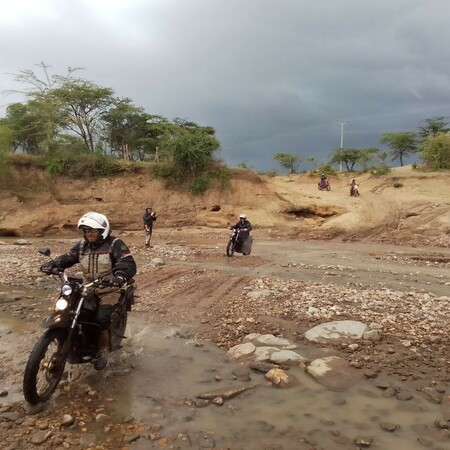
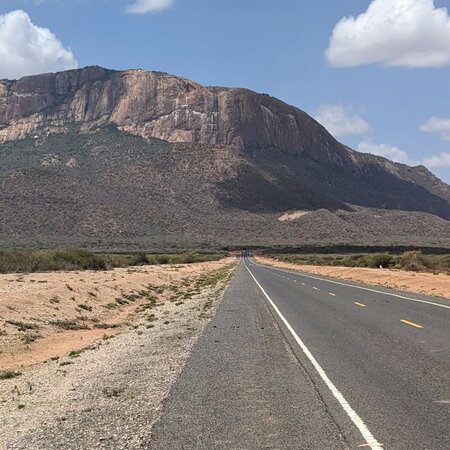
Kenya from 1.899 €

Austria from 2.679 €

Tanzania from 2.369 €

Ukraine from 2.060 €

Cameroon from 10.199 €

Congo (DR) from 10.089 €

Western Sahara from 4.729 €

Balkan from 669 €

China from 8.899 €

Travel Information Kenya

Adventure and wild beauty in Africa's treasure

Everything you need to know about Kenya

Travel map of Kenya by the tour operator Overcross

Travel map of Kenya by the tour operator Overcross


  1. General information for Kenya
  2. Climate in Kenya
  3. Geography in Kenya
  4. Flora and fauna in Kenya
  5. National parks and conservation in Kenya
  6. Population in Kenya
  7. Politics and economy in Kenya
  8. Transport network in Kenya
  9. Cities and regions in Kenya
  10. Culture and sights in Kenya
  11. Holidays in Kenya
  12. Medical information for Kenya
  13. Travel information for Kenya
  14. Foreign representation in Kenya
  15. Information sources for Kenya


1. General information for Kenya

Continent: Africa
Geographical location: Eastern Central Africa, located at the Equator
Highest elevation: Batian in the Mount Kenya massif (5,199 m above sea level)
Longest river: Tana (approx. 700 km)
Form of government: Republic
System of government: Presidential system
Languages: Swahili and English
Neighboring countries: Ethiopia, South Sudan, Uganda, Tanzania, Somalia
Capital: Nairobi
Area: Approx. 580,000 km²
Population: Approx. 54 million people (2023)
Population density: 93 inhabitants per km²
Religions: Approx. 82% followers of Christianity (23% Roman Catholic, 29% Anglican, Orthodox and African churches, 47% Protestant), 11% Muslims, 1.6% traditional African religions, 0.1% Hindus, 2.4% non-denominational
Currency: Kenyan Shilling (KES); 1 EUR is approximately 150 KES. The current exchange rates can be found at oanda.com
Climate: Two climate zones: In the highlands above 1800 m above sea level, temperatures between 10 degrees and 25°C with two rainy periods from April to June and from October to November. In the coastal region, temperatures range between 22 and 32°C and rain falls between April and June, humidity approx. 75 percent.
Timezone: UTC + 3
Area code: +254
Country code: KE, KEN
Electricity: In Kenya, socket type G is used. The mains voltage is 3 x 240V with 50Hz frequency. A travel adapter is advisable. An overview of sockets and plugs used in our travel countries can be found at wikipedia.de

back to top of page


2. Climate in Kenya

Two climate zones can be distinguished in Kenya. In the highlands located over 1800 m above sea level, rainy periods occur from April to June and from October to November. Precipitation usually falls in the afternoons, evenings, and nights. The coldest period is in July and August with about 10°C. The warmest period is in January and February with max. temperatures of about 25 to 26°C. In the capital Nairobi, it can get a little cooler. Humidity is about 65%. The average rainfall for Nairobi is stated as 958 mm per year. At Lake Victoria, temperatures are much higher and rainfall is also heavier.
On the coast, on the other hand, temperatures average between 22 and 32°C and humidity is around 75%. Most rainfall here occurs from April to June. January and February are the driest months on the coast and from October to May, it is warmest.


Travel climate diagram for Nairobi from the tour operator Overcross


Travel climate diagram for Mombasa by the tour operator Overcross


Travel climate diagram for Kitale by the tour operator Overcross

back to top of page


3. Geography in Kenya

Kenya is located in East Africa and straddles both sides of the equator. With an area of approx. 583,000 km², Kenya is slightly larger than France. To the north, Kenya borders Ethiopia and South Sudan, to the west Uganda with Lake Victoria, to the southwest and south Tanzania and to the east Somalia. In the southeast, the country is bordered by the Indian Ocean, with numerous bays, reefs, and offshore islands such as the Lamu Archipelago, which belongs to Kenyan territory, lining Kenya's coastline.
From the coast, the land rises westward to about 1000 m. The plateau covers almost the entire north and east of Kenya, with individual mountain ranges towering above it. The Kenyan highlands lie at an elevation of 1500 - 3000 m and occupy the central part of Kenya. The East African Rift (Rift Valley) runs in a north-south direction across the central highlands of Kenya and past Lake Turkana, Lake Baringo, Lake Bogoria, Lake Nakuru, Lake Elementeita, Lake Naivasha, and Lake Magadi down to Tanzania. The highest elevation in the country and at the same time the second highest mountain in Africa is Batian at 5199 m above sea level, the highest peak of the Mount Kenya massif located in central Kenya.
The waters of the rainfall-rich central highlands are drained into the Indian Ocean via the approx. 700 km long Tana. The precipitation in the southwestern parts of the country fills Lake Victoria, which is drained by the Nile's outflow system. The northern plateau of Kenya drains its rainfall through various rivers into the endorheic basin of Lake Turkana.

back to top of page


Savanna landscape in Kenya

Savanna landscape in Kenya


4. Flora and fauna in Kenya

A large part of Kenya's land area is characterized by vast, grassy savannas. The rainforests, which have unfortunately declined significantly in recent decades, are located at the foot of the mountainous center of the country, while in the northwest and northeast, due to climatic differences, semi-deserts with acacias, various thorn bushes, whistling thorn, baobab, sausage, and camphor trees, bamboo, olives and orchids, as well as some types of spurge, spread out. In the rain-rich mountains, among other things, mountain bamboo up to 15 m high, giant groundsel, senecios, and lobelia trees can be found. Along the coast, coconut palms line Kenya’s white beaches. The swampy shallow water areas are overgrown with mangrove forests, lemon and mango trees. Among Kenya’s more than 10,000 different plant species, there are also banana trees, fan palms, flame trees, copal pines, crocodile trees, Madagascar almond trees, maniocs, oil palms, papaya trees, rosary pea trees, umbrella acacias, teak trees, poinsettias and castor-oil plants. Kenya's wildlife, not least due to the seasonal climatic differences, which force a large part of the animals to migrate from the Serengeti to the south of Kenya to the areas of the Masai Mara 500 km to the north, is rich in African big game species such as wildebeest, Thomson’s gazelles, zebras and antelopes as well as representatives of the so-called Big Five, i.e. lions, leopards, Cape buffaloes, rhinoceroses, and elephants. In addition, eland antelopes, Serengeti topi, giraffes, olive baboons, vervet monkeys, Kinda baboons, savanna baboons, aardwolves, striped jackals, and striped hyenas are also noteworthy. In the waters hippos stand, crocodiles lurk, and a multitude of other reptiles and snakes can be found in Kenya's rainforests and savannas. Among Kenya’s countless bird species are such well-known representatives as flamingos, weaver birds, crowned cranes, lilac-breasted rollers, hamerkops, hornbills, helmeted guineafowl, marabous, kori bustards, pelicans, saddle-billed storks, secretary birds, snake eagles, and ostriches.

back to top of page


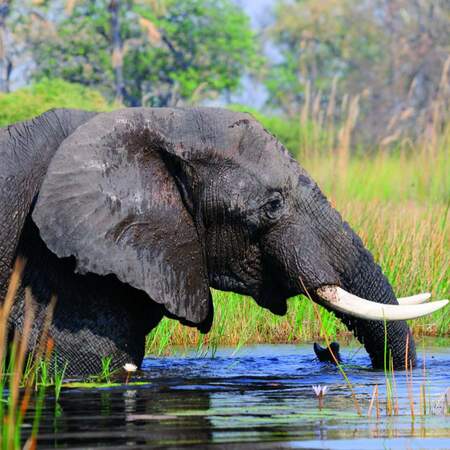
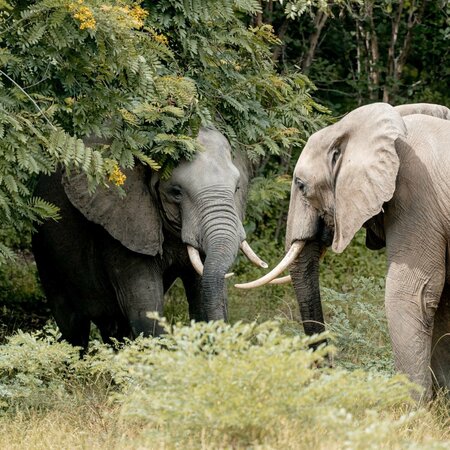
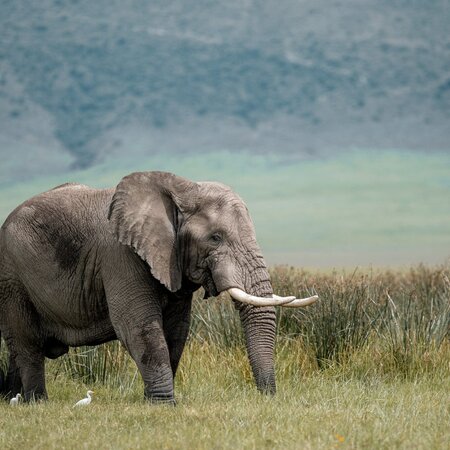
Herd of elephants in the Kenyan tree savanna

Herd of elephants in the Kenyan tree savanna


5. National parks and nature conservation in Kenya

Kenya, the motherland of safaris, currently has 22 national parks and just as many nature reserves. They form a very important foundation for the country’s emerging tourism industry. At the same time, the presence of many tourists in the wildlife parks provides significant protection against poaching. In Kenya, the national parks are subject to the highest level of protection, which is above that of the National Reserves and Sanctuaries. One of Kenya's first nature reserves was the Southern Reserve, established in 1899 with around 33,000 km. The most important reserves and national parks are:

The Tsavo National Park, which is divided into Tsavo East and Tsavo West, is located in Kenya’s coastal region between Nairobi and Mombasa. With a size of almost 22,000 km², it is the largest national park in Kenya and also one of the largest worldwide. The park is divided by the railway line to Mombasa. The somewhat larger eastern section is mostly flat and dry, while the western part of the park is more mountainous and traversed by wetlands.

The Maasai Mara is an extensive nature reserve and forms the northern extension of the Serengeti. Especially in the months of July and August, large numbers of animals can be seen here due to the migration of herds from the Serengeti.

The Amboseli National Park is located in the southwest of Kenya, right on the border with Tanzania. Since the Maasai do not tolerate foreign hunters in their territory, the park has largely been spared from poachers. The elephant population has been able to thrive here undisturbed.

The Lake Nakuru National Park is, as the name suggests, located near Nakuru around Lake Nakuru. An impressive natural spectacle is the approximately two million flamingos, which were the reason why the first bird protection national park in all of Africa was established here in 1967.

The Meru National Park is located about 100 km northeast of Mount Kenya in Meru County. Together with the Bisandi Reserve to the east, it forms an ecological unit.

The Nairobi National Park is located only about 7 km from the center of Nairobi, whose skyline can be seen from the park. Due to the proximity to the large city, the migration routes of hoofed animals are unfortunately disturbed.

back to top of page


Giraffes in Kenya’s National Parks

Giraffes in Kenya’s National Parks


6. Population in Kenya

According to the latest estimates, about 54 million people live in Kenya, about a quarter of whom reside in the major cities. Over 42% of the population is younger than 15 years. The Kenyan population comprises about 40 different ethnic groups, who speak more than 50 different languages and dialects. More than half of these belong to the Bantu-speaking peoples such as the Kikuyu (with about 22% of the population the largest ethnic group in Kenya), the Luhya (14%), the Kamba (11%), the Kisii (6%), the Mijikenda (5.1%), and the Meru (4.3%). In addition, there are Nilotic and Cushitic-speaking peoples as well as non-African population groups (Europeans, mainly of British origin, Asians, Arabs), who account for only 1% of the population. In recent years, more refugees from Somalia, Uganda, and South Sudan have immigrated to Kenya.
In addition to the total of 43 peoples who are recognized by the Kenyan government as eligible for citizenship (2023), there are a number of peoples and communities who likely already lived in Kenya before independence but are considered stateless – almost 20,000 people in total. These include the Shona, the Shirazi, the Galja’el, and the Pemba.
Official languages are Swahili and English; in addition, about 30 other languages are used in daily life.

back to top of page


7. Politics and Economy in Kenya

According to the new constitution of 2010, Kenya is a presidential republic with both democratic and authoritarian elements, in which the president, who controls both the government and the armed forces, has far-reaching executive powers. With the implementation of the new constitution, the office of prime minister was abolished again. Since 2013, Kenya has had a decentralized administration with 47 so-called counties, in which governors and parliaments are elected at the district level.
Although Kenya has the most powerful economy in East Africa, more than half the population still lives below the poverty line. Services are the most important economic sector, accounting for over 55% of the gross domestic product. Tourism, too, with around two million visitors annually, represents an important source of income. 8% of the country is available as agricultural land and generates over a quarter of GDP. The main crops are coffee, tea, cotton, sugar cane, and vegetables. Fishing serves to supply the local population. The industry focuses on the processing of local raw materials and has been continuously growing since the 1990s. Today, it contributes 17% to Kenya's GDP.

back to top of page


8. Transport Network in Kenya

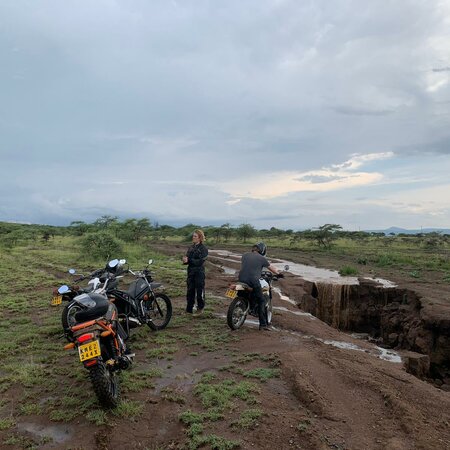
Kenya has a road network of about 65,000 kilometers, of which about 7,800 km are paved. The road conditions vary greatly and are quite poor in much of the north. Some tracks may become impassable during the rainy season. Traffic drives on the left. Road safety is very limited due to poorly maintained vehicles and widespread disregard for traffic rules by many road users.
The railway network in Kenya covers about 3,000 kilometers, with the main line connecting Mombasa and Nairobi.
In addition to the many small airports, there are two international airports in Kenya: Jomo Kenyatta International Airport in Nairobi and Mombasa Airport. Mombasa is also the most important seaport in Kenya.

back to top of page


Traditional cooking place in a Kenyan village

Traditional cooking place in a Kenyan village


9. Cities and Regions in Kenya

Since the implementation of the constitutional reform in 2013, Kenya has been divided into 47 counties (administrative districts), most of which are named after their respective capitals, replacing the previously existing provinces of Central, Coast, Eastern, North-Eastern, Western, Nyanza, Rift Valley, and Nairobi.
The largest cities in Kenya are:

Nairobi
The capital of Kenya has about 4,500,000 inhabitants in an area of approximately 693 km². The city, located on the Nairobi River in southern Kenya at an average altitude of 1,624 m above sea level, is one of the highest capitals in Africa. Nairobi originated from a railway camp and supply depot established by the British administration of Uganda in 1896 in the swampy area in the center of Kenya. Nairobi originated from a railway camp and supply depot established by the British administration of Uganda in 1896 in the swampy area in the center of Kenya. Due to several universities, educational institutions, and research institutes, Nairobi is considered the country’s educational capital. The cityscape of Nairobi today is dominated by modern high-rise buildings and office blocks. Notable sights include the National Museum with a comprehensive collection on African prehistory, the Railway Museum, the Parliament building, City Hall, the courthouse, as well as the National Theatre and the National Library. Tourist attractions also include the nearby Nairobi National Park, the Langatta Giraffe Center, and the Daphne Sheldrick's Orphanage for elephants.

Mombasa
Kenya’s second largest city, with just under one million inhabitants, is also a major economic center of Kenya and the most important port city in East Africa. Attractions include the old town of Mombasa with the former market hall and the old post office, the Fort Jesus Museum from the 16th century, the main market with spices, fruits, vegetables, etc., the Tusks (ivory archway), and Haller Park.

Kisumu
The port city of Kisumu, with about 323,000 inhabitants, is Kenya’s third largest city and is located in the northeast of Lake Victoria on Winam Gulf at an altitude of 1,131 m above sea level. Kisumu is the settlement center of the Luo, the country’s third largest ethnic group. Founded in 1901 as Port Florence as the terminus of the newly built Uganda Railway, the city is a trading hub for agricultural products from the surrounding area and their processed goods, as well as the seat of the Catholic Archdiocese of Kisumu. From the port, there are ferry connections across Lake Victoria to Uganda and Tanzania. The Kisumu Museum presents not only historical exhibits from the region but also biological displays. The Kisumu Impala Sanctuary is a small wildlife reserve on the city’s lakeshore.

Nakuru
The city of Nakuru, located at about 1,900 m above sea level on Lake Nakuru in the eastern part of Kenya, is with around 310,000 inhabitants the fourth largest city in Kenya. Lake Nakuru, along with the nearby Lake Nakuru National Park, is world-famous for its flocks of flamingos. Other attractions include the Menengai volcanic crater and the prehistoric Hyrax Hill, a Neolithic excavation site with settlement remains from around 1500 BC.

Eldoret
The city of Eldoret was founded in 1910 with the opening of a post office on the Sosiani River in the east of Kenya. Today, Eldoret, with almost 300,000 inhabitants, is the fastest growing city in Kenya and boasts an international airport, Eldoret International Airport. The birthplace of many Kenyan runners is known among athletes for the running events held here, such as the New KCC/Athletics Kenya Weekend Track and Field, the Eldoret Discovery Half Marathon, the Family Bank Half Marathon, or the national cross championships (Discovery Cross Country Championships).

back to top of page


10. Culture and Sights in Kenya 

For Kenya’s multiethnic society, culture, religion, and tradition play an important role. Due to the many different groups, Kenya’s traditional cultural life is very diverse and cannot be described uniformly. However, with constant societal change, cultural life in Kenya is also subject to more recent influences, with traditional elements such as, for example, Swahili songs being transformed into so-called hotel pop in modern versions for foreign tourists. Kenya also has a rich choral music scene with a strong emphasis on religious singing.
Especially in Nairobi, national or international music, dance, and acrobatics events are often held in large hotels, theaters, schools, or cultural centers. Theater culture is strongly shaped by school theater. Every year, competitions and festivals are held in the districts, provinces, and at the national level.
Most tourists come to Kenya to experience the typically African nature in the many national parks. Worth seeing among others are the Masai Mara and Tsavo East National Park. The beach of Lamu, lined with coconut palms at the far north of the Kenyan coast, is known for its beautiful white sandbanks. Here, a boat trip to the 600-year-old ruins on the two islands of Pate and Manda is also recommended.
But there is also much to see and experience in the cities. Interesting museums such as the National Museum of Kenya and vibrant neighborhoods are offered by Kenya’s capital, Nairobi. In honor of the Danish author Karen Blixen, known from the film “Out of Africa” under the German pseudonym Tanja Blixen, the Karen Blixen Museum with interesting background material about the bestseller was opened in Nairobi.

back to top of page


11. Public holidays with fixed dates in Kenya

1 Jan New Year
1 May Labor Day
1 June Madaraka Day
10 Oct Moi Day
20 Oct Mashujaa Day (21 Oct. alternative date)
12 Dec Independence Day
25 Dec Christmas
26 Dec Boxing Day

back to top of page


12. Medical information for Kenya

For legal reasons, as a tour operator, we are not allowed to provide binding medical information and therefore refer to the information from the Federal Foreign Office of the Federal Republic of Germany, the Robert Koch Institute and the German Society for Tropical Medicine and International Health.

back to top of page


13. Travel advice for Kenya

Current travel and safety information, information about entry and exit regulations as well as special criminal law advice and recommendations for your stay in Kenya are provided by the Federal Foreign Office of the Federal Republic of Germany.

back to top of page


14. Foreign representation in Kenya

Embassy of the Federal Republic of Germany in Nairobi
District of jurisdiction/
Consular district:
In addition to Kenya, the head of the mission is also accredited as ambassador to Somalia and Seychelles as well as permanent representative to the United Nations Environment Programme (UNEP) and the United Nations Human Settlements Programme UN-HABITAT, based in Nairobi. The mission supports the embassies in Asmara and Bujumbura in legal and consular matters
Location: Nairobi
Street address: Ludwig Krapf House, Riverside Drive 113, Nairobi
Postal address: Embassy of the Federal Republic of Germany, P.O. Box 30180, 00100 Nairobi, Kenya
Telephone: +254 20 426 21 00, for emergencies +254-(0)721 322 443
Fax: +254 20 426 21 29
E-Mail: Contact form
Website: https://nairobi.diplo.de/ke-en/service
Official languages
in the host country:
English


Embassy of the Republic of Kenya in Berlin
(There is also an honorary consulate in Hamburg)
Location: Berlin
Street address: Markgrafenstraße 63
Postal address: Markgrafenstraße 63, 10969 Berlin
Telephone: 030 23 45 67 10
Fax: 030 23 45 67 20
E-Mail: [email protected]
Website: http://www.kenyaembassyberlin.de


back to top of page


15. Sources of information for Kenya

German Meteorological Service
Federal Foreign Office of the Federal Republic of Germany
Wikipedia

back to top of page

Karte von Kenya

×

Send request

Adventure

How did you
hear about us?

Ask a Route Expert