Travel Information India

Magical India: Discover Colors, Culture, and Adventure

Everything you need to know about India

Travel map of India by tour operator OVERCROSS

Travel map of India by tour operator OVERCROSS
  1. General information
  2. Geography and Climate
  3. Flora and fauna
  4. Cities and regions
  5. Transport network
  6. Population
  7. Politics and economy
  8. Culture and sights
  9. National parks and conservation
  10. Holidays
  11. Travel advice
  12. Medical advice
  13. Foreign representations
  14. Sources and links

​​

1. General information

Continent: Asia
Geographical location: India lies between 68° and 97° east longitude and between 8° and 37° north latitude.
Highest point: Kangchendzönga (8,586 m)
Longest river: Ganges (2,525 km)
System of government: Parliamentary federal republic 
Type of government: Parliamentary democracy
Languages: Hindi and English (official languages), in addition, over 100 other languages from 4 language families are spoken!
Neighboring countries: Bangladesh, Bhutan, Myanmar, Nepal, Pakistan, China
Capital: New Delhi
Area:  3,287,469 km²
Inhabitants: 1,428,627,000 (estimation 2023)
Population density: 377 inhabitants per km²
Religions: Hinduism, Islam, Christianity, Sikhism, Buddhism, Jainism
Currency: Indian Rupee (INR)
Climate: Subtropical continental climate
Time zone:  UTC +5:30
Dial code: +91
Country code: IN, IND
Electricity: 230V - take a travel adapter. In some places, direct current networks are also common.

back to top of page


2. Geography and Climate


The climate in India is very diverse, from the arid desert of Rajasthan to the cool highlands of Assam, which is said to be the wettest place on earth. Outside the mountainous regions, the northern and central areas are dominated by a subtropical continental climate, while the coastal regions and the south have a maritime tropical climate. In the north, temperatures fluctuate significantly throughout the year: in the northern lowlands, temperatures in December and January are between 10 and 15°C, while between April and June they are between 40 and 50°C. In southern regions, it is consistently hot all year round. The Indian summer monsoon (June to September/October) is responsible for 80-90% of the precipitation amounts across India.


Delhi Temp. °C min/max Sun hours / day Rainy days
Jan 6 21 8
Feb 10 24 8 2
Mar 14 29 8 2
Apr 20 36 9 1
May 26 41 9 2
Jun 28 39 8 6
Jul 27 35 6 11
Aug 26 34 6 11
Sep 24 34 7 6
Oct 17 34 9 0
Nov 11 28 9 0
Dec 7 23 8 1


Bombay (Mumbai) Temp. °C min/max Sun hours / day Rainy days
Jan 19 28 9 0
Feb 20 28 9 0
Mar 22 30 9 0
Apr 24 32 9 0
May 27 33 9 0
Jun 26 31 5 16
Jul 25 30 3 26
Aug 24 29 2 20
Sep 24 30 5 14
Oct 24 32 8 3
Nov 23 32 10 1
Dec 21 30 10 0


back to top of page


3. Flora and Fauna


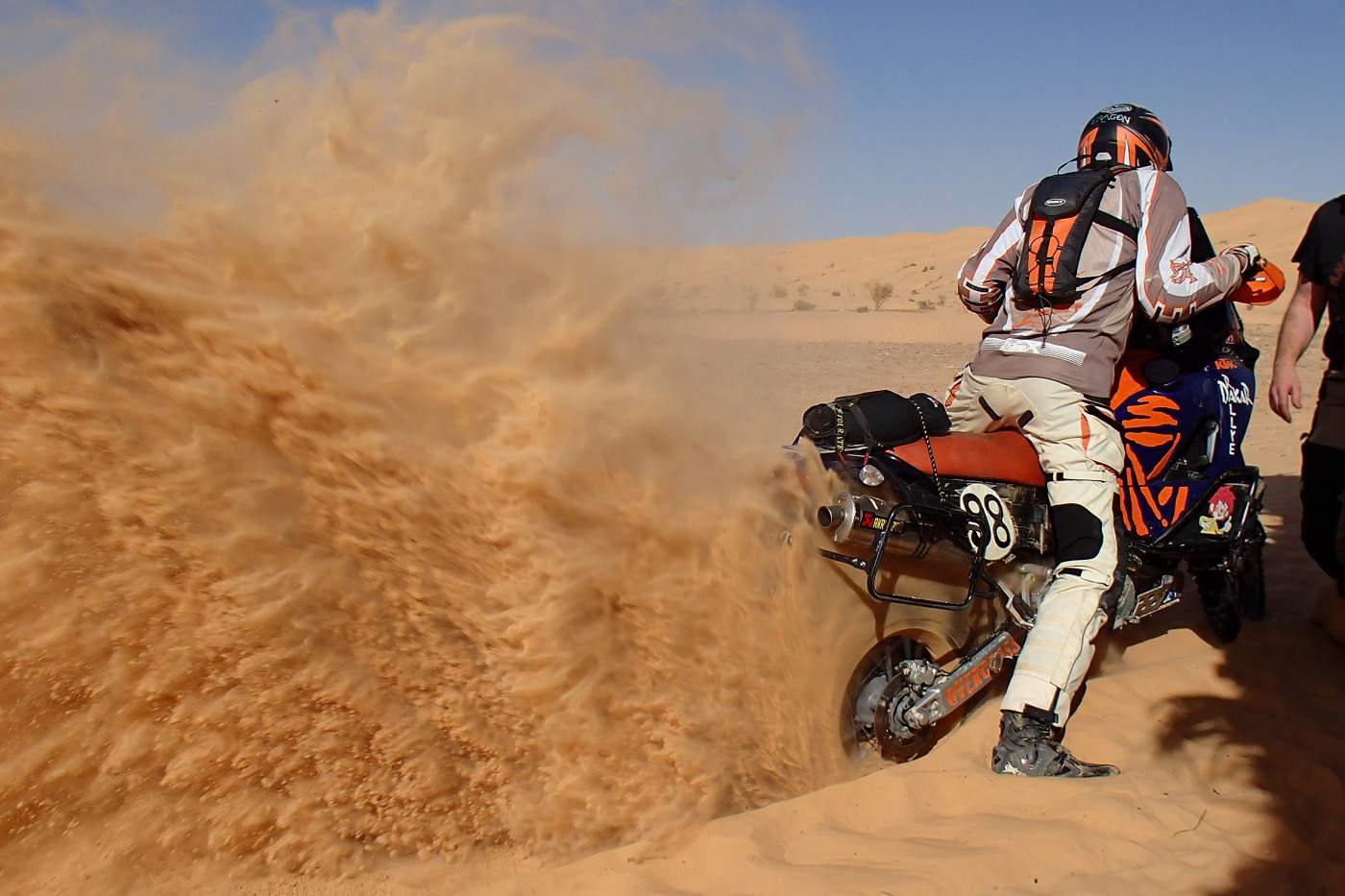
Overcross India travel by motorcycle


The size of the country and the different climatic conditions in its various regions give India a great diversity of landscapes. India’s plant life ranges from high mountain vegetation in the Himalayas to tropical rainforests in the south. Large parts of the original vegetation cover have today been destroyed. Instead, India is predominantly characterized by cultivated landscapes. Only about one fifth of the country is forested, although official figures vary, as they also include degraded areas and open forests.


Thanks to its varied landscapes, India is home to an extremely rich variety of animal species. It is estimated that about 400 mammal, 1,300 bird, 450 reptile and 200 amphibian species are native. However, many species are now found only in refuges such as forests, swamps, mountains and hilly regions. In Indian waters, there are also more than 2,500 species of fish. A selection from India’s diversity of species: Indian elephant, Bengal tiger, snow leopard, wild boar, deer, buffalo, antelope, rhesus monkey, macaque, peacock, pigeon, crow, stork, heron, ibis, spectacled cobra, king cobra, Indian python, mugger crocodile.

back to top


4. Cities and Regions

According to the 2011 census, India’s population is 1,210,569,573 and as of an estimate in 2023, even 1,428,627,000. This makes India the world’s second most populous country after the People’s Republic of China. The population density is 377 inhabitants per km² (Germany: 231 per km²). However, not all parts of the country are equally densely populated, rather, the population is very unevenly distributed. It is concentrated mainly in fertile areas like the Ganges plain, West Bengal and Kerala, while the Himalayas, the hilly areas of the northeast, as well as the drier regions in Rajasthan and on the Deccan, have only a low population density. For example, in Bihar, an average of 1,106 people live per square kilometer, while in Arunachal Pradesh, there are only 17.

India is divided into 28 states and 8 union territories, which are subdivided into over 600 districts. In some states, several districts are grouped together into divisions. Below the districts, there are parallel and sometimes overlapping Tehsils (or Taluks), blocks, and subdivisions. The lowest administrative level is formed by the villages themselves, which may sometimes be grouped into so-called Hoblis.


India motorcycle journey building


The capital of India is New Delhi within the boundaries of Delhi, which, with around 11 million inhabitants, is the country’s second largest city and, with more than 16 million inhabitants, the second largest urban agglomeration. Delhi is the cultural center of the Hindi-speaking community of the north. India's largest city and economic center, however, is Mumbai (Bombay). The metropolis on the west coast has more than 12.5 million inhabitants, and around 20 million in the urban agglomeration. In third place is Bangalore. The city of 8.5 million in the southern Deccan Plateau is home to many high-tech companies, which has earned it the nickname “Silicon Valley of India.” The fourth largest city is Hyderabad, also located in South India, with 6.8 million inhabitants, followed by western Ahmedabad with 5.6 million. Chennai (Madras), India’s seventh largest city with 4.7 million inhabitants, is known as the cultural center of South India and, in particular, of the Tamils. Kolkata, the most important metropolis of the east, is in eighth place with 4.5 million people. It is considered an intellectual center.


The largest cities in India (excluding metropolitan region/agglomeration):

Rank 

City

Inhabitants (2011 census)

1 Mumbai 12,478,447 2 Delhi 11,007,835 3 Bengaluru (Bangalore) 8,425,970 4 Hyderabad 6,809,970 5 Ahmedabad 5,570,585 6 Chennai (Madras)  4,681,087 7 Kolkata (Kalkutta) 4,486,679


back to top of page


5. Transport network

India has a well-developed transport infrastructure, which in part extends into remote mountain regions. The vast railway network is a good alternative to domestic flights for longer journeys, as you will see much more of the country from a train than you would from a plane. The main hubs for domestic air traffic are Delhi, Mumbai, and Chennai as the central points of their respective regions. 

back to top of page


6. Population (Ethnicities, Languages, Religion, Social Status)


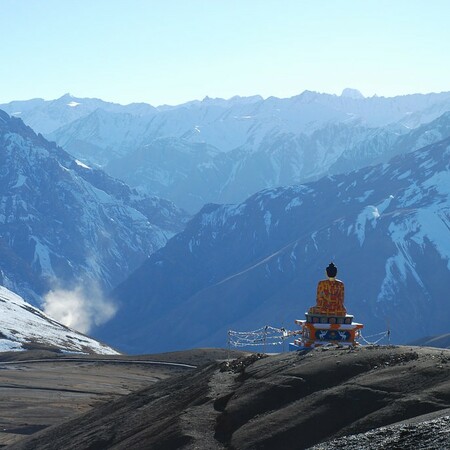
monk meditating India travel motorcycle


As a multi-ethnic state, India's ethnic diversity can be compared to that of the European continent. About 72% of the population are Indo-Aryans, 25% are Dravidians, and 3% belong to other ethnicities. 8.6% of the residents belong to the indigenous tribal population, who refer to themselves as Adivasi, but are ethnically extremely diverse. The officially considered illegal number of Bangladeshi immigrants is estimated at 20 million. In contrast, around 100,000 exiled Tibetans and 60,000 Tamils from Sri Lanka are recognized as refugees.

In India, well over 100 different languages are spoken. They are divided into 4 language families. The Indian constitution recognizes the following 22 languages: Assamese, Bengali, Bodo, Dogri, Gujarati, Kannada, Kashmiri, Konkani, Maithili, Malayalam, Marathi, Meitei, Nepali, Oriya, Punjabi, Santali, Sanskrit, Sindhi, Tamil, Telugu, Urdu and Hindi. Most of them serve as official languages in the states where they are spoken by a majority of the population. English is the language of administration, education, and business. However, it is spoken fluently by only a privileged minority of the total population. What the attempts to revive Sanskrit as a spoken language (it is comparable to Latin in Europe) will lead to remains to be seen. It has been made the third language taught in some schools. Most languages have different writing systems.

India is also known for its extraordinarily rich (sometimes perceived as chaotic by some) religious landscape. According to the 2011 census, it is divided as follows: 79.8% Hindus, 14.2% Muslims, 2.3% Christians, 1.7% Sikhs, 0.7% Buddhists, 0.4% Jains, and 0.7% others. 0.2% of Indians stated they had no religion.

According to the World Bank, today 44% of India's population have less than 1 US dollar per day available. Since the 1970s, the nutritional situation has greatly improved. Nevertheless, the proportion of the poor is particularly high, especially in rural areas.

16.6% of the population are counted among the so-called untouchables (Scheduled Castes), 8.6% belong to the Indian tribal population (Adivasi, officially: Scheduled Tribes), both of whom, among other reasons due to the caste system—which remains influential despite democratization—are subjected to severe social disadvantages. Women remain disadvantaged in the patriarchally influenced society, but there are also significant emancipation movements.

to the top of the page


7. Politics and Economy

India is a parliamentary democracy (the largest democracy in the world) with a diverse party landscape. However, many parties are limited to certain federal states and thus reflect the specific regional ethnic and social circumstances. There is a lower house, which is elected by majority vote every 5 years, and an upper house, whose members are elected by the parliaments of the states and represent them at the national level. The national government has broader powers over the states. The country is currently governed by Prime Minister Narendra Modi and his Hindu-nationalist party BJP. The government has initiated extensive reforms, including to boost the economy, professionalize administration, and create jobs for the 12 million Indians entering the labor market each year. The state administration is subject to control by the free press and a vibrant civil society.

The economic reforms initiated under Modi are having an effect. After weak years since 2011, India's economy has recently picked up speed again, with growth at 6.3% in 2023. More foreign investment is to be achieved. Inflation fell from 10% before Modi's term in office to 4.3% recently. Although almost 50% of the Indian population works in agriculture, its share of GDP is only about 17.4% (2015/16), with a decreasing trend. Only about 10% of all employees have a contractually regulated employment relationship. The remaining 90% are assigned to the so-called "informal sector"—they are neither insured against illness or work accidents nor do they have any claim to social benefits or retirement provision. India owes growth and prosperity primarily to the service sector, with a share of around 56% of GDP. However, only 27% of the population work here and benefit from it. Jobs, in the government's view, can most easily be created in the comparatively insignificant industrial sector.

back to top of the page


8. Culture and Sights

Indian culture is one of the oldest and most diverse in the world. The countless number of ethnicities and languages makes this clear. Faith has always played an outstanding role in the country of origin of several religions (Hinduism, Buddhism, Jainism, Sikhism). Influences from Islam and European colonization have also left their mark. All of this is visibly reflected in the manifold architecture, as well as in literature, music, dance, painting, sports, cuisine, and holidays.


Taj Mahal in Indien Agra


Selection of sights and experiences:

  • Taj Mahal in Agra, Golden Temple (Hari Mandir) in Amritsar, Amber Fort/Palace in Amer, Amritsar's Golden Temple (holiest shrine of the Sikhs)
  • State of Kerala at the southern tip of the peninsula.
  • ​The sacred Varanasi on the Ganges
  • City of Darjeeling in the far northeast in the Himalayas
  • Puducherry in Tamil Nadu with French flair
  • Bargaining at the markets
  • Mumbai's architecture
  • Mountains and monasteries in the Himalayas
  • Religious processions
  • Delhi: Architecture, culture, good food, shopping, multicultural
  • ​Safaris
  • Train journeys! - Varied landscapes and contact with locals.
  • ...

back to top of page


9. National Parks and Nature Conservation


Indien Reisen Tiere Büffel


The national parks in India are managed at the state level. As of February 2023, there were 106 national parks in India with a total area of 40,000 km² (about 1.22 percent of the country's area). However, as of August 2022, only 85 areas had been classified as Category II (national park) by the International Union for Conservation of Nature and Natural Resources (IUCN), with applications for recognition pending for others. In 1970, India had only five national parks. There are also 515 wildlife sanctuaries, of which 446 are listed in the IUCN Category IV - roughly comparable to European FFH areas - as well as other protected areas and special tiger reserves to ensure the survival of India's national animal. Due to the different categories, usually fewer than 100 national parks are listed. For example, Sundarbans National Park is classified by the IUCN not as Category II but as Category Ia, which, however, means much higher protection. The number of protected areas including national parks is to be increased in the long term. Several national parks are planned, including Kambalakonda National Park (70 km²) in Andhra Pradesh. In total, about 156,700 km² of land is under protection throughout India, which corresponds to almost five percent of the country's area.

Although (or precisely because) India signed the Paris Climate Agreement in October 2016, there is still much to be done in terms of environmental protection. Major problems include water scarcity, erosion and pollution of soils, air pollution (especially in the metropolises), and generally the poor implementation of the existing comprehensive environmental legislation.

back to top of page


10. Holidays


Holiday Date
New Year 1 January
Republic Day 26 January
Holi 06 March
Good Friday 03 April
Labor Day 01 May
Whit Monday 25 May
Independence Day 15 August
Raksha Bandhan 29 August
Mahatma Gandhi's Birthday 2 October
Dussehra 22 October
Diwali 11 November
Govardhan Puja 12 November
Bhai Duj 13 November


back to top of page


11. Travel Information

Latest travel advice for India can be found at the Federal Foreign Office.

back to top of page


12. Medical Information

Current medical information can be found at Federal Foreign Office.

back to top of page


13. Foreign Representations

Embassy of the Federal Republic of Germany

Location: New Delhi No.6/50G, Shanti Path, Chanakyapuri, New Delhi 110021
Mailing address: Embassy of the Federal Republic of Germany, P.O. Box 613, New Delhi 110001, India
​Phone: +91 11 44 19 91 99
E-Mail: [email protected]
Homepage: www.new-delhi.diplo.de

Embassy of the Republic of India in Germany

Tiergartenstraße 17
10785 Berlin
Phone: +49 30257950
Fax: +49 3025795102
E-Mail: [email protected]
Homepage: www.indianembassy.de


back to top of page


14. Sources and Links

Wikipedia

​Federal Foreign Office

CIA World Factbook

Lonely Planet

Ministry of Tourism India

back to top of page


Karte von India

×

Send request

Adventure

How did you
hear about us?

Ask a Route Expert

How do you want to travel?