Travel Information

France Travel Information for Motorcycle & Offroad Tours

Everything you need to know before your France tour: Alpine passes, entry requirements, mandatory gear, and toll roads, from a rider's perspective.

View tours
Visa
A national ID card is sufficient for EU, EEA and Swiss citizens
Non-EU citizens: passport required, a Schengen visa may also be needed depending on country of origin
Passport validity
Not required for EU/EEA/CH; non-EU passports must be valid for at least 3 months beyond the planned departure from the Schengen area
Best time to travel
June to September for the high passes; the rest of the country can be ridden year-round
Currency
Euro (EUR)
Time zone
CET, UTC+1 (daylight saving UTC+2)
Side of the road
Right-hand traffic
Helmet & gear
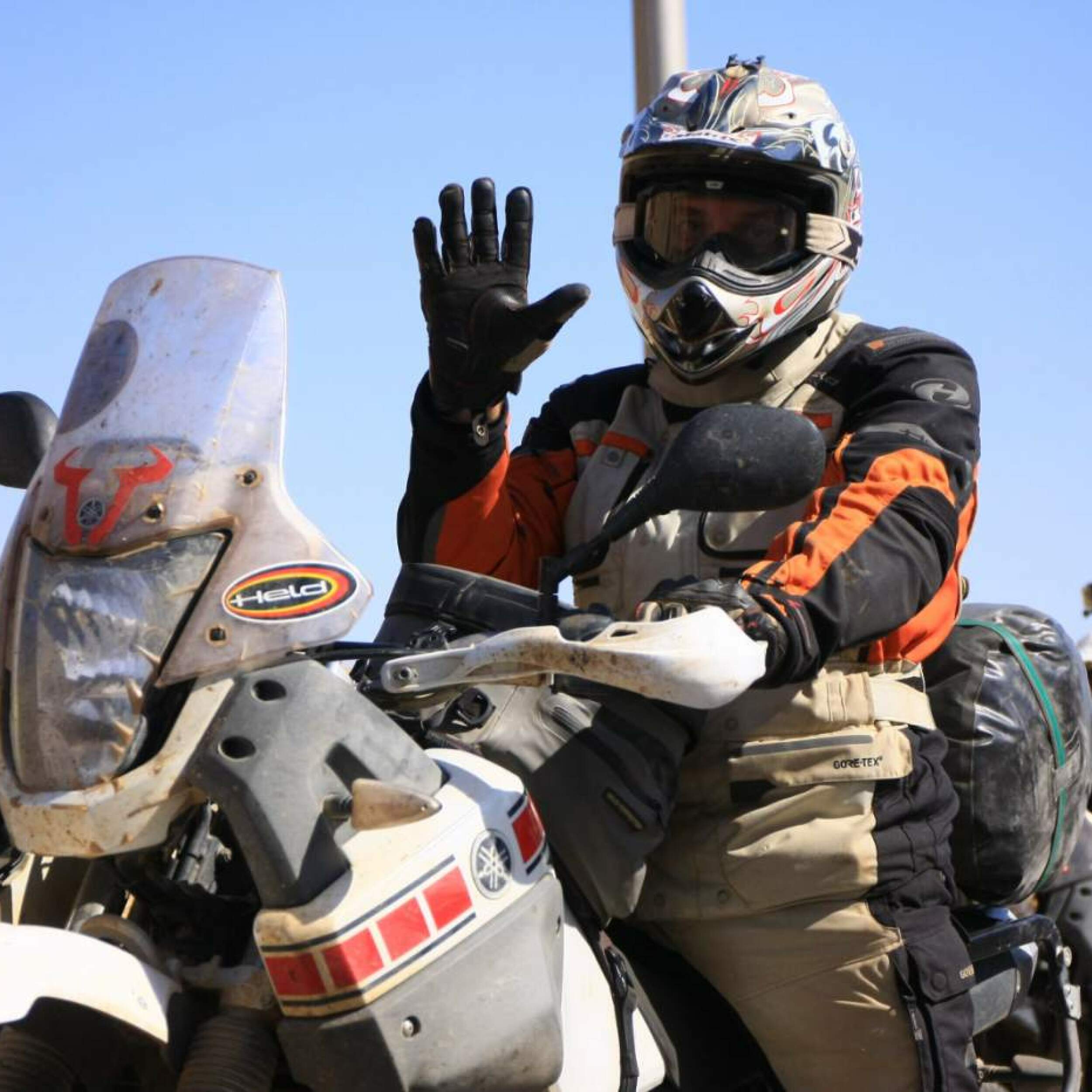
Helmet mandatory; reflective clothing required above 125cc, plus certified gloves
Main road
A6/A7 Paris-Lyon-Marseille, Route des Grandes Alpes (D1091/D902)
Fuel
SP95/SP98 and diesel (gazole) available nationwide, E10 is common too
Int'l driving permit
Not required for EU licences; recommended or mandatory for non-EU citizens depending on country of origin

What guests say about their trip to France

★★★★★

Michael M.

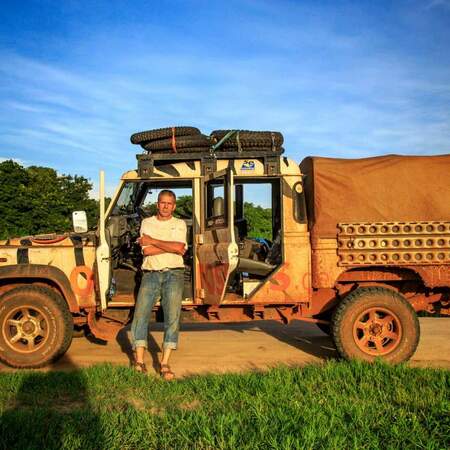
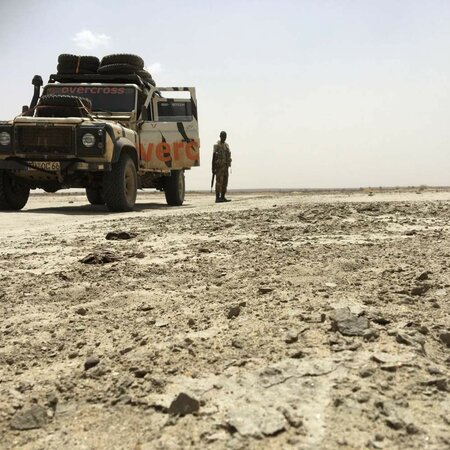
Das zweitägige 4x4 Training in Frankreich bot eine gut strukturierte Kombination aus theoretischen Einweisungen und praktischen Übungen. Besonders positiv war die individuelle Betreuung durch die Offroadtrainer, die sicherstellte, dass alle Teilnehmer, trotz unterschiedlicher Erfahrungslevels, das Gelernte angemessen verinnerlichen konnten. Ich habe eine realistische Einschätzung meiner...
★★★★★

Philipp S.

Die Tour durch die nördlichen Vogesen in Frankreich bietet eine durchdachte Routenplanung, die verschiedene Offroad-Strecken miteinander verknüpft. Besonders hervorzuheben ist die abwechslungsreiche Kombination aus technischen Herausforderungen und landschaftlicher Erkundung, wie die Etappenfahrt entlang der Maginot-Linie. Die Festlegung der täglichen Ziele und die Orientierung an landschaftlichen...

★★★★★

Thomas W.

Die Markom Travel Trophy in den nördlichen Vogesen bietet eine durchdachte Routenplanung, die von der Maginot-Linie bis zum Rhein-Marne-Kanal führt. Die täglichen Anforderungen gestalten sich herausfordernd, insbesondere bei den Offroad-Einlagen, die auf die Fähigkeiten der Gruppe abgestimmt sind. Die Streckenführung ist abwechslungsreich und ermöglicht sowohl...

Best Time to Travel & Climate in France

France's lowlands can be ridden almost year-round; what matters is the high passes of the Alps and Pyrenees.

5 Ideal
Best time to travel
June to September

In the Alps and Pyrenees, the high passes are usually not snow-free until mid-June, and snow can return from October. The rest of the country can be ridden year-round.

Region Jan Feb Mar Apr May Jun Jul Aug Sep Oct Nov Dec
Alps (High Passes)
Pyrenees (High Passes)
Rest of France (Coast, Lowlands, Low Mountains)
Ideal Doable Not passable

In France, the season is mainly a matter of altitude. In the lowlands, along the coast and in the low mountain ranges, roads stay open year-round; here the weather only affects riding comfort, not whether the road is passable. May to September is the most pleasant period, while winter brings cold and wet weather but no closures.

It's different in the Alps and Pyrenees: the high passes such as Col du Galibier, Col de l'Iseran, Col de la Bonette or Col du Tourmalet are officially closed in winter and only cleared once the snow allows it. The official closure periods usually run from October/November to May/June, but the actual clearing date depends on that year's snowfall and can vary by several weeks.

Even outside the winter closure, cold, fog and sudden snowfall can be expected at altitudes above 2,000m at any time of year, even in high summer. In July and August, motorcycles also share the big passes with large numbers of road cyclists.

Entry & Visa for France

France is an EU and Schengen member: for most European travellers, entry is a mere formality.

France is a member of the EU and the Schengen Area. For citizens of the EU, the EEA and Switzerland, a valid national ID card is enough; a passport is not required. There is no visa and no limit on the length of stay, since freedom of movement applies within the EU.

Travellers from non-EU countries (such as the USA, Canada, the United Kingdom or Australia) need a valid passport. For most of these countries, tourist entry is visa-free for up to 90 days within any 180-day period (the Schengen rule); citizens of some countries need to apply for a visa in advance. On entry, the passport should still be valid for at least three months beyond the planned departure from the Schengen area.

Within the Schengen Area, there are usually no systematic identity checks at the French border. A valid ID document should still always be carried, along with vehicle papers and proof of insurance, in case of a random spot check.

A longer stay of more than 90 days is only possible for non-EU citizens with a visa long séjour, which must be applied for in advance at the French consulate in the home country.

TypeStayCostWhereValidity
National ID card (EU/EEA/Switzerland)Unlimited (freedom of movement)noneNo application neededFor the validity period of the ID card
Visa-free (non-EU, e.g. USA, UK, Canada)Up to 90 days within 180 daysnoneNo application, passport check on entryMaximum 90 of 180 days per stay
Schengen visa (countries requiring a visa)As per visa, usually up to 90 daysFee on applicationFrench consulate in the home country, before travelAs stated on the visa
Long-term stay over 90 days (non-EU)Over 90 daysFeeVisa long séjour, French consulate in advanceAs per visa type

Bringing Your Own Motorcycle to France

No carnet, no customs forms, but a few equipment rules that can get expensive at a checkpoint.

France is a member of the EU and the Schengen Area, so entering with an EU-registered motorcycle is about as simple as it gets: no Carnet de Passages, no customs declaration, no time limit on the import. The vehicle registration document (Teil I) and valid proof of insurance are enough. Since an EU number plate is automatically considered insured within the EU, a Green Card is not strictly necessary for EU-registered vehicles, though it does no harm to carry one as evidence in case of an accident.

For motorcycles with a non-EU number plate (such as Switzerland or the United Kingdom), it is still advisable to carry the Green Card, even though it is rarely checked at the border.

More important than entry itself is the equipment requirement: since 2013, riders and pillion passengers on motorcycles over 125cc, and on motor tricycles over 15kW, must wear reflective clothing with at least 150cm² of reflective surface; jackets or vests with built-in reflective strips are the usual choice. CE-certified gloves are also mandatory for both rider and pillion. Both are checked during traffic stops, and the fine is around 68 euros per missing item.

Anyone riding through Paris, Lyon or another city with more than 150,000 inhabitants has generally needed a Crit'Air sticker for the low-emission zone (ZFE) since January 2025, motorcycles included. Some cities, such as Reims, exempt motorcycles, and the rule is also politically contested and may change. The sticker costs only a few euros, is valid for the lifetime of the vehicle, and should be ordered before the trip via the official French website; allow some lead time.

0 / 6
The reflective clothing and glove requirements apply regardless of the vehicle's country of origin, including for riders just passing through. Checks are rare, but the fine is around 68 euros per missing item and is collected on the spot.

Licence and Documents

The EU card licence is sufficient. Non-EU citizens should check in advance what else is required.

An EU category A card licence is sufficient for France; an international driving permit is not needed for EU citizens. Non-EU citizens should check before travelling whether their licence is recognised directly in France or whether an international driving permit is also required, which depends on the issuing country.

Checks by the police or gendarmerie are common on country roads and at motorway rest stops, and are usually low-key. You will be asked for your licence, vehicle registration document and proof of insurance. For a rented or borrowed motorcycle, a written confirmation from the registered owner is advisable, even though it is not strictly required within the EU.

0 / 6

Roads, Passes & Tolls in France

Well maintained, but tolled, and weather-dependent by season on the big mountain passes.

France's road network is one of the best maintained and most densely signposted in Europe. Motorways (autoroutes) are mostly tolled, charged via barriers at toll stations (péage). On some sections (A13, A14, A79, plus parts of the A4, A10 and A837), tolling now runs as a free-flow system: a camera reads the number plate, and payment must be made online within 72 hours or an extra fee applies. As a free alternative, so-called Routes Nationales (RN) or Départementales (D) run alongside most motorways, often the more scenic and slower choice for motorcyclists.

Speed limits: 50km/h in built-up areas, 80km/h outside them (some départements have again allowed 90km/h on selected country roads since 2020, watch the signage), 110km/h on expressways, 130km/h on motorways, all reduced by 20km/h in the rain. Newly licensed riders with less than two years' experience must ride 20km/h below the posted limit at all times.

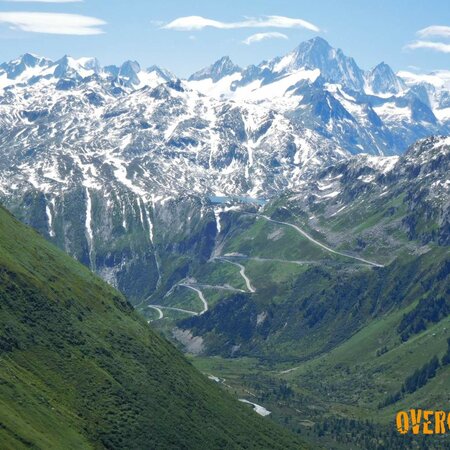
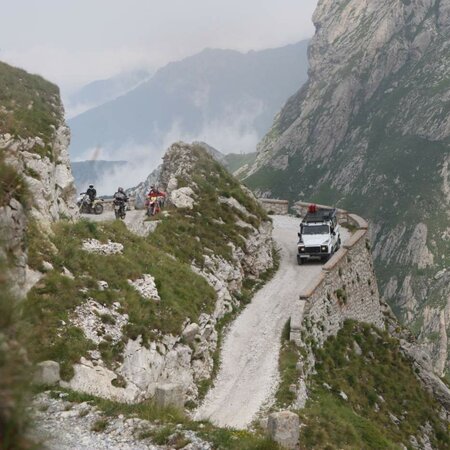
The major pass roads of the Alps (Route des Grandes Alpes) and the Pyrenees are fully paved and technically unproblematic, but closed seasonally. The exact clearing dates depend on snowfall and can differ from the official closure periods by several weeks; current closures are listed on the relevant département websites. In high summer, motorcycles share the passes with large numbers of road cyclists, especially in July.

A well-known off-road route is the Col du Parpaillon in the Hautes-Alpes, with its unlit tunnel at 2,637m. Following a rockfall, the pass road has been closed since 2023/2024 and has not yet reopened; older guidebooks and maps are out of date here.

1
Route des Grandes Alpes: Col du Galibier
100% paved

Paved, very winding, heavily used by road cyclists in July/August

After rain
Fog and cold possible even in summer, road surface can ice over
Realistic daily distance
100 to 150km realistic on a pass day
Fuel stops
Fuel stations in the valleys, none on the pass itself
Passes
Col du Galibier 2,642m, seasonally closed (winter closure roughly early Nov to end of May)
Permits
none
2
Route des Grandes Alpes: Col de l'Iseran
100% paved

Paved, the highest road pass in the Alps, wide hairpins

After rain
Fog and reduced visibility at the summit
Realistic daily distance
100 to 150km realistic on a pass day
Fuel stops
Val d'Isère and Bonneval-sur-Arc, none on the pass
Passes
Col de l'Iseran 2,764m, seasonally closed (winter closure roughly early Nov to mid-June)
Permits
none
3
Alpes-de-Haute-Provence: Col de la Bonette
100% paved

Paved, loop road around the Cime de la Bonette

After rain
Strong wind on the exposed summit
Realistic daily distance
100 to 150km realistic on a pass day
Fuel stops
Barcelonnette and Saint-Étienne-de-Tinée, none on the pass
Passes
Col de la Bonette 2,715m, Cime de la Bonette 2,802m, seasonally closed (winter closure roughly 1 Oct to mid-June)
Permits
none
4
Pyrenees: Col du Tourmalet
100% paved

Paved, the highest road pass in the French Pyrenees

After rain
Slippery surface in the tight hairpins
Realistic daily distance
100 to 150km realistic on a pass day
Fuel stops
Luz-Saint-Sauveur and Sainte-Marie-de-Campan, none on the pass
Passes
Col du Tourmalet 2,115m, seasonally closed (winter closure roughly December to May)
Permits
none

Fuel & Range in France

Fuel stations are plentiful; paying at unmanned night pumps is the only real hurdle.

France has a very dense network of fuel stations, even away from the motorways. On offer are SP95 (unleaded, often as E10 with 10% bioethanol), SP98 (premium, available in every larger town) and gazole (diesel). Adventure bikes with older fuel-injection systems should check beforehand whether they tolerate E10, and use SP98 if not. Premium fuel currently costs around 2.00 euros per litre (as of August 2026), with noticeable price fluctuation.

Outside opening hours, and on motorways, many stations run as automatic 24-hour pumps that only accept chip-and-PIN credit cards. Cards without a chip, or that only support a signature, are rejected by many of these machines, and a hold amount is often pre-authorised as well. Cash remains the norm at staffed stations.

FuelAvailabilityNote
SP95 (also as E10)NationwideCheck E10 compatibility on older machines beforehand
SP98Nationwide in towns, rarer in rural areasSafest choice for older fuel-injection systems
Gazole (diesel)NationwideRelevant for support vehicles
Night pumpsOn motorways and outside opening hoursChip-and-PIN credit card only, no cash

Safety on the Road in France

France is safe for travellers; the biggest risk is the road traffic itself.

France is considered a safe country for travellers overall; the same everyday caution that applies in any big city is generally enough, watch for pickpocketing, particularly around train stations and popular tourist sights. Political demonstrations and strikes (grèves) can block roads, toll stations or ferries at short notice and with little warning, so it is worth checking the current situation before setting off on a multi-day stage.

On country roads, speed is closely and consistently monitored through a dense network of fixed and mobile speed cameras, and fines are issued and sent on to foreign vehicle owners just as they are to French ones. On winding pass roads and in wooded, rural areas, be prepared for wildlife suddenly crossing the road, a risk that rises sharply around dusk and dawn.

Health & Travel Insurance

EU citizens are well covered through the European Health Insurance Card, but supplementary insurance is still important.

No vaccinations are mandatory for France. EU, EEA and Swiss citizens can be treated within the French healthcare system using the European Health Insurance Card (EHIC), printed on the back of their statutory health insurance card. It does not, however, cover repatriation or treatment in private clinics.

The healthcare system is well developed, and emergency departments (urgences) exist in almost every larger town, even away from major cities. In the Alps and Pyrenees, however, the nearest clinic can still mean a long journey after a fall on a remote pass road.

0 / 5
Many travel and health insurance policies exclude motorcycling above 125cc or ambitious pass riding. Check your policy before the tour and, if in doubt, take out supplementary cover that explicitly includes motorcycling.

Money, Cards & Payment

The euro keeps the maths simple; what matters more is having the right kind of card.

France uses the euro. Cards are accepted almost everywhere, including at toll stations and most fuel stations. Unmanned night-time fuel stations only accept chip-and-PIN credit cards; a plain debit card without credit-card functionality is often rejected there. In small mountain villages and at some mountain huts (refuges) along the pass roads, cash is still worth carrying.

Internet, SIM & Network Coverage

For EU travellers, France counts as home for roaming purposes; even so, coverage drops off in the mountains.

France is part of the EU roaming zone: with a SIM card from an EU or EEA country, roam-like-at-home rules apply, so there are no extra costs and your own data allowance is simply used as normal. Travellers from outside the EU should get a local SIM (Orange, SFR, Bouygues, Free) or an eSIM before departure; these are easy to find in towns and at train stations.

Network coverage is very good along the motorways and in towns. In the high valleys of the Alps and Pyrenees, and directly on the passes, coverage can be patchy, so offline map sections are worth having for pass stages.

Language, Culture & Etiquette

A friendly bonjour opens doors, and it's best to avoid the big motorways at the end of July.

The official language is French; English is mainly spoken in tourist regions and larger towns. A few words of French, above all a friendly bonjour when entering a shop, are noticeably well received.

Late July and early August is peak holiday season for the French themselves (chassé-croisé): on the weekends around 1 August, motorways heading south and to the coast are heavily overloaded, and the Bison Futé traffic service rates these days red or black. If you can, avoid the major routes on these weekends.

Restaurants usually serve only at fixed times, lunch roughly 12pm to 2pm and dinner from 7pm, with the kitchen closed in between in many places. In small towns, shops close on Sundays and often on Mondays too.

Packing List for France

Only what France additionally requires. The general motorcycle packing list is assumed.

0 / 6

Frequently asked questions

Citizens of the EU, the EEA and Switzerland don't need a visa; a national ID card is enough. Non-EU citizens can usually enter visa-free with a passport for up to 90 days within 180 days, depending on their country of origin.

Since 2013, riders and pillions on motorcycles over 125cc must wear reflective clothing with at least 150cm² of reflective surface, such as a jacket or vest with reflective strips. The fine is around 68 euros per missing item.

Not for EU licences. Non-EU citizens should check before travelling whether their licence is recognised directly or whether an international driving permit is required.

There is no flat-rate sticker, but a distance-based toll (péage) charged at barriers. On some sections, tolling runs as a camera-based free-flow system, and payment must then be made online within 72 hours.

Usually from June to October or early November, depending on snowfall. The official winter closures run roughly from early November to the end of May, though the actual clearing date can differ.

No. France is an EU member, so an EU-registered motorcycle is imported informally, with no carnet and no customs declaration.

No. Following a rockfall, the unlit tunnel passage has been closed since 2023/2024 and has not yet reopened. Older maps and guidebooks are out of date here.

Generally yes, in low-emission zones (ZFE) of cities with over 150,000 inhabitants, motorcycles included. Some cities, such as Reims, exempt motorcycles, and the rule is also politically contested. Order it online before the trip.

Photos from France

×

Send request

Adventure

How did you
hear about us?

Adventure truck Road path Palm tree
Ask a Route Expert

How do you want to travel?