Travel Information France

Romantic landscapes and delicious culinary delights await!

Everything you need to know about France

Travel map of France by the tour operator Overcross

Travel map of France by the tour operator Overcross


  1. General travel information for France
  2. Travel climate in France
  3. Geography in France
  4. Flora and fauna in France
  5. National parks and nature conservation in France
  6. Population in France
  7. Politics and economy in France
  8. Transport network in France
  9. Cities and regions in France
  10. Culture and sights in France
  11. Public holidays in France
  12. Medical information for France
  13. Travel advice for France
  14. Foreign representation in France
  15. Information sources for France


1. General travel information for France

Continent: Europe
Geographical location: Central Europe, located in the northern hemisphere between the Atlantic/North Sea and the Mediterranean
Highest elevation: Mont Blanc (4810 m a.s.l.)
Longest river: Loire (1012 km)
Form of government: Republic
Government system: semi-presidential democracy
Languages: French
Neighboring countries: Luxembourg, Belgium, Spain, Italy, and Switzerland
Capital: Paris
Area: Approx. 544,000 km² (Europe only)
Population: Approx. 67.5 million people (2023)
Population density: 124 inhabitants per km²
Religions: Approx. 54% Christian (51% Catholics, 3% Protestants), 9% Muslims, 31% unaffiliated, minorities of Jews, Buddhists and Hindus
Currency: Euro;   The current exchange rates to our travel countries can be found at oanda.com
Travel climate: Mediterranean travel climate
Time zone: UTC +1
Dialing code: +33
Country code: FR, FRA
Electricity: In France, sockets of type C and E are used. The mains voltage is 230V with a frequency of 50Hz. An overview of the sockets and plugs used in our travel countries can be found at wikipedia.de

back to top of page


2. Travel climate in France

France is located mainly in the temperate climate zone of Central Europe, only the travel regions in the southeast are already subject to the Mediterranean climate. While there are mild, rainy winters and hot, dry summers with an average annual temperature of 16 °C, the average annual temperature in the rest of France is 10°C, and even lower in the north, Lorraine, Jura and the Alps. The annual precipitation amounts range between 700 and 1000 mm, but in the Paris basin, in Alsace and along some coastal stretches of the Mediterranean, less than 600 mm of rain falls per year. On the western flanks of the Alps, Cevennes, Jura and Vosges, significantly higher rain quantities of over 1500 mm/year are sometimes measured. However, the distribution of precipitation throughout the year can be very different. While it often rains in Normandy and the sun comes out correspondingly less, the travel weather in the Rhône Valley is much friendlier, with only 60 rainy days per year on average.
In detail, individual travel regions in France can be distinguished by different climate conditions. The travel climate in the northwest of the country, including Normandy and Brittany, is oceanic under the influence of westerly winds, with precipitation amounts exceeding 1000 mm/year, mild winters and cool summers.
Central France with the Paris basin and the Loire Valley is overall relatively low in precipitation, with occasional heat periods and associated dryness. It is significantly cooler and wetter in the Massif Central, which can rise up to 1800 m.
In the southwestern travel region around the Atlantic coast, the overall climate is humid, but already relatively warm due to the influence of the Azores high, with frequent precipitation in the area of the Pyrenees. The Mediterranean area in the southeast is already under the so-called winter rain climate, with occasional heat waves and droughts in the summer and rainy, mild winters. In the catchment area of the Rhône, the Mistral blows, a strong, cold north-northwesterly wind that occasionally occurs in summer and provides cooling.
In the higher elevations of the Alps and Pyrenees, there is a high mountain climate with correspondingly good winter sports conditions.
 

Travel climate diagram for Paris by the tour operator Overcross


Travel climate diagram for Marseille by the tour operator Overcross


Travel climate diagram for Bordeaux by the tour operator Overcross


Travel climate diagram for Brest by the tour operator Overcross


back to top of page


3. Geography in France

The French national territory includes mainland France in Central Europe, the island of Corsica as well as the French overseas territories of French Guiana, Guadeloupe, Martinique, Mayotte, and Réunion. The French motherland is situated in the center of Europe and borders Germany, Luxembourg and Belgium to the east and northeast, Andorra and Spain to the southwest, and Monaco, Italy, and Switzerland to the southeast. It is bordered to the north and east by the Atlantic Ocean and the English Channel, with a transition to the North Sea, and stretches in the south to the Mediterranean coast.
With an area of about 544,000 km², France is one of the largest countries in Europe and has very diverse landscapes. On a journey through central France, the landscape is mainly characterized by plains or hills, which in the southeast rise into massive mountains with the Alps and on the border to the Iberian Peninsula with the Pyrenees. In the southern center of France lies the Massif Central, and the eastern borders are shaped by the Rhine and Rhône valleys with the Jura and the adjoining Vosges mountains. The highest mountain in France is the 4,810-meter-high Mont Blanc in the Alps, which is often considered the highest mountain in Europe. France’s coasts on the Atlantic in the west are mostly flat and sandy. In the northwest and north, in Brittany and Normandy, there are also rugged cliffs with bluffs. The coastline of Normandy is in many places marked by the breaking edge of chalk cliffs. The rocky Mediterranean coast, aside from the Rhône delta in the area of popular French travel destinations, forms in some places extensive lagoons.
The largest area of the country drains toward the Atlantic or North Sea via the rivers Rhine, Loire, Seine, Moselle, Meuse, and Scheldt, while only the Rhône carries significant rainfall from the French Alps to the Mediterranean.

back to top of page
 

In the French Pyrenees

In the French Pyrenees


4. Flora and Fauna in France

In France, you can find almost all of the plants native to Europe, ranging from typical deciduous and coniferous trees, orange and other fruit trees, to alpine mosses, lichens, and herbs. In the larger forests of southern Normandy, oaks, beeches, ashes, maples, and chestnuts grow. In the Mediterranean region, pines, holm and cork oaks, stone pines, junipers, cypresses, and plane trees are especially native. In Corsica, continuous forests of sweet chestnuts have developed. In southern France, olives, almonds, and wine are also cultivated. The largest continuous forest area in France, the Forêt des Landes, which however consists exclusively of man-made maritime pine plantations, is found in the dunes on the west coast. A floristic highlight is Provence in southern France, which in spring becomes a sea of blooming herbs and flowers. Here, the Aleppo pine is also frequently encountered.

The flamingos living in the Camargue lend an exotic flair. This popular travel region is also known for its population of wild horses. In addition to the native red and wild boar, you may come across ibexes, chamois, mouflons, and marmots, especially in the Alps. Encounters with lynxes, brown bears, or wolves are rare. Caution is advised with reptiles. Grass snakes and vipers are relatively common and, unlike the snake species living in Germany, the asp viper, European green whip snake, and the meadow viper, which is only found sporadically, are significantly more venomous. The Greek tortoise is also at home in the Massif des Maures in southern France.
The river meadows and wetlands are inhabited by various large birds, especially storks and different species of herons. In addition to birds of prey such as eagle owls, buzzards, kites, kestrels, and sparrowhawks, golden eagles and bearded vultures can also be observed in the mountain regions.

back to top of page


5. National parks and nature conservation in France

In addition to a large number of protected zones, nature parks, and biosphere reserves, France maintains 6 national parks on the European mainland that deserve attention when traveling through France. Among them are the 1,480 km² Vanoise National Park and the 1,780 km² Écrins National Park in the French Alps, the 520 km² Calanques National Park and the 25 km² Port-Cros National Park on the Mediterranean coast between Marseille and Toulon, the approximately 460 km² Pyrenees National Park, the 3,200 km² Cévennes National Park, and the 2,150 km² Mercantour National Park in the French Maritime Alps.

back to top of page


6. Population in France

Of the over 67 million people living in France today, around 10% have immigrated or are descendants of immigrants. France has been a country of immigration since the beginning of industrialization, as the demand for labor could no longer be met by the native population, which was stagnating in growth. The largest proportion of migrants today are of Portuguese descent, followed by North Africans, Turks, Italians, and Spaniards. A large proportion of immigrants in recent years have also come from the former French colonies in Sub-Saharan Africa and the Caribbean. Despite immigration, France's population grows by less than 0.5% per year. Although France is the most populous country in Europe after the Federal Republic of Germany, it has only half the population density due to its large national territory. The population of France is mainly concentrated in the large metropolitan cities such as Paris, Lyon, Toulouse, or Marseille.
In addition to French as the sole official and common language, various dialectal regional languages such as Picard, Norman, Gallo, Poitevin-Saintongeais, or Walloon were long used in France, which now threaten to die out due to linguistic standardization. Therefore, since 2008, the French constitution has mentioned the long-neglected regional languages as part of France's cultural heritage. Immigrants from various nations, especially from Portugal, Eastern Europe, the Maghreb, and the rest of Africa, have also brought their languages and maintain them in their locally limited neighborhoods. Although the importance of the English language is increasing among the young population of France, especially in the education sector, having your own knowledge of French is very advantageous when traveling through France.

back to top of page


7. Politics and Economy in France

With the new constitution of 1958, the travel destination France is a centrally organized democracy managed from the capital with a semi-presidential governmental system, in which the executive power and the power of the president have been largely strengthened. The president, who is directly elected by the people, is the highest state organ and stands above all other institutions, oversees the observance of the constitution, ensures the functioning of public authorities, the inviolability of national territory, and the compliance with agreements concluded with other states. The president may also shape foreign and security policy decisively, as well as enter into international agreements binding for France; he is also the commander-in-chief of the armed forces and responsible for the deployment of nuclear weapons. Moreover, the president is not subject to judicial control and is only accountable to parliament in cases of high treason. The legislative parliament consists of two chambers. The National Assembly has 577 deputies directly elected for five years, whereas the Senate has 348 members who are indirectly elected for a term of six years. The government, which is formed by the Prime Minister and the other state ministers and appointed by the president, depends primarily on the confidence of parliament. Once appointed, the government can no longer be formally dismissed by the president.

France has a managed economy, in which state actors conduct intensive economic and industrial policy. Similar to Germany, a state-mandated minimum wage guarantees employees a reasonable return for their working time. Due to France’s transformation from an agricultural to an industrial country, today less than four percent of the working population is employed in agriculture, forestry, and fisheries, while over 24 percent work in industry and over 72 percent in the service sector. The majority of French exports come from mechanical engineering, the automotive industry, aerospace engineering, the pharmaceutical sector, electronics, viticulture, and the food industry. The tourism sector and the luxury goods industry also play a major role.
France’s economy has grown, measured by GDP, in recent years by an average of 0.8%. As a founding member of the European Community, France plays a central role in Europe’s economic policy.

back to top of page


8. Transport network in France

Rail transport in France is characterized by the alignment of the rail network towards the Greater Paris area. Passenger train traffic, which has made significant progress in France since the 1980s through the development of high-speed trains and lines (TGV), is more important than freight traffic and is operated almost exclusively by the state-owned company Société nationale des chemins de fer français (SNCF). The French rail network covers approximately 30,000 kilometers in total, about half of which is electrified and over 3,000 km have been developed as high-speed lines for high-speed trains. Public rail transport in large cities and metropolitan areas is excellently organized. Therefore, when traveling, one can move very conveniently in France by train, both from one metropolis to the next and within the urban centers themselves. However, places located far outside the metropolitan areas are less accessible.
As a traditional seafaring nation, France has extensive natural and artificial inland waterways as well as efficient seaports in Dunkerque, Le Havre, Rouen, La Rochelle, Saint-Nazaire, Bordeaux, and Marseille. Passenger shipping is now regaining significance in France, particularly in the form of cruise travel.
Air travel in France takes place mainly centrally from the two airports in the capital Paris (Charles de Gaulle and Orly), with Charles de Gaulle Airport being the second largest airport in Europe and handling practically all long-haul flights to and from France. In addition, the airports of Nice, Lyon, and Marseille are important for European and domestic flight connections. Through these airports, journeys through France can conveniently be started near the intended destinations.

back to top of page


9. Cities and Regions in France

The European motherland of France has, since the territorial reform in 2015, been divided into 13 new regions through the partial merger of the former 22 regions, each corresponding to the status of a territorial authority. In terms of their administrative powers, they are comparable to government districts, their autonomy is financial, but not legislative. The new regions, listed in order of the size of their land area, are called Nouvelle-Aquitaine, Occitania, Auvergne-Rhône-Alpes, Grand Est, Burgundy-Franche-Comté, Centre-Val de Loire, Pays de la Loire, Hauts-de-France, Provence-Alpes-Côte d’Azur, Normandy, Brittany, Île-de-France (Paris) and the island Corsica. Each region in turn is divided into further departments. In total, mainland France, including the island of Corsica, is made up of 96 departments.
France has 6 large cities which, together with their surrounding metropolitan regions, each have more than one million inhabitants. These include the capital Paris with over 12.5 million, Marseille with 3.5 million, Lyon with 2.3 million, Toulouse with about 1.3 million, Bordeaux and Lille with about 1.2 million each as well as Nice with about 1 million inhabitants.

Paris
The French capital Paris is the political, economic as well as cultural center of France, and with three airports and six terminal stations, its largest transportation hub. On the relatively small area of the city proper, about 105 km², crowd together over 2 million inhabitants, making Paris, with a population density of around 21,000 inhabitants per square kilometer, the most densely populated major city in Europe.
Paris developed since the 3rd century BC from the Celtic settlement Lutetia on the Seine, which was later expanded into a city by the Romans and in the 6th century first became a main residence of the Frankish Empire. In the 16th and 17th centuries, notably under Louis XIV, Paris experienced a cultural and architectural flowering, which was reflected by numerous newly created splendid boulevards and baroque buildings, making Paris an exemplary model for baroque urban planning. Although the royal residence was relocated to Versailles in 1682, Paris continued to be the center of the country due to its political and economic importance. At the beginning of the 20th century, Paris, initiated by six world exhibitions, received worldwide attention and became one of the most important cities in the western world as well as the seat of internationally renowned artists, fashion designers, perfumers, and artisans.
Due to the unique development of the French capital from a city planning and architectural point of view since the Middle Ages, Paris has a multitude of sights to offer, of which the city's famous landmarks such as the Eiffel Tower, Notre-Dame Cathedral, the Triumph Arch or the Louvre make up only a small part, making the city a popular destination for international city tourists. Parts of the Seine riverbanks are today listed as a UNESCO World Heritage Site, and UNESCO’s headquarters is also in the French capital.
In addition, Paris, with its quaint neighborhoods like Montmartre or the Latin Quarter, its internationally important museums, theaters, and concert halls, is a world-famous cultural center whose flair must be experienced on a cultural journey through France.

Marseille
Marseille is the most important French port city and has international significance for the movement of goods on the Mediterranean. It lies in southern France, not far from the mouth of the Rhone on the Gulf of Lion. With about 860,000 inhabitants in the city proper and around 3.05 million inhabitants in the metropolitan area, Marseille is the second largest city in France after Paris.
The founding of the city around 620–600 BC goes back to the Greeks, who established a permanently inhabited settlement called Massalia at the previously existing harbor, soon developing into one of the richest and largest Greek colonies in the western Mediterranean. After a turbulent history during which both the Romans and later the Burgundians influenced the character of the city, a large part of historic Marseille was destroyed by the Wehrmacht and Waffen SS in 1943 through demolition. In the wake of the economic upswing in the postwar period and the influx of Algerian French after Algeria’s independence, Marseille struggled with both urban planning and social problems. Only with the urban renewal project Euromediterrannée at the beginning of the 1990s did the image of the city gradually change. For example, old industrial buildings were dedicated to cultural purposes, and the magnificent boulevards created during the Second Empire, such as Rue de la République, were enhanced by private investors. The city continues to make great efforts to beautify the cityscape, but thus also faces criticism for displacing the less affluent population from the city center.
Among the many sights of Marseille are, besides a variety of interesting museums and exhibitions, the Notre-Dame de la Garde, the old port with fishing harbor, the Quartier du Panier with the layouts of Marseille’s earliest settlement, or the park with Borély Castle. A visit to the magnificent boulevard La Canebière should also not be missed on a trip to Marseille.

Nice
The picturesque city of Nice, not far from the border with Monaco or Italy, together with the surrounding seaside resorts, forms a popular travel destination for the French Mediterranean coast and the adjacent Provence. Thanks to its sheltered location, Nice is also one of the warmest places on the French Côte d’Azur in winter. The most pleasant months for travel are May and from mid-September to mid-October. With nearly 350,000 inhabitants, Nice is France’s fifth largest city and has been, since the 19th century, first favored as a summer retreat by European and Russian nobility, especially the British.
The founding of Nice probably dates back to around 350 BC, when Greek Phocaeans, after a victory over the Ligurians, founded the city of Nikaia. Subsequently, the Romans settled in the city to protect against Ligurian attacks, and later Saracen invaders plundered the city. In the Middle Ages, Nice found itself caught between the lines of Spanish and French territorial claims. After a temporary possession by France, Nice’s affiliation shifted repeatedly between French and Italian claims by the House of Savoy, due to the War of Austrian Succession and Napoleonic conquests in Piedmont. Only with the Treaty of Turin in 1860 between Napoleon III and King Victor Emmanuel II of Sardinia-Piedmont was the final annexation of Nice to France agreed upon.
The city of Nice’s eventful past has resulted in a rich architectural heritage. Due to the concentration of construction on city expansion during the Second Empire, the old town core remained essentially intact. Many villas, palaces, and baroque churches built in the time of the House of Savoy also survived. The diversion of the Paillon River from 1868 onward enabled the creation of significant green spaces in today’s city center and at the same time allowed some of the newly gained land to be used as building sites for large public buildings. The city, which was initially occupied by Italy and later by Germany during World War II, also remained largely undamaged.
In the well-preserved old town, you will therefore find numerous baroque buildings and churches, such as the Sainte-Réparate Cathedral, the Church of the Annunciation, the Église du Gésu, the Church of Saint-Martin-Saint-Augustin, and the Église la Miséricorde. Among the secular buildings are the Prefecture, once the seat of the Dukes of Savoy, or the Palais communal as the former town hall. Above the old town lies Castle Hill with the ruins of the citadel, razed in 1706. The transition to the new town is introduced by Place Garibaldi and Place Masséna, both uniformly designed squares after Turin models, which are characterized by numerous luxury hotels such as the famous Hotel Negresco, apartment buildings, and Belle Époque villas. On the south side of the new town is the splendid Promenade des Anglais, laid out between 1822 and 1824. The growth of the Russian community since the second half of the 19th century led to the construction of Orthodox churches such as the Church of Saint-Nicolas-et-Sainte-Alexandra or the Saint-Nicolas Cathedral.
On Mount Cimiez, the excavations of the Roman town can be visited. There is also a Franciscan monastery with paintings by Jacques Bréa and the cemetery where Henri Matisse is buried.

Corsica
After Sicily, Sardinia and Cyprus, Corsica, with an area of 8,679 km², is the fourth largest island in the Mediterranean, lying about 200 km southeast of Nice in the Ligurian Sea. The island of Corsica is a region of France with special status and is inhabited by about 330,000 people. Corsica’s landscape is predominantly characterized by high mountains with 50 peaks rising over 2000 m, the highest being the summit of the Monte Cinto Massif at 2706 m above sea level. The mountains allow unique views over the island, to the neighboring island of Sardinia, and to the coast of Italy about 84 km away.
Corsica has a typical Mediterranean climate with hot, dry summers and mild, wet winters. In the high mountains, it is noticeably cooler, so some high-altitude locations offer winter sports. Already in late winter, the Corsican maquis, typical of the island, blooms with lavender, broom, cistus, myrtle, tree heath and strawberry trees in colorful hues, exuding an intense aroma that is even perceptible from the sea.
The biggest towns, whose ports provide access to the island for travelers, are Ajaccio and Bastia.
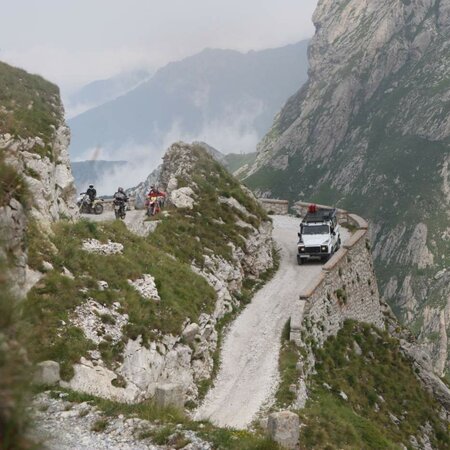
Because of the combination of winding mountain roads and breathtaking sea views, still little developed for tourism, Corsica is a popular destination for bikers, both motorized and muscle-powered. Also, a long-distance hiking trail crossing Corsica with many climbing passages attracts many ambitious hikers and climbers, with the so-called “Tafoni”, bizarre rock formations, being extremely grippy. The best-known climbing centers are the Restonica Valley and the Bavella Pass.

back to top of page


10. Culture and Sights in France 

French culture played a major role in the cultural development of Europe and also set many cultural impulses on an international scale, which were taken up by many countries. It developed as early as the Roman Empire and was shaped into its present diversity during the time of the Frankish Empire, the Empire, and later within the framework of the various republics.
The French language is a cultural asset, aspired to by the nobility and the wealthy worldwide, and which, even in today's age of increasing Anglicization, is preserved and cherished.
Since the Early Modern period, French cuisine has been considered the most influential national cuisine in Europe, world-famous for both its quality and versatility. Food is an important part of daily life in France, and caring for the cuisine is an indispensable element of national culture.
The oldest architectural traces in France were left primarily by the Romans in southeastern France, such as the amphitheatre of Nîmes or the Pont du Gard over the Gardon near Avignon. From the Middle Ages, mainly sacred buildings have survived, such as the Baptistery of Saint-Jean from the Carolingian period, churches in the Romanesque style such as St-Sernin de Toulouse, Ste-Foy de Conques, or Ste-Marie-Madeleine de Vézelay, as well as churches in the Gothic style such as the Cathedral of Amiens or the Cathedral of Beauvais. However, the most famous architectural monuments were left by the Renaissance cultural era in the form of countless castles and magnificent buildings. The most significant structures of this period include the Louvre and the Palace of Versailles, which were also imitated abroad, such as Sanssouci Palace in Berlin. From Art Nouveau, the Art Deco style developed in France, which adorns numerous metro stations in Paris and the Théâtre des Champs-Élysées architecturally.
With famous composers such as Hector Berlioz, Claude Debussy, and Georges Bizet, France decisively contributed to many styles of classical music. In more recent times, chansons were a French creation among emerging popular music genres.

From this rich cultural heritage, France has preserved unique and world-famous sights, many of which belong to the UNESCO World Heritage and are cultural highlights of any trip to France. These include, for example, the Eiffel Tower, the Louvre and the Cathedral of Notre-Dame in Paris, the Palace of Versailles, the castles of the Loire, the Cathedral of Amiens, and the historic center of Strasbourg, but also the Roman structures such as the amphitheatre of Nîmes or the Pont du Gard, or the cave paintings from early human culture in the Upper Paleolithic cave of Lascaux near Montignac in the French Dordogne. French and Mediterranean lifestyle can be well experienced in the well-known seaside resorts on the Côte Azur, such as St. Tropez or Nice.

In addition to the many cultural sights, France offers nature lovers a wide variety of natural landscapes, each with its own unique character, such as the French Pyrenees, Brittany, the coasts of Normandy, the Loire Valley, Provence, or the island of Corsica. Many of these natural beauties, such as the mountainous landscape of Mont Perdu in the Pyrenees, Mont St. Michel and its bay, the Chauvet Cave near Vallon-Pont-d'Arc on the Ardèche, or the Causses and Cévennes in the French Massif Central, are also protected by UNESCO as natural world heritage sites and are accessible to travelers through national and natural parks. Our adventure trips also provide the best opportunity to discover the diverse and impressive landscapes of France.

back to top of page


11. Public holidays with fixed dates in France


1 Jan New Year's Day
1 May Labour Day
8 May Victory Day
14 July National Holiday
15 Aug. Assumption of Mary
1 Nov All Saints' Day
11 Nov. L'Armistice
25 Dec Christmas


back to top of page


12. Medical Information for France

For legal reasons, as a tour operator we are not permitted to provide binding medical information for France, and therefore refer you to the information provided by the Federal Foreign Office of the Federal Republic of Germany, the Robert Koch Institute and the German Society for Tropical Medicine and International Health e.V.

back to top of page


13. Travel Information for France

Current travel and safety information, information on entry and exit requirements as well as special criminal law notes and behavioral recommendations for your stay in France can be obtained from the Federal Foreign Office of the Federal Republic of Germany.

back to top of page


14. Embassies in France

Embassy of the Federal Republic of Germany in Paris (There are further general consulates in Bordeaux, Marseille, Lyon, and Strasbourg, as well as a number of honorary consulates in Avignon, Brest, Dijon, Lille, Montpellier, Nantes and Nice.)
Jurisdiction/
Consular District:
France, French overseas territories and Monaco
Location: Paris
Street address: 13-15, Avenue Franklin D.Roosevelt, 75008 Paris
Postal address: Embassy of the Federal Republic of Germany, BP 30 221, 75364 Paris CEDEX 08
Telephone: +33 1 53 83 45 00, for emergencies +33 (0)1 53 83 45 00
Fax: +33 1 53 83 45 02
E-Mail: Contact form
Website: http://www.allemagne-en-france.diplo.de
Official languages
in the host country:
French


Embassy of the French Republic in Berlin
(There are further honorary consulates, e.g. in Hamburg, Düsseldorf, Frankfurt am Main, Stuttgart and Munich)
Location: Berlin
Street address: Pariser Platz 5
Postal address: Pariser Platz 5, 10117 Berlin
Telephone: 030 590 03 90 00
Fax: 030 590 03 91 10
E-Mail: [email protected]
Website: https://www.ambafrance-de.org


back to top of page


15. Information sources for France

German Weather Service
Federal Foreign Office of the Federal Republic of Germany
Wikipedia

back to top of page

Karte von France

×

Send request

Adventure

How did you
hear about us?

Ask a Route Expert

How do you want to travel?