Travel Information Argentina

Discover vibrant culture and breathtaking nature!

Everything you need to know about Argentina

Travel map of Argentina by the tour operator OVERCROSS

Travel map of Argentina by the tour operator OVERCROSS


  1. General information
  2. Climate
  3. Geography
  4. Flora and fauna
  5. National parks and conservation
  6. Medical information
  7. Population
  8. Politics and economy
  9. Transport network
  10. Cities and regions
  11. Culture and sights 
  12. Public holidays
  13. Travel information
  14. Representations abroad
  15. Sources


1. General information

Continent: South America
Geographical location: 
Form of government: Federal Republic
System of government: Presidential democracy
Languages: Spanish
Neighboring countries: Bolivia, Paraguay, Brazil, Uruguay
Capital: Buenos Aires
Area: approx. 2,780,400 km²
Inhabitants: approx. 45,376,763
Population density: 16.3 inhabitants per km²  
Religions: no state religion
Currency: Argentine Peso
Climate: tropical
Time zone: UTC-3
Dialing code:+54
Country code: ARG

back to top of the page

2. Climate

Buenos Aires Temperature max/min Precipitation /days Sun h/day
Jan 29,9 / 19,6 6 9
Feb 28,6 / 18,9 7 8,5
Mar 26,3 / 16,9 8 7,4
Apr 22,8 / 13,3 6 6,2
May 19,3 / 10,4 6 5,6
Jun 15,7 / 7,7 5 4,4
Jul 15,4 / 7,6 5 4,6
Aug 17,1 / 8,3 6 5,4
Sep 19,3 / 10 7 6,3
Oct 22,1 / 12,7 8 7
Nov 25,2 / 15,4 8 8,4
Dec 28,2 / 18,1 7 8,6

back to top of page


3. Geography

Argentina occupies almost the entire southern tip of South America. The republic stretches in a north-south direction over a length of 3,799 km, which, converted to distances in Europe, corresponds to the route between North Cape and Madrid. The country is shaped like an elongated triangle and at its widest point along the 27th parallel it reaches 1,432 km. Argentina's area of 2,780,403 km² corresponds to eight times the area of Germany.

back to top of page


4. Flora and Fauna

The country, due to its extension from the tropics to the South Pole, has the most diverse types of vegetation zones and animal species. There are subtropical rainforests with giant cedars and laurel trees in the province of Misiones in the northeast. Another special feature are the extremely resistant Quebracho trees (Spanish for axe-breaker) in Mesopotamia, whose heartwood is used for tannin and whose bark is used for tanning agents. Xeromorphic plants, i.e., plants protected from drying out through certain adaptations, such as thorn bushes and cacti, exist in the Gran Chaco; vast grasslands with a great diversity of wild grasses are found in the pampas húmeda.

In Eastern Patagonia there are barren steppes, in southern Tierra del Fuego forests with southern beeches and araucarias (Andean pines). All over Patagonia grow, among others, numerous different types of herbs, wild grasses, and blackberry bushes. In the Andes there are, besides conifers, also hardwoods and alders. In the Puna, a highland in the area of the central Cordilleras, above 3,500 m, densely leaved cushion plants and especially Tola heather occur.

The very species-rich wildlife of Argentina includes, in the north, mammal species such as monkeys, jaguars, pumas, ocelots, anteaters, tapirs, and raccoons. Native birds include flamingos and various species of hummingbirds and parrots. In the Pampas and partly also in Patagonia live armadillos, foxes, martens, wildcats, hares, deer, and the rhea, a large flightless bird similar to an ostrich. Bird species include, for example, falcons, herons, plovers, and partridges. The pig breeds now living wild in Patagonia are descended from domestic pigs brought to the country by European settlers. In the colder mountainous regions of the Andes, llamas and condors are native, among others. There are numerous fish and sea lions in the coastal waters, and large populations of freshwater fish in the inland rivers.

back to top of page


5. Conservation and National Parks

Talampaya National Park: The unique rock formations in combination with dinosaur remains, petroglyphs, and ruins make the national park a real experience. Since 2000, it has been a UNESCO World Natural Heritage Site.

El Leoncito National Park: The El Leoncito National Park is located in the west of the province of San Juan in an Andean valley and thus in western Argentina, the so-called Cuyo region. It protects a desert- to steppe-like highland, on which the observatory El Leoncito is located, which is known for the particularly clear skies in the region, and covers 89,706 hectares.

back to top of page


6. Medical Note

The provision of medical care is generally comparable to that in Europe in large cities and especially in Buenos Aires. However, in rural areas it is often technically, instrumentally, and hygienically problematic. Sufficient, worldwide health insurance coverage and reliable travel repatriation insurance are strongly recommended.

Further information: www.auswaertiges-amt.de

back to top of page


7. Population

Of the approximately 45.4 million inhabitants of the country, 13.2 million (agglomeration) live in Buenos Aires, the country's capital, alone. Almost a third of all Argentinians thus live in the capital and its immediate surroundings. In the rest of the country too, the vast majority of the population lives in the major cities (Córdoba, Rosario, Morón, etc.). With about 16.3 inhabitants per km², Argentina is one of the sparsely populated countries of the world. The population consists of about 95% whites as well as mestizos, indigenous people, and people of other origins. Over 75% of Argentinians are Roman Catholic, 8% Pentecostal, and there are minorities of Protestants, Jews, and Muslims.

Since about 1850, large numbers of Europeans have immigrated to the country (particularly Italians and Spaniards), and today Argentina has the highest number of European descendants compared to other South American countries. The indigenous original population was displaced by the immigrating Europeans and today number about 30,000 people, who mostly live in the Chaco and Patagonia. Argentina has one of the lowest illiteracy rates (just under 3%) in South America, although it is significantly higher in rural areas. School attendance from ages 6 to 14 is compulsory. The country's oldest university was founded as early as 1613 in Córdoba in the interior. Population growth is only 1%; life expectancy is on average 76 years. In addition to the official language Spanish, various European languages and Quechua are spoken.

back to top of page


8. Politics and Economy

The Argentine Republic is a presidential federal republic. The president, elected for four years, is simultaneously head of state, head of government, and commander-in-chief of the armed forces (President Cristina Fernández de Kirchner, since December 2007); one immediate re-election is possible. The National Congress consists of a Senate chamber (Senado) with 72 senators (indirectly elected for six years; partial elections every two years) and a Chamber of Deputies (Cámara de Diputados) with 257 members (directly elected for four years; partial elections every two years). The country’s main parties are the Partido Justicialista-Frente para la Victoria (PJ-FPV) and Unión Cívica Radical (UCR). An independent body of judges and lawyers proposes judicial appointments to the government and can initiate proceedings for abusive conduct in judicial office. Each of the 22 provinces, the national territory of Tierra del Fuego, and the autonomous federal district of Buenos Aires have their own constitution and elect their governor, deputies, and judges without intervention from the federal government.

Argentina remains the largest economy in Spanish-speaking South America. The country's economic development is based on several sectors: On the one hand, the country possesses excellent foundations for productive agriculture thanks to its fertile plains. On the other hand, the industrial sector is very important, with the automotive industry playing a leading role. The most important exports of the country remain agricultural products (soybean oil, corn, wheat, dairy and fishery products, fruit, beef and poultry as well as wine), as well as motor vehicles, raw materials and fuels, and chemical products. Imports include chemical products, motor vehicles, and machinery. The largest industrial companies are found in the greater Buenos Aires area and belong to the consumer goods industry. Primarily for the domestic market, products from meat, grain, sugar, and oil are produced and further processed here. A strong energy resource base (natural gas, oil, hydropower, nuclear power) makes the country almost self-sufficient. Furthermore, a large potential of as yet undeveloped mineral resources has a positive effect on the country's future opportunities. Already mined and produced raw materials include asbestos, lead, copper, tungsten, zinc, tin, gold and silver, manganese, uranium, oil, and natural gas. The currency is the Argentine Peso (=100 centavos)

back to top of page


9. Transport network

The role of the railway for passenger transport has largely been taken over by modern, air-conditioned coaches. Practically every point in the country can be reached by coach, and thus today bus terminals are, alongside airports, the most frequently used infrastructure facilities. The most important bus terminal in Argentina is Retiro in Buenos Aires. From there, there are bus connections throughout the country. Other heavily frequented bus terminals and hubs are found in Cordoba (about 10 hours travel time from Buenos Aires) and Mendoza (about 14–15 hours travel time from Buenos Aires). The longest direct connection is between San Salvador de Jujuy and Rio Gallegos (3430 km, scheduled travel time 55 hours), from where you can continue on to Ushuaia.

back to top of page


10. Cities and Regions

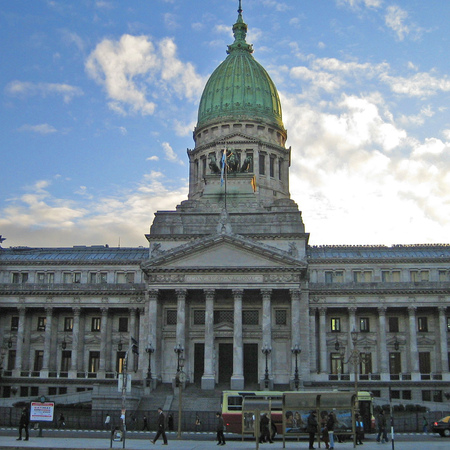
Buenos Aires: Buenos Aires is the great, cosmopolitan capital of Argentina. Its center is the Plaza de Mayo, with stately 19th-century buildings, such as the famous presidential palace Casa Rosada. Other major attractions include the Teatro Colón, a magnificent opera house with almost 2,500 seats from 1908, and the modern MALBA (Museo de Arte Latinoamericano de Buenos Aires) for Latin American art.

Mendoza: Mendoza is a city in the Argentine region of Cuyo. It is located in the center of Argentina's wine-growing region, known for its Malbec and other red wines. Many bodegas (wineries) offer tastings and tours. The city has wide, shaded boulevards lined with modern and Art Deco buildings, as well as smaller squares around Plaza Independencia. Here you will also find the underground Museo Municipal de Arte Moderno, which exhibits modern and contemporary art.

Santa Fe: Santa Fe de la Vera Cruz is a city in northeastern Argentina. It is the capital of the wealthy province of Santa Fe, which is shaped by agriculture and industry, and with about 400,000 residents, it is one of the largest cities in the country.

back to top of page


11. Culture and Sights 

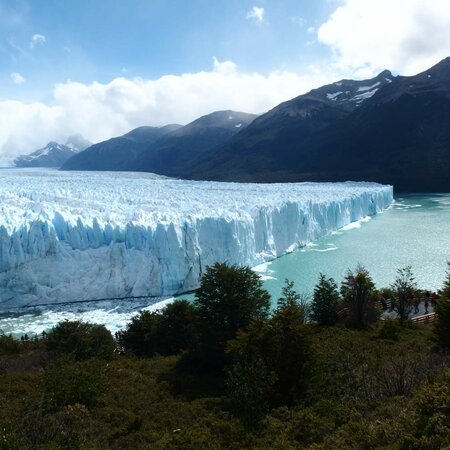
Perito Moreno Glacier: This glacier is the most impressive of its kind on the entire continent and one of South America's most beautiful tourist destinations. Since its tongue extends into the lake it feeds, dividing it into two parts, an impressive natural spectacle takes place every few years, when the higher section of the lake pours into the lower section through an ice rupture.

Iguazú Falls: The world's most impressive waterfalls are located directly on the border with Brazil on the Iguazú River. At least 1,500 cubic meters of water (much more during rainy seasons) pour down here per second in 275 larger and smaller falls, cascading over a distance of more than two and a half kilometers.

Quebrada de Humahuaca: The thousands of mineral colors with which the rocky gorge landscape of Quebrada de Humahuaca captivates viewers are a feast for the eyes. Other senses are stimulated by the smells and flavors of traditional dishes, which are mainly served here.

back to top of page


12. Holidays

01 January New Year
12 February Carnival Monday
13 February Carnival Tuesday
24 March Memorial Day for the 1976 Military Coup
29 March Maundy Thursday
30 March Good Friday
02 April Day of the Fallen and the Veterans
01 May Labor Day
25 May May Revolution Day
20 June Flag Day
09 July Independence Day
20 August Memorial Day General José de San Martin
08 August Columbus Day
26 November National Sovereignty Day
08 December Immaculate Conception
24 December Christmas Eve
25 December Christmas
31 December New Year's Eve


13. Travel Information

Safety information from the Federal Foreign Office

back to top of page


14. Foreign Representation

Embassy of the Federal Republic of Germany

Head: Jürgen Christian Mertens, Ambassador Extraordinary and Plenipotentiary

Location: Buenos Aires

Telephone: +54 11 47 78 25 00

Mailing address: Embajada de la República Federal de Alemania, Calle Villanueva 1055, C1426BMC Buenos Aires, Argentina.

Street address: Calle Villanueva 1055, C1426BMC Buenos Aires.

Website:http://www.buenos-aires.diplo.de

back to top of page


15. Sources

www.wetterkontor.de
www.auswaertiges-amt.de
www.algier.diplo.de

back to top of page

Karte von Argentina

×

Send request

Adventure

How did you
hear about us?

Ask a Route Expert

How do you want to travel?