Travel Information

Albania Travel Information for Motorcycle & Offroad Tours

Everything that matters before your Albania tour: entry with your own motorcycle, visa, mountain road conditions, fuel and emergency numbers, from a rider's point of view.

View tours
Visa
Visa-free up to 90 days (DE, AT, CH, EU)
For longer stays: apply for a residence permit within the first 30 days
Passport validity
Valid for at least 3 months beyond entry
Best time to travel
May to June and September to October
Currency
Lek (ALL)
Prices are often still quoted verbally in the old Lek, ten times today's value
Time zone
UTC+1 (CET, same time zone as Germany)
Side of the road
Right-hand traffic
Helmet & gear
Helmet compulsory; protective clothing not required by law
Main road
SH8 coastal road, A1 Rruga e Kombit towards Kosovo
Fuel
Super 95 and diesel widely available on the coast and in cities, patchy in the mountains
Int'l driving permit
Not mandatory for EU driving licences, but recommended

What guests say about their trip to Albania

★★★★★

Lars R.

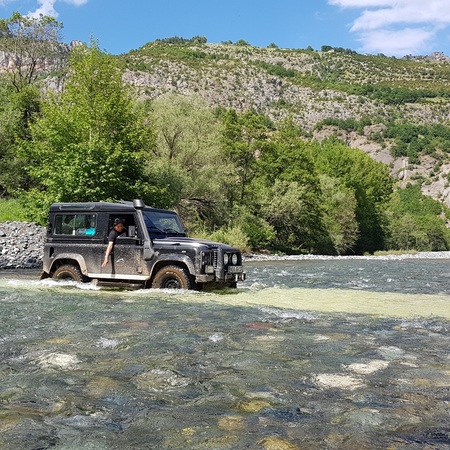
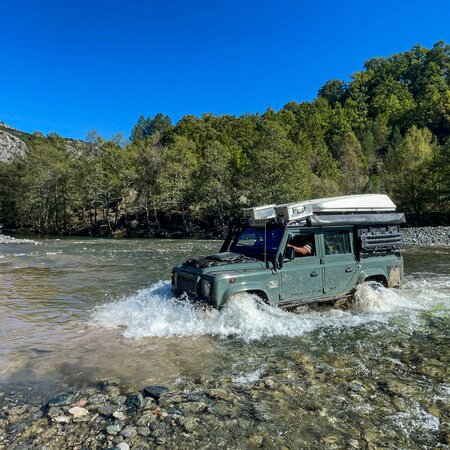
Die geführte 4x4-Offroadreise durch Albanien besticht durch die hohe Kompetenz des einheimischen Guides. Während der exakten Routenführung durch die einsamen Pfade zum Dorf Theth und den atemberaubenden Osum-Schluchten erhielt unsere kleine Gruppe gezielte Tipps zum Fahrverhalten. Der lokal gewachsene Kontext und die enge Betreuung sorgten...
★★★★★

Jan K.

Die 4x4-Offroadreise durch Albanien bietet eine klar strukturierte Organisation, insbesondere die täglichen Briefings vor der Etappe, die eine präzise Routenplanung für die inklusive Besuche der Lura-Seen und des Koman-Sees ermöglichen. Die größere Herausforderung in der unwegsamen Region rund um das Shala-Gebirge erfordert viel Geschick, was...

★★★★★

Martin W.

Die geführte 4x4-Offroadreise durch Albanien bietet eine klar strukturierte Routenplanung mit einem Fokus auf technische Vorbereitung und Support. Die täglichen Briefings vor den Etappen, inklusive GPS-Tracks, garantieren eine nachvollziehbare Streckenführung durch das Shala-Gebirge und die Osum-Schluchten. Der professionelle und einheimische Guide stellte sicher, dass die...

Best time to travel & climate in Albania

The coast is open almost year-round; winter snow closes the Albanian Alps in the north from November to April.

8 Ideal
Best time to travel
May to June and September to October

In early and late summer, coast and mountain passes are equally open, without the heat and holiday traffic of high summer. From November to April, snow lies on the passes of the Albanian Alps.

Region Jan Feb Mar Apr May Jun Jul Aug Sep Oct Nov Dec
Coast and plain (Vlorë, Tirana, Sarandë)
Albanian Alps (Theth, Valbona, North)
Ideal Doable Not passable

Albania has no single riding window - it depends on the region. On the coast (Vlorë, the Albanian Riviera, Sarandë) and in the plain around Tirana, riding happens year-round, but July and August bring heat and dense holiday traffic on the narrow coast road SH8 over the Llogara Pass.

In the north, in the Albanian Alps around Theth and Valbona, snow determines the season. According to official information, the SH21 pass road over the Qafa e Thorës to Theth is closed from November to April, with avalanche and mudslide risk at the edges of the season. The route is only reliably clear again from May.

In between lies the rest of the country: main roads and the A1 motorway towards Kosovo are rideable year-round, while side roads in the mountains suffer from landslides after heavy rain.

Entry & visa for Albania

For EU passports, entry is a formality. Your own motorcycle needs the Green Card and a little patience with customs.

Travellers from Germany, Austria, Switzerland and the EU do not need a visa for tourist stays of up to 90 days. The passport or ID card must still be valid for at least three months at entry.

Anyone wanting to stay longer than 90 days needs a long-term visa beforehand, or must apply for a residence permit at the Albanian immigration authority within the first 30 days. Without this application, problems can arise on departure.

Your own motorcycle doesn't need a visa, but it does need paperwork: the original vehicle registration document and a valid Green Card with the country code AL. Albania is a member of the Green Card system, and the card is checked at the border. Check with your insurer before departure whether AL is listed on the card and not crossed out.

Check the current rules with the German Federal Foreign Office before departure, especially if the trip continues beyond Albania into Kosovo: the Green Card is not recognised there, and local border insurance is compulsory.

Visa typeStayCostWhere to applyValidity
Visa-free (tourism)Up to 90 daysnoneNo application needed, checked on entryUp to 90 days per stay
Stay over 90 daysAs granted with the permitFee paid locallyApplication at the immigration authority, within the first 30 daysAs stated on the residence permit
Own motorcycleUp to 180 daysnoneCustoms on entry, Green Card checkedTied to the vehicle documents, no separate export deadline

Entering Albania with your own motorcycle

No carnet, but the Green Card has to be right, and without a power of attorney a borrowed motorcycle gets stuck at customs.

No Carnet de Passages is needed to enter with your own motorcycle. According to the German Federal Foreign Office, vehicles with foreign number plates may be driven in Albania for up to 180 days without any separate customs clearance being required.

The Green Card is compulsory: Albania is a member of the international Green Card system, and the country code AL must appear on your card and must not be crossed out. Check this with your insurer before you set off, not only at the border crossing. If cover is missing, you will be refused onward travel at the border.

If you're riding someone else's motorcycle, you need a power of attorney from the owner. According to traveller reports, border officials check strictly and often won't accept a photo or PDF on a phone: the registration document, Green Card and power of attorney should be printed and carried in your luggage.

The common entry points from the north are Hani i Hotit from Montenegro, on the well-built main road SH1, and from the south the border at Kakavijë from Greece. From the east, the A1 motorway (Rruga e Kombit) runs from Kosovo via Morinë into Albania, tolled at around EUR 2.10 per direction.

If you want to continue into Kosovo, the Green Card isn't valid there: local border insurance is compulsory for onward travel, regardless of what your card covers for Albania.

0 / 6
The Green Card is the most common cause of trouble at the border: not every European insurer covers Albania. Call your insurer before you set off and get AL on the card confirmed in writing, not only at the counter in the border hut.

Driving licence and documents

An EU driving licence is enough. An international one saves arguments at checks.

The EU card-format category A driving licence is recognised in Albania; an international driving permit is not a strict requirement. It's worth carrying one anyway: it's printed in English and French and speeds up checks, because police don't have to translate every German licence category. It's only valid together with the national licence.

Checks are common on country roads. You'll be asked for your driving licence, vehicle documents and proof of insurance. The blood alcohol limit is 0.1, effectively a ban on drinking at all before riding.

0 / 5

Road conditions & riding in Albania

The main routes are well built; behind them a gravel track often begins. Knowing where still gets you through just fine.

The main connections have been heavily upgraded in recent years: the A1 motorway (Rruga e Kombit) connects Tirana to the Kosovo border in a good two hours, paved throughout and tolled. The coast road SH8 between Vlorë and Sarandë crosses the Llogara Pass at 1,027 m, narrow, with tight hairpins and stretches with no guardrail.

Off the main routes, things become unpredictable. According to the German Federal Foreign Office, the condition of side roads in the mountains is often poor, and some stretches are only passable with off-road-capable vehicles. Expect potholes, unlit vehicles and unsecured roadworks, especially at dusk. After heavy rain, mountain roads can become impassable at short notice due to landslides.

Even on main roads, speed limits often change without an obvious reason and with little warning - go by the signage, not by expectation. Donkeys, flocks of sheep and pedestrians on the road are a normal sight, especially on the coast road south of Vlorë. Ride accordingly with foresight, particularly in villages and when meeting oncoming traffic in tight curves.

1
A1 Rruga e Kombit: Tirana (Kashar) to the Kosovo border (Morinë)
114 km
100% paved

Continuous motorway, partly two lanes per direction, a 5.5 km tunnel near Kalimash

After rain
Uncritical, modern drainage
Realistic daily distance
The whole route in a good 2 hours
Fuel stops
Every 20 to 30 km at the rest stops
Passes
Mountain section Rëshen to Kalimash
Permits
none, toll approx. EUR 2.10 per direction
2
SH8 Vlorë to Sarandë over the Llogara Pass
100% paved

Paved, but narrow, with tight hairpins, steep ramps and stretches with no guardrail

After rain
Fog and visibility problems possible at the top of the pass
Realistic daily distance
Allow noticeably more time than the distance suggests, because of the curves and holiday traffic
Fuel stops
Vlorë and Sarandë well supplied, sparse in between
Passes
Llogara Pass, 1,027 m
Permits
none
3
SH21 Koplik (Shkodra) to Theth
58 km
100% paved

Paved throughout since 2021, but narrow, winding and running along a deep valley cut

After rain
Avalanche, snowstorm and landslide risk in the shoulder seasons
Realistic daily distance
58 km in 1.5 to 2 hours
Fuel stops
Last reliable fuel station in Koplik
Passes
Qafa e Thorës
Permits
none, road closed from November to April

Fuel, range and daily stages

On the coast and the main routes, fuel is a non-issue. In the mountains and the far north it gets tight.

Along the coast, the A1 and in the cities, the fuel station network is dense, with well-known brands such as Kastrati and international providers. Super 95 is standard, diesel is available everywhere, and Super 98 is found mainly in larger cities.

In the mountains, particularly in the Albanian Alps around Theth and Valbona and off the SH8 south of Sarandë, fuel stations are rare. Fill up fully as soon as you see a station, rather than waiting until the tank runs low. A small spare canister bridges a station that turns out to be closed on a mountain stage.

Payment at the big chains is by card; smaller rural stations often take only cash in Lek. Keep small notes handy.

FuelAvailabilityNote
Super 95Widely available on the coast, main roads and in citiesStandard for touring and enduro motorcycles
Super 98Larger cities onlyDo not factor into your planning
DieselWidely availableRelevant for support vehicles
Spare canisterBring your ownWorthwhile for the Albanian Alps and remote mountain stretches

Safety on the road in Albania

The real risk in Albania lies in road traffic, not in crime.

Albania is generally considered safe for travellers; the usual caution in towns is normally enough. Pickpocketing occurs in tourist centres, but more serious crime against travellers is rare.

The bigger risk is road traffic: the German Federal Foreign Office points to frequent, sometimes serious traffic accidents and advises defensive riding, especially at dusk because of unlit vehicles and unpaved road edges.

According to the Federal Foreign Office, even foreigners can face temporary custody or an exit ban after a traffic accident, until the case is resolved. Check the current travel safety advice from the Federal Foreign Office before and during your trip.

Health & vaccinations

No mandatory vaccinations, but medical care doesn't match German standards everywhere.

No mandatory vaccinations are required for Albania. The Federal Foreign Office recommends hepatitis A for most trips, and TBE, hepatitis B and rabies depending on the route and length of stay - best clarified individually at a travel medicine consultation.

According to the Federal Foreign Office, medical care falls below German standards, especially away from Tirana. Travel health insurance with repatriation cover is strongly recommended for a motorcycle trip.

0 / 5
Most travel and health insurance policies exclude riding motorcycles over 125cc. Check your policy before booking and, if in doubt, take out supplementary cover that explicitly includes motorcycling and repatriation.

Currency, costs & payment

The Lek is the national currency, but many Albanians still mentally calculate in the old Lek.

Payment is in Albanian Lek (ALL). In cities and at large fuel station chains, card payment works reliably; in the countryside and at small stations you'll need cash. Cash machines exist in every larger town, usually with a fee equivalent to a few euros per withdrawal.

Be careful with quoted prices: many Albanians still state prices in the old Lek, ten times today's value. If someone quotes you 5000 Lek for a coffee, they probably mean 500 - ask if you're unsure.

Internet, SIM & navigation

Coverage is good on the coast and main routes, patchy in the Albanian Alps.

Albania has two nationwide mobile operators, Vodafone Albania and One Albania. Prepaid SIM cards are cheap and available at Tirana airport and in every larger town, and eSIM support is growing. The LTE network is well built out along the coast and in the cities.

In the mountains, especially in the Albanian Alps around Theth and Valbona and on remote inland tracks, network coverage is patchy. Download offline maps in advance and don't rely solely on mobile signal on these stages.

Language, culture & conduct

Hospitality is taken seriously, while tipping is barely expected.

The official language is Albanian. In tourist areas and with younger Albanians, English and Italian get you by fine; older people in the mountains tend to speak only Albanian.

Hospitality carries real weight in Albania - don't turn down an invitation to a coffee or a raki lightly. Tipping is unusual and rarely expected, though it's increasingly appreciated in tourist restaurants on the coast.

Religiously, Albania is diverse and relaxed: a large part of the population has a Muslim background, alongside Orthodox and Catholic Christians and many non-religious Albanians living side by side. Dress modestly away from the beaches, especially in rural areas.

Packing list for Albania

Only what Albania adds on top. The general motorcycle touring packing list is assumed.

0 / 6

Photos from Albania

×

Send request

Adventure

How did you
hear about us?

Adventure truck Road path Palm tree
Ask a Route Expert

How do you want to travel?