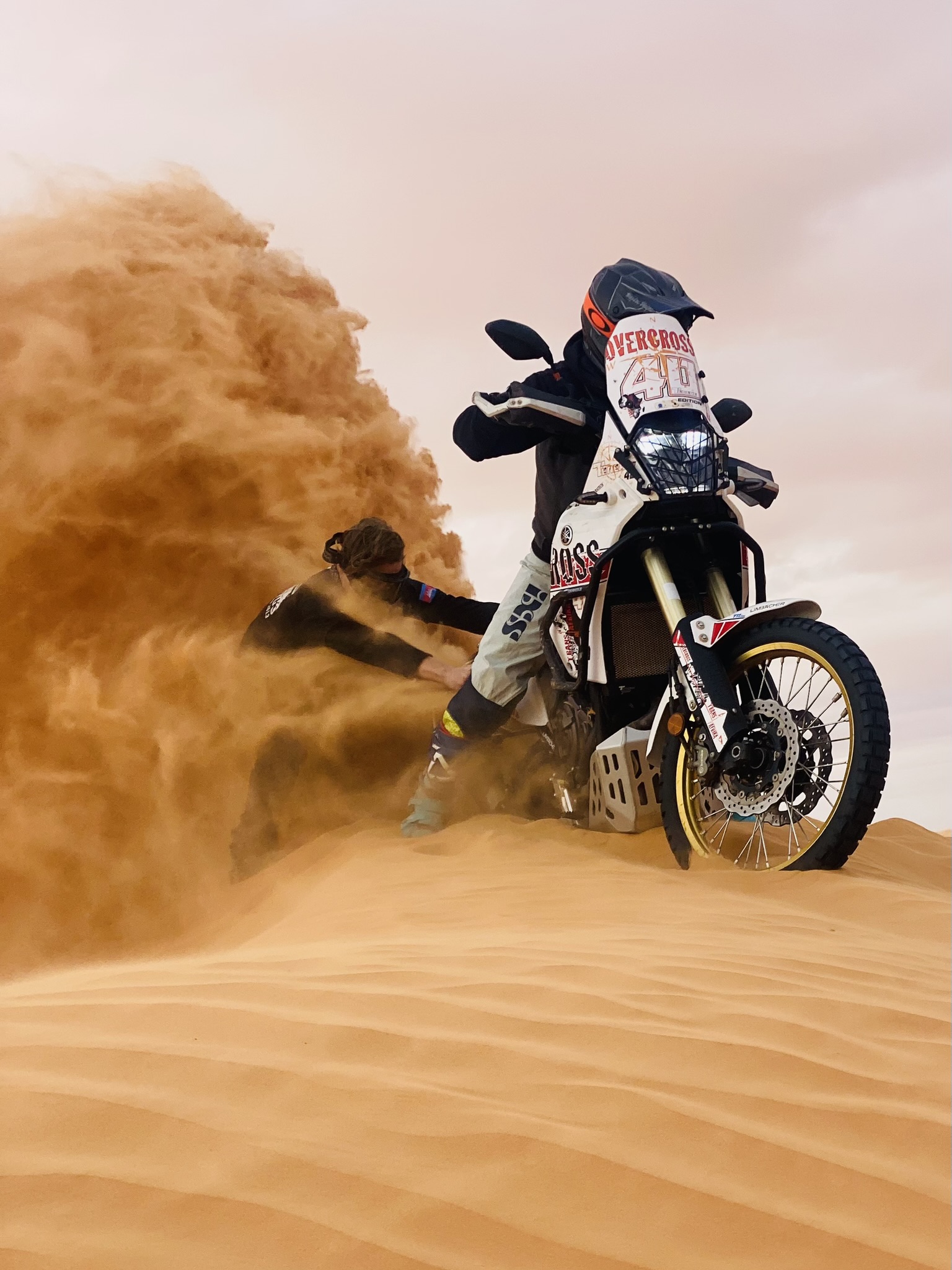
Travel Information Turkey

Turkey: Where history and beaches unite!

Everything you need to know about Turkey

Travel map of Turkey by the tour operator OVERCROSS

Travel map of Turkey by the tour operator OVERCROSS


  1. General Information
  2. Climate
  3. Example
  4. Flora and Fauna
  5. National Parks and Nature Conservation
  6. Medical Notes
  7. Population
  8. Language
  9. Politics and Economy
  10. Transport Network
  11. Cities and Regions
  12. Culture, Sights
  13. Holidays
  14. Travel Advice
  15. Foreign Representatives
  16. Sources and Link


1. General Information


Continent: Asia
Geographical location: Turkey geographically spans two continents, Asia and Europe.​
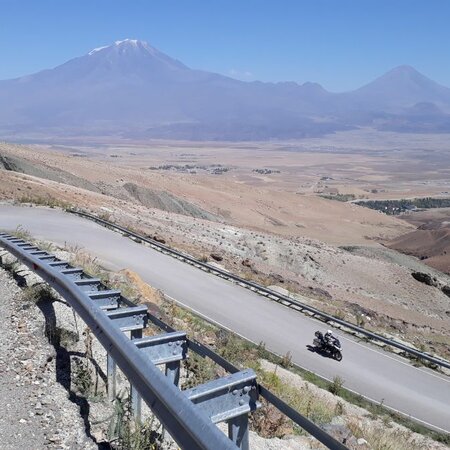
Highest elevation: Mount Ararat at 5,137m above sea level
Longest river: Kizilirmak with a length of 1,353km
Form of government: Parliamentary republic
System of government: Parliamentary democracy
Languages: Turkish
Neighboring countries: Armenia, Azerbaijan, Bulgaria, Greece, Iraq, Iran, Syria
Capital: Ankara
Area: 783,562 km²
Population: 85,342,000
Population density: 109 inhabitants per km²
Religions: Muslims 
Currency: Turkish Lira (TRY)
Climate: Several climate zones traverse Turkey
Time zone: UTC+3 
Country code: +90
Country abbreviation: TR 
Electricity: 220 V, 50 Hz power system
Opening hours: Banks Mon-Sat 8:30-12:30, 13:30-17 (currency exchange only after 11 am); post offices daily 8-21, often until 23; shops partly until 22.

back to top of page


2. Climate


Istanbul Temp. °C min/max Sunshine hours / day Rainy days
Jan 2 7 4 13
Feb 3 8 4 12
Mar 4 11 5 11
Apr 7 15 6 9
May 12 20 8 8
Jun 14 25 11 5
Jul 18 28 12 5
Aug 20 29 11 6
Sep 18 28 8 8
Oct 13 20 6 11
Nov 10 16 5 12
Dec 3 9 4 13


Antalya Temp. °C min/max Hours of sunshine / day Rainy days
Jan 6 15 4 14
Feb 7 16 6 11
Mar 8 19 7 8
Apr 10 21 8 6
May 15 25 10 4
Jun 19 30 11 2
Jul 22 34 12 0
Aug 23 34 12 0
Sep 19 31 10 1
Oct 15 26 8 6
Nov 10 20 6 9
Dec 8 17 5 12


Hardly any Mediterranean coast with high water temperatures and so much sunshine in summer has such consistently growing visitor numbers as the varied south and southwest coast of Turkey.
The longing for picturesque harbor towns, unclouded sunshine on fine sandy beaches, state-of-the-art resorts, imposing rocky backdrops, and culturally magical travel destinations like Pergamon, Troy, or Ephesus can be quickly fulfilled.
While the weather on the Black Sea can be unpredictable in summer, you can rely on the most popular vacation destinations in southern Turkey. More than 10 hours of glorious sunshine and few or no days with precipitation speak for Turkey's climate.
 
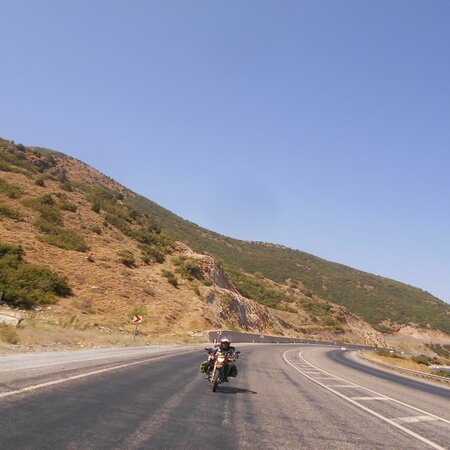
The best time to travel to Antalya and the nearby cities on the Turkish Riviera is in spring from May to June and in autumn from September to November. During the summer months of July and August, it is very hot by Central European standards, but good for motorcycling.

back to top of page


3. Flora and Fauna

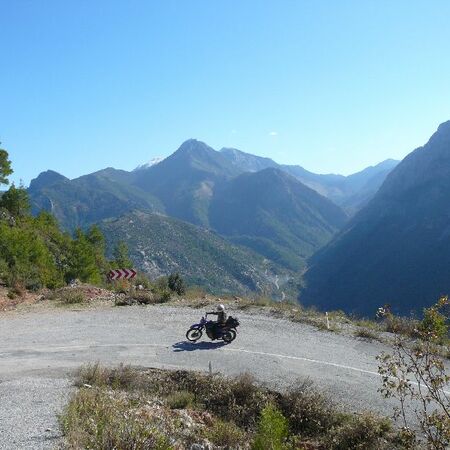
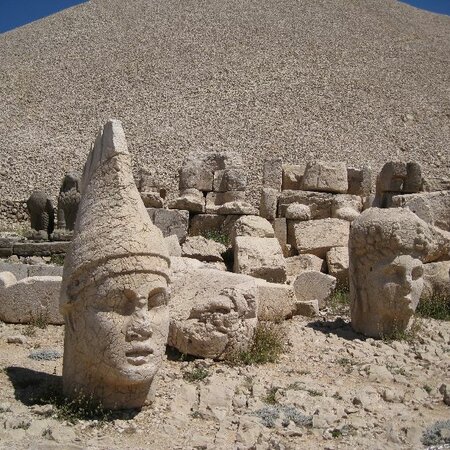
Flora and Fauna of Turkey Taurus Mountains
Image: View of part of the Taurus Mountains in Turkey


The total area of Turkey is used 36.3% for agriculture, and 26.2% is covered by forest.
 
In the Near East, Turkey’s flora is considered the most diverse and varied. On the plateaus, many wildflowers and ground covers are native, the steppes are dominated by shrubs, coniferous forests and black pines, while the dry areas are also home to thistles and cactus plants. In the north, especially along the Black Sea coast, there are extensive hazelnut, corn and tea plantations, in the south more fruit and cotton plantations and especially plants that have adapted to the dry summers, such as evergreen hedges, shrubs, oak trees, olive trees and carob trees.
 
The main livestock found are cattle, horses, buffalo, sheep and goats. The camel population has steadily declined in recent decades; their original use as pack animals has been largely replaced today by sporting competitions. Also, many small game species and wild boar are native, although their populations are constantly reduced by hunting.
 
The largest predators still living in Turkey today include brown bears, wolves, jackals and some lynx species.

back to top of page


4. National Parks and Nature Conservation

In total, 33 national parks in Turkey offer untouched landscapes, wonders of nature and beaches.
The 3 most popular national parks are:
Kaz-Dagi National Park
Dilek National Park
Olympos National Park


back to top of page


5. Medical Information

When traveling, remember to bring a well-stocked travel pharmacy, as there may be shortages in medical care. In addition, it is advisable to take out inexpensive travel health insurance.
 
Give your body the necessary time to adjust to the changed climate. In warmer regions you will need more fluids, which can mean up to 4 liters more per day depending on physical exertion and outside temperature.
It is best to visit your family doctor before your trip; they always have the latest information.

back to top of page


6. Population

Turkey Motorcycle Travel Population
Image: The typical Turkish village of Kayayköy

The ethnic composition of the population in Turkey cannot be precisely determined. In official censuses, ethnic affiliation is not recorded. Instead, native and secondary language are collected, but the numbers among many minorities have sharply decreased due to Turkish assimilation policies. In addition, various ethnic groups have been mixing for centuries, making it often difficult to assign individuals to a specific group.
 
The information regarding ethnic groups varies greatly depending on which sources are used. Accordingly, the following ethnic groups live in Turkey: 70 to 77% Turks, 14 to 18% Kurds, 4% Zaza, 2% Circassians, 2% Bosniaks, 1.5% Arabs, 1% Albanians, 0.5% Laz, 0.1% Georgians as well as various other ethnic groups and nationalities such as Armenians/Hemşinli, Bulgarians/Pomaks, Arameans, Chechens, Greeks/Pontians, Jews, and Roma.
 
In 1914, there were about 1.3 million Armenians with Armenian as their native language in the Ottoman Empire. Due to the genocide from 1915 to 1917 and expulsions, their number has decreased to about 40,000. On top of this, there are about 70,000 illegal Armenian immigrants.

to top of page


7. Language

The national and official language of Turkey is the Turkic language Turkish, spoken by over 80% of the population as a mother tongue and by another 10–15% as a second language. Thus, Turkish is by far the most important language in present-day Turkey. Turkish Sign Language was legally recognized in July 2005.
 
In addition, there are about twenty languages from a total of five different language families spoken today by non-Turkish ethnic groups and minorities living in Turkey. 
Kurdish, Zazaki, Arabic, Azerbaijani, and Bulgarian

back to top of page

8. Politics and Economy

Politics:
According to Article Two of the Constitution, Turkey is a democratic, secular, and social constitutional state. The Republic of Turkey was founded by Mustafa Kemal Atatürk after the end of the First World War, who is still revered by many citizens today.
 
According to the Constitution, the president is to supervise the harmonious functioning of state organs as head of state. He is elected for five years at a time, with one re-election possible. His duties include nominating the prime minister and, on his proposal, appointing the ministers as well.
 
Economy:
In recent years, Turkey has recorded consistently strong economic growth. Despite the global economic crisis, the country's economy shone in the second quarter of 2021, for example, with a growth rate of 8.8%. As a result, the country is increasingly becoming a destination for foreign investors. Moreover, the government has managed for years to reduce inflation. In 2023 it was only 43.0%, a rapid decrease compared to 2002 (44.4%). However, it should be noted that a large gap still exists between the highly industrialized west and the agrarian, poorer east of the country.

back to top of page


9. Transportation Network


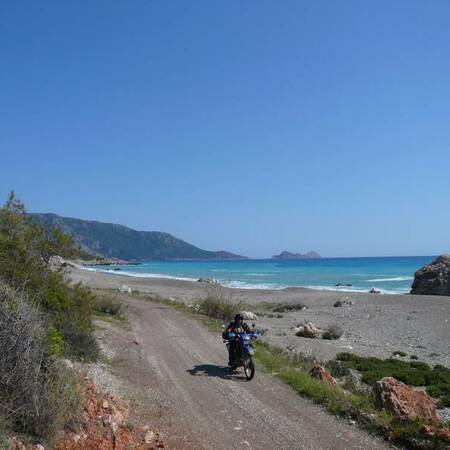
Motorcycle tours in Turkey transportation network
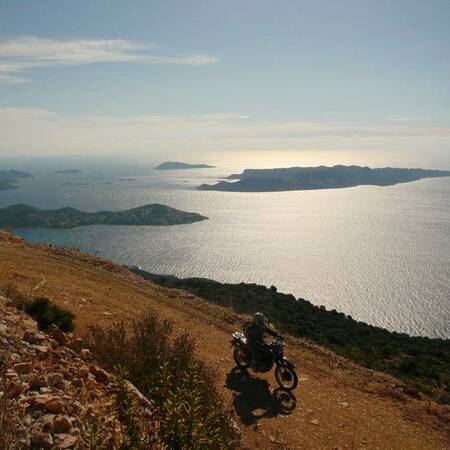
Image: Motorcyclist on one of the many coastal roads of Turkey


back to top of page


10. Cities and Regions


The largest cities in Turkey

City

Pop.

Istanbul

13,720,000

Ankara

4,865,000

Izmir

3,550,000

Bursa

1,622,000

Adana

2,300,000


back to top of page


11. Culture, Sights


Turkey villages like from another time
Image: Turkey villages like from another time


back to top of page


12. Holidays


Holiday Date
New Year 1 January
National Sovereignty and Children's Day 23 April
Labour and Solidarity Day 1 May
Atatürk Memorial Day 19 May
Victory Day 30 August
Veterans Day 19 September
Republic Day 29 October


back to top of page


12. Travel Advice

Foreign Office


back to top of page


14. Diplomatic Missions


German Embassy in Ankara: 114 Atatürk Bulvari, Kavaklidere, 06540 Ankara. Telephone  +90 312 455 51 00​, Fax +90 312 455 53 37​

More information about this is here

 Embassy of Turkey in Germany, Address: 10785 Berlin, Tiergartenstraße 19-21. Telephone  +49 30 27 58 50,  Fax +49 30 275 909 15

More information about it here

back to top of page


Karte von Turkey

×

Send request

Adventure

How did you
hear about us?

Ask a Route Expert

How do you want to travel?