Everything you need to know about Malawi
Reisekarte von Malawi des Reiseveranstalters Overcross
- Allgemeine Informationen für Malawi
- Klima in Malawi
- Geographie in Malawi
- Flora und Fauna in Malawi
- Nationalparks und Naturschutz in Malawi
- Bevölkerung in Malawi
- Politik und Wirtschaft in Malawi
- Verkehrsnetz in Malawi
- Städte und Regionen in Malawi
- Kultur und Sehenswürdigkeiten in Malawi
- Feiertage in Malawi
- Medizinische Hinweise für Malawi
- Reisehinweise für Malawi
- Auslandsvertretung in Malawi
- Informationsquellen für Malawi
1. Allgemeine Informationen für Malawi
| Kontinent: | Afrika |
| Geographische Lage: | Südliches Afrika entlang des zentralafrikanischen Grabens, auf der Südhalbkugel gelegen |
| Höchste Erhebung: | Sapitwa (3002 m.ü.NN) |
| Längster Fluss: | Shire (402 km) |
| Staatsform: | Republik |
| Regierungssystem: | Präsidialsystem |
| Sprachen: | Englisch, Chichewa |
| Nachbarländer: | Tansania, Mosambik und Sambia |
| Hauptstadt: | Lilongwe |
| Fläche: | Ca. 118.480 km² |
| Einwohner: | Ca. 19.934.000 Personen (2023) |
| Bevölkerungsdichte: | 168 Einwohner pro km² |
| Religionen: | Christen 80%, Muslime 13%, weitere Bahai, Atheisten, Naturreligionen |
| Währung: | Malawi-Kwacha (MWK), 1 Euro sind ungefähr 1.080 MWK (2023). Den aktuellen Wechselkurs finden Sie unter oanda.com |
| Klima: | Subtropisch mit vier Jahreszeiten |
| Zeitzone: | UTC + 2 |
| Vorwahl: | +265 |
| Ländercode: | MW, MWI, 454 |
| Strom: | In Malawi werden Steckdosen Typ G verwendet. Die Netzspannung beträgt 3 x 230V mit 50Hz Wechselintervall. Ein Reisestecker-Adapter ist von Vorteil. Eine Übersicht der in unseren Reiseländern verwendeten Steckdosen und Stecker finden Sie unter wikipedia.de |
2. Reiseklima in Malawi
Malawi has a subtropical climate with four distinct seasons and average temperatures between 19 °C and 32 °C from November to April and between 14 °C and 24 °C from May to October. Between May and mid-August, and especially in July, it is coolest, followed by the hot season until November and then the humid rainy season with up to 100% humidity in the morning. The post-rainy season begins in April and ends in May. In general, the climate is cooler and wetter in the higher mountain areas, whereas it is hot and humid in the lowlands around Lake Malawi. From the northern part of the country, with around 2000 mm of rainfall per year, there is a significant decrease in precipitation towards the southern parts, with a maximum of 1200 mm of rainfall per year.


3. Geography in Malawi
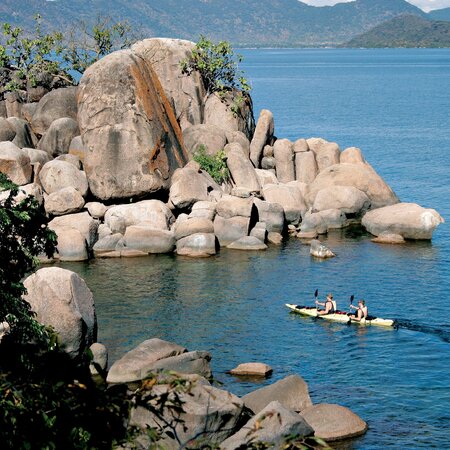
Malawi borders Tanzania in the north and northeast, Mozambique in the east, south and southwest, and Zambia in the north and northwest. Malawi’s land area of 118,480 km² lies in the region of the East African Rift System and is characterized by highlands, scattered inselbergs, extensive plains and Lake Malawi, which, with a water surface area of about 29,600 km², 570 kilometers in length, and up to 80 kilometers in width is the third-largest lake in Africa. The eastern shore of Lake Malawi forms the border with Tanzania and Mozambique.
Although the northern region is overall more mountainous with peaks up to 3000 m above sea level, the highest point in the country, Sapitwa in the Mulanje Massif with 3002 m above sea level, is found in the lower-lying southern part.
The outflow of Lake Malawi, the Shire river, which flows into the Zambezi in Mozambique, is at 402 km the longest river in Malawi.
Snorkeling in Lake Malawi
4. Flora and Fauna in Malawi
Malawi’s land area is 31% forest and bushland and 15% meadows and pastures. Vegetation is mainly characterized by savannas, open grasslands, and sparse dry forests. Dense forests occur only on the forested plateaus and in mountain areas. There, among other things, acacias, cacti, and grasses grow, but also palms and baobabs. In the highlands you can even find coniferous forests. Due to extensive clearing for new building land and for timber production, the original forest has been greatly reduced and now remains only in mountain areas or on individual plateaus.
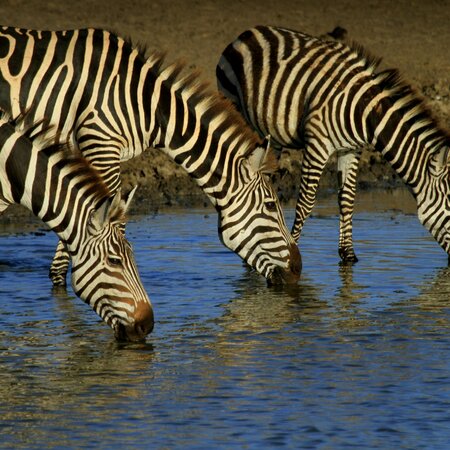
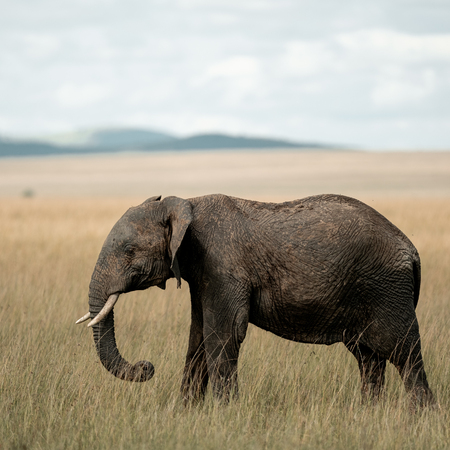
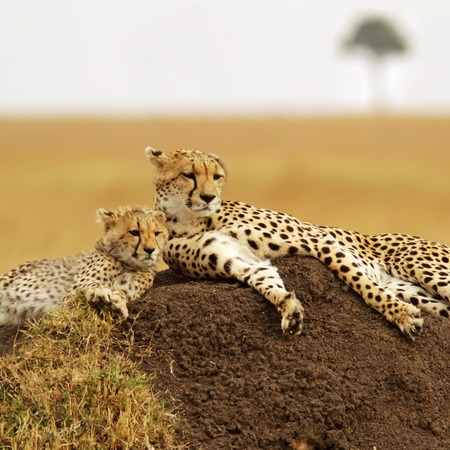
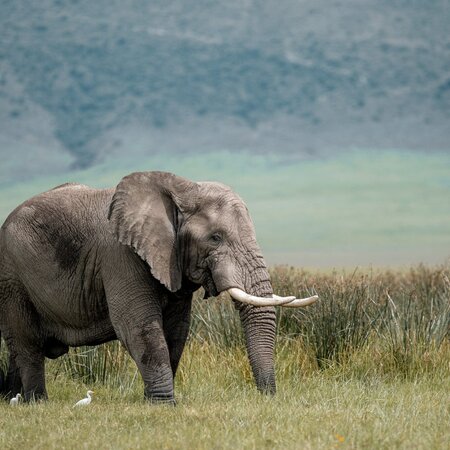
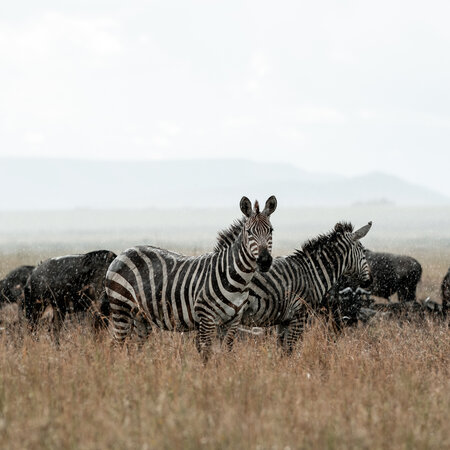
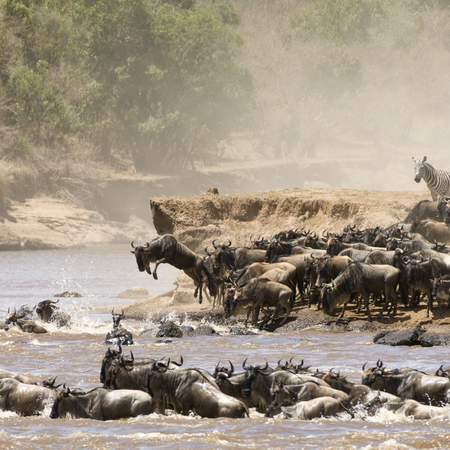
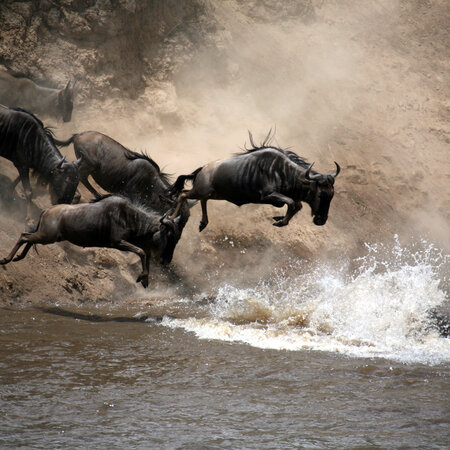
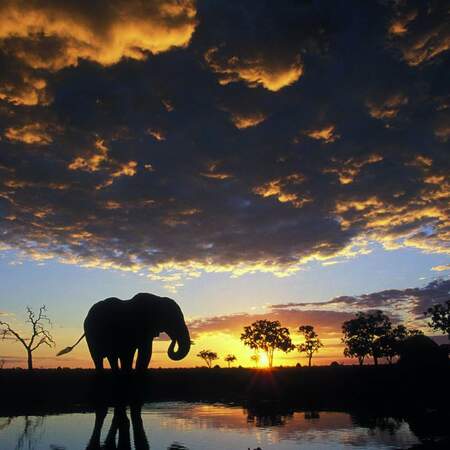
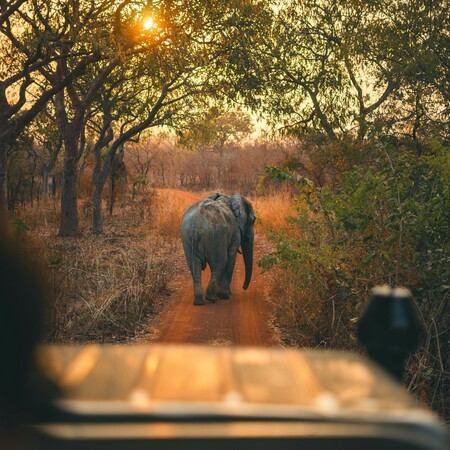
Malawi’s diverse wildlife is distinguished by the presence of, among others, crocodiles, elephants, antelopes, zebras, monkeys and leopards, snakes, monitor lizards and many bird species. Overwhelming is Lake Malawi’s wealth of exotic fish species such as cichlids, catfish, and numerous other aquarium fish species.
5. National Parks and Nature Conservation
Liwonde National Park
Der beliebteste Wildpark in ganz Malawi besitzt eine Fläche von ca. 580 km². Er grenzt an den Malombe See, der von Flusssümpfen, Waldland und weitem Grasland umgeben ist. Überschwemmungsgebiete und Grasland im Süden, Mischwälder auf den Hügeln, hohes Gras und Baumsavanne entlang des Auwaldes der Bäche und gelegentlich trockenes Laubdickicht prägen das Landschaftsbild. In dem Park gibt es gute Möglichkeiten, die vielfältige Tierwelt Malawis zu beobachten. An den Flüssen tummeln sich Elefanten, Flusspferde und Krokodile. In den Gras- und Baumsavannen sind Kudus, Rappenantilopen, Buschböcke, Leoparden und Hyänen anzutreffen, gelegentlich auch Löwen. Durch die Frankfurter Zoologische Gesellschaft wurde im Park das Spitzmaulnashorn wieder angesiedelt. Ungefähr 400 Vogelarten sind im Liwonde National Park zu Hause.
Majete Wildlife Reserve
In der Nähe der Stadt Blantyre befindet sich das ca. 70.000 Hektar große Wildschutzgebiet Majete. Die abwechslungsreiche Landschaft in diesem Wildpark reicht von urwüchsigen Miombo-Wäldern und massiven Grantifelsen bis hin zu sanften Flusstälern und grünen Auen. Seit 2003 wird der durch Wilderei in den 80er und 90er Jahren stark dezimierte Großwildbestand wieder aufgestockt. Heute sind wieder größere Populationen von Spitzmaulnashörnern, Elefanten, Büffeln, Elen-und Kudu-Antilopen, Wasserböcken, Klippspringern, Impalas, Kuhantilopen und Zebras zu beobachten. Das Majete Wildschutzgebiet ist das einzige zusammenhängende Gebiet Malawis, in dem die berühmten „Big 5“ zu sehen sind.
Nkhotakota Wildlife Reserve
Im zentralen Landesinneren, an den Ufern des Malawisees, liegt das größste und älteste Wildschutzgebiet Malawis. Das Schutzgebiet besitzt auf einer Fläche von 1.800 km² zum größten Teil unerforschte Wildnis. Die Landschaft ist von Miombo Buschland geprägt, welches verschiedentlich von offenen Grassavannen unterbrochen wird. Zudem bahnen sich zahlreiche Wasserläufe einen Weg durch die faszinierende Landschaft, bilden mehrere schöne Wasserfälle und enden im Malawisee. Zu den Bewohnern des Nkotakota Wildlife Reserves gehören Löwen, Elefanten, Büffel und verschiedene Antilopenarten. Sie können aufgrund der dichten Vegetation und des unwegsamen Geländes nur mit viel Glück entdeckt werden.
Nyika National Park
Der Nyika Nationalpark erstreckt sich über eine Fläche von 3.200 km² im hügeligen Norden Malawis und ist der größte Nationalpark des Landes. Weite offene Ebenen, hügelige Graslandschaften und das „Nyika Plateau“, das sich bis auf 2.600 m.ü.N.N. erhebt, formen hier eine unberühnte Wildnis. Im Nyika Nationalpark ist eine außergewöhnliche Biodiversität an Lebewesen anzutreffen. Die Berglandschaft beherbergt Leoparden, Löwen, Schakale, Hyänen und Warzenschweine. Auch die seltenen Pferdeantilopen sowie Zebras, Rappenantilopen und große Herden von Elenantilopen finden hier ein zuhause. Verschiedene Wildblumen und andere endemischen Pflanzenarten bilden ein Paradies für Schmetterlinge.
6. Bevölkerung in Malawi
Malawi hat ca. 19 Millionen Einwohner und gehört zu den ärmsten Ländern der Welt. Die Bevölkerung setzt sich überwiegend aus Bantu-Ethnien (Chichewa, Nyanja, Lomwe, Yao, Sena) zusammen. Zu einer kleinen Minderheit gehören Bevölkerungsgruppen indischer Abstammung. Ein Viertel der Einwohner des Landes sind mit HIV infiziert.
Etwa 80% der Einwohner sind Christen, 11% Muslime und 9% Anhänger traditioneller Religionen. Unter den Christen sind die Katholiken die am stärksten vertretene Fraktion, gefolgt von den Anhängern verschiedener afrikanisch geprägter Kirchengemeinden, Evangelikale und Pfingstler sowie Anglisten, Adventisten und malawische Baptisten. Während des Banda-Regimes wurde die Minderheit der Zeugen Jehovas wegen ihrer strengen parteipolitischen Neutralität verfolgt, inzwischen sind sie wieder auf mehrere Tausend angewachsen.
Die Amts- und Geschäftssprache in Malawi ist Englisch. Zu der Nationalsprache zählt Chichewa und wird von etwa 60% der Bevölkerung gesprochen. Dazu kommen weitere Bantusprachen wie Chiyanja, Chiyao, Chitumbuka, Lomwe und Sena.

Boat tour in Liwonde National Park of Malawi
7. Politics and Economy in Malawi
The constitution manifested in 1966 after independence in 1964 identifies Malawi as a presidential republic in the British-influenced Commonwealth of Nations. It was not until 1993, after a referendum, that the introduction of a multi-party system was decided, which replaced the previous dictatorship. The parliament, the Malawian National Assembly, has 177 members, who, just like the president, are newly elected every 5 years. The system of government, which consists of both democratic and authoritarian elements, is viewed internationally as partially free. Malawi is a member of the United Nations, the Non-Aligned Movement, the Commonwealth of Nations, the African Union, the Southern African Development Community, and the Common Market for Eastern and Southern Africa.
Malawi is a predominantly agricultural country and is one of the poorest economies in the world. For 90% of residents, agriculture is the main livelihood and contributes 30% to the gross domestic product. On small plots, Bantu families harvest maize, rice, cassava, and legumes for their own needs. Tobacco, tea, and sugarcane are for export. Three percent of the arable land is owned by Europeans, who also produce coffee and peanuts in addition to tobacco, tea, and sugarcane. Due to its agricultural orientation, Malawi's economy is dependent on extreme weather events. In addition, corruption is a widespread economic problem in Malawi.
Malawi has considerable reserves of usable mineral resources, particularly aluminum, uranium, and niobium ores, coal, and heavy minerals. There are also deposits of phosphate and graphite as well as rare earths, along with significant amounts of pure quartz sand in Malawi’s subsoil. However, few efforts have been made so far to exploit these deposits economically. A uranium mining operation opened in the north of the country in 2009 by an Australian mining company was closed again in 2014 after extracting 200 t of uranium ore. Near Livingstonia, a coal mine is operated with completely outdated equipment.
Recently, efforts have been made to stimulate the still underdeveloped tourism sector in Malawi and use it as an economic resource, with the government setting itself the goal of making Malawi the leading country for ecotourism.
8. Transport Network in Malawi
Malawi has left-hand traffic. Most roads of the 14,597-kilometer-long road network are, compared to neighboring countries, in a reasonably good condition. The main connections between the larger cities are, with a few exceptions, paved and due to the low traffic volume, are easy to drive on during the day. Side roads consist mainly of gravel tracks. Driving after dark should be avoided due to the high risk of accidents, as the road markings are inadequate, wild animals can cross the road, and some cars have no lights and therefore cannot be seen in time. In Malawi, measured by population, the world's third highest number of fatal traffic accidents has been recorded.
Regular scheduled buses run between Blantyre, Lilongwe, and Mzuzu, and rural areas can be reached by minibuses.
The 797-kilometer-long rail network in Malawi is privately operated and is mainly used for freight transport. Passenger transport only takes place on some sections. The capital Lilongwe is not served by passenger trains.
The most important of the seven larger airports are located near Lilongwe, Blantyre, and Mzuzu.
9. Städte und Regionen in Malawi
Malawi gliedert sich von Norden nach Süden in drei Verwaltungsprovinzen, die in insgesamt 28 Verwaltungsdistrikte unterteilt sind:
Northern Region
Mit einer Ausdehnung von 26.931 km² und mit knapp 1,7 Mill. Einwohnern ist die Northern Region die kleinste Verwaltungsprovinz in Malawi. Sie reicht von der Nordgrenze des Landes bis zur südlich anschließenden Central Region und umfasst in sechs Distrikten den gebirgig ausgebildeten Teil Malawis. Die Verwaltungshauptstadt der landwirtschaftlich geprägten Northern Region ist Mzuzu. Der von 2009 - 2014 bei Karonga betriebene Uranerzbergbau wurde wieder geschlossen. Haupteinnahmequelle der Region ist der Tabakexport.
Central Region
Die flächenmäßig größte Region Malawis ist die 35.592 km² umfassende und von knapp 7,6 Mill. Einwohnern bewohnte Central Region mit der Hauptstadt Lilongwe, die auch gleichzeitig Landeshauptstadt von Malawi ist. Sie wird in neun Distrikte unterteilt und umfasst die zentralen Landesteile Malawis. Auch in der Central Region ist die Landwirtschaft mit dem Tabakanbau der hauptsächliche Wirtschaftszweig.
Southern Region
Die im Süden von Malawi gelegene Southern Region besitzt eine Ausdehnung von 31.753 km² und wird mit knapp 6,5 Mill. Einwohnern von den meisten Menschen in Malawi bewohnt, die sich auf dreizehn Verwaltungsdistrikte verteilen. Hauptstadt und Verwaltungszentrum ist Blantyre. Neben Tabak werden in der Southern Region auch Baumwolle und Erdnüsse angebaut. Neu entdeckte Phosphatvorkommen sollen in der Region künftig für einen Wirtschaftsschub sorgen.
Wichtige Städte in Malawi sind:
Lilongwe
In der Hauptstadt Malawis leben knapp 1 Mio Einwohner auf einer Fläche von ca. 730 km². Die Stadt untergliedert sich in eine Altstadt und eine durch rege Bautätigkeit ständig wachsende Neustadt. Das Stadtbild ist durch große Grundstücke und breite, parkähnliche Boulevards geprägt. Erlebenswert ist die rege Markttätigkeit auf der Malangalanga Road, die indischen Händler in der Altstadt und die Tabakauktionen. An den oberen Hängen des auf über 1000 m ü. NN gelegenen Lilongwetals sind Areale mit dichtem Regenwald und Proteabüschen anzutreffen. Zwischen der Alt- und Neustadt ist ein Tierpark angelegt, der von wildlebenden Hyänen und Krokodilen besucht wird.
Blantyre
Die zweitgrößte Stadt Malawis ist mittlerweile auf ca. 900.000 Einwohner angewachsen und vergrößert sich ständig. Die auf ca. 1000 m. ü.NN im Shire-Hochland gelegene Stadt bildet zusammen mit der mittlerweile als Stadtteil intergrierten Stadt Limbe auf einer Fläche von ca. 228 km² das wirtschaftliche Zentrum des Landes, in dem zahlreiche malawische und internationale Unternehmen ihren Sitz bzw. ihre Niederlassung haben. Auch der Präsident von Malawi besitzt hier einen Palast. Blantyre ist zugleich Hauptstadt der Southern Region von Malawi und vom gleichnamigen Verwaltungsdistrikt umgeben. Die Stadt erhielt ihren Namen nach der gleichlautenden Geburtsstadt des Afrikaforschers Livingstone in Schottland.
Die Wohnviertel von Blantyre sind entweder großzügige Villenareale oder landesübliche, Einfamilienhäuser mit Blechdach und Glasfenstern geprägt.
Das auffälligste Gebäude der Stadt ist die 1891 fertiggestellte Saint Michael and All Angels Kirche. Das Mandala-Haus, 1882 ursprünglich als Depot für europäische Missionare und Pioniere erbaut, ist das älteste Gebäude der Stadt und beherbergt heute eine Galerie, eine Bibliothek und eine Ausstellung zur Geschichte Malawis. In Blantyre befinden sich drei der fünf Colleges der University of Malawi. Erlebenswert sind die ebenso wie in Lilongwe täglich stattfindenden Tabakauktionen.
Mzuzu
die Hauptstadt der Northern Region Malawis ist mit 128.432 Einwohnern auf einer Stadtfläche von rund 48 km² die drittgrößte Stadt des Landes. Sie liegt auf einer Höhe von 1.254 m. ü. NN am nördlichen Ende des Viphya Plateaus, welches als touristisches Wandergebiet genutzt wird. Neben der 1997 gegründeten Mzuzu University ist das Mzuzu Environmental Education Centre mit den Themen Umweltbewusstsein und Umweltschutz von überregionaler Bedeutung.
Zomba
Die viertgrößte Stadt Malawis zählt ca. 100.000 Einwohner und liegt in ca. 900 m Höhe am Fuße des 2000 m hohen Zomba-Plateaus im Shire-Hochland . Zomba ist Hauptstadt des gleichnamigen Verwaltungsdistrikts und Sitz des Bistums Zomba . Die ehemalige Hauptstadt Malawis gab diesen Status 1975 an Lilongwe ab, blieb aber bis 1994 Parlamentssitz und verfügt immer noch über staatliche Institutionen sowie einen Präsidentenpalast. In Zomba befindet sich der Hauptsitz der University of Malawi. Aufgrund der hohen Niederschlagsrate auf dem Plateu und damit verbundenen guten Bewässerungssituation hat sich Zomba zu einer relativ wohlhabenden Stadt entwickelt.
Kasungu
In der Hauptstadt des gleichnamigen, in der Zentralregion von Malawis gelegenen Verwaltungsdistrikts leben ca. 50.000 Einwohner. Der Distrikt zählt aufgrund der unfruchtbaren und trockenen Bodenverhätnisse zu den ärmsten des Landes. In der Nähe der Stadt Zomba befindet sich der sehenswerte Kasungu-Nationalpark, der neben den Tierbeobachtungsmöglichkeiten Gastronomie und Übernachtungsmöglichkeiten für den gehobenen Tourismus anbietet.
10. Culture and Sights in Malawi
The main attractions of Malawi are, above all, the fantastic impressions of nature and landscape that you experience while passing through and especially in the designated national parks and protected areas. This, of course, also includes Lake Malawi, which runs through the country as a central body of water and has had a lasting impact. You should also not overlook Lake Malombe, which is connected to the south of Lake Malawi, as well as the Mulanje Massif when traveling around Malawi. Particularly spectacular during the rainy seasons are the Kapichira Falls on the Shire River, where the masses of water plunge about 80 meters between granite rocks.
In addition to Malawi's traditional music, which is practiced by singing ensembles, for example, accompanied by board zither, xylophone, and drums, the country's population has taken up the influences of many other musical styles and passed them on to neighboring countries. There are thus musicians and musical groups that mix European and American musical influences with traditional musical elements to create new styles of Malawian music. After the end of the dictatorship in 1993, Malawi's music scene experienced an upswing. In addition to music, traditional dances such as the Nyau dance, which are performed on all possible occasions, are an important part of Malawian culture, as is the making of corresponding masks. Basket weaving also has a long tradition in Malawi.
Although the Ministry of Culture, Tourism and Wildlife does not provide any financial support to cultural institutions, a small theater scene has developed with the Nanzikambe Arts Theatre in Blantyre.
11. Public holidays with fixed dates in Malawi
| 1 Jan | New Year |
| 15 Jan | John Chilembwe Commemoration |
| 3 March | Martyrs' Day |
| 1 May | May Day |
| 14 May | Kamuzu Memorial Day |
| 5 June | Eid al-Fitr |
| 14 June | Freedom Day |
| 6 July | Independence Day |
| 25 Dec | Christmas |

Majete Wildlife Reserve in Malawi
12. Medical Information for Malawi
Although medical care in Malawi can by no means be measured by European standards, it is relatively good compared to the healthcare situation in some neighboring countries. However, already due to the lack of readiness for emergencies, there is no sufficient accident or emergency treatment. Each district usually has a district hospital with at least 100 beds, operating rooms, and appropriate medical diagnostic equipment. In the major cities, care and equipment are even better. The medical care of the surrounding area is supplemented by so-called Medical Centres, which are supervised by nurses. Medicines are mostly dispensed free of charge.
For Malawi, there is a year-round increased risk of malaria, especially near Lake Malawi and in the lower-lying southern parts of the country. In the north and at altitudes over 2,000 meters, the risk of infection is lower. Appropriate travel advice including prophylaxis from a tropical medicine specialist is strongly recommended before departure. In areas with low hygiene standards and limited water supply, cholera outbreaks can occur. In all freshwater bodies, there is also a risk of infection with bilharzia (schistosomiasis) when bathing. Therefore, swimming, diving, and any other water sports in lakes and rivers should be strictly avoided.
The Foreign Office recommends checking and completing the standard vaccinations for children and adults according to the current vaccination schedule of the Robert Koch Institute before traveling.
Further information: www.auswaertiges-amt.de
13. Travel advice for Malawi
Current travel and safety advice, information on entry and exit as well as special legal instructions and recommendations for your stay in Malawi can be obtained from the Foreign Office of the Federal Republic of Germany.
14. Foreign representation in Malawi
| Embassy of the Federal Republic of Germany in Malawi | |
| Jurisdiction/ Consular district: |
Malawi. Note: No issuing of visas. (See note at the embassy Lusaka/Zambia) |
| Location: | Lilongwe |
| Street address: | Convention Drive (Capital City), Lilongwe |
| Postal address: | Embassy of the Federal Republic of Germany, P.O. Box 30046, Lilongwe 3, Malawi |
| Telephone: | +265 177 25 55, for emergencies: +265 991 393 393 |
| Fax: | +265 1 77 02 50 |
| E-Mail: | [email protected] |
| Website: | https://lilongwe.diplo.de |
| Official languages in the host country: | English |
| Botschaft der Republik Malawi in Berlin | |
| Ort: | Berlin |
| Straßenanschrift: | Westfälische Straße 86, 10709 Berlin |
| Postadresse: | Westfälische Straße 86, 10709 Berlin |
| Telefon: | +49 30 843 15 40 |
| Fax: | +49 30 843 154 30 |
| E-Mail: | [email protected] |
| Website: | http://www.malawiembassy.de/ |
15. Informationsquellen für Malawi
Deutscher Wetterdienst
Auswärtiges Amt der Bundesrepublik Deutschland
Wikipedia