Everything you need to know about Ecuador
Travel map of Ecuador by the tour operator OVERCROSS
1. General Information
2. Climate
3. National Parks, Nature and Environmental Protection
4. Population
5. Languages
6. Religions
7. Attractions
8. Our Tours in Ecuador
Country Information Ecuador
Continent: South America
Form of government: Presidential republic
Official language: Spanish
Geographical location: In the northeast of Central America, on the Pacific Ocean.
Neighboring countries: Colombia, Peru
Capital: Quito
Topography: The hilly coastal land rises up over the Andean highlands. There are still some active volcanoes. The highest peaks of the Andes are over 6,000 meters high. The highest mountain is Chimborazo at 6,263 meters. In the east lies the Amazon lowlands. Also, the Galapagos Islands belong to Ecuador. These are located 1000km off the coast in the Pacific.
Area: 283,561 km² (For comparison, Great Britain 244,140 km²)
Population: 18,534,700 inhabitants (July 2023)
Religion: 95% Catholic
Currency: US Dollar
Climate: The climate of Ecuador varies greatly by region. The coast has a tropical climate, while the Andean highlands have a temperate climate.
Time zone: UTC -5 , CET -6
Country code: +593
Vehicle registration: EC
The Climate in Ecuador
| Quito Climate | Jan | Feb | Mar | Apr | May | Jun | Jul | Aug | Sep | Oct | Nov | Dec |
|---|---|---|---|---|---|---|---|---|---|---|---|---|
| Max. Temperatures | 21 | 20 | 21 | 21 | 21 | 21 | 22 | 22 | 22 | 21 | 21 | 21 |
| Min. Temperatures | 8 | 8 | 9 | 9 | 9 | 8 | 8 | 7 | 8 | 8 | 8 | 8 |
| Sunshine Hours | 6 | 5 | 4 | 5 | 6 | 6 | 7 | 7 | 6 | 5 | 5 | 6 |
| Rainy Days | 9 | 12 | 13 | 16 | 12 | 9 | 4 | 4 | 8 | 12 | 15 | 8 |
Climate table Guayaquil
' Climate Guayaquil Jan Feb Mar Apr May Jun Jul Aug Sep Oct Nov Dec Max. Temperatures 31 31 32 30 29 28 29 29 29 29 30 31 Min. Temperatures 22 23 23 23 22 21 20 19 20 21 21 22 Water temperature 24 24 24 25 24 23 23 22 22 22 23 24Rainy days
Climate table Galapagos Islands San Cristobal
Climate Galapagos Islands Jan Feb Mar Apr May Jun Jul Aug Sep Oct Nov Dec Max. Temperatures 29 30 30 29 29 27 26 25 24 26 26 27 Min. Temperatures 22 23 22 22 22 21 20 19 18 19 20 21 Hours of sunshine 6 8 8 8 8 8 7 6 5 5 5 6 Water temperature 25 26 27 26 25 24 23 23 22 22 23 24
Ecuador's climate is very diverse, even within short distances. Just due to the different altitudes (from 0 to over 6,000 meters), there are strong regional temperature differences. The best time to travel in Ecuador is from May to October. Nevertheless, you can visit Ecuador all year round. Due to its proximity to the equator and its altitude, it is never really cold, but also not extremely hot. The rainy season from January to April is weaker in the northern parts of the country, such as in the capital Quito. The Galapagos Islands can be visited all year round. You can also see the animals of the islands throughout the entire year. Even in the rainy season, there is only very light precipitation.
Click here to go back to the overview.
National Parks, Environmental and Nature Protection
Like most developing countries, Ecuador lacks funds for effective and equitable environmental protection. However, with its large areas of tropical rainforest, Ecuador is at the focus of global environmental interests. For several years, Ecuador has been appealing to the international community for more support. Some industrialized countries, including Germany and Austria, agreed in 2010 to provide funding for the protection of forests—of course under strict conditions, which Ecuador, however, has willingly fulfilled. Of the roughly 4 million hectares of forest, only about 800,000 hectares were able to be protected in 2023 with international resources.
Four areas of Ecuador are recognized as UNESCO Biosphere Reserves:
- the Galápagos Islands
- Yasuní National Park
- Sumaco
- Podocarpus-El Condor
There are also the following national parks:
- El Condor National Park
- Cajas National Park
- Cotopaxi-El Boliche National Park
- Podocarpus National Park
- Sangay National Park
- Machalilla National Park
- Cuyabeno National Park
- Ilinizas National Park
- Llanganates National Park
Furthermore, some areas on the coast, in the mountain region, as well as in the adjacent Amazon region are under special protection.
Click here to go back to the overview.
Population of Ecuador
With a little more than 18 million inhabitants, Ecuador is considered a medium-sized country in South America. The average age of the population is just 28 years old (Germany 44 years). However, the life expectancy for men at 76 years is just 2 years less than in Germany.
Due to urbanization, more than 34% of the population now lives in the two cities Guayaquil (3.5 million) and the capital Quito (2.0 million).
Click here to go back to the overview.
Languages
In addition to the official language Spanish, "Kichwa," with around 2 million speakers, is widely spoken in Ecuador. The language is actually a dialect of Quechua, which was introduced by the Incas in the 15th century. Various local indigenous languages are also spoken.
Click here to go back to the overview.
Religions
After the conquest of Ecuador by the Spanish, the Roman Catholic faith was also brought over. Catholicism was declared the state religion of Ecuador in 1863. Among other things, many Indigenous people also converted to the Roman Catholic faith. The church was subordinated to the state in 1904. In the meantime, 72.3% of the population belong to the faith. Only about 1% belong to various Protestant churches. Some Indigenous people still practice natural religions.
Click here to go back to the overview.
Sights

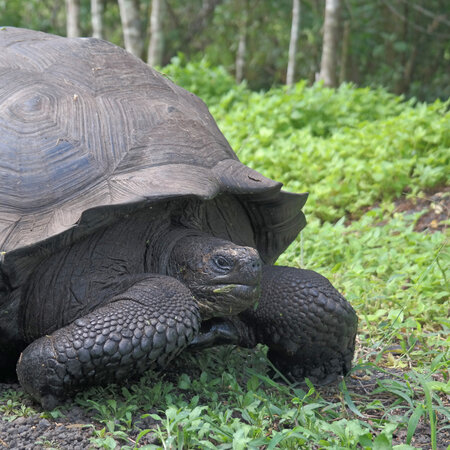
Nature lovers in particular will be delighted with Ecuador. With its 550 km long Pacific coast with wonderful port cities, the national park and the marine reserve of the Galapagos Islands, no wishes remain unfulfilled.
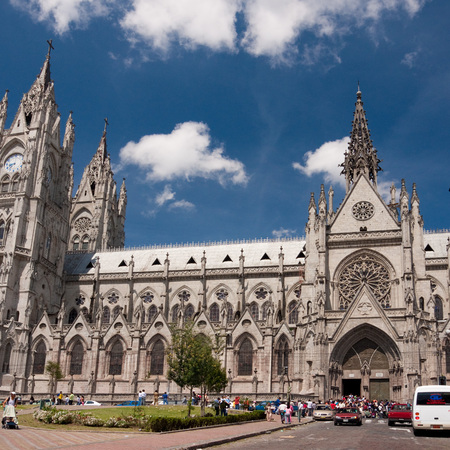
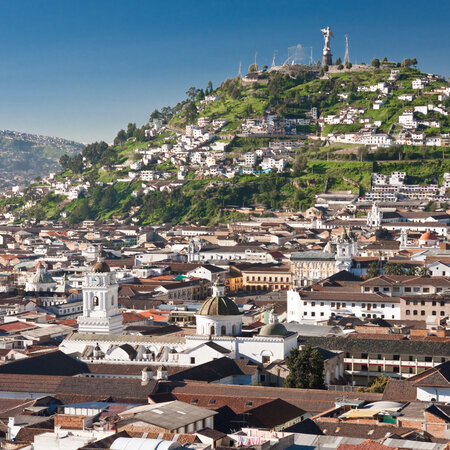
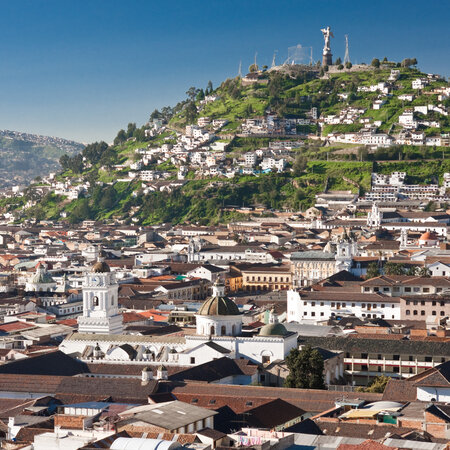
Thanks to its unique location between the two volcanoes Ruca and Guagua, the capital Quito offers a very beautiful panorama. Like the Galapagos Islands, Quito has been part of the UNESCO World Heritage since 1979. Quito owes this especially to its many historic buildings and natural treasures.
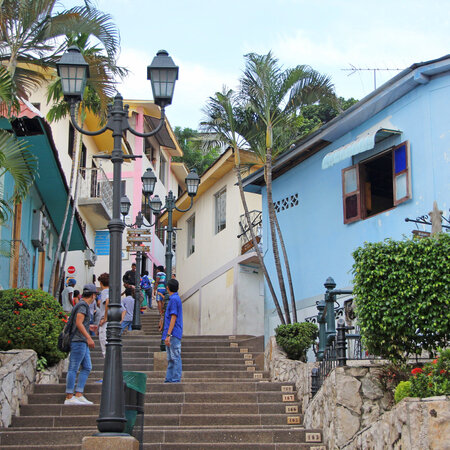
There are other sights to discover, for example, in the largest city, Guayaquil. In addition to the extremely impressive city center, there are many palaces and sacred buildings.
Other sights include:
- The colonial and world heritage city of Cuenca
- Cotopaxi National Park
- The fishing village of Puerto López
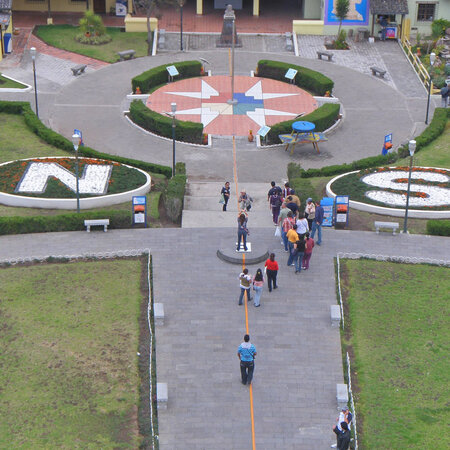
- the Inti Nan Museum, which is run by indigenous people
- the surfer town of Montanita
Just let us know what you would like to visit and we will be happy to arrange a round trip for you with your preferred hotel categories.
You can find a suggestion here.