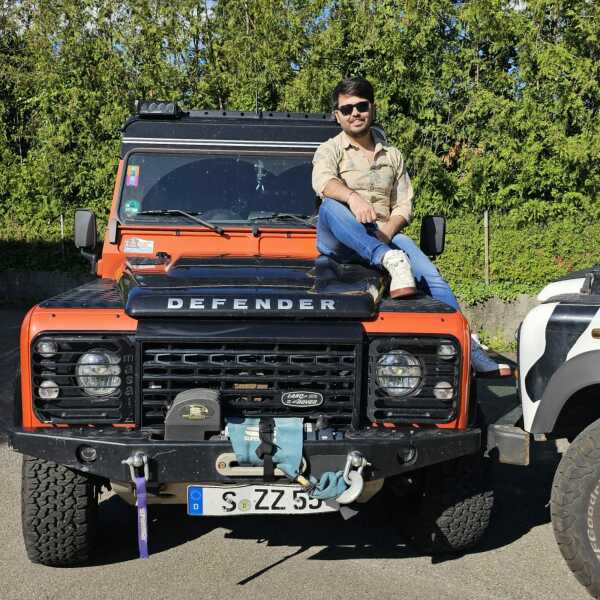
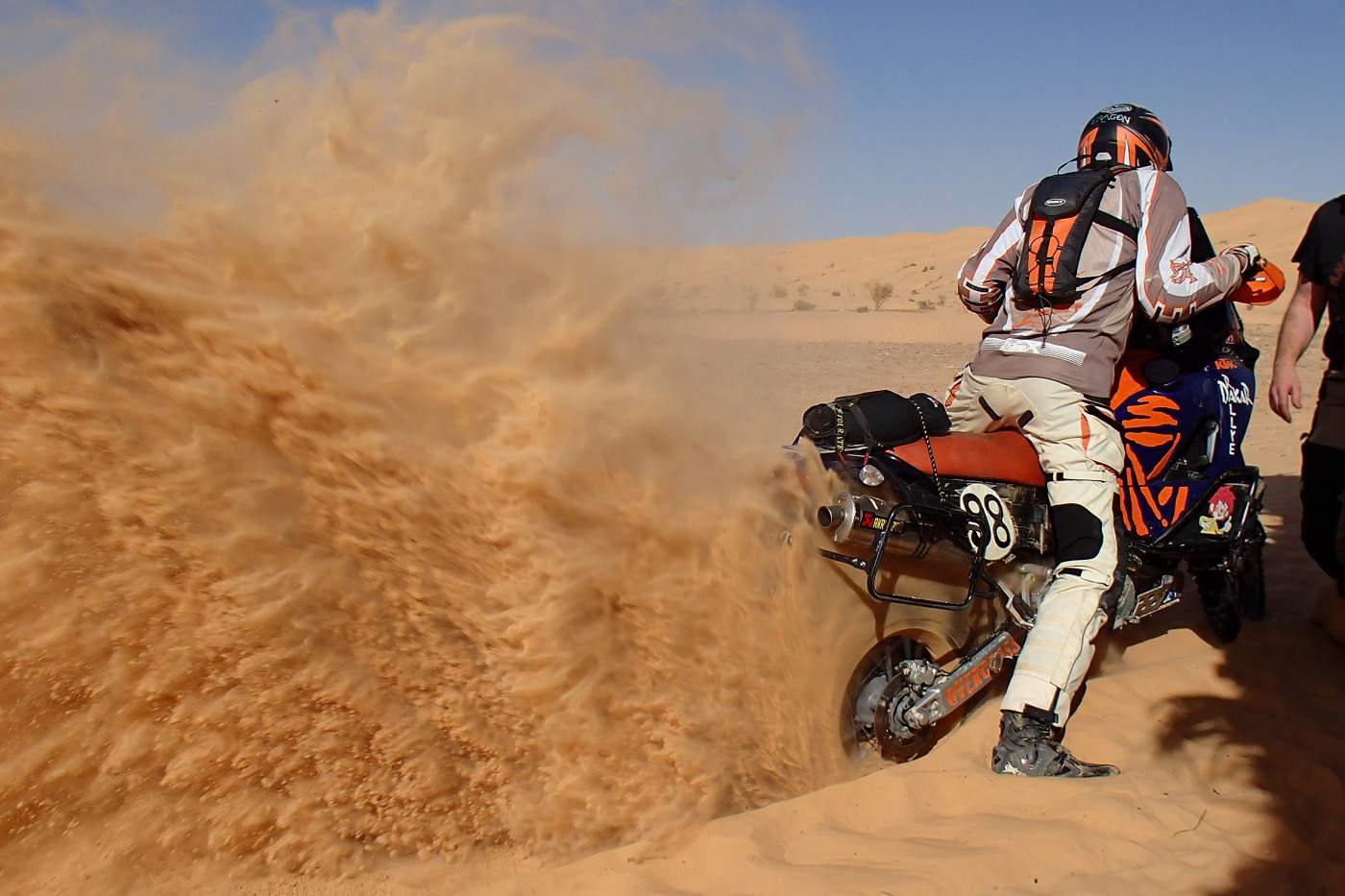
You have the option to rent a 4x4 off-road vehicle directly from us for your Offroad 4x4 trip. Information on costs, equipment, and all other rental terms can be found in our rental conditions .
OVERVIEW
Listen to audio tour
0:00
0:00
TransAfrica 4x4 Expedition Go EAST
Philosophy and Itinerary of the Transafrica Expedition
Due to the uncertainties of the current war in Sudan, the Trans-Africa Tour will be conducted on the West Route in 2026 & 2027 instead of the East Route.
Off-road vehicle safari / EXPEDITION across Africa: 30 million km², 53 countries, 1000 ethnicities an adventure, welcome to Africa, welcome to the 4X4 Trans-Africa EXPEDITION. Heinrich Barth, Africa researcher from the very beginning, traveled the continent mainly with a rough idea of the itinerary (“a journey mostly unfolds during the journey”). This is the philosophy and content of the Transafrica Expedition which we have been planning and executing anew every year since 2014. There is a starting and an ending point of the expedition journey, in between lies the "unpredictable" adventure of Africa, which describes the spirit of this expedition. One of the last off-road adventures is the EXPEDITION through: South Africa, Lesotho, Swaziland, Rhodesia, Zambia, Mali, Tanzania, Kenya, Ethiopia, Sudan, and Egypt. Since 2019, the "premium traveler" can also book the privately guided safari from Egypt through Africa to Cape Town with our expedition vehicle or with their own off-road vehicle with OVERCROSS ZA. Our zebra fleet (Land Rover Defender and Discovery) is available for the off-road vehicle safari exclusively with a guide upon request.
Philosophy and itinerary of the Transafrica Expedition
There are many reasons to travel: escaping everyday life, the search for or even the addiction to always new adventures. Whatever it is, it remains a fascinating experience and adventure across the African continent, which will accompany you for a lifetime and will certainly also change you a bit. Out of Africa has enchanted researchers, adventure travelers, or rally junkies; as a teenager, I sat completely hypnotized in front of the raging impressions of the Paris Dakar Rally, with the wish in my mind: I want to experience AFRICA, once Paris Dakar or better yet, once across the whole continent! Everyone who has traveled to Africa multiple times knows how challenging this continent is and recognizes the addiction "Adventure Africa" as "elixir of life". After three years of planning and four subsequent expeditions, we have gained control over these difficulties and know that this is a tangible, exclusive adventure that remains in memory for EVERY participant. My name is Joe Küster, founder of OVERCROSS with well over 100,000 "African kilometers" as an expedition guide. In 2014, the idea was born over a cup of coffee and the question about the last adventures of life, in the offices of Schaaf Federtechnik in Möglingen. Shortly thereafter, we launched the first Trans Africa expedition with a handful of participants. After a few thousand kilometers, the first expedition failed miserably. Two years later, we launched the second Trans Africa expedition with a total of three years of preparation (and one more "burnout syndrome" ;-) again. This time, the expedition was planned "headquarters-style"! Motorcycle tour guide, support guide in a Land Rover Defender 130cc, and an online tour guide were specifically assigned, briefed, and trained for the expedition. Secured with satellite phone / emergency phone / satellite monitoring with "direct line" on site, we set off on this mega expedition through the African continent, which was and remains an indescribable experience for the participants. After over 20 years of experience in Africa, you can believe me that this expedition (alongside my children and the great love by my side) is THE adventure that means the "world" to me. Ten years after the first TRANS AFRIKA EXPEDITION, I know that for me as a guide and organizer, this expedition was the most strenuous and at the same time the "most liberating" experience I have ever had! → Here you can get an impression of the OVERCROSS team.
Service Description - Overcross Expeditions - IMPORTANT!
This journey is an expedition, not a package tour in the legal sense.
Overcross organizes and conducts expeditions worldwide - with the goal of giving experienced adventurers the real feeling of freedom, nature, and encounters: rough, unpredictable, real.
Important Note
This journey is not a tourist-standardized service, but an expedition with unpredictable external influences - including weather conditions, political situations, technical defects, and road and terrain conditions.
Overcross takes care of the organization, preparation, and execution, but no guarantees for fixed stages, accommodations, travel times, or routes. Changes are part of the character of the expedition and may be necessary at any time.
Character of the Expedition
These trips are aimed at participants with a spirit of adventure, personal responsibility, and the ability to improvise.
An Overcross expedition is not a package product in the sense of the EU Package Travel Directive, but a collectively conducted undertaking with expedition leadership and logistical framework.
The unpredictable is part of the experience - not the exception.
Organizational Services of Overcross
Planning and coordination of the expedition
Provision of experienced expedition leadership / guide team
Organization of transport and supply logistics
Administrative support for visas, border crossings, and vehicle documents
Safety and route planning based on current information
Liability and Personal Responsibility
Participation is at your own risk.
Each participant is responsible for themselves, their vehicle, and their equipment.
Technical preparation, physical resilience, and mental resilience are required.
Important Safety Note
We expressly point out that there may be risks and dangers in all the countries visited.
We strongly recommend informing yourself about the current travel and safety advice of the Federal Foreign Office before the trip:
https://www.auswaertiges-amt.de/de/ReiseUndSicherheit
Daily program: 4x4 Transafrica Go EAST Expedition
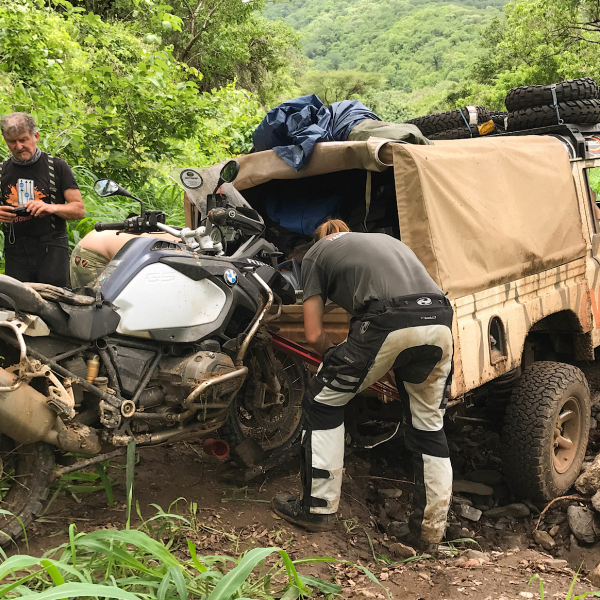
Arrival day: Transcontinental flight to South Africa
We flew through the night with South African Airlines and landed around 11:00 AM at South Africa's second largest airport, Cape Town International Airport (CTIA). The shuttle will take us to the Table Bay at the northwestern edge of Cape Town. At the freight company's warehouse, which has taken care of transporting the vehicles, we will pick them up. We connect the batteries, stow luggage and equipment. We're off to the nearest gas station, where we will fill our vehicles up before driving the first kilometers to our overnight spot at the foot of Table Mountain. Welcome to the Cape, welcome to Mama Africa in the heart of Cape Town!
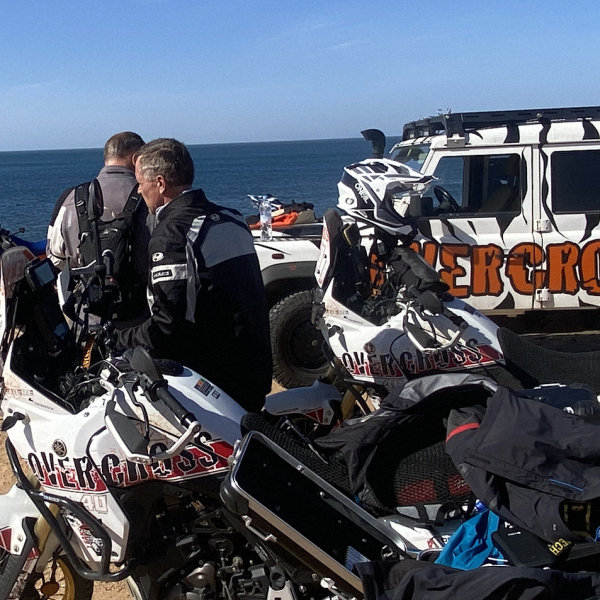
Start of the TransAfrica Safari Expedition
At the Cape of Good Hope, we make the starting image after sunrise over Africa! Here we go: once across the African continent! Passing Cape Town, we drive around the bay towards Somerset West. Quick stop for breakfast and onwards to Chapman's Peak Drive. Along the legendary and relaxed Garden Route, we reach Mossel Bay and enjoy the view of the Indian Ocean. In the late afternoon, we will reach Knysna Park before sunset, and we will conclude the first day of travel with a wildlife safari and a South African sundowner.
Adrenaline on the Garden Route
We fold the rooftop tents for the first time and head towards the bridge 50 kilometers away. Today there will be a 211-meter free fall for breakfast. Alternatively, we can also attach you to a cable car that will catapult you through the forest at a height of 30 meters! Those who are still hungry afterward will get a dessert to go with the adrenaline breakfast. "On the road again": On asphalt, we roll through the scenery of the Garden Route.
Lesotho: over the Sani Pass into the kingdom
In the small town of Hofmeyr, a dreary transit town, we make our breakfast stop and fill up tanks and food for today's marathon day. Today's stage will be one of the toughest asphalt routes in southern Africa. We cross KwaZulu-Natal and reach the border to the smallest kingdom in Africa: Lesotho in the afternoon. With 64 inhabitants per km², it is a small and manageable country with equally manageable border formalities that we should complete within half an hour. We drive up into the kingdom to an altitude of 2800 meters. Now the "first time" becomes exciting: over the highlands of Lesotho, we reach the fantastic landscape of the Drakensberg, which shapes the scenery of southern Lesotho. Time and willingness will be the decisive factor in the kingdom of Lesotho when we spend the night at the "feet" of the 3482-meter-high Thabana Ntlenyana at Bob's Campground. You can take a bath in the Matebeng River and enjoy the only luxury for miles around to the fullest. It will be the first and last cold bath and the first and last cold night south of the equator.

On the road to the battlefield
Fog banks rise over Thabana Ntlenyana, we follow and traverse a continuous fog bank to the summit. It is cold and damp until we reach the next valley, and the sun of Africa bathes the landscape of Lesotho in bright green. Breakfast in the highest bar in South Africa, before we tear out of Lesotho over the Sani Pass, which is the third steepest pass in the world, and reach the border post Mkhomazane at the foot of the Drakensberg to South Africa. After our third border crossing, we traverse the province of Kwa Zulu Natal and stand in the evening on the "Battlefields" in the former kingdom of the Zulu. The Zulu War of 1879 was an undeclared war between the Zulu and the wild people of the tea drinkers. After the British Empire defeated the Zulu at the Battle of Ulundi with its superiority in weaponry, the Kingdom of the Zulu ceased to exist as a sovereign state. In the midst of these battlefields, this day of travel ends.
Safari into the Kingdom of Swaziland
Morning ceremony: tour briefing and a last sip from the coffee cup, then the engines are started and we drive to Swaziland. We reach the border to the Kingdom of Swaziland via South Africa's country roads. The route runs through the mountainous kingdom to the Hlane Royal National Park. The Hlane Royal National Park is home to the largest herds of lions, elephants, white rhinos, and giraffes in Swaziland. We take a game drive with the park ranger's Land Rover and enjoy the sundowner in the midst of the African wildlife, provided we haven't "worn ourselves out" with the curves of Swaziland.
New Year's Eve party at the Gecko Lodge near Kruger Park
The last day of the old year begins relaxed: sleeping in, cozy breakfast, on- and off-road through the forests of Swaziland to the border crossing of the province of Mpumalanga in South Africa. We reach Hazyview in the afternoon and fill ALL tanks for the new year! From here, the length of the daily stages will decrease for the rest of the tour, as we have only covered distance up to this point to take more time for the "real" Africa. IT'S TIME TO CELEBRATE - New Year's Eve in Africa and "only" eleven countries and one continent ahead of us!
New Year in Africa: A year full of adventures!
The new year in Africa begins with a hangover breakfast, coffee, aspirin, rollmops, and a chaser beer. We start on a relaxed "sobering tour" through Kruger Park. The provinces Western Cape, Eastern Cape, Kwazulu-Natal, Mpumalanga, and Limpopo are behind us and the last province Northern Province is ahead of us. Today, we will have rather "calm" kilometers through Kruger Park, which we will travel northward before getting back on the road to the border.
Crossing Zimbabwe
Welcome to Zimbabwe! The border crossing takes place by crossing the Limpopo River, depending on the water level and the waiting crocodiles. Once we have cleared the customs formalities with the SUVs, we can get going. The next destination is Matobo National Park. On one of the major African routes, we reach Great Zimbabwe and dive into a piece of African history. Established in 1926, the Rhodes-Matobo National Park, known as Matobo National Park since 1953, is the oldest national park in Zimbabwe. In 2003, it was designated a World Heritage Site by UNESCO. It gained fame not only because Cecil Rhodes is buried here but also because of the impressive granite rock formations. Here, the Bantu are said to have left a rich heritage of rock art and rock structures like the impressive "Great Zimbabwe," which has been a UNESCO World Heritage Site since 1986. The hills are still considered sacred sites by the Shona people. Here we set up our camp.
Safari to the famous Victoria Falls
With the sunrise over Africa, a new travel day begins. Folding up tents, a sip of coffee, a cookie, and off we go. We start the engines and drive off- and on-road towards north-northwest. Today's itinerary takes us past Hwange National Park. Depending on the tour progression, group dynamics, and interest, we will go on safari in Hwange National Park. The end of the day's stage is the Zambian border, where we will reach one of the UNESCO World Heritage Sites after about 500 kilometers. Welcome to Mosi oa Tunya, better known as the "Victoria Falls," which separate Zimbabwe and Zambia with the Zambezi River.
From Livingstone to Lusaka
And "every day the groundhog greets" after a short, deep sleep: meeting, coffee, here we go. Over the 200-meter-long railroad bridge, also known as Victoria Falls Bridge, we reach Zambia. This impressive border bridge between Zimbabwe and Zambia was commissioned by Cecil Rhodes in 1903. The construction of the bridge was carried out in England, the bridge was transported by sea to Africa and inaugurated after just 14 months of manufacturing and installation time by George Howard Darwin, the son of Charles Darwin. After receiving the Zimbabwean exit stamp, we cross 200 meters of exciting history before we reach Zambia on the other side of the Zambezi. Customs clearance and then off on unspectacular asphalt "racetrack" and a straight-off-road shortcut towards the northeast. Zambia is named after the border river Zambezi, which flows between Zimbabwe and Zambia. The railroad bridge over the Zambezi is the only connection in the Victoria Falls region. With the crossing of the Zambezi, we enter Zambia, which ranks 141st out of 187 in the Human Development Index (2014). 99% of the black African population speaks about 72 Bantu languages. The country now in front of us is rather sparsely populated with around 19 inhabitants per m² and for us, Africa begins as we imagine it.
Expedition Zambia, the safari into the unknown?
We travel across the vast highlands of Zambia to the border of Malawi. Zambia, formerly known as Northern Rhodesia and independent since 1964, offers a variety of animals and plants in large national parks. However, it is primarily known for its waterfalls, the most famous of which are the Victoria Falls. Other large waterfalls can be found throughout the country, which, due to its subtropical location, release heavy and impressive volumes of water during the rainy season. The sparsely populated country has little infrastructure in some of the extensive stretches. It is therefore clear that we have a travel route in Zambia that holds ALL surprises, as we are traveling (how else could it be?) during the rainy season, with heavy tropical storms and temperatures between 24 and 38°C. Passing the national parks of Zambia and crossing the great Luangwa River, we traverse the entire Eastern Province, where cotton is grown on barren soils and aquamarines can still be found today, fetching up to $1000 per carat.
At Lake Malawi
Like every morning: Meeting for the day's stage over coffee and cookies, and with the first rays of sun, the engines start... it shouldn’t feel like we’re a self-help group here, but especially the meetings make it easier to continue. We reach the border to Malawi over the asphalt stage. Today’s travel day is only interrupted by the waiting time at the border post. We use this time to have breakfast, refuel, brush our teeth (yes, that’s not neglected either, because even if the underwear is only changed once, the teeth must not suffer), and write postcards. With a bit of luck, we get our turn quickly and thus manage to skip writing postcards (though the moms at home might be a bit curious and miss us already). After completing the Malawian border formalities, the crossing of Malawi begins! We travel on relatively well-developed roads to Lake Malawi, off the road and along the lake off-road to the lodge. Jump into the water, lick wounds, and eat delicious crocodile - with a view of the relatives in the lake.
Through the East African rift
Malawi is almost entirely located in the East African Rift and is rather densely populated with 120 people per km². The lifeline of Malawi is the third largest lake in Africa, along the shores of which we will travel today. Sunrise over Lake Malawi, discuss the day’s route, coffee, cookie, go! The route runs along the western flank of the approximately 30,000 km² large Lake Malawi. We will approach the border with Tanzania as we are used to, “pole pole” (Swahili: slowly). While the border formalities are being handled, we can enjoy the “treats” of the Songwe border river. As always, refuel, eat, and write postcards before getting back into the car seat and heading through a new African country. This afternoon we still have infinitely tough, African kilometers of tracks ahead of us. This day will leave us with its challenging sections for a long time. By sunset, we will reach the coffee region of Tanzania, where we will conclude one of the presumably hardest driving days!
Tanzania: Welcome to the "most fertile" and youngest country in Africa
Tanzania is one of the youngest countries in Africa, with a fertility rate of 5.3% and an average age of 15 years, with 43 inhabitants per m². After the tiring day yesterday, we will start the day with a cozy breakfast and enjoy the freshly brewed coffee directly from the plantation at our leisure. We will traverse the endless expanses of Tanzania, skirting the more or less well-developed routes/tracks along the famous Ruaha National Park to the north, until we reach our campsite "in the 1000-star hotel" Tanzania. Here in Tanzania, a few friendly mechanics will be waiting for us for a "pit stop"! The next day, all oils will be drained and all wear parts that we could/needed to order by phone on the way will now be replaced. Time out, until the next day when the sun rises again. We have a leisurely breakfast, discuss the day, and set off again on the track with the destination Kenya.
Stopover Kilimanjaro with the destination Nairobi
Unfortunately, this TransAfrica tour lacks the time for the Ngorongoro Crater, the Serengeti, or the ascent of Kilimanjaro. But we get a "taste" of the beauty of the countries and can always come back or just drive back... Passing Mount Meru, we continue north. Through the eternal expanse, the euphorbias are the only highlight, until we reach Mount Longido, where we take a break before reaching the border to Kenya. After crossing the border from Tanzania to Kenya, we arrive in Nairobi. After around six thousand kilometers in Africa, we will take the time to explore the city and shop for provisions for the next 14 days. In the evening, we will enjoy a crocodile at the Kroko Bar with a few bikers from Nairobi and the Royal Enfield importer. What we can't finish, we'll take as a "doggy bag." In the evening, we chain ourselves to the bar and wash the dust down our lungs until the doctor arrives! We'll have plenty of time to sleep... when we're back home. Next destination: Ethiopia, the largest landlocked country in the world by population! 1001 experiences lie behind us, 1001 kilometers across Kenya await us. We will ride until the sun sets. The second marathon day, this time through the land of marathon runners. A day that can't be harder. Sun galore, thick dust, and sweat that runs through the pores like... whatever. It will undoubtedly be the most indescribable adventure!
Transafrica expedition to the cradle of humanity
The barrier to Ethiopia goes up and we set off for Addis Ababa. The barren landscape becomes greener and lusher, an area with high populations of lions, hyenas, giraffes, and elephants, interspersed with catastrophic tracks and roads. On the Human Development Index, Ethiopia ranks 173rd (out of 187) and is among the poorest countries in the world. Half of the Ethiopian population is undernourished and mostly lives off subsistence farming. Tourism is a drop in the bucket. This journey may bring us the realization of the luxury we live in and how important fair trade is. Whether it's about the milk from the farmer at our doorstep or the coffee that the food corporations procure for us as cheaply as possible at the expense of the poorest. For photographers, this country will probably be the highlight, even if we are on tour for ten hours a day; we will allow ourselves stops for photos and national parks like the Abidjatta-Shalla National Park... as long as we are "in time"! We cross kilometer after kilometer of the African landscape, from horizon to horizon, ever further north, ever closer to a shower and the urban jungle of Addis Ababa. The nighttime conferences of the city dogs over the rooftops of Addis, through the courtyards and streets of the city, usually do not end before sunrise. WELL - This is Africa. But here the dogs are doing it and for us, the politicians... a different topic!
Safari stage to the source of the Blue Nile
Passing the Merkato, with about 100 hectares one of the largest markets in Africa, visited daily by a quarter of a million people. Freshly supplied with water and bread, we tackle the Ethiopian trails. Our first destination is Lake Tana, located at 1830 meters above sea level, whose outlet in the town of Bahir Dar is the source of the Blue Nile. Our daily destination is Gondar, the first capital of antiquity, where we celebrate the Timkat festival with the Ethiopian Orthodox Christians at the Fasilidas Castle in the legendary bath of Fasilidas. Here and now in Gondar, the Epiphany festival is taking place with the procession and celebration of the baptism of Jesus Christ... and we are part of it!
Border crossing from Ethiopia to Sudan
The slopes of Ethiopia and the last night will still weigh heavily in our bones. Today's travel day will be rather long and monotonous from the Sudanese border to Khartoum. We will cross the south of Sudan in one day on asphalt to the capital, where we will arrive just before sunset.
Endless Nubian Desert
Along the "Sudan Express," we will traverse the Nubian Desert over two full days of travel. The desert area between the third Nile cataract and Khartoum is considered the high culture of ancient Egypt. In the desert land of the tall Hamitic Nubians, we encounter cultural-historical relics of ancient pyramids, necropolises, and temple ruins that originate from the cultural flourishing of the Kingdom of Kush before our era. We will spend the night in or near the oldest necropolis, the royal necropolis of the Kingdom of Kush. Last time to refill the water and gas tanks in Sudan: Fully fueled, we head back into the relentless desert, which will surely demand our last strengths before we cross the border at the train station 1 to the Kingdom of the Pharaohs.
The last country of the TransAfrica expedition: Egypt
God willing, the ferry will receive us in the morning hours. After customs clearance in Wadi Halfa, we can bring the off-road vehicles on board and enjoy the (old school) crossing on the pontoon or barge (depending on which is ready for use). This will be our core date on the Transafrica tour. The border situation between Egypt and Sudan drives every tour operator to the brink! Perhaps that's the reason no one offers it?! We leave Lake Nubia, which will become Lake Nasser upon crossing the border into Egypt. In front of us is the port city of Abu Simbel and a marathon of bureaucracy. With our new Egyptian license plates, we can then head to Abu Simbel for the long-awaited shower.
On the trails of the pharaohs to the Valley of the Kings
We leave Abu Simbel on paved roads heading north along the Sahara and immerse ourselves in the desert world with its isolated volcanic craters and the monotonous mirages of the Sahara. After 250 kilometers, we reach the Assuan checkpoint, finally a few curves and the Assuan dam. On the Khazan Assuan Road, we cross the Nile and follow it northwards to the Valley of the Kings near Luxor. After visiting the tombs, we switch sides of the river once more and attend the night performance of the Karnak Temple.
Off-road across the Sahara of the Pharaohs
We leave the green Nile belt and dive into the Egyptian desert/Sahara in the early morning hours. We cross the desert tongue of Quena, provided that the trail conditions and our stamina allow. Along the Nile, we continue our journey to our major milestone: Cairo. The roads become busier, and you can literally feel the metropolis announcing itself with the crowds on the streets. West of the Nile, we can already see the Pyramids of Giza from afar. A great goal has been reached. We stand before the Sphinx and the Pyramids, the milestone of Africa has been accomplished after about 12,000 kilometers and we have crossed the "black" continent once in length! Time for a good cold beer.
Last kilometers
We can approach the last kilometers from Cairo to Alexandria in a relaxed manner and load the expedition vehicles into the ready containers. From this historic city, where the famous library and one of the seven wonders of the world, the lighthouse "Pharos of Alexandria," stand, we return to Cairo for the airport. The last shared breakfast before we fly into the Central European winter. We say goodbye to new friends, an exciting time in our lives, and probably the greatest adventure of your life: after over 14,000 kilometers, 11 countries, and a huge continent, we are richer by 1001 impressions!
×
![]()
PRICE
from€12769.00 / person✓ Trip includes
✕ Trip does not include
- You can join me in the Orga expedition vehicle on board
- Transport / Carnet de Passage for the Org vehicle is free of charge
- Organization & costs of border formalities for person and organization vehicle
- Organization & costs of border formalities for person and Org vehicle
- Breakfast and dinner from the expedition kitchen
Service
HIGHLIGHTS
Experience Cape Town and Table Mountain:
Begin your adventure in Cape Town, explore Table Mountain and enjoy the atmosphere.
Lesotho: Kingdom of the Basotho:
Journey to the elevated Lesotho, where the impressive landscape and culture are waiting for you.
Swaziland: Hlane Royal National Park:
Discover the Hlane National Park, home to many wildlife and fascinating Swazi traditions.
Simbabwe: The Victoria Falls:
Visit the impressive wonder of the Victoria Falls and experience the majestic nature and wildlife.
Egypt: In the footsteps of the pharaohs:
Experience the fascinating Egypt with a crossing over the Nile to the Pyramids of Giza. Immerse yourself in history at fascinating sites like the Valley of the Kings and visit the ancient temples. An unforgettable conclusion to your Transafrica expedition that has taken you over 14,000 kilometers through breathtaking landscapes and cultures!