Michael Habel
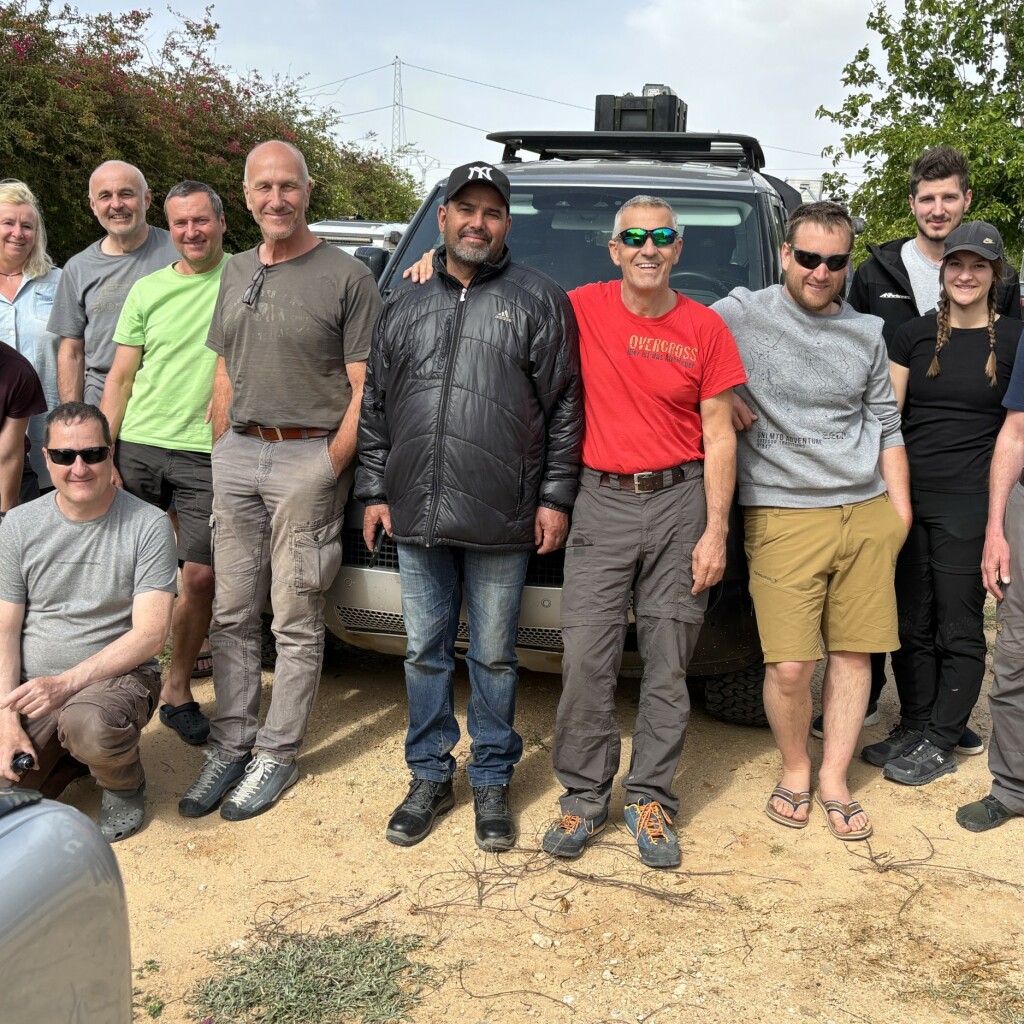
Heidi and I booked the Sahara Tour in April 2024. It was our first trip with Overcross and we were both excited. Christian, our guide, was very competent, unfla...
.JPG "Offroad-Reisen Tunesien, Dünen, tunesische Wüste")
OFF-ROAD-TOURS · TUNISIA
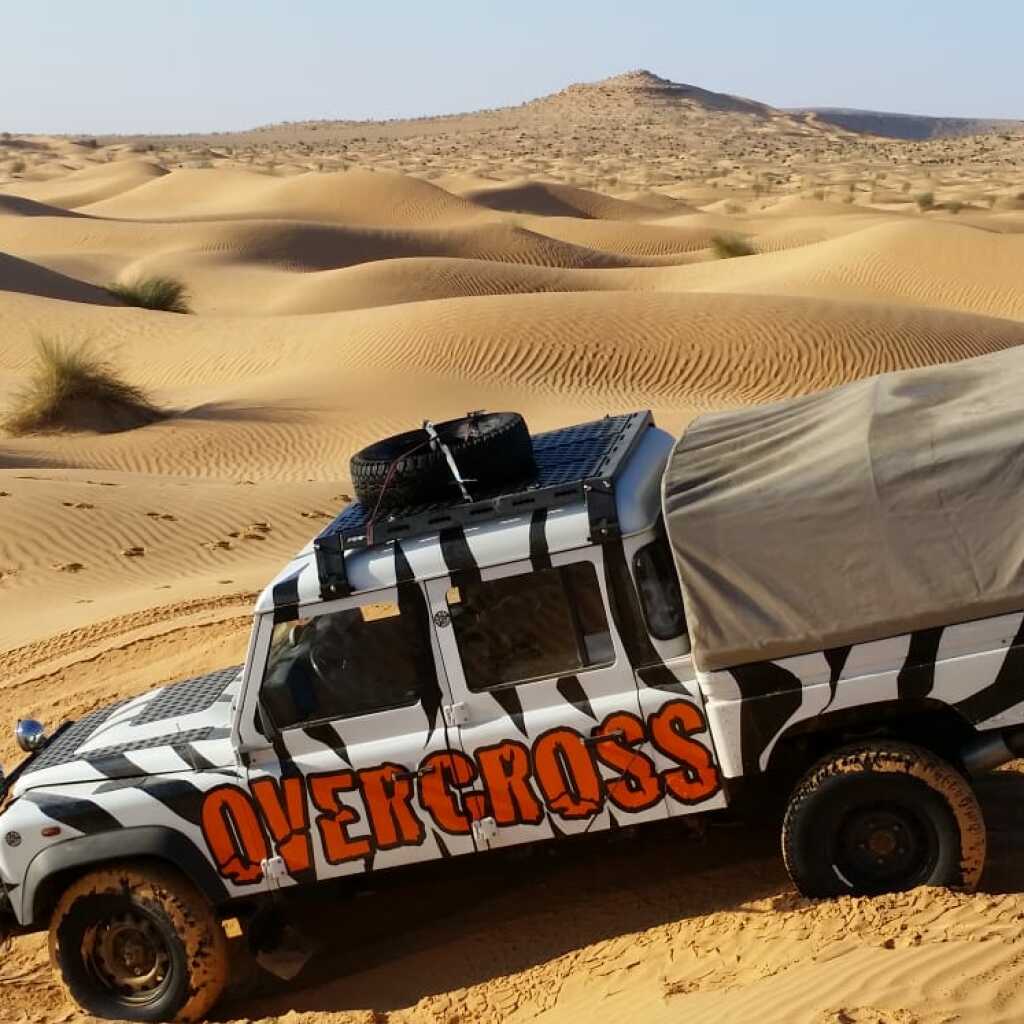
This 15-day guided 4x4 expedition runs from Genoa by ferry to Tunisia, crosses roughly 1,750 miles (2,800 km) of mixed terrain — paved highway, rocky mountain tracks, salt flats, and open dune fields — and returns to Genoa by sea. About 70% of the route is off-road.
The Journey
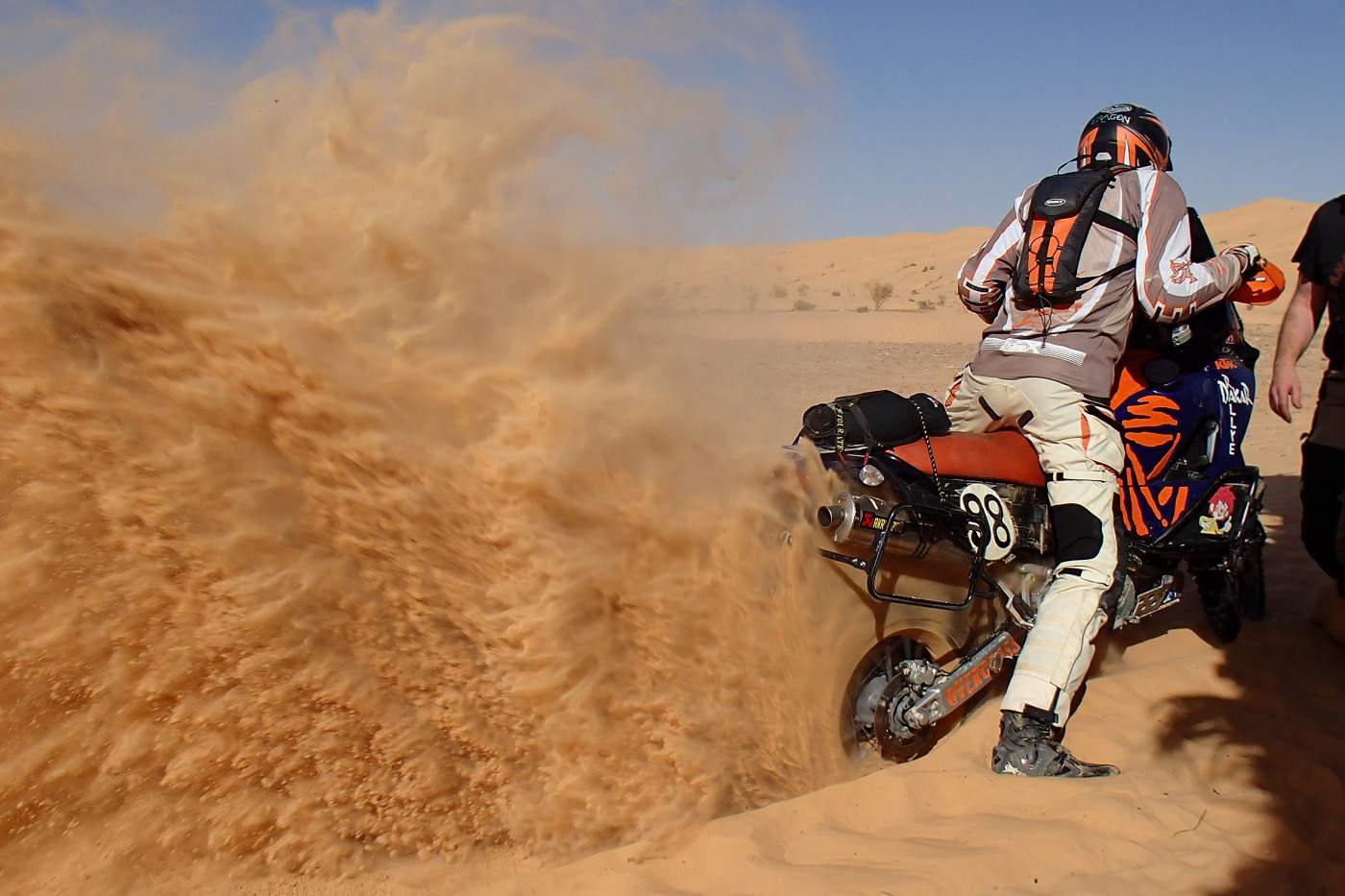
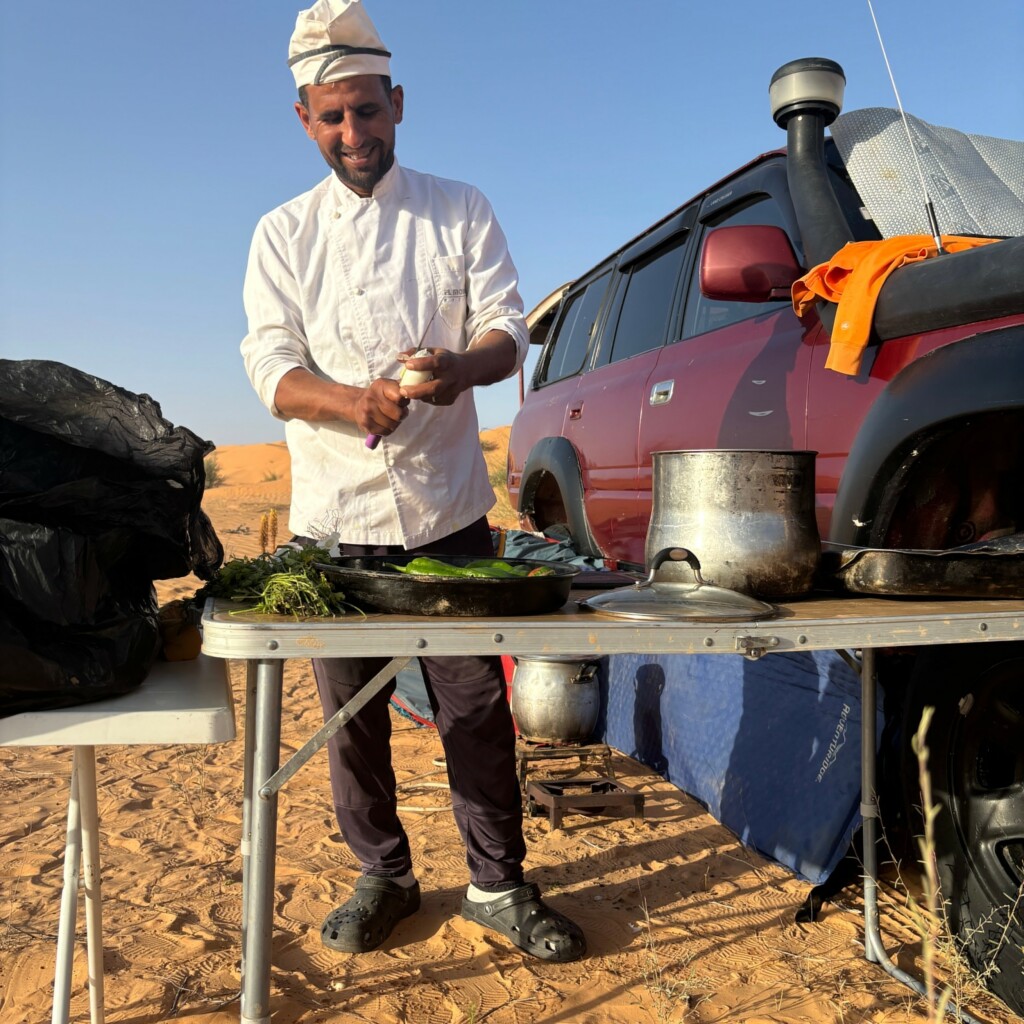
Tunisia packs more terrain into one route than most countries twice its size. You’ll cross the Grand Erg Oriental dune fields, the salt flat of Chott el Jerid, and the rocky Dahar Mountains. The route covers roughly 1,750 miles (2,800 km) total — 70% off-road, 90 to 185 miles (150–300 km) per day. Sand training at Ksar Ghilane oasis is built in before the technical dune stages. Overnights shift between a coastal hotel in Hammamet, desert tent camps mid-route, and wild camps far from any infrastructure. A guide in a support vehicle and a cook travel with the convoy for the full 15 days.
Tunisia
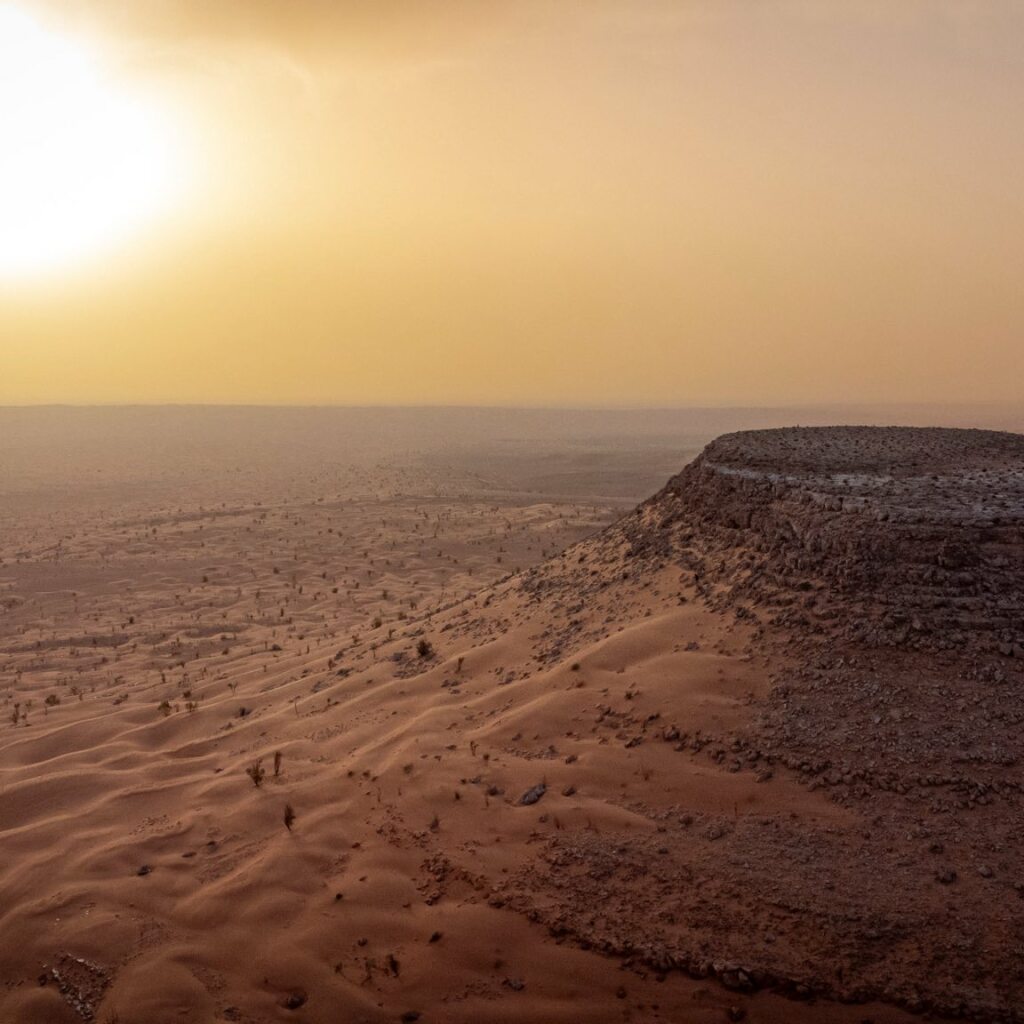
Tunisia packs Saharan dune fields, salt flats, mountain plateaus, and coastal roads into a single country. The route covers the terrain in sequence — highway south, then off-road through the desert core, then back north along a different arc.
You meet the convoy at the port in Genoa between 3 and 4 PM. Ferry tickets, Overcross stickers for the fast lane, QR codes for check-in — everything is organized at the CNT terminal. The MS Tanit takes the full convoy across the Mediterranean overnight. By the time Genoa’s lights are behind you, the expedition has already started. Satellite comms are set up, radios tested. You’re not waiting for Africa — you’re already moving toward it.
The ferry docks at La Goulette at noon. VIP customs processing gets the whole convoy through passport control and into local currency within 45 minutes. The convoy rolls south through Tunis to Hammamet — first hotel night, first dinner at the Gulf of Hammamet. You unpack the vehicle, charge the radios, and go through the pre-departure checklist. Tunisia starts with civilization. It won’t stay that way long.
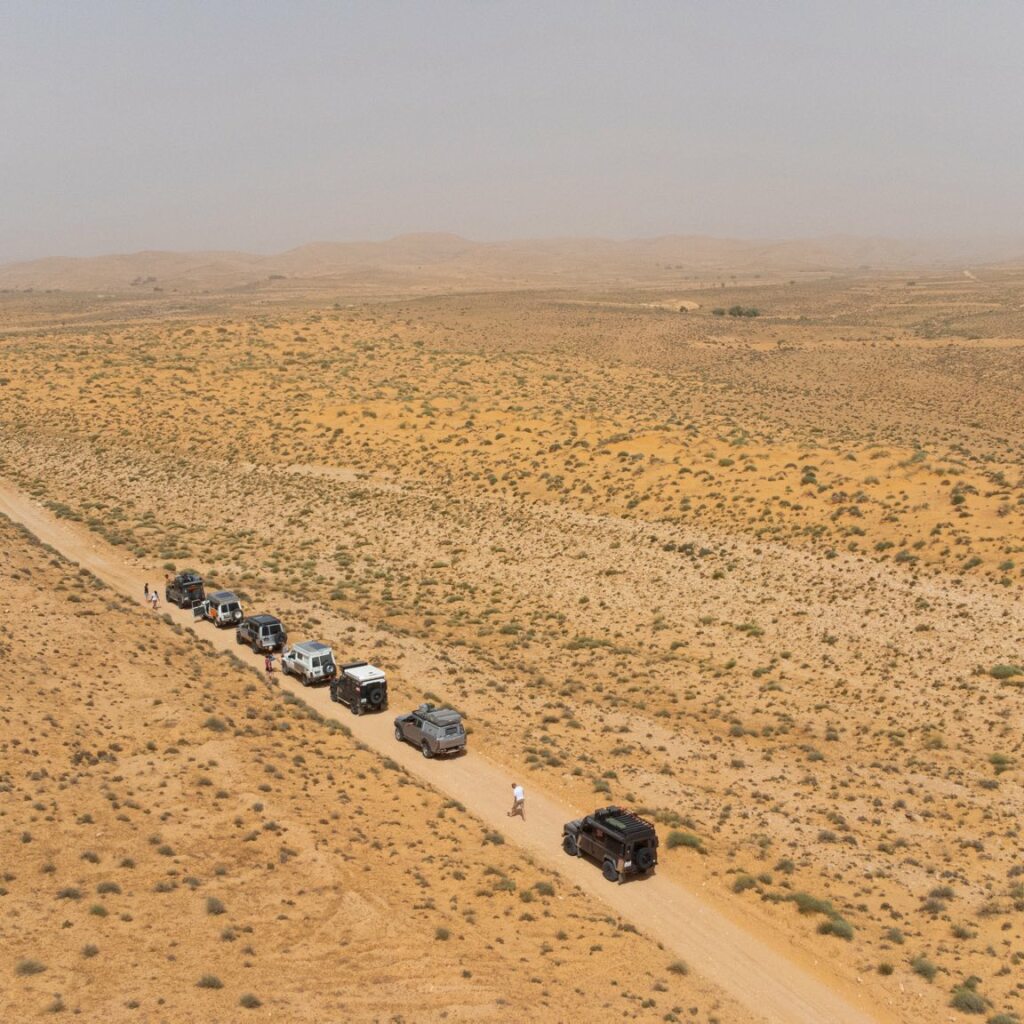
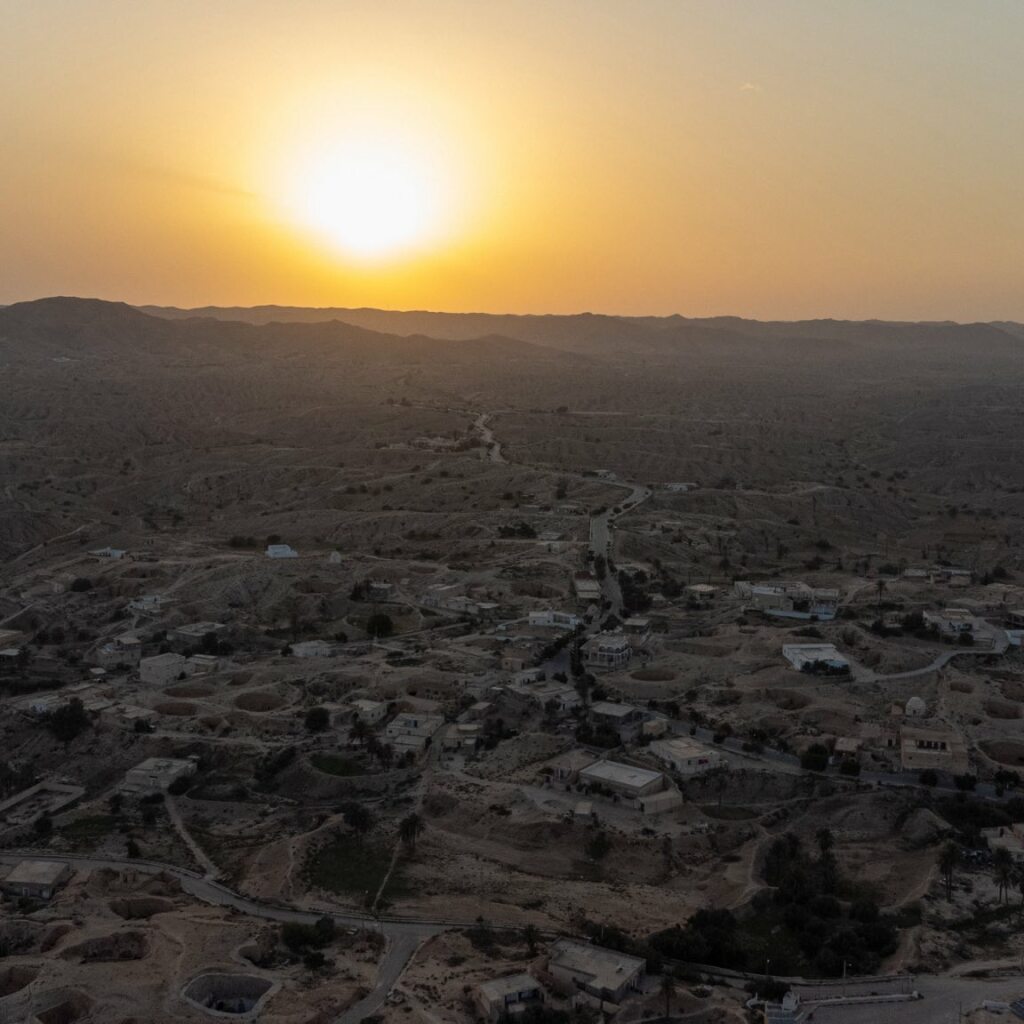
The highway south gives way to older roads through the Dahar Mountains. Matmata is a stop worth taking slowly — Berber cave dwellings carved into the hillside, and the same landscapes used on location for Star Wars. Roman ruins appear mid-route — pillars and worn stone in the midday heat. In the evening the group eats together: Tunisian food cooked by the team. The south is close now.
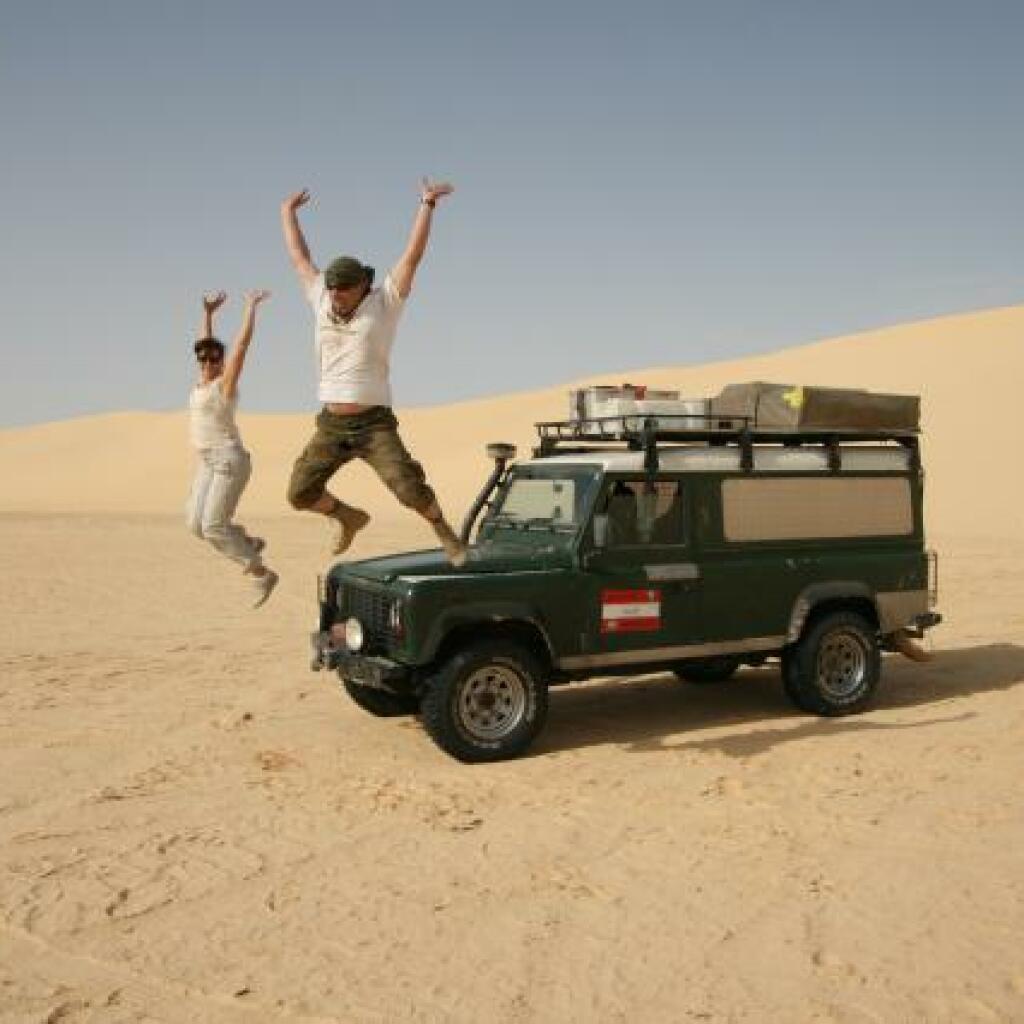
The asphalt ends here. You refuel water and diesel, load supplies, and the convoy rolls into the desert edge. Before the first proper off-road stage, guides cover driving technique: tire pressure for sand, line selection, what to do when a vehicle digs in. Camp that night is open desert — tents, fire, and a sky with no light competition. Tomorrow you use what you learned today.
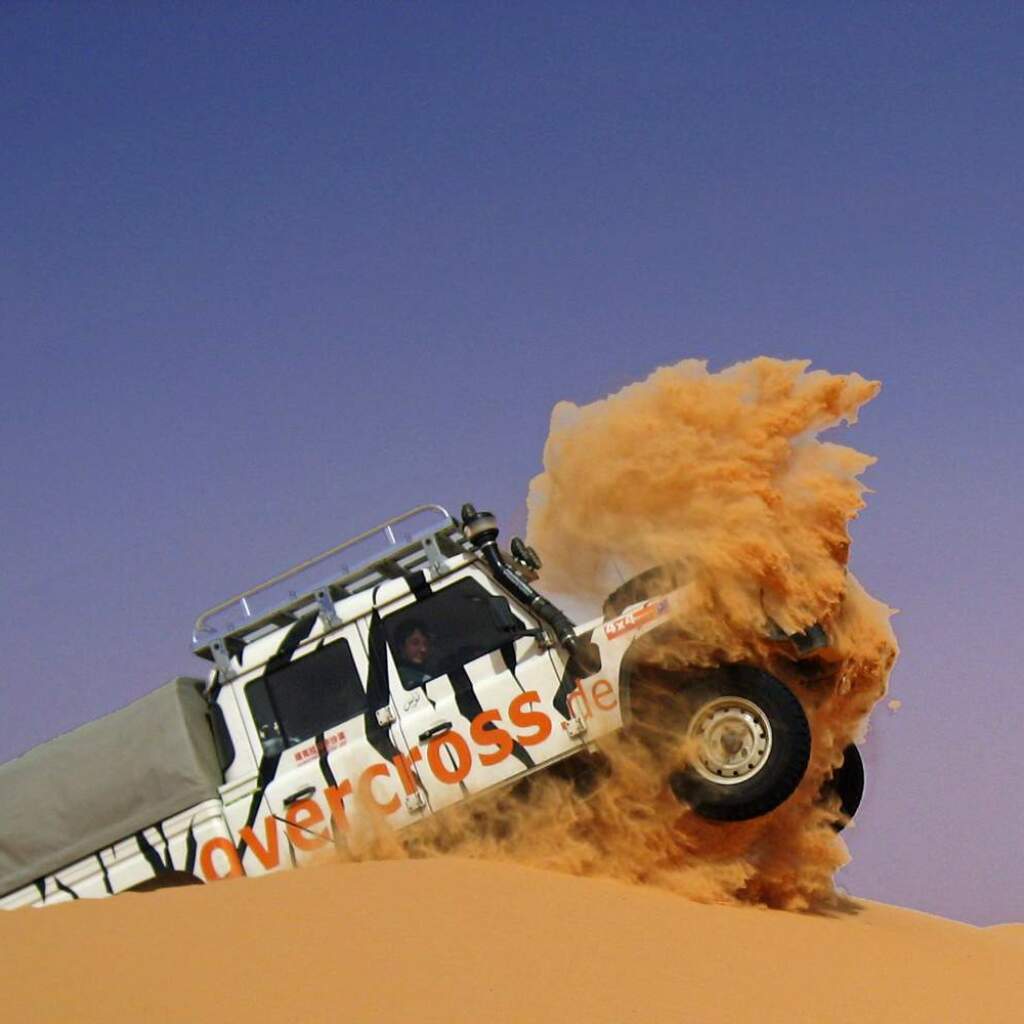
The route crosses the Hamada to Ksar Ghilane oasis — a brief stop at the hot spring, then the convoy leaves the last bit of infrastructure behind. The afternoon is sand training: dune runs, reverse recovery, sand plate technique, teamwork under real conditions. Not a demo — you drive it. In the evening, lamb and couscous cooked at camp, desert bread from the embers.
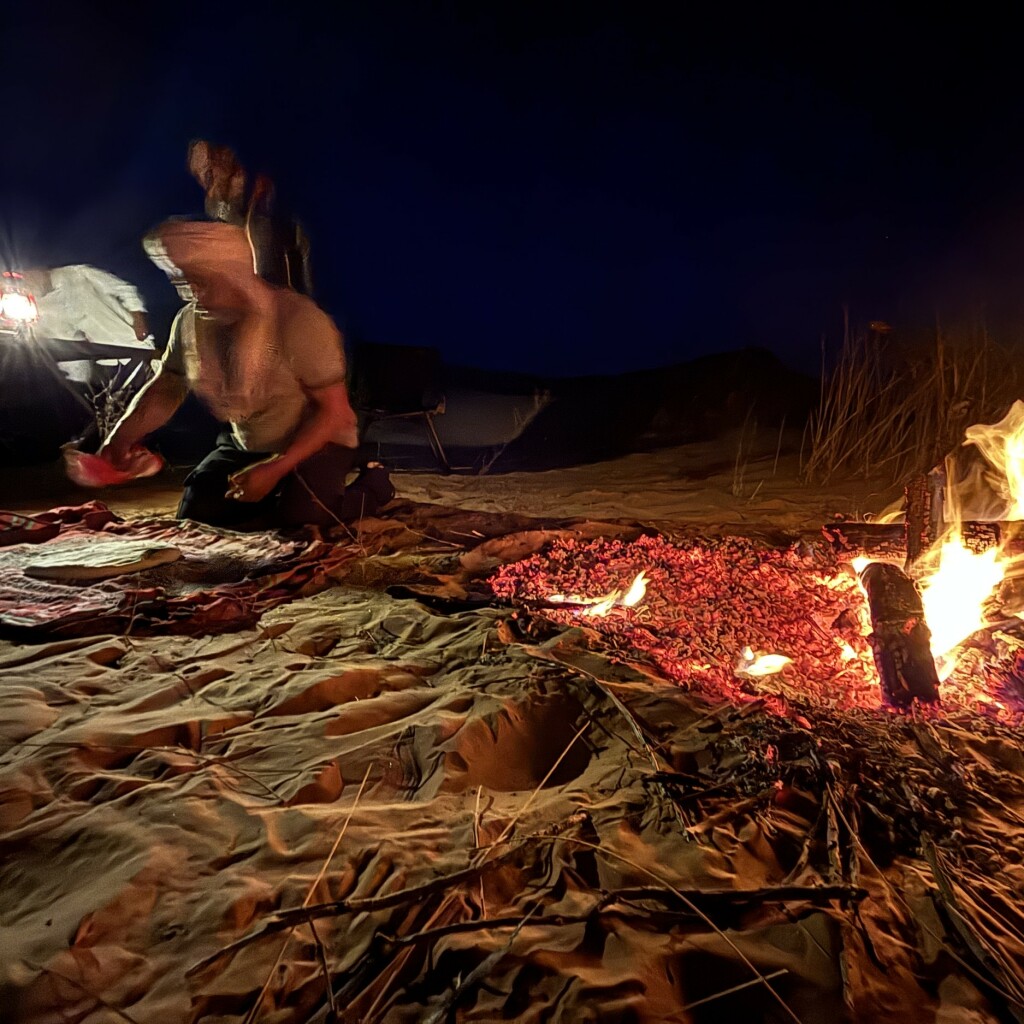
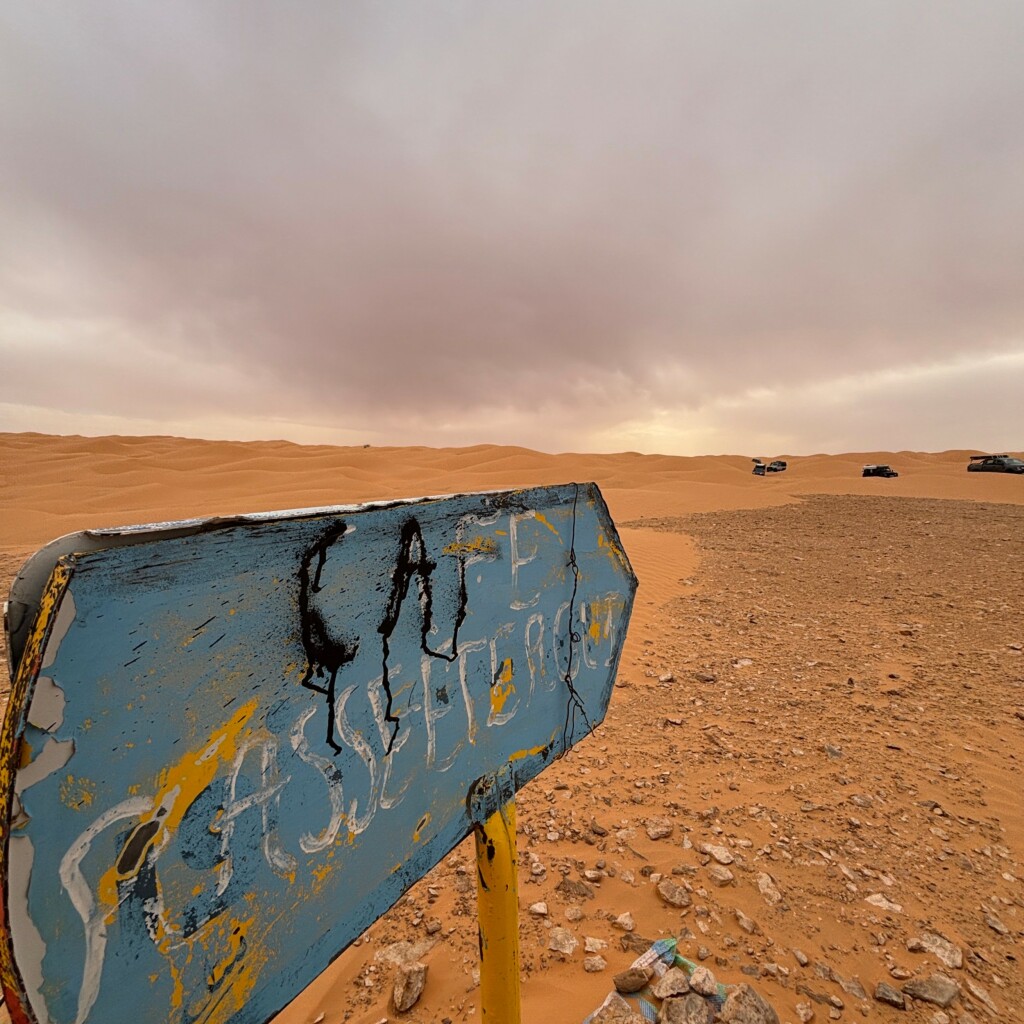
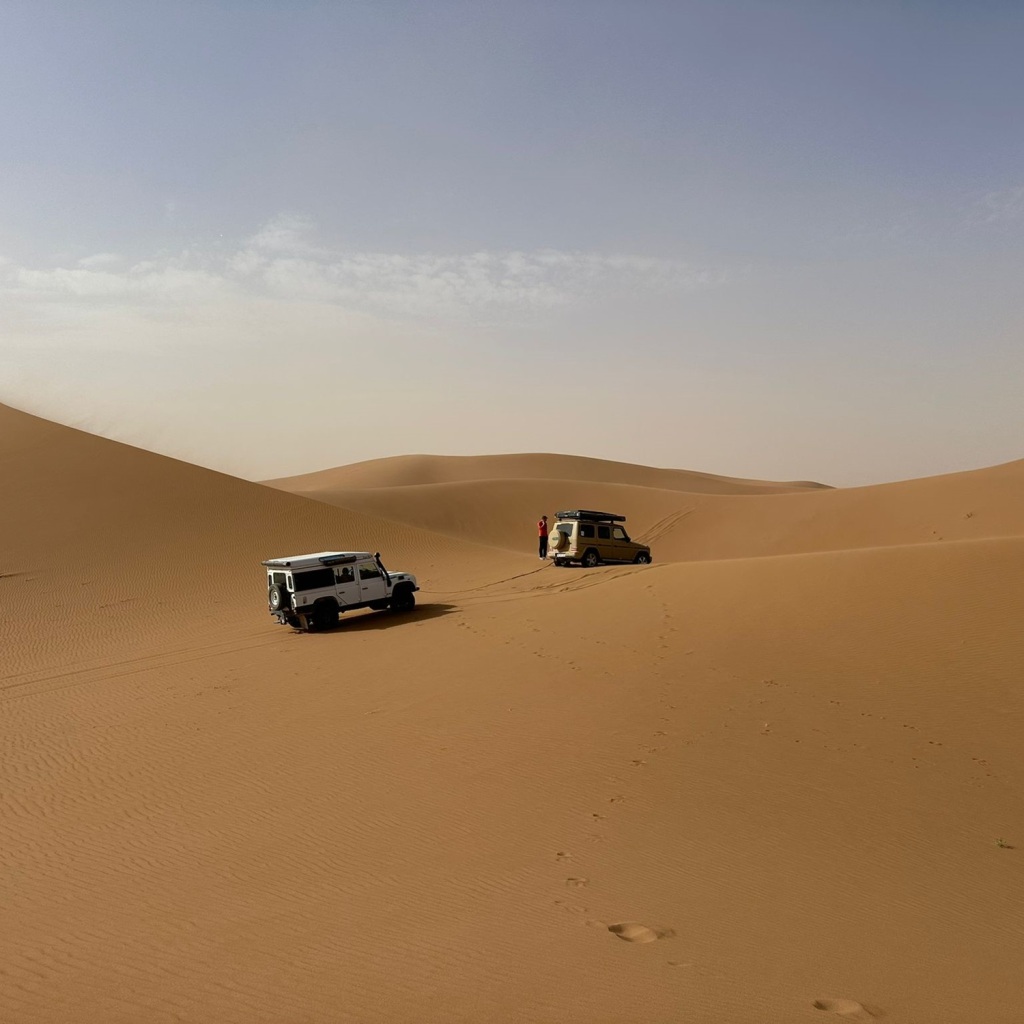
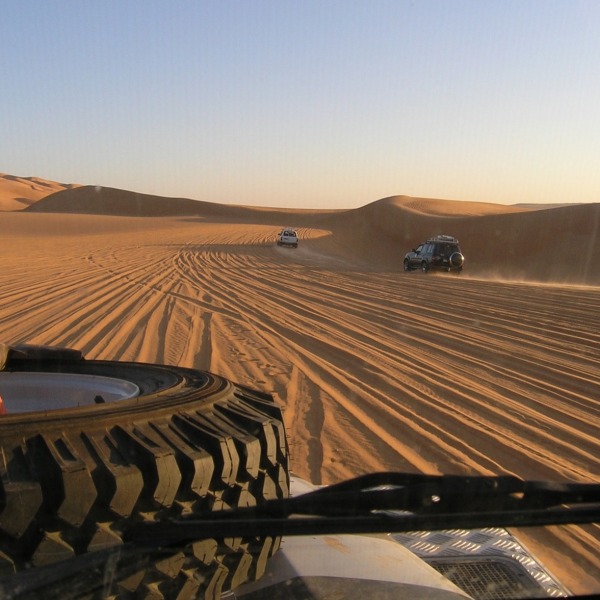
No network, no noise beyond wind and engines. The convoy crosses the Grand Erg Oriental — field after field of dunes where each day’s surface is slightly different from the last. Driving here is about reading the sand: momentum, tire pressure, where to commit and where to back off. Evenings in camp at Dekanis. The cook works the fire, anyone who wants to help does. The group functions like a unit.
Questions about the tour itinerary?
Our tour guide is happy to answer any questions about the day-by-day route, stops, and details.
The convoy works through the southern edge of the Grand Erg Oriental, where dune shapes shift with the wind direction. Driving technique and group coordination run in parallel here — no one gets through a stuck vehicle alone. Stories at camp about the nomadic routes through this region. Desert bread again. The Sahara at this stage is no longer unfamiliar; it’s the normal operating environment.
The El Mida dune field is the last major sand stage. Conditions here decide who’s learned to read the desert and who’s still driving by feel alone. Sun is high, dunes are long, and the day’s driving demands focus from start to finish. Final desert camp that night — the last under full open sky before the route turns north. Wind, sand, stars.
Sand gives way to palm trees and graded tracks. The convoy reaches a camp with showers — a notable upgrade. Douz is the gateway between the desert interior and the road north; the contrast hits hard after days of remote terrain. A full rest day follows with no schedule. The group reflects on the route so far. The faces have changed since Hammamet.
On and off-road through Chott el Jerid — one of the largest salt flats in Africa at roughly 2,900 square miles (7,500 km²). The surface reflects like glass in the heat; mirages form on the horizon. No reference points, no terrain features, just the convoy moving across white salt. The route pushes toward the Atlas foothills after the crossing, where the landscape picks up color and elevation again.
The drive north passes through Kairouan and the Rommel Post route markers — World War II supply lines that cut through this landscape in the 1940s. The road returns, and with it traffic, towns, and the feel of re-entry into ordinary Tunisia. Final overnight at a coastal hotel with a pool. The contrast with the desert camps is as sharp as it sounds.
Drive to Tunis, check in for the ferry home. The formalities move fast — faster than arrival, which is always how it goes. Final group dinner on the ship. Africa drops behind the wake. The Sahara 4x4 tour ends at the Genoa dock at noon. Fourteen driving days done.
Want a detailed description of all tour days?
Our expert will walk you through the full itinerary and answer all your questions.
Verified Reviews
Heidi and I booked the Sahara Tour in April 2024. It was our first trip with Overcross and we were both excited. Christian, our guide, was very competent, unfla...
Was for a great experience. I booked a group trip for the first time through Overcross, and I must say I’m really excited. The Sahara tour in Tunisia in April 2...
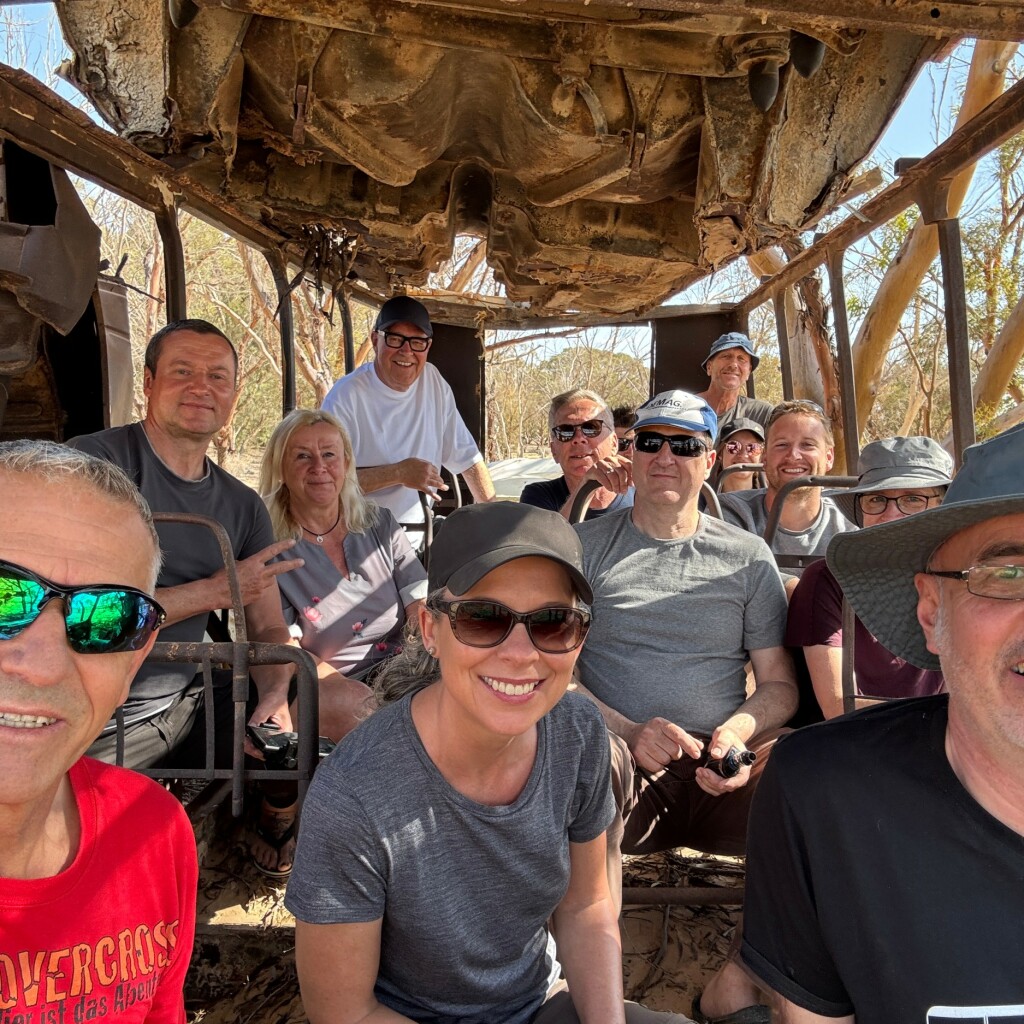
Tunisia offroad, this was a success, great tour driving, nice people, everyone helped at any moment, whether in the kitchen or in recovering the vehicles in the...
from
 Featured
 Featured
How did you
hear about us?