Travel Information Ukraine

Discover hidden treasures and heartfelt hospitality

Everything you need to know about Ukraine

Travel map of Ukraine by the tour operator OVERCROSS

Travel map of Ukraine by the tour operator OVERCROSS


  1. General information
  2. Climate
  3. Flora and fauna
  4. National parks and nature conservation
  5. Medical notes
  6. Population
  7. Politics and economy
  8. Transport network
  9. Cities and regions
  10. Culture, sights, and famous personalities
  11. Holidays
  12. Travel information
  13. Foreign representations
  14. Sources and links


1. General information

Continent: Europe
Geographical location: Eastern Europe
Highest elevation: Hoverla, 2061 m
Longest river: (partially) Danube 2850 km​
Form of government: Parliamentary-presidential republic​
System of government: Presidential-parliamentary system of government​
Languages: State language Ukrainian, also Russian used as lingua franca, predominantly Russian in the south and east. Regionally, other languages such as Hungarian or Romanian are also spoken
Neighboring countries: Poland, Belarus, Russia, Romania, Republic of Moldova, Hungary, Slovakia, 1,355 km of Black Sea coastline​
Capital: Kyiv
Area: 603,700 km²
Population: Approx. 41,800,000 (as of 2023)
Population density: Approx. 69 inhabitants per km²
Religions: Ukrainian Orthodox (Moscow Patriarchate), Ukrainian Orthodox (Kyiv Patriarchate), Ukrainian Orthodox (autocephalous), Greek Catholic (united with Rome). Smaller Jewish, Roman Catholic and Protestant communities (especially Baptists); Islam (mainly Crimean Tatars)​
Currency: Hryvnia (UAH); 1 Euro = about 40 UAH (as of 2023)​
Climate: Temperate continental, subtropical in the southern part of the Crimean Peninsula​
Timezone: UTC+2 (CET), UTC+3 (CEST, March to October)
Dialing code: +380
Country code: UA
Electricity: 220 V, no adapter needed
Opening hours: Generally weekdays 9:00-18:00, Saturdays until 18:00 or 19:00, closed on Sundays.

back to top of page

2. Climate

Kyiv Temp. °C min/max Sun hours / day Rainy days
Jan -8.6 -3.2 1.4 9
Feb -8 -2 2.3 8
Mar -3.3 3.2 3.6 8
Apr 3.6 12.2 5.4 8
May 9.8 20.3 8.3 8
Jun 13.1 23.6 9.1 10
Jul 14.9 25.6 9.3 10
Aug 14 24.5 8.1 8
Sep 9.6 19.5 6.3 7
Oct 4.2 12 4 6
Nov -1.1 4 1.7 9
Dec -5.6 -1.1 1 10


Lemberg (Lwiw) Temp. °C min/max Sonnenstunden / Tag Regentage
Jan -8,7 -2,4 1,8 9
Feb -7,2 -1 2,7 8
Mar -3,2 3,9 3,9 10
Apr 2,9 12,3 5,4 10
May 8,1 18,3 7,8 11
Jun 10,9 21 8,1 12
Jul 12,8 23 8,1 11
Aug 12 21,9 7,4 10
Sep 8,8 18,9 6 9
Oct 4 12,9 4,6 9
Nov 0,2 5,6 1,7 10
Dec -5,4 -0,3 1,5 12


Odessa Temp. °C min/max Sonnenstunden / Tag Regentage
Jan -4,1 1,6 2,2 7
Feb -3,3 2 2,5 6
Mar 0,5 5,9 4,1 6
Apr 6,1 12,6 6,2 7
May 11,8 18,8 8,8 6
Jun 15,6 23,4 9,2 7
Jul 17,5 25,9 9,8 5
Aug 17,3 25,5 9,9 4
Sep 13,3 21,1 7,7 4
Oct 8 15 5,5 4
Nov 3,2 8,9 2,4 5
Dec -1,1 4,2 1,7 6


Die Ukraine hat überwiegend gemäßigtes Kontinentalklima mit warmen Sommern, in denen die Temperaturen zwischen 20 und 25°C liegen, und kalten, schneereichen Wintern, in denen Temperaturen von -5 bis -10°C üblich sind. Die Herbstmonate sind meist sonnig. An der Schwarzmeerküste herrscht ein Klima, das man als mediterran bezeichnen könnte. So klettern die Temperaturen in diesem Landesteil im Sommer normalerweise bis auf 30°C und fallen auf -5°C im Winter.

zurück zum Seitenanfang

3. Flora und Fauna

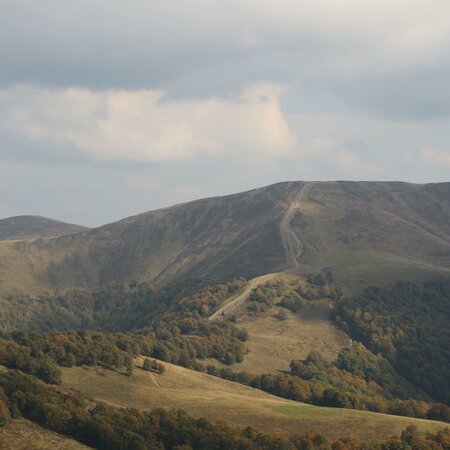
Large parts of the original vegetation types—mixed forests, forest and dry steppes—have been converted into cultivated and arable land. Remnants of mixed forests and swamps are found in the northern parts of the country. The Carpathian region in the southeast and the Crimean Mountains are still largely covered with forests. A special case is the Mediterranean vegetation on the southern side of the Crimean Peninsula. Here, a variety of shrubs, wildflowers, grasses, and deciduous trees can be found.

More than 100 species of mammals, 350 species of birds, and 200 species of fish live in Ukraine. Predators such as martens, foxes, bears, lynxes, and wolves can be found, as well as hoofed animals like deer, boars, moose, and wild sheep, which still find their habitat in the Ukrainian forests and steppes. In addition to predators and hoofed animals, there are rodents such as ground squirrels, field mice, and hamsters, as well as raccoons, beavers, and muskrats. Among the bird species, owls, gulls, black grouse and capercaillie, and several species of eagles are particularly noteworthy; migratory birds such as storks, ducks, and geese stay temporarily in Ukraine. Among the numerous species of fish in inland and marine waters are, among others, carp, pike, and sturgeon.

back to top of page

4. National Parks and Nature Conservation

Ukraine has a diverse natural landscape and wildlife. For this reason, areas have been designated as nature reserves and national parks. These offer great opportunities for the development of ecotourism. There are the following types of national parks and protected areas: mixed forests, forest-steppe, steppe, the Carpathian Mountains, and the Crimean Mountains.

back to top of page

5. Medical Information

There are both state-run and privately operated hospitals and clinics in Ukraine. According to the constitution, the state is responsible for the creation of efficient medical structures that should be accessible to all citizens. The state and municipal health institutions provide free care in case of illness; however, needed medications are not included. The economic crisis has had significant impacts on the medical infrastructure. Conditions in the hospitals are deteriorating, doctors are poorly paid, and both medicines and technical equipment are in short supply. The situation in larger cities is generally better than in rural areas, where hospitals can hardly treat serious cases. People living in villages with serious health problems are advised to visit the respective district hospital.
Emergency numbers: Fire brigade 101, Police 102, Ambulance 103, and Gas service 104.

Please note the medical information of the Federal Foreign Office.

Contact your family doctor and visit the page of the Tropical Institute.

back to top of page

6. Population

About 41.8 million people live in Ukraine. The largest city is Kyiv, the capital of the country, with about 2.85 million inhabitants. Other million-strong cities are Kharkiv with 1.44 million, Dnipro with 1.06 million, Donetsk with 0.95 million, and Odessa on the Black Sea with 1.01 million citizens. In almost all cities, the population has decreased, as overall population development in Ukraine is negative (-0.4%). This is mainly due to the low birth rate, but also to the emigration, especially of the Russian population.

Ukrainians make up the majority of the population at 76%, followed by 17% Russian residents. Other small ethnic groups are Belarusians, Jews, Moldovans, and Tatars. The German minority living in the country is estimated at about 30,000 people. Emigration to Germany has greatly reduced the number, so that only in Transcarpathia near Mukachevo as well as around Odessa and Mykolaiv are there villages with larger German populations. Life expectancy in Ukraine is 72 years, and literacy is almost universal.

back to top of page

7. Politics and Economy

According to the 1996 constitution, Ukraine is a republic with a presidential system. The head of state (since May 2019, Volodymyr Zelenskyy) is elected directly by the people for five years. The Prime Minister heads the government (since July 2021, Denys Shmyhal). The legislature is vested in the Supreme Council (Verkhovna Rada) with 450 members of parliament, elected for four years. The country is divided into 24 districts (oblasts). Their governors are appointed and dismissed by the president. In addition, there is the Autonomous Republic of Crimea with its own parliament and government, as well as the cities of Kyiv and Sevastopol, which have special status.

In 2023, around 15.5 percent of the workforce in Ukraine was employed in agriculture, 25.8 percent in industry and 58.7 percent in the service sector. The east of the country is the (heavy) industrial center of Ukraine, the west is rural, but increasingly also characterized by light industry. The most important economic sectors are the metallurgical and chemical industries, agriculture and the food industry as well as mechanical engineering, and increasingly also the IT sector. Large parts of Ukrainian industry suffer from low competitiveness due to outdated facilities and high energy consumption. However, Ukraine also has a number of locational advantages: a relatively large domestic market with around 41 million inhabitants, some highly developed niche sectors such as aircraft and rocket construction, immediate geographical proximity to the sales markets in the EU and Eastern Europe, a high need for catching up in terms of consumption and modernization investments, very good natural conditions for agriculture, as well as a comparatively low wage level with a generally high level of education.

back to top of page

8. Transport Network

The Ukrainian road network is well developed, however, many roads are in poor condition. The road network covers 174,000 km, of which 164,000 km are paved, and consists of highways, national, and regional roads. There is no infrastructure comparable to the German autobahn network, except for a few highways between Kyiv-Boryspil, Kyiv-Odesa and Kharkiv-Dnipro, as well as motorway-like sections with multiple lanes on international routes. Regional centers and larger district cities, however, have good infrastructure and a dense network of public transport, including trams, trolleybuses, buses, taxis, and marshrutkas (so-called shared taxis). Kyiv, Kharkiv, and Dnipro have a metro system.

Within city limits, cars in Ukraine may drive at 60 km/h, on country roads at 90 km/h, on expressways at 110 km/h, and on highways at 130 km/h. Anyone who has had their driver's license for less than two years may generally only drive at 70 km/h.

back to top of page

9. Cities and Regions

The administrative division of Ukraine is closely based on the principle of the unitary state. The country is divided into 24 oblasts, one "Autonomous Republic" and two cities with special status. The majority of Ukrainian oblasts are named after the name of their capital, which is also officially referred to as the oblast center. An oblast center is usually also the largest and most developed city in the respective oblast.

The "cities with special status" Kyiv and Sevastopol are administered directly by the central government of Ukraine. They are granted their status through the administrative division of the former Ukrainian SSR, with the exact legal status defined by special laws.

These three national entities are subsequently subdivided into smaller units, which are usually the raions.

Raions are smaller administrative units in Ukraine. In 2006 there were 490 raions, divided among the 24 oblasts and the Autonomous Republic of Crimea. An average raion in Ukraine covers an area of 1,200 km² with an average population of 52,000 inhabitants.

Cities in Ukraine are characterized by the granting of city status by the respective administrative authority. Three types of administration can be distinguished: city with: special status, reporting directly to the Ukrainian government; of oblast importance, reporting to an oblast administration; and of raion importance, reporting to a raion administration.

The smallest administrative unit is the rural settlement. There are also various intermediate levels, with several villages and settlements often grouped into rural councils. An exception is the urban-type settlement, which must meet special requirements as a settlement. These smallest units are in turn subordinate to a higher administrative unit, mostly raions or cities.

back to top of page

10. Culture, Sights and Famous Personalities

The sector of non-government-funded culture (private theaters, dance and music festivals, cinema and much more) in Ukraine is very active. Especially since the upheaval in Ukraine, non-governmental organizations have become important players with considerable influence.

Ukraine now has two major international film festivals: the traditional “Molodist” film festival in Kyiv, which takes place annually in October, and the film festival in Odesa in July. Numerous smaller festivals on special topics have also become established, such as the “DocuDays” focusing on human rights.

Ukrainian and Ukrainian-language literature is developing rapidly, which is also reflected in numerous German translations. In recent years, authors such as Andrey Kurkov, Yuri Andrukhovych, and also writers of the younger generation like Serhiy Zhadan, Taras Prokhasko, Oksana Zabuzhko and Tanja Malyarchuk have become increasingly popular in Germany as well. From 2012 to 2014 Ukraine, together with Poland and Belarus, was a focus country at the Leipzig Book Fair. Important book fairs in the country in Lviv and Kyiv are gaining more attention every year; there are also numerous literature and poetry festivals.

Ukraine has a diverse music scene, especially in the field of contemporary music, which also draws attention through international festivals (notably in Odesa, Lviv and Kyiv).

An important element of cultural relations is the civil society connections below the governmental level. Numerous active city partnerships promote exchanges with a wide range of offerings. The most traditional cooperation, which celebrated its 50th anniversary in 2011, exists between Kyiv and Leipzig.

The 10 sights you should see: resorts in Crimea, Carpathian Mountains, Kyiv, Lviv "the little Paris of the East" (cultural center of the country), the port city of Odesa, the peninsula of Yalta, the historic town of Kamianets-Podilskyi, one of the oldest cities Chernihiv, the 1.79 km² large landscape garden Sofiyivka in the north of Uman, and the historically significant city of Poltava. Nearby, in 1709, a war took place between Russia and Ukraine.

back to top of page

11. Holidays

Holiday Date
New Year January 1
Russian Orthodox Christmas January 7
International Women's Day March 8
Orthodox Easter March / April
Labor Day May 1
Victory Day  May 9
Orthodox Pentecost May / June
Constitution Day June 28
Independence Day (National Holiday) August 24
Defenders of Ukraine Day October 14

If a holiday falls on a Saturday or Sunday, the following Monday is a day off.
The main holiday months are July and August.

back to top of page

12. Travel Information

Auf der Seite des Auswärtigen Amtes finden Sie Informationen zu landesspezifischen Sicherheitshinweisen, Einreisebestimmungen für deutsche Staatsangehörige, besondere Zollvorschriften, besondere strafrechtliche Vorschriften und medizinische Hinweise. 

zurück zum Seitenanfang

13. Auslandsvertretungen

Deutsche Botschaft in Kiew: Wul. Bohdana Chmelnytzkoho 25, 01901 Kiew, Telefon: +380 44 281 11 00 - Link dazu hier.

Weitere deutsche Vertretungen finden Sie hier.

Ukrainische Vertretungen in Deutschland finden Sie hier.

zurück zum Seitenanfang

14. Quellen und Links

http://www.tourismus.de/europa/ukraine/

http://www.auswaertiges-amt.de/DE/Aussenpolitik/Laender/Laenderinfos/01-Nodes_Uebersichtsseiten/Ukraine_node.html

http://laendercode.net/de/country/ua

http://www.oeamtc.at/portal/ukraine-feiertage+2500+1130855?env=JUQ2ZmZudW5nc3plaXRlbj0

http://www.welt-steckdosen.de/ukraine/

http://www.bamf.de/SharedDocs/MILo-DB/DE/Rueckkehrfoerderung/Laenderinformationen/Informationsblaetter/cfs_ukraine-dl_de.pdf?__blob=publicationFile

http://www.reise-atlas.com/ukraine/stadt

https://www.liportal.de/ukraine/ueberblick/#c10031

http://www.kiew.diplo.de/Vertretung/kiew/de/05/Hilfe/Hilfe.html

https://de.statista.com/statistik/daten/studie/314514/umfrage/erwerbstaetige-nach-wirtschaftssektoren-in-der-ukraine/

http://www.ukraine.com/national-parks/


zurück zum Seitenanfang

Karte von Ukraine

×

Send request

Adventure

How did you
hear about us?

Ask a Route Expert

How do you want to travel?