Everything you need to know about Thailand
Travel map of Thailand from the tour operator OVERCROSS
1. Climate
2. Animals and Plants
3. National Parks and Nature Conservation
4. Population
5. Medical Care
6. Languages
7. Religion
8. Human Rights Situation
9. Cities
10. Mineral Resources and Agriculture
11. Roads
12. Public Holidays
1. Climate
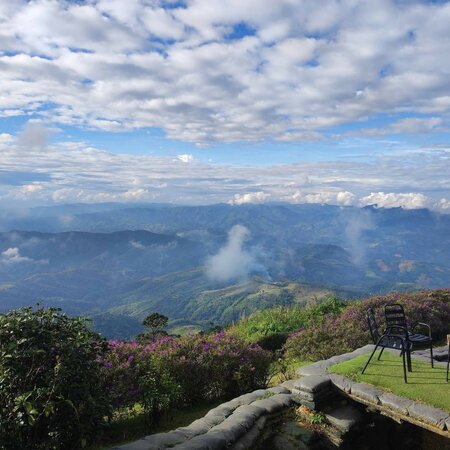
Our travel destination, the Kingdom of Thailand, has a tropical monsoon climate with average annual temperatures of 28°C in the south and 19°C at Doi Inthanon, the coolest place in Thailand, far in the north. Temperature differences are minor throughout the year and across the country, but in the north, you can distinguish three seasons (relatively cool from November to February, extremely hot with temperatures over 35°C between March and May, and hot between May and November). The monsoon has different effects from region to region. In winter, the northeast monsoon brings continental air and thus ensures dryness in northern Thailand, while the southwest monsoon brings rain to the whole country. Cyclones also occur in Thailand, although by far not as often as in neighboring states.
2. Animals and Plants
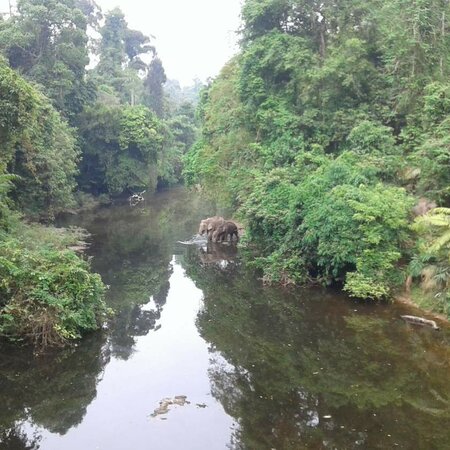
Even today, large mammals such as the Asian elephant, tiger, leopard, clouded leopard, sambar deer, muntjacs, wild cattle such as gaur and banteng, wild boar, and various species of monkeys—above all the gibbons—still live in the Kingdom of Thailand. Near the border with Myanmar, some wild water buffaloes live and in southern Thailand there are Malayan tapirs. The lizard and snake populations are especially diverse, with various pythons, cobras, and the king cobra. Over 1200 species of butterflies and moths flutter around the country and over 10,000 different species of beetles inhabit the land.
For bird enthusiasts, too, Thailand is a true treasure trove. Especially in the forests, you can find parrots, pheasants, wild peacocks, sunbirds (also called honeyeaters), mynas, and hornbills. The less forested areas are inhabited by storks, ibises, herons, cranes, and pigeons.
Among the aquatic animals, the carp is probably the most important, as it is crucial for the nutrition of Thais. Herring and mackerel are abundant in the coastal waters, and various sharks can also be found. Other aquatic animals in Thailand are crocodiles, especially the saltwater crocodile. Even some of the nearly extinct Siamese crocodiles still call this place home. Various species of turtles can also be found, such as the loggerhead sea turtle and the tortoise.

In the past, up until 1960, the travel country Thailand consisted of about 80% forest. Due to rapid population growth and road construction, it is now only about 22%.
In the south and west of our travel destination, tropical rainforests grow, showing a high diversity of species. Because of this high biodiversity, these forests are hardly used economically, but some of the plants are utilized by the pharmaceutical industry, such as the wood oil tree. There is also high species diversity in the mountainous areas, with the difference that here some trees lose their leaves during the dry period. Pines, oaks, and chestnuts also occur in some of these areas.
Another very important tree in Thailand is the teak tree, which is an important export product of the country and is often cultivated in plantations.
3. National Parks and Nature Conservation
With over 60,000 km² of land area and 6,000 km² of islands and marine area, around 10% of the country is made up of national parks, wildlife sanctuaries, and marine parks. The best-known of these nature reserves are Khao Yai National Park, the Thung Yai Wildlife Sanctuary, and Huai Kha Khaeng; there is much to see here on our motorcycle tours.
4. Population
About 75% of the population living in Thailand consists of ethnic Thais. The second largest group is the Chinese, who make up 14% of the total population, followed by Malays at 4%. The remaining 7% consists of hill tribes such as the Hmong, as well as refugees from Myanmar and Vietnam. It is suspected that in addition to the 1.28 million refugees only registered in 2004, another 1.5 million are staying in Thailand.
5. Medical Care
A yellow fever vaccination is not required for direct entry from Germany, and no other vaccinations are mandated here. However, the tour operator OVERCROSS recommends checking and completing standard vaccinations if you are participating in one of our tours through Thailand. If there are any questions about vaccinations, it is advisable to consult a tropical medicine specialist.
In cities and especially in Bangkok, medical care is good; in rural areas, however, it usually does not meet European standards. There are rarely European-trained doctors, and English or French are spoken only rarely by doctors in rural areas.
Anyone who would like to find out about international health insurance coverage can do so at the OVERCROSS travel agency.
6. Languages
Thai is the official language of the country, but a total of 73 additional languages are spoken in Thailand. About 94% speak a language of the Tai-Kadai language family, of which Thai is the most spoken; the remaining 6% include, for example, the Hmong-Mien languages or Austronesian languages.
English is widely understood by the educated part of the population and is mainly spoken in the cities. English is also understood in places with high levels of tourism.
7. Religions
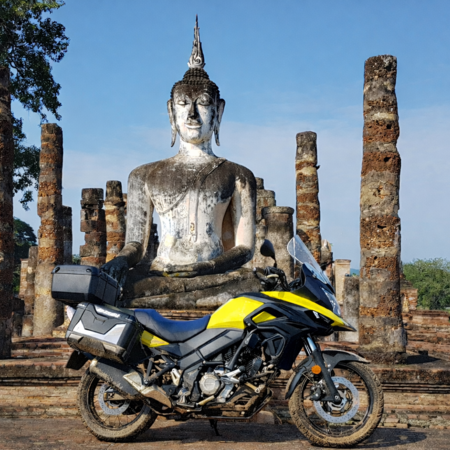
Thailand is a predominantly Buddhist country with 94% of the population. The second largest religious community is the Muslims, who are mainly found in southern Thailand. With 0.6% of the population of our travel destination, Christianity in Thailand does not play a particularly significant role. 0.1% are Hindus, most of whom are from India. Only the remaining 0.4% describe themselves as non-religious, which is a strikingly low proportion compared to Germany, where 37% are non-denominational.

In Thailand, it is enshrined in the constitution that the state should protect and promote Buddhism as well as all other religions and contribute to harmony between religions.
8. Human Rights Situation
The human rights situation in Thailand is classified as critical by Amnesty International. The death penalty still exists in Thailand, and is mostly carried out against drug dealers. There are also repeated human rights violations against the Muslim minority of Malays living in the south.
9. Cities

| Name of the City | Population |
|---|---|
| Bangkok | 6688550 |
| Nonthaburi | 404805 |
| Samut Prakan | 393217 |
| Udon Thani | 255754 |
| Chonburi | 228227 |
10. Natural Resources and Agriculture
About 39% of the working population in Thailand is employed in agriculture. Mainly, rice is cultivated in Thailand; the country is the sixth-largest rice exporter in the world.

The kingdom is also the world's largest producer of natural rubber and pineapples.
Thailand has large reserves of natural resources. Mainly ores, lignite, and natural gas are extracted, but tin, gold, tungsten, copper, lead, iron, manganese, and gemstones are also mined.
11. Roads
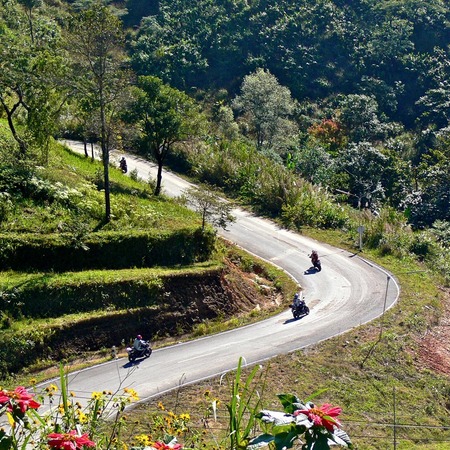
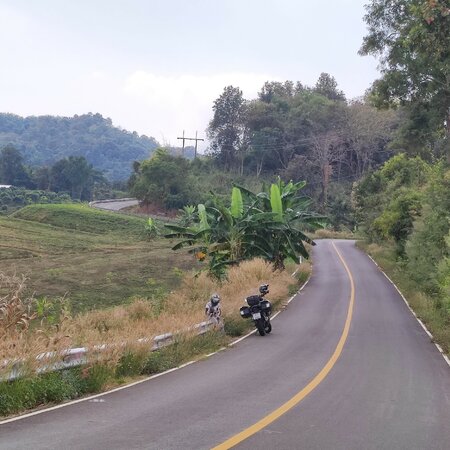
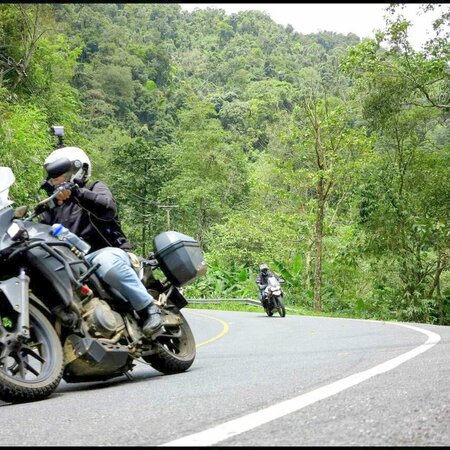
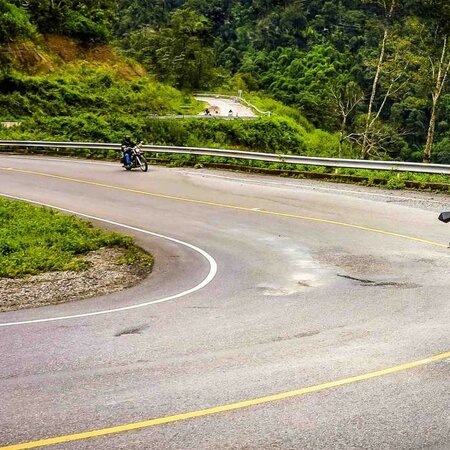
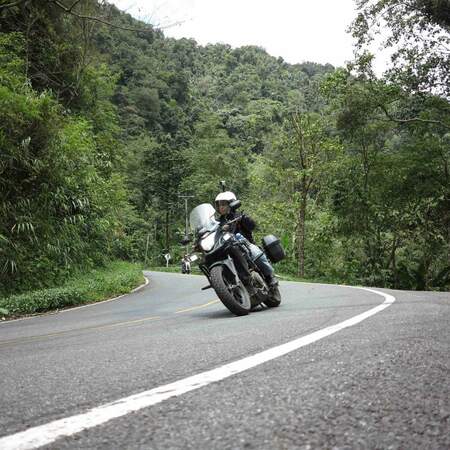
Thailand is crisscrossed by a road network of about 50,000 km, most of which is paved. There is left-hand traffic.
12. Holidays

In Thailand, traditional Thai, Buddhist, and also Western holidays are celebrated. The Thai holidays are based on the lunar calendar, making it difficult to name a specific date for them. A peculiarity in Thailand is that holidays falling on Saturday or Sunday are observed on the first weekday thereafter.