Tunisia from 2.050 €

Germany from 299 €

Peru from 2.379 €

South Africa from 869 €

Namibia from 1.129 €

Greece from 1.579 €

Switzerland from 1.289 €

Senegal from 4.729 €

Mauritania from 4.729 €

Nigeria from 9.899 €

India from 2.469 €

France from 270 €

Spain from 1.239 €

Italy from 1.079 €

Chile from 2.819 €

Morocco from 2.059 €

Kenya from 1.899 €

Austria from 2.679 €

Tanzania from 2.369 €

Ukraine from 2.060 €

Cameroon from 9.899 €

Congo (DR) from 9.899 €

Western Sahara from 4.729 €

Balkan from 669 €

China from 8.899 €

Travel Information New Zealand

Nature paradise with breathtaking landscapes and adventures

Everything you need to know about New Zealand

Travel map of New Zealand by tour operator OVERCROSS

Travel map of New Zealand by tour operator OVERCROSS


  1. General Information
  2. Climate
  3. Flora and Fauna
  4. National Parks and Conservation
  5. Medical Information
  6. Population
  7. Politics and Economy
  8. Transport Network
  9. Cities and Regions
  10. Culture, Sights and Famous Personalities
  11. Public Holidays
  12. Travel Advice
  13. Foreign Representations
  14. Sources and Links


1. General Information


Neuseeland map

Continent: Oceania
Form of government: Parliamentary democracy
Official language: English, Maori
Geographical location: Pacific Ocean, 1600 km east of Australia and consists of two islands
Neighboring countries:  Australia, New Caledonia, Tonga, Fiji
Highest mountain: Mount Cook, at 3754m
Capital: Wellington
Area: 269,652 km²
Population: 5,164,000
Religion: 25% no religion, 20% Anglicans, 16% Presbyterians, 15% Catholics
Currency: New Zealand Dollar (NZD)
Climate: Temperate – subtropical climate
Time zone: UTC+13
Dialing code: +64
Longest river: Waikato River, 425 kilometers long, located in the center of the North Island River​
Power adapter: 2/3-pin plug 230V alternating current / bring a power adapter
Opening hours: Many supermarkets are open until late in the evening and on weekends. All other shops are usually open on weekdays from 9am–5:30pm, with Late Night Shopping on Thursdays and Fridays until 8pm. In larger cities, shops are also open Sundays from 10am to 4pm.

back to top of page

2. Climate

Christchurch Temp. °C min/max Sun hours / day Rainy days
Jan 12,4 22,2 7 10
Feb 12,0 21,8 7 8
Mar 11,3 20,5 5 9
Apr 8,3 17,2 5 10
May 5,2 14,0 4 12
Jun 2,5 11,4 4 13
Jul 1,9 10,7 4 13
Aug 3,4 12,5 5 11
Sep 5,6 15,0 6 10
Oct 7,8 18,0 6 10
Nov 9,4 19,1 7 7
Dec 11,5 21,0 8 8


Auckland Temp. °C min/max Hours of sunshine / day Rainy days
Jan 16,1 24,1 7 9
Feb 16,1 24,0 7 8
Mar 15,0 23,0 5 9
Apr 12 19 5 10
May 11 18 4 12
Jun 9 15 4 13
Jul 8 14 4 13
Aug 8 14 5 11
Sep 9 16 6 10
Oct 11 17 6 10
Nov 12 19 7 7
Dec 14 21 8 8


The best time to travel is in November and December (spring) as well as during the mostly stable weather months of February, March, and April (summer/autumn).Since New Zealand is in the southern hemisphere, average temperatures decrease as you travel south. In the far north of the country, there is an average temperature of about 15 °C, while the deep south has a cooler average temperature of 9 °C. January and February are the warmest months of the year, while July is the coldest. The country is always exposed to winds. There is an average rainfall of 700–1500 ml, ideal for the lush vegetation. The climate on the South Island is similar to central Europe, while the north of the North Island is more subtropical. Winter sports are possible on the North and South Island from July to September.
New Zealand has a largely temperate climate. Although in the far north during summer you will find a subtropical climate and the alpine regions in the inland South Island can reach as low as -10 °C in winter, most of the country is close to the coast, which means mild temperatures, moderate rainfall, and plenty of sunshine.

back to top of page


3. Flora and Fauna

Because the island group has been separated from other landmasses for a long time, an extraordinary animal and plant world has developed here. About 85% of New Zealand's plant species are endemic. The most common forest types are evergreen broadleaf and conifer forests, e.g., yews, Kauri trees, and southern beeches. In addition, there is a unique fern landscape.
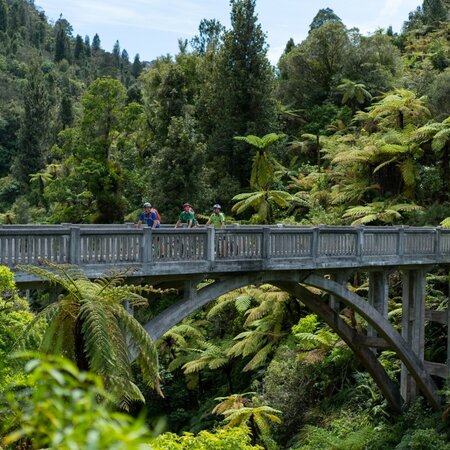
The most impressive are the tree ferns, which can grow up to 10 m tall. A frond of the ponga or silver fern is depicted on New Zealand's coat of arms, and the fern is also the national plant of New Zealand. Other plants include palm species, such as the Nikau palm.

There are no poisonous animals in New Zealand and rare species such as Hector's dolphins, kiwis, or yellow-eyed penguins can be seen in several places. Many of the niches normally occupied by mammals have been filled by birds. Thus, flightless birds play a special role here. These include the Kakapo, the Kiwi, the Weka, and the Kea. The island is also used by numerous migratory birds as a wintering ground or breeding site. Near Auckland, there is a large colony of gannets, but royal albatrosses and petrels also have nesting sites along the coast.
The coasts of the South Island are shared by various penguin species such as the yellow-eyed penguin and the little penguin along with seals and sea lions. Off the coast of Kaikoura you have the best chance to observe a whale. Dolphins and small dolphin species are distributed along the entire coastline. Furthermore, New Zealand is home to many lizards. Nearly 60 species of lizards occur in New Zealand. Among them is also the tuatara, an ancient reptile species.


New Zealand round trip nature culture adventure holiday
Picture: Fly fishing in Nelson Lakes National Park 

back to top of page

4. National Parks

New Zealand has been settled for less than a thousand years. Before that, it was the land of forests, mountains, and beaches. The loudest sound was the song of birds, the rustling of the wind, or the waves. Fourteen spectacular national parks protect New Zealand's natural heritage. There are 14 national parks in New Zealand, which together make up 10% of New Zealand's total area.

back to top of page

 5. Medical Information

Vaccination protection:

The Federal Foreign Office recommends checking and updating standard vaccinations for children and adults according to the current vaccination schedule of the Robert Koch Institute before traveling. See Robert Koch Institute or at the Tropical Institute
For adults, this includes vaccinations against tetanus, diphtheria, Pertussis (whooping cough), if necessary also against polio, mumps, measles, rubella (MMR) and influenza as well as pneumococci.

With particular risks, vaccination against hepatitis A and B is also recommended; for this, consult an experienced tropical/travel medicine specialist. 

You can find hospitals in New Zealand here

Emergency numbers
Breakdown service (AA - 24-hour emergency service: 
Members (also ADAC): 
Ph: 0800 500 222 (toll free)
Mobile: *222 (toll free)

Non-members:
Ph: 0800 500 222 (toll free)
Mobile: *222 (toll free) 

Fire brigade/Police/Ambulance: 111 

back to top of page

6. Population

New Zealand has about 5,164,000 inhabitants and this results in a low population density of 15 inhabitants per square kilometer. Auckland is the largest city in the country with 1.39 million inhabitants. On the North Island lies the capital Wellington, named after the Duke of Wellington, which is populated by 479,000 inhabitants. Since the 2001 census, the population has increased by 9.8%. 25% of the population were not born in New Zealand. Population growth in recent years is due to about two thirds immigration. On average, the average age was 37 years. 14.7% of New Zealand’s inhabitants at this time were over 60 years old. The average age of the Maori, on the other hand, was 23.8 years. Around 1 million people live on the larger South Island and large parts of the country are almost uninhabited. The smaller North Island is home to over 4 million people in total.
Today, New Zealanders are highly educated and cultured city dwellers. As members of a unique and vibrant multicultural society, New Zealanders embrace the technology and culture of the 21st century en masse. However, New Zealanders also have a calm but rugged individualism, independence and a talent for inventions. These qualities are still visible in the population today.
With a degree of urbanization of 86% in 2021, New Zealand is one of the countries with the highest percentage of urban population in the world. Eight percent of its inhabitants have European, mostly British, ancestors. Only 9 percent are Maori. The ancestors of the Maori immigrated around 900 AD from the area of present-day French Polynesia.

The Maori Culture
When the culture of the Maoris originated cannot be defined scientifically with exactness. It is assumed that the ancestors of the Maoris most likely came from the Polynesian islands, the Cook Islands, and the other Society Islands. The people, who lived as cannibals, brought their own domesticated animals with them and thus drastically changed the animal world of the country. Many animal species became extinct. Until the middle of the 19th century, cannibalism was practiced in Maori tribes. This fact was long concealed and has only been examined historically since 2008. 


Entrance to a Maori village during the New Zealand round trip by land, on foot and in the air
Image: Entrance to a Maori village in New Zealand

back to top of page

7. Politics and Economy

Politics:
New Zealand is governed as a constitutional monarchy. Although New Zealand has been independent from Great Britain since 1931, the British Queen is still also Queen of New Zealand and is represented there by a Governor-General. Every four years, the unicameral parliament is elected, which then elects the Prime Minister. The parliament consists of the "House of Representatives" with 120 members. A certain number of seats are reserved for Maori representatives.

New Zealand's electoral system is called "Mixed Member Proportional System" and is similar to the German electoral law. Every person from the age of 18 is eligible to vote. The most influential parties in the country are the "Labour Party" and the "National Party". However, New Zealand does not have a fixed constitution. Constitutional law is based on the "Bill of Rights", the British "Habeas Corpus Act" and many further New Zealand-specific laws.


Economy:
The most important economic sectors in New Zealand are agriculture and tourism. In general, New Zealand's economy is highly dependent on exports. The most important trading partners are found in Australia and the EU. New Zealand has free trade agreements with Australia, Singapore, Brunei, Chile, and China. The main exports are agricultural and forestry products such as fish, shellfish, dairy and other animal products, fruit, vegetables, and industrial goods such as paper, wool, and wood. These account for more than 50% of exports. Tourism, with 17.1% of export revenues, is the country's second most important economic sector. Main imports are mineral products, chemicals, machinery and vehicles, ships, and aircraft.

back to top of page

8. Transport Network 

Bus transport
The most important cities and places in between are served by a network of inexpensive and modern bus lines, with special offers on some routes. The frequency depends on the route and season, prices may vary depending on the time of day of departure.

Most well-known bus connections:
Intercity: 
'Intercity' is the largest bus line and covers almost every corner of both islands.
For individual travelers, it is recommended to purchase the Intercity Coach Pass. As the holder of this pass, it is possible to get off and back on along the fixed Intercity routes individually.
Northliner:
The services of the company 'Northliner' are available exclusively (as the name suggests) in the northernmost region of the North Island. 


Trains
The main train lines run between Auckland and Wellington (The Overlander), between Picton and Christchurch (The TranzCoastal), and between Christchurch and Greymouth
(The TranzAlpine). The main train stations on these routes are Auckland (Britomart), Hamilton (Frankton Railway Station), National Park, Ohakune, Palmerston North, Wellington, Picton, Blenheim, Kaikoura, Christchurch, Arthurs Pass, and Greymouth. There are also dozens of nostalgic and short train lines in New Zealand. Many train enthusiasts come to New Zealand to admire the old steam engines, which are often kept in perfect condition by volunteers.


Flights

Most larger cities in New Zealand have domestic flights either to Auckland, Wellington, or Christchurch. Prices vary greatly; generally, flights are cheaper the earlier you book.
Almost every major airline flies to New Zealand’s bigger cities from Germany (e.g. Frankfurt, Munich).

Here is a short list:
Emirates
Air New Zealand
Qantas
Singapore Airlines
Cathay Pacific
Malaysia Airlines
Thai Airways
China Airlines

Not all small airports are connected by public transport; sometimes shuttles and taxis are unavoidable. You can rent a car at every stop on your trip and, in a simple and quick way, see very different parts of New Zealand. 


Boat trips and ferry connections between North and South Island

Unfortunately, you cannot travel up and down New Zealand’s beautiful coast by ship, but there are many options for excursions! New Zealand is famous for its scenery, but the sea is just as important for countless Kiwis, who spend every free minute on water activities. Many boat tours allow you to observe dolphins, whales, seals, penguins, or rare sea birds. You won’t forget a day trip on the sea, and sometimes you can even take your car with you (e.g. on the Interislander ferry or on the Northland car ferries from Russell, the Hokianga Harbour, and Waiheke Island).

The connection between North and South Island is made by ferry crossing from Wellington to Picton.
Ferries depart several times daily.
Interislander and Bluebridge are the 2 best known ferry companies Price per person: approx. NZ$ 80

back to top of page

9. Cities and Regions

Wellington
Is the capital of New Zealand and the country's second largest urban area after Auckland. Wellington has 479,000 inhabitants and is located at the southern tip of the North Island.
The area is the political and cultural center of the country. Wellington became famous for its picturesque location between natural harbor and green hills.
The Māori name Te Whanganui-a-Tara refers to the neighboring Wellington Harbour and translates as “The great harbor of Tara.” Thanks to its location on a headland, the city is exposed to strong winds, hence the city's nickname: Windy Wellington, in other words, “Windy Wellington.” 

Auckland
Largest city in New Zealand and a cosmopolitan metropolis
Auckland (Greater Auckland or Auckland Metropolitan Area; Maori: Tāmaki-makau-rau or Ākarana) on the North Island of New Zealand is by far the largest agglomeration in the country, with over 1.4 million inhabitants – a third of the national population. The Maori name Tāmaki-makau-rau means “A young beauty with 100 lovers,” while Ākarana is the transcribed version of “Auckland.” On November 1, 2010, the cities of Auckland City, Manukau City, North Shore City, and Waitakere City as well as the districts of Franklin District, Papakura District, Rodney District, and the Auckland Region lost their independence through amalgamation. Auckland Council, politically legitimized by the local election on October 9, 2010, has since united all former administrative units under the government with a mayor and 20 city councillors. Whenever Auckland is referred to politically or administratively as a city today, it always means the Auckland Council.
The scenic view of multicultural Auckland is shaped by the approximately 50 inactive volcanoes over whose backs the metropolis sprawls. The city owes its vast parks to them. The location on sheltered sea bays also contributes to Auckland’s appearance, not least due to the numerous sailboats that have given the city the nickname City of Sails.

Queenstown
on the South Island is the capital of the Queenstown-Lakes District in the Otago region. Queenstown is located at 358 m above sea level and sits at the edge of the New Zealand Alps on the South Island of New Zealand, on Lake Wakatipu. In 2021 it had 13,700 inhabitants. That is an increase of 31% compared to 2001. Queenstown is the starting point of the Southern Scenic Route.
Queenstown is a must for all adrenaline junkies. Here the offerings range from bungy jumping to skydiving to caving tours and skiing on the surrounding glaciers.

Churchlands
The city of Christchurch, with 341,469 inhabitants, lies on the South Island of New Zealand in the Canterbury region. Christchurch is considered the “most English” city in New Zealand, which can still be seen today in the architecture. The Maori name of the city is Ōtautahi, named after a Maori chief who settled at the Avon River.


Nelson
Located on the South Island (just over 50,000 inhabitants) surrounded by the three most visited national parks in New Zealand (Abel Tasman National Park, Kahurangi National Park, and the Nelson Lakes National Park area) in the region

Fjordlands
Te Anau is the starting point to the beautiful fjordlands. The Milford Track, which New Zealanders, not without reason, call "the finest walk in the world," begins at the northern end of Lake Te Anau. Very beautiful hikes through this dreamlike area are also possible on the Kepler Track and the Hollyford Track. A slightly more comfortable but no less impressive way to explore the fjordlands is a boat trip through the Milford Sound or the less frequented Doubtful Sound.

back to top of page

10. Culture, Sights and Famous Personalities

Fiordland National Park
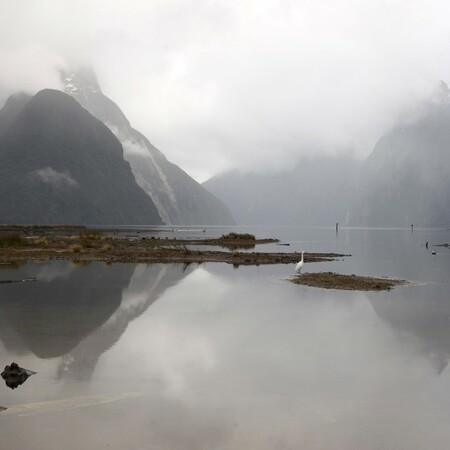
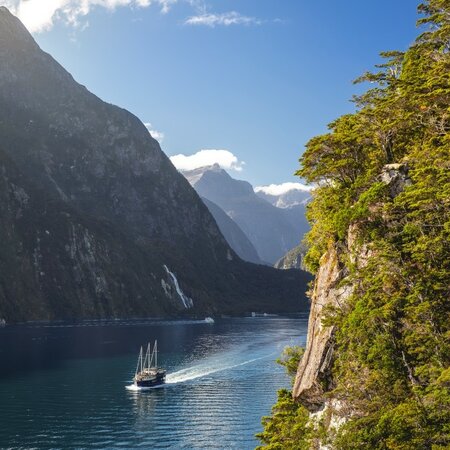
At 1.25 million hectares, Fiordland National Park isthe largest in New Zealand. Located in the southwest, the park has been a UNESCO World Heritage site since 1986. Here you will experience a unique setting: Wild animal species such as seals or dolphins, steep waterfalls and wild nature with rainforests, as well as a constantly changing climate make this trip unforgettable. You can explore the region either on a boat or kayak tour, or, no less spectacularly, on a scenic flight. The route to Milford Sound is especially popular. Once there, you’ll be greeted in the fjord with its Mitre Peak by a beautiful landscape. It is therefore not surprising that this lake with its huge island has been called the eighth wonder of the world.

On a New Zealand holiday Fjordlands boat trip
Image: Panoramic view over Fjordland at sunset
 

Rotorua
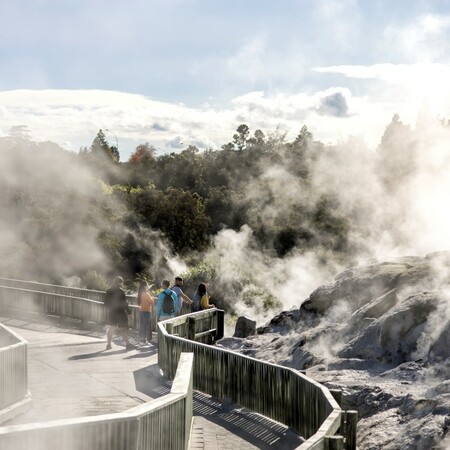
Rotorua is one of the most popular travel destinations in New Zealand. The city is located right on the south coast of New Zealand’s North Island. Maori villages were built all around, where the native people of New Zealand live, and where visitors can learn a lot about their culture and way of life. The spa town also offers so-called “Thermal Wonderlands”, where you will experience amazing natural spectacles. One of them is “Wai-O-Tapu Park.” Here you can visit the Lady Knox geyser, which spouts water up to 20 meters high. Right next to it is the “Mud Pool”: a large lake full of mud that was once a volcano. You can see these two attractions without paying an entrance fee. If you want to explore the park further, you have to pay. In “Hell’s Gate,” another thermal wonderland, you can relax instead. Here you are allowed to bathe in hot springs and try out mud for beauty masks. The advantage: Hell’s Gate is much less crowded than Wai-O-Tapu Park.

Abel Tasman National Park
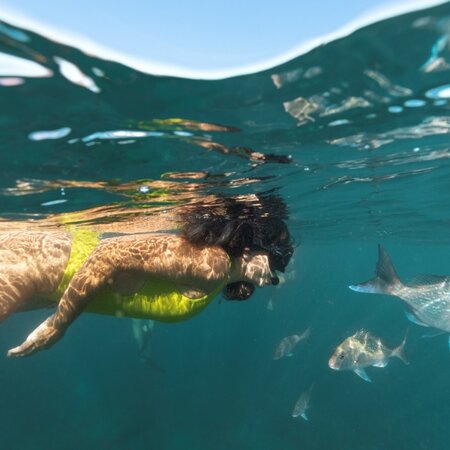
On the north coast in the south of New Zealand, you’ll find Abel Tasman National Park, which stretches from the village of Marahau in the south to Wainui Bay in the north. Here you will findcomplete tranquility along the white sandy beaches, the secluded bays, and the green landscape. The bright blue water invites you to swim, snorkel, and dive. Sailing and kayaking enthusiasts are also very common here. In the midst of untouched nature, you can go exploring on hiking trails and observe New Zealand bellbirds and Tunis. In particular, visitors in need of relaxation will gladly find refuge here from the otherwise stressful everyday life.

Mount Cook
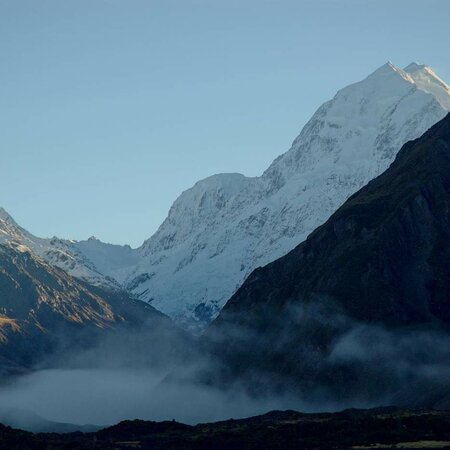
At a height of 3754, Mount Cook, also known as Aoraki, isthe highest mountain in New Zealand in the middle of the New Zealand Alps in the south. At the same time, it forms the center of the surrounding, eponymous national park. This park is 707 square kilometers in size and is home to 140 mountains, 40 percent of which are glaciated. Since 1990 this area has been a UNESCO World Heritage Site. The mountain and the park were named after the British explorer James Cook. If you don’t want to attempt the climb yourself, you can even fly to the summit by helicopter – certainly a once-in-a-lifetime experience.

Mount Cook during a New Zealand tour
Image: Mount Cook at dusk
 

Franz Josef Glacier
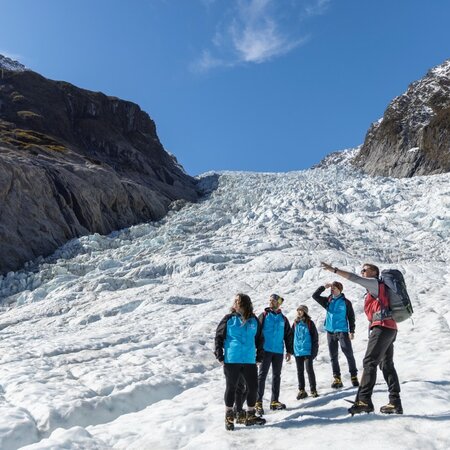
On New Zealand's South Island, the eleven-kilometer-long Franz Josef Glacier is located in Westland National Park. 150,000 years ago, the glacier was significantly higher than today's Mount Cook. However, the Franz Josef Glacier, named after Franz Josef I of Austria, is considered a warm glacier, as it flows about half a liter per day. The special feature is: the glacier unbelievably borders directly on the rainforest. Around the glacier, tours are offered where you can hike on the ice.

Bay of Islands
On the east coast of New Zealand, the Bay of Islands awaits you. 144 islands are located here, which mainly attract water sports enthusiasts. On the beautiful sandy beaches in the romantic bays you can relax and end your day and enjoy the sunset. On some days, you can even watch dolphins during a boat trip. New Zealanders also like to come here to sail or fish. A true paradise for relaxing, where you can recharge for more adventures. Here you can find out more about the Bay of Islands.

Sky Tower in Auckland
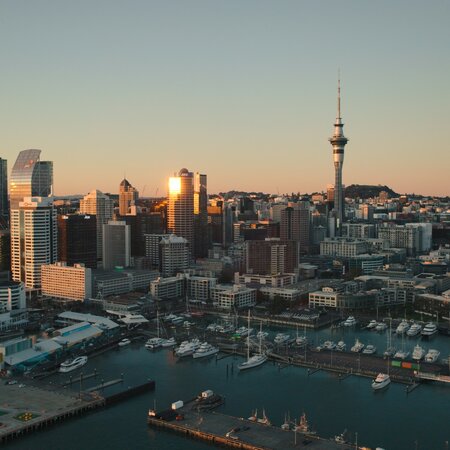
The Skytower in Auckland, at 328 meters, is the tallest building in New Zealand. It is located in the middle of the city center and is considered a landmark of the city. Even from the Harbour Bridge, you can see the massive complex recognize. Two observation platforms offer a breathtaking view here. If you have the courage, you can stand on the glass floor on one of the observation platforms to look straight down. For adrenaline junkies, the Sky Jump is offered. The jumper is guided by two ropes and can land safely on the ground. If you don't dare, you should at least watch the jumpers and marvel.

Famous people:
Everyone knows him, Oscar winner Russel Crowe, who was born on April 7, 1964 in Wellington.

Peter Jackson is also one of today's Hollywood stars who come from New Zealand

Atomic physicist Ernest Rutherford, who received the Nobel Prize in Chemistry in 1908.

Sir Edmund Hillary also achieved great fame, who was the first to climb Mount Everest in 1953.

back to top of page

 11. Holidays

Holidays Date
New Year's Day 1 January
Day after New Year's Day 2 January
Waitangi Day / New Zealand National Holiday 6 February
Good Friday flexible
Easter Sunday / Easter Monday flexible
Anzac Day 25 April
Queen's Birthday 2 June
Labour Day 27 October
Christmas Day 25 December
Boxing Day 26 December

back to top of page


12. Travel Information

Safety:
New Zealand is generally a safe country to travel to, but the usual precautions should also be observed here. There is an increasing number of thefts and car break-ins, especially in places frequently visited by tourists. Valuables and important documents (passports) should not be left in the car/campervan, and handbags and luggage should not be left unattended.
In individual cases, there have also been attacks on tourists in the past who were hitchhiking or were camping/parking overnight outside organized campsites.

Entry Requirements:
Passports: Generally required, must be valid for at least 6 months beyond your stay.

Visa:
German, Swiss, and Austrian citizens do not need a visa for stays of up to 3 months. For longer stays, a visitor visa must be applied for.

Helpful information is also available here at the German Foreign Office.


In New Zealand, people drive on the left!!!!!!!!!!! That means rethink;)
Road conditions in New Zealand are generally good. All tourist routes are paved and even in small towns the roads are signposted. Generally, driving on unpaved roads is only recommended for 4x4 vehicles.
However, the roads often lead through quite wild nature. You must always be prepared that an animal may run onto the road. In addition, the roads are narrower and more winding than in Germany, as they often go through mountains.

Important traffic rules at a glance:
Right-of-way rules: RIGHT before LEFT!!!
Maximum speed on country roads and highways: 100 km/h
Maximum speed in towns 50 km/h
Seatbelt requirement for all vehicle occupants
In roundabouts, traffic in the circle always has the right of way
Alcohol limit for drivers under 20 years is 0.3
Alcohol limit for drivers over 20 is 0.8

back to top of page

13. Foreign Representation

German Embassy in Wellington
Address:
Embassy of the Federal Republic of Germany
90-92 Hobson St
Thorndon
6011 Wellington
Tel.: +64 4 473 6063
Fax: +64 4 473 6069

Embassy of New Zealand in Germany
New Zealand Trade and Enterprise
New Zealand Consulate-General
Zürich-Haus
Domstraße 19
20095 Hamburg
GERMANY
Tel.: +49 40 4425 550
Fax: +49 40 4425 5549
E-mail: [email protected]
Internet: www.nzte.govt.nz

back to top of page

14. Sources and Links

www.wetterkontor.de
www.auswaertiges-amt.de
www.wikipedia.de
www.tropeninstitut.de

back to top of page

Karte von New Zealand

×

Send request

Adventure

How did you
hear about us?

Ask a Route Expert