Everything you need to know about Madagascar
Travel map of Madagascar by the tour operator Overcross
- General information for Madagascar
- Climate in Madagascar
- Geography in Madagascar
- Flora and fauna in Madagascar
- National parks and nature conservation in Madagascar
- Population in Madagascar
- Politics and economy in Madagascar
- Transport network in Madagascar
- Cities and regions in Madagascar
- Culture and sights in Madagascar
- Holidays in Madagascar
- Medical information for Madagascar
- Travel advice for Madagascar
- Foreign representation in Madagascar
- Information sources for Madagascar
1. General information for Madagascar
| Continent: | Africa |
| Geographical location: | Island in the Indian Ocean, approx. 400 km east of the southeastern African continent, located in the Southern Hemisphere |
| Highest elevation: | Maromokotro (2876 m a.s.l.) |
| Longest river: | Mangoky (560km) |
| Form of government: | Republic |
| System of government: | Semi-presidential system of government |
| Languages: | Malagasy and French |
| Neighboring countries: | Island state, approx. 400 km east of Mozambique located in the Indian Ocean |
| Capital: | Antananarivo |
| Area: | Approx. 587,295 km² |
| Population: | Approx. 29,000,000 people (2023) |
| Population density: | 49 inhabitants per km² |
| Religions: | 52% indigenous beliefs (animism, ancestor worship), 41% Christianity (23% Roman Catholic, 18% Protestant), 7% Islam |
| Currency: | Malagasy Ariary, 1 Euro is approx. 4500 Ariary. The current exchange rates can be found at oanda.com |
| Climate: | tropical climate, hot in low-lying regions, cool in higher regions |
| Time zone: | UTC + 3 |
| Dialing code: | +261 |
| Country code: | MG |
| Electricity: | In Madagascar, sockets of types C, D, E, J, and K are used. The mains voltage varies regionally: either 3 x 220V or 3 x 127 V with a 50Hz alternating interval. A travel plug adapter is recommended. An overview of the sockets and plugs used in our travel countries can be found at wikipedia.de |
2. Climate in Madagascar
Madagascar lies in the tropical climate of the South Equatorial Current. The precipitation decreases continuously from the east coast with up to 4,000 millimeters/year to as little as 500 millimeters/year on the west coast. The annual average temperature is 25 °C, with temperatures being higher on the coasts and dropping below freezing in the highlands of the interior. Summer and winter correspond to the tropical rainy and dry seasons. Madagascar is regularly hit by cyclones.


3. Geography in Madagascar
The state of Madagascar occupies most of the island of the same name in the Indian Ocean. The world's fourth largest island lies approx. 300 - 400 km east of the African continent, off the coast of Mozambique.
Central Madagascar is a plateau with average elevations of 1100 meters. To the east it drops sharply and steeply, while the ascent to the west is more gradual. The plateau culminates in Maromokotro, the highest mountain on the island at 2876 meters, and is drained by several large rivers mostly westward.

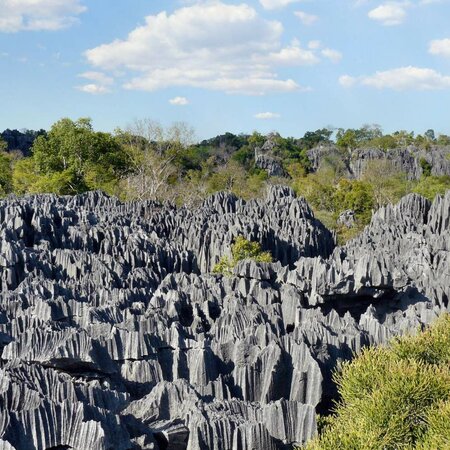
Rock formations in Tsingy de Bemaraha National Park
4. Flora and Fauna in Madagascar
Madagascar has been separated from the mainland for a long geological period and thus belongs geo-ecologically to the "older islands" of Earth's history. Therefore, Madagascar is home to an exceptionally large number of unique animals and plants that can be found nowhere else on Earth. The great diversity of animal and plant species and the presence of diverse ecosystems make Madagascar one of the most extensive biodiversity environments on this planet.
Before the arrival of the first settlers, Madagascar was presumably predominantly forested. In coastal areas with sufficient rainfall, tropical lowland rainforests developed, of which only four percent remain. The largest contiguous and still existing rainforest areas are located on the Masoala Peninsula. From east to west, the rainforest gradually transitions through moist savannas into dry and, in the south, thorny savannas, which today cover almost 90 percent of the island. Reforestation attempts have so far been largely unsuccessful, and natural re-cultivation of fallow land by the forest hardly occurs. Despite legal prohibitions, about 50 percent of the savannas are burned annually by cattle herders, resulting in an extremely impoverished secondary savanna with resistant but nutrient-poor grasses such as Aristida. More than 12,000 different plant species can be found on Madagascar.
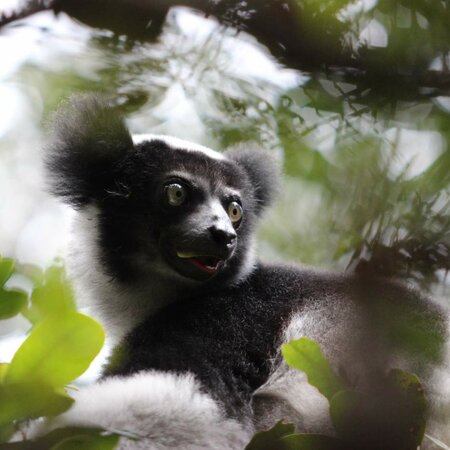
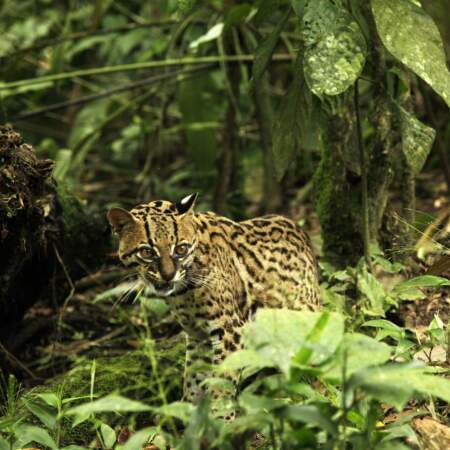
Predators on Madagascar are only represented by smaller, cat-like mammals, the euplerids, and crocodiles. Lemurs and tenrecs, on the other hand, are unique to Madagascar. Among the reptiles, many chameleon species are noteworthy, which are endemic to Madagascar. The once distinctive megafauna of Madagascar, which included the gigantic elephant birds, various species of giant lemurs, and the Malagasy hippopotamus, is now extinct.
5. National Parks and Nature Conservation in Madagascar
Environmental protection is enshrined as a state objective in the Malagasy constitution. A government plan aims to triple the existing area of the current 47 official nature reserves. However, enforcing the protected status proves difficult because the people living in the affected areas have other interests and reject nature conservation. According to relevant reports, precious woods continue to be illegally logged and offered on the international market in Madagascar on a large scale.
About half of the 47 designated nature reserves in Madagascar have national park status with partially special protection. The following national parks are among a selection of particularly worthwhile areas:
Montagne d’Ambre National Park
Montagne d’Ambre National Park was already designated in 1958 in the north of Madagascar on an area of about 182 km². It is located at an altitude between 1000 and 1445 m above sea level. The landscape is characterized by a volcanic rock massif with several waterfalls and crater lakes. The fauna and flora are represented, among others, by many different bird species, lemurs, and orchids..
Tsingy de Bemaraha National Park
The national park that emerged in 1997 from the strict nature reserve Tsingy de Bemaraha on an area of about 723 km² is located in the province of Mahajanga in the western lowlands of Madagascar and is part of the UNESCO World Natural Heritage. The karst landscape, with striking, closely spaced limestone needles (tsingys), forms bizarre rock formations in the shape of a stone forest. The plateau areas are partly forested. An annual rainfall of around 1000 mm leads to the gorges at the foot of the tsingys being extremely humid, while savanna-like conditions prevail on the karst areas. In lower areas there are lakes and mangroves. 86% of the 650 plant species found in the national park are over 80% endemic. An ecological peculiarity is the Malagasy dry forest. The diversity of habitats leads to a great wealth of animal species, such as fossa, ring-tailed mongoose, lemurs, bats, and reptiles, including the Malagasy ploughshare tortoise, leaf-tailed geckos, and stump-tailed chameleons.
Isalo National Park
The Isalo National Park, designated in 1962 in the southwestern high plateau of Madagascar, covers an area of about 860 km² and is one of the most popular national parks in Madagascar. The average altitude is 1000 m above sea level. The national park is characterized by the wildly rugged Isalo mountain range with deep gorges, bizarre rock formations, and eroded caves. A variety of endemic plant species as well as lemurs (ring-tailed lemur, Verreaux’s sifaka, red-fronted lemur), fossas, and Madagascar boas can be observed in the park.
Ankarafantsika National Park
Ankarafantsika National Park near the town of the same name was already established in 1927 as one of the oldest nature conservation parks in Madagascar on an area of 1350 km² in the northwestern lowlands of the island. The national park borders the eastern bank of the Mahajamba river and is home to the beautiful Lake Ravelobe. Among the lush vegetation of the national park are over 800 plant species, a large proportion of which are endemic to the park. Eight different lemur species, including the mongoose lemur, Coquerel's sifaka, and western fat-tailed dwarf lemur, 129 bird species including the Madagascar fish eagle, chameleons, iguanas, snakes, and freshwater turtles can be observed among the animals.
Ranomafana National Park
Ranomafana National Park, located in the area of the eastern escarpment of the Malagasy high plateau near the city of Fianarantsoa, is known both for its waterfalls and thermal baths as well as for its diversity of lemur and bird species. It was designated as a national park in 1991 on an area of 416.00 km² and is part of the UNESCO World Natural Heritage in Madagascar. Thanks to the evergreen rainforest, with which the park is abundantly covered, a great variety of orchids, tree ferns, and mosses thrive here. The park is home to a total of twelve lemur and 118 bird species, of which 68 are threatened with extinction in Madagascar.
6. Population in Madagascar
The Malagasy population is divided into various subgroups called Foko, which, although they have developed a common identity through the shared Malagasy language, differ considerably in their social institutions and traditions. The Malagasy state officially recognizes 18 such Foko, among which the Merina, who maintained their own state structure in the center and southwest of the country until the end of the 19th century, represent the largest ethnic subgroup. Other population groups include the Betsileo, Sihanaka, and the Bezanozano, as well as a number of other regionally based Foko. Besides Malagasy people, Comorians, French, Chinese, and Indians also live on the island, but the proportion of foreigners among the Malagasy is very low. Madagascar itself is a country of emigration with over 100,000 emigrants living in France. The average age of the rapidly expanding population is 18.3 years, with the total population in Madagascar already having grown to over 29 million inhabitants. One reason for this population growth of 2.25% is the high fertility rate of an average of 4.45 children per woman.
Madagascar is united above all by the shared Malagasy language, spoken by the majority of all Malagasy people. Only in a few villages on the west coast is Makoa spoken by immigrants from Mozambique, and among the people on Nosy Be there are bilingual Swahili speakers. In addition to Malagasy, French is an official language in Madagascar, and from 2007 to 2010, English was also officially spoken.
In Madagascar, 52% of the population follow indigenous beliefs (animism, ancestor worship), among Christians, 23% belong to the Roman Catholic Church and 18% to Protestants, and a further 7% of the population are Muslim. Malagasy ancestor worship is part of the religion of almost all Malagasy people. The belief in Fady, established rules about what one should avoid in certain places or at certain times, or at least out of consideration for potential negative consequences, is also common among officially Christian or Muslim Malagasy.
7. Politics and Economy in Madagascar
Madagascar's political system is constitutionally a centralized, presidential republic with a directly elected president and a bicameral system. The National Assembly is composed of 160 members elected for four years. The second chamber, the Senate, represents the six Malagasy provinces of Antananarivo, Antsiranana, Fianarantsoa, Mahajanga, Toamasina, and Toliara. One third of the senators are appointed by the president, the rest are elected. Each province has a provincial parliament, whose members are directly elected by the respective population. The heads of government of the individual provinces are appointed by the president. As part of moderate decentralization, Madagascar has also been divided into 22 regions. These too are headed by chiefs appointed by the president.
Madagascar's economy has typical characteristics of a developing country. According to the gross domestic product of 2021, Madagascar still ranks among the poorest countries in the world, with nearly 50% of the population living on less than 1 US dollar per day.
The main export products are coffee, fishery products, vanilla, cloves, and sugar, as well as mining products, especially nickel, ilmenite sands, and graphite.

On the way to southern Madagascar
8. Transport Network in Madagascar
Of the nearly 50,000 km road network in Madagascar, only 5,000 km are paved. During the rainy season, many roads, especially those leading to remote areas, are therefore not passable with regular cars. The most important long-distance routes are the busiest Route Nationale 1, which runs from Antananarivo via Analavory to Tsiroanomandidy, the economically most important Route Nationale 2, which connects the capital with the port of Toamasina, and Route Nationale 4 between Antananarivo and Mahajanga.
The total rail network in Madagascar is 1,030 kilometers long, most of which dates back to the colonial era. The Tananarive-Côte-Est Line (T.C.E.) connects the capital with the East Coast port of Toamasina and via two branch lines with Antsirabe and Lac Alaotra, while the Fianarantsoa-Côte-Est Line (F.C.E.) connects the Betsileo capital in the highlands with the port city of Manakara. This means that four of the eight most important cities in Madagascar are connected to the small railway network.
The most important seaport is Toamasina on the east coast of Madagascar.
Domestic air traffic within Madagascar has been of great importance since the 1950s due to poor road conditions. To this day, Malagasy airlines operate about 40 domestic destinations in Madagascar. From the aviation hub of Antananarivo International Airport, flights depart to Paris, Johannesburg, and Bangkok, among others.
9. Cities and regions in Madagascar
Madagascar is divided into 22 regions, which replaced the provinces that existed before the constitutional amendment of 2009. The regions are subdivided into 119 districts, and the lowest administrative level is formed by the communes. In addition, there are the core areas of the Foko in neighborhoods or entire villages with self-government.
The largest cities in Madagascar are (2023):
Antananarivo
Madagascar's capital has over 1.9 million inhabitants and is the country's geographical, administrative, and industrial center. Sights include the rebuilt Royal Palace Rova, the Zoma markets, where practically everything the island has to offer is traded, the Tsimbazaza Zoo, which offers an excellent insight into Madagascar's endemic animal species, as well as the pirate museum opened in 2008, which tells the story of Madagascar's pirates.
Toamasina
With over 300,000 inhabitants (2023), Madagascar’s second largest city has the only natural harbor in the country on the east coast. After being repeatedly destroyed by cyclones, the present industrial cityscape is merely the result of the last reconstruction at the end of the 1980s. Nevertheless, the city is a popular starting point for trips to the beaches of the nearby surroundings and for tours to the touristically well-developed island of Sainte Marie.
Antsirabe
With almost 240,000 inhabitants, the country's third largest city, located centrally in Madagascar’s interior, is an important center of the Betsileo. During colonial times, Antsirabe was known for its thermal springs. Today, Antsirabe, with the largest textile factory in the country, is Madagascar’s second largest industrial hub. The colonial-era train station in Antsirabe is worth seeing.
Mahajanga
Mahajanga has over 140,000 inhabitants (2023) and is located on the northwest coast of Madagascar, in the Bay of Bombetoka and on the Betsiboka River. The capital of the Boeny region is a starting point for excursions to the Betsiboka estuary plain and the many beaches in the area as well as to the national parks Baie de Baly, Tsingy de Namoroka, and Ankarafantsika, all located within approximately 150 km.
10. Culture and sights in Madagascar
The unique wildlife, and especially the lemurs that have made Madagascar world-famous, are the main focus of any visit to the island in its numerous and scenically interesting national parks and protected areas. In addition, the cultural remains of past times, such as the royal hill of Ambohimanga near the capital Antananarivo, are also worth seeing. Madagascar's diverse culture is the result of the customs and traditions of a wide variety of ethnic groups who immigrated to the island from different regions of the world over time. Traditions and taboos are still held in higher esteem than the law in many places. An important ceremony is the Famadihana, the reburial of the dead, which is carried out after several years of resting in the grave with corresponding celebrations, dance, and music. In general, music is above all an important cultural asset in Madagascar, which is played in many places and at every celebration on the most diverse and largely natural-material instruments.
11. Public holidays with fixed dates in Madagascar
| 1 Jan | New Year's Day |
| 29 March | Martyrs' Day |
| 1 May | Independence Day |
| 1 May | Labour Day |
| 26 June | Independence Day |
| 25 Aug. | Assumption Day |
| 1 Nov. | All Saints' Day |
| 11 Dec. | Republic Day |
| 25 Dec | Christmas |
12. Medical information for Madagascar
Medical care in Madagascar cannot be compared with European conditions and is highly problematic in terms of personnel, technology, equipment, and hygiene. English-speaking medical professionals are hardly found outside the capital. Due to the limited availability of medication, it is advisable to carry a well-equipped travel pharmacy.
It is strongly recommended to take out travel health insurance valid for Madagascar before starting the trip, which includes an ambulance rescue flight or repatriation to Germany.
Although there is no reliable data on the epidemiology of HIV/AIDS in Madagascar, the risk of infection is generally high through sexual contact, intravenous drug use, and blood transfusions.
Malaria occurs in the lowlands of Madagascar, with particular risks on the coasts. There are lower risks in the highlands and in the capital Antananarivo. Occasional, mostly locally limited outbreaks of chikungunya fever, Rift Valley fever, and West Nile fever caused by mosquito bites must be expected. In addition to active mosquito protection, malaria prophylaxis and consultation with an experienced tropical medicine specialist are urgently recommended.
There is a risk of transmission of bilharzia for tourists when swimming in freshwater bodies, and for the population especially during rice cultivation throughout the country, but particularly in the western lowlands with the provinces of Toliara and Mahajanga. Bathing in open freshwater should therefore generally be avoided.
Due to the low hygiene standards and limited water supply, diarrheal diseases such as cholera and typhoid infections are possible, especially during the rainy season. However, most diarrheal diseases can be prevented by appropriate food and drinking water hygiene.
The plague has been endemic in the central highlands of Madagascar since 1921. By far the most common form, bubonic plague, occurs regularly with up to 500 cases annually in the provinces of Antananarivo, Antsiranana, Fianarantsoa, Mahajanga, and Toamasina, with the number of cases rising at the start of the rainy season. In 2017, an unusually early and large outbreak occurred, in which many cases of the highly contagious pneumonic plague were also reported.
Health hazards also come from some poisonous species of spiders and scorpions and other animals with potentially strong venom effects (e.g. certain sometimes conspicuously colored caterpillars, centipedes, frogs, etc.). Increased caution is therefore advised regarding where you step and where you sit or lie down. Before use, check blankets and bed sheets, clothing, footwear, and headgear for possibly present, poisonous vermin.
A yellow fever vaccination is advisable and mandatory if arriving from a yellow fever area. The Federal Foreign Office recommends reviewing and updating the standard vaccinations for children and adults according to the current vaccination schedule of the Robert Koch Institute for your journey.
You will find further information and current notices from the Federal Foreign Office of the Federal Republic of Germany.
13. Travel information for Madagascar
Current travel and security information, details on entry and exit, and special criminal law notes and behavioral recommendations for your stay in Madagascar are available from the Federal Foreign Office of the Federal Republic of Germany.
14. Foreign representation in Madagascar
| Embassy of the Federal Republic of Germany in Antananarivo | |
| Jurisdiction/ Consular district: |
Madagascar and Mauritius (no issuance of visas.) |
| Location: | Antananarivo |
| Street address: | 101, Rue du Pasteur Rabeony Hans (Ambodirotra), Antananarivo 101 |
| Postal address: | Ambassade de la République fédérale d'Allemagne, B.P. 516, Antananarivo, Madagascar |
| Telephone: | +261 20 222 38 02, +261 20 222 38 03, +261 20 222 16 91, In case of consular emergency please contact the embassy Dar es Salaam/Tanzania |
| Fax: | +261 20 222 66 27 |
| E-mail: | Contact form |
| Website: | http://www.antananarivo.diplo.de |
| Official languages in the host country: |
French |
| Embassy of the Republic of Madagascar in Berlin/Falkensee | |
| Location: | Falkensee |
| Street address: | Kommandantenstraße 80 |
| Postal address: | Seepromenade 92, 14612 Falkensee |
| Telephone: | 03322 231 40 |
| Fax: | 0 3322 23 14 29 |
| E-mail: | [email protected] |
| Website: | http://www.botschaft-madagaskar.de |
15. Information Sources for Madagascar
German Weather Service
Federal Foreign Office of the Federal Republic of Germany
Wikipedia