Everything you need to know about Libya
Travel map of Libya by the tour operator OVERCROSS
- Climate
- Animals and Plants
- National Parks and Nature Conservation
- Population
- Medical Care
- Languages
- Religions
- Human Rights
- Cities
- Natural Resources and Agriculture
- Roads
- Holidays
|
Although the travel destination Libya is 1,775,500 km² in size and Switzerland could fit into it about 40 times, there are essentially only 2 climate zones.
On the one hand, there is the Mediterranean climate along the coast, with humid and mild winters and average daytime temperatures around 12°C. The summers in this climate zone are dry and the average temperature in August is 28°C. Spring and autumn often bring a dry, hot and dusty wind across the region, which is called Gibli.
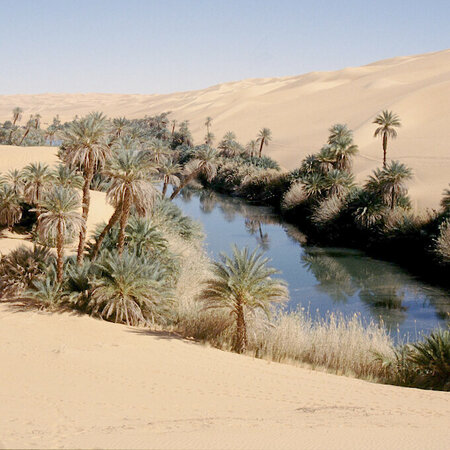
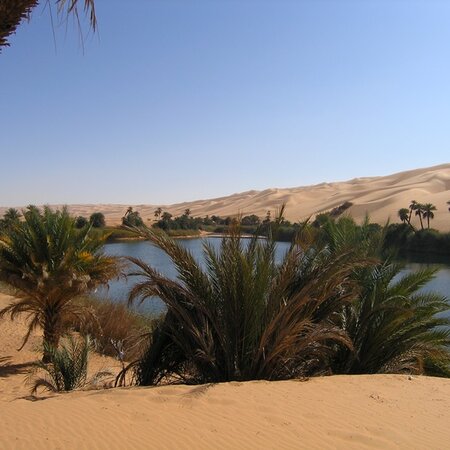
The other climate prevailing in Libya is the desert climate in the interior. Here it almost never rains and the temperature fluctuations are extremely high. In summer, the temperatures can rise above 50°C, in winter they drop below 0°C.
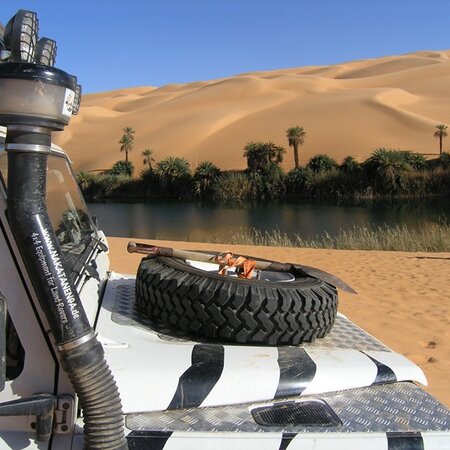
The mountainous regions near the coasts are lined with typical Mediterranean plants, in the coastal lowlands steppe vegetation dominates. The animals found in Libya, which you can admire on an enduro tour through the desert, are typical for arid regions. Here, for example, the dorcas gazelles, hyenas, jackals, desert jerboas, desert foxes are to be mentioned. Additionally, there are also anubis baboons, wild donkeys, hares, and various snakes, birds of prey and scorpions.
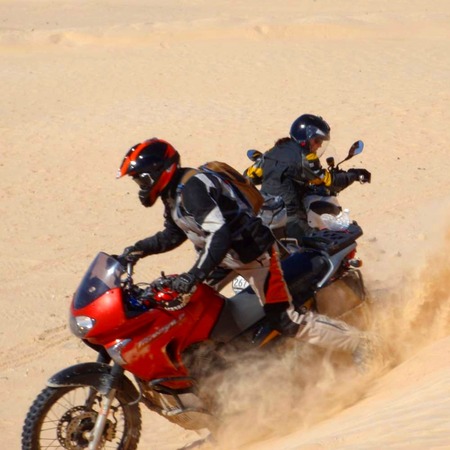
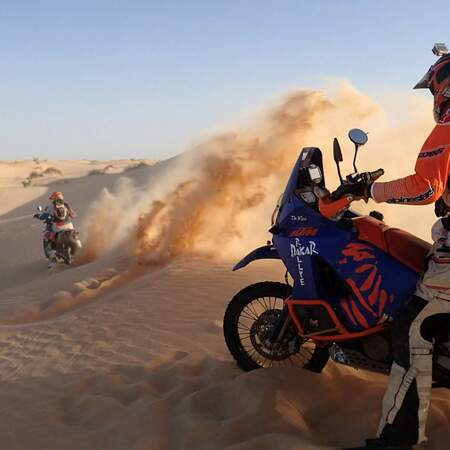
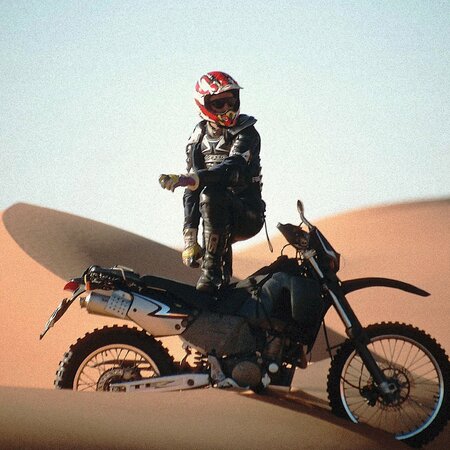
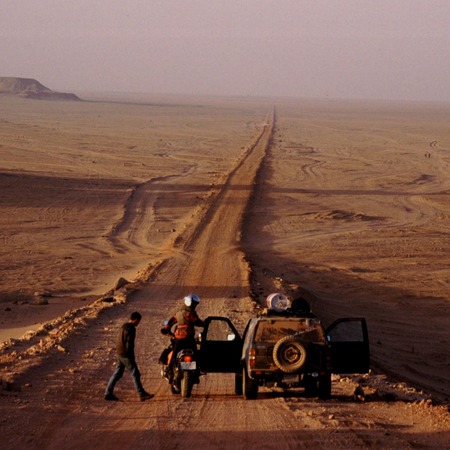
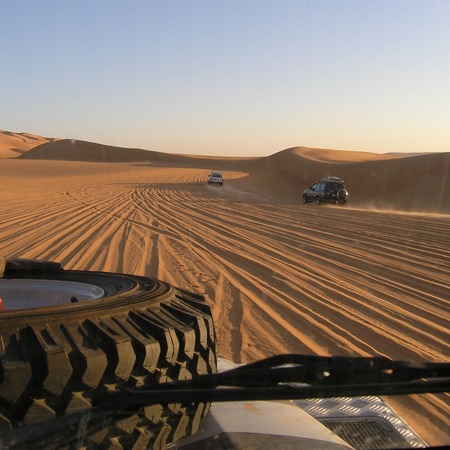
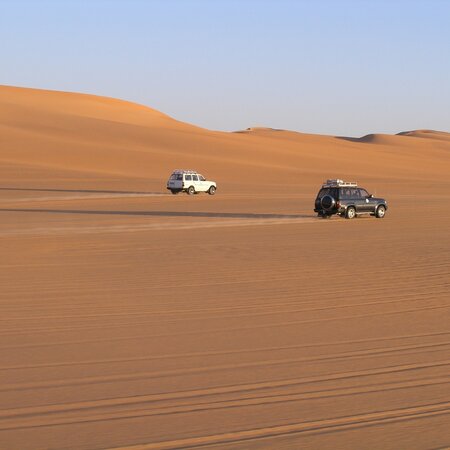
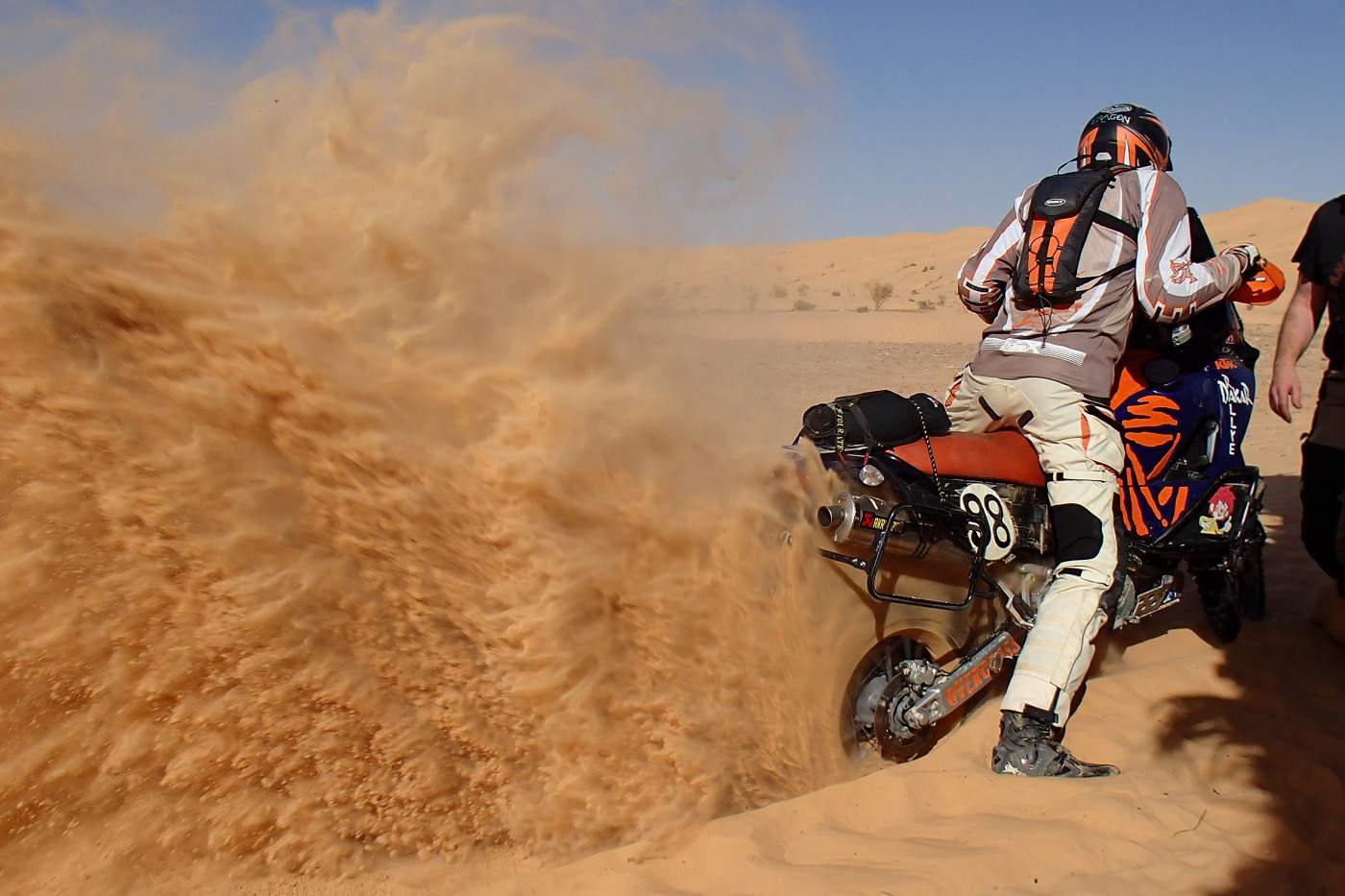
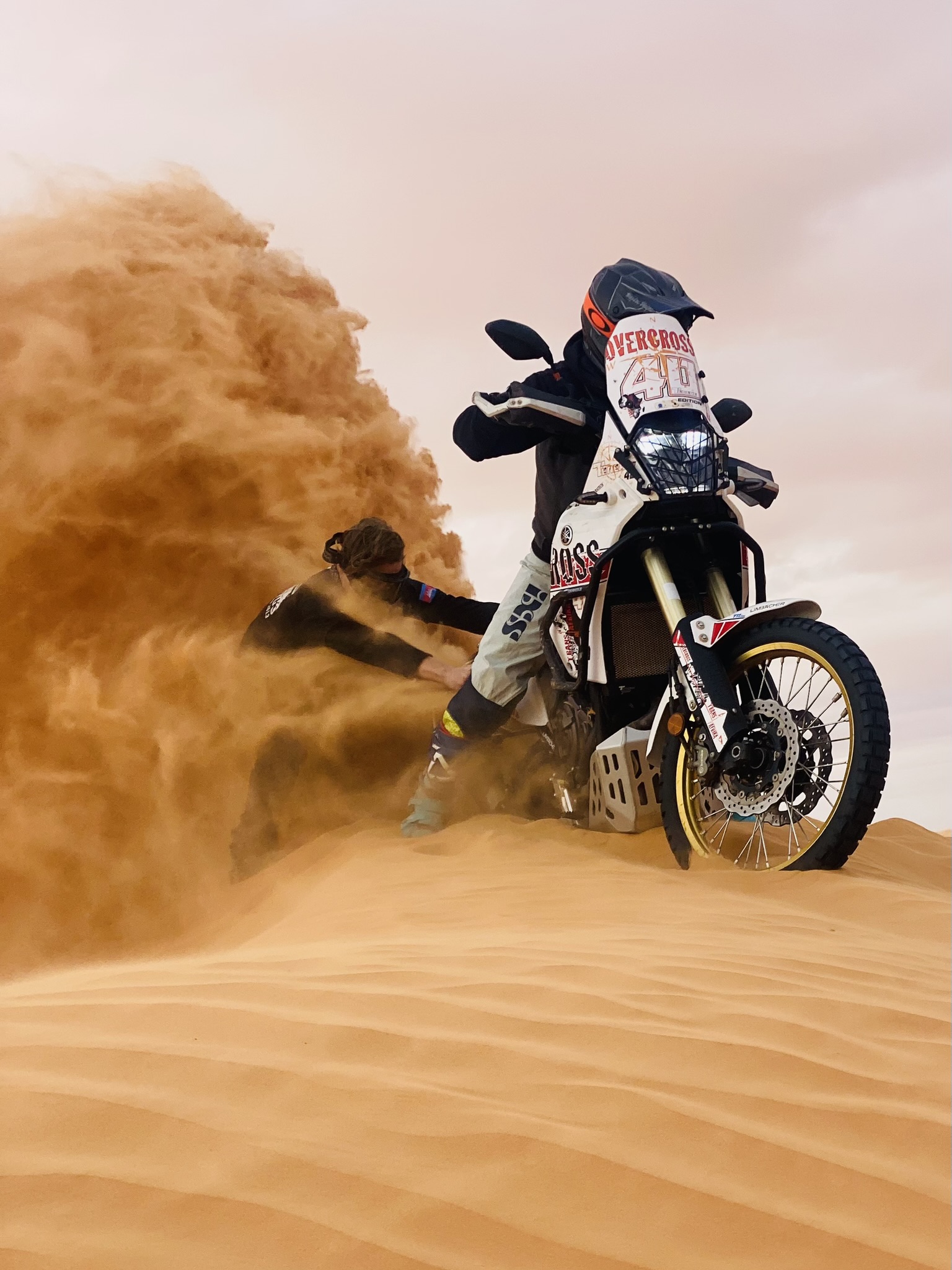
Except near the coast, there is hardly any noteworthy vegetation in the country; on our OVERCROSS adventure trips, we are mostly riding our enduros in the desert.
National Parks and Nature Conservation
In Libya, there is the Akakus National Park, which was named after the nearby Akakus Mountains. Other than that, there is no real space for nature conservation in Libya, as the state is too focused on its oil.
97% of Libya's population consists of Berbers, who, in terms of language and culture, have been largely Arabized, similar to the Tunisians, and consists of Arabs.
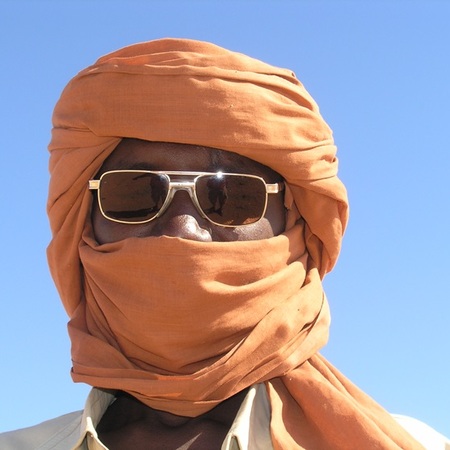
The proportion of Berbers still living in traditional tribal societies is only 25%. In the western part of the country, the nomadic Tuareg people live, who are also a Berber people, and in the southern parts of the country live the Tubu, who are a different nomadic people of the Sahara, formerly hostile to the Tuareg and fought for control over the desert. This conflict ended when the two major desert peoples joined forces in the early 1990s to fight the government of Niger, from which the Tuareg and Tubu wanted to regain control over their part of the desert. Foreigners in Libya include, among others, Italians, whose number quickly declined after Gaddafi's revolution, as they left the country. Other minorities in the country are Greeks, Turks, Levantines, Maltese, Egyptians, Tunisians, Indians, and Pakistanis.
For thousands of years, there were Jews on the coasts of Libya, but during World War II they were mercilessly persecuted, and nearly every Jew was forced to emigrate, mostly to Israel, which had just been founded at that time. In 2002, the last Jewish woman in Libya died, so there are exactly 0 Jews in the country.
As in many countries in Africa, a yellow fever vaccination is not required if you enter directly from Germany, only if you are coming from an area of infection, such as the more southern African countries like Tanzania, Kenya, but also Senegal or Ivory Coast. Anyone traveling to Libya should check and update their standard vaccinations; if there are further questions about vaccinations, a doctor should be consulted, as we as a tour operator cannot/do not provide further information on this topic.
Especially in rural areas, medical care cannot be compared to Europe, as, if a doctor is found at all, basic hygiene standards are often lacking. Language barriers may also arise here. After the armed conflicts during the Arab Spring in 2011, most state and private hospitals and clinics in the cities have become operational again.
The official language is Standard Arabic, but a large part of the population speaks the Libyan-Arabic dialect. Minority languages include Berber languages such as Nafusi (101,000 speakers), Ghadames (42,000 speakers), and Tamasheq with 17,000 speakers. The language of the Tubu is called Tedaga and is spoken by about 2,000 members of this people. English and Italian (which is still understood in the big cities, as Libya was formerly an Italian colony) are common as trade languages. Under Gaddafi, Berber languages and Italian were banned to further advance the Arabization of the country. After his overthrow, these languages were revived and legalized.
Libya is a Muslim state, but under Gaddafi's rule any religion was accepted, as long as it did not conflict with the traditions of the country. Until now, state and religion were separated. Women are mostly treated equally in Libya, but that does not stop some Libyan men from being shocked by the introduction of compulsory military service for women.
Lately, there has been an increasing shift toward orthodox Islam, and more and more women can be seen wearing veils.
97% of the population are Sunni Muslims. The traditional Berber tribes belong to the special Muslim community of the Ibadites. Only about 70,000 Catholics still live in the country, mainly because Gaddafi closed most Christian churches after taking power. As mentioned above, there have been no Jews in Libya since World War II.
Many human rights organizations such as Amnesty International report that the situation in Libya has not improved after the revolution, but has even worsened for some groups. Violent riots against the Tubu people repeatedly occur because, due to their skin color, they are branded as Gaddafi mercenaries. Organizations such as Open Doors report that Christians are now also being persecuted; in 2011 some were even arrested because of their religious affiliation. Radical Islamist groups have become stronger since Gaddafi's fall.

|
City |
Population |
|
Tripoli |
1,103,000 |
|
Banghazi |
650,000 |
|
Misrata |
380,000 |
|
al-Aziziyya |
290,000 |
|
Tarhuna |
220,000 |
Natural Resources and Agriculture t
Libya is the country with the largest oil and gas reserves in all of Africa. Otherwise, there is hardly any mining, as the state prefers to focus on oil, which makes up 70% of the gross domestic product.
Agriculture is not a particularly large sector in Libya and on our group tours through the country, we will mainly encounter fields and farms in the coastal areas, as it is not profitable to farm in the rest of the country. Here, mainly olives, wheat, dates, vegetables and citrus fruits are grown. For years, the government has been promoting the irrigation of fields in the desert, but many environmental activists criticize this as harmful to the environment.
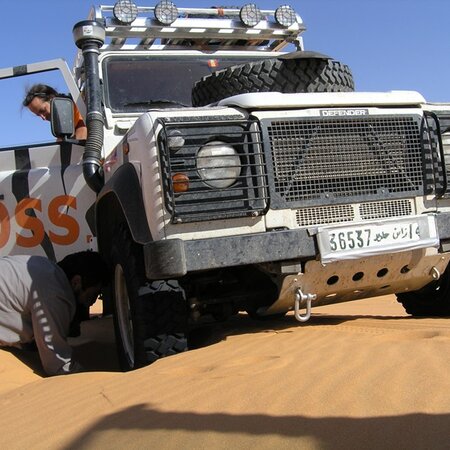
Our travel destination Libya has a comparatively very good infrastructure for the region with a network of 47,600 km of paved roads and about 35,600 km of tracks. However, we prefer to be out in the desert on our enduros and in our 4x4 off-road vehicles.
15 Feb. Mouloud (Birthday of the Prophet).
2 Mar. Proclamation of State Authority
28 Mar. Day of the Expulsion of the British.
11 June Day of the Expulsion of the US Army.
28 July Ascension of the Prophet.
30 Aug. Eid al-Fitr (End of Ramadan).
1 Sept. National Day.
1 Sept. Revolution Day.
7 Oct. Day of the Expulsion of the Italians.
6 Nov. Eid al-Adha (Festival of Sacrifice).
26 Nov. Islamic New Year.
5 Dec. Ashoura.