Everything you need to know about Australia
Travel map of Australia from the tour operator OVERCROSS
- General Information
- Climate
- Flora and Fauna
- National Parks and Conservation
- Medical Information
- Population
- Politics and Economy
- Transport Network
- Cities and States
- Culture and Sights
- Public Holidays
- Travel Advice
- Foreign Missions
- Sources and Links
1. General Information
Continent: Australia
Geographical Location: Oceania, continent between the Indian Ocean and the southern Pacific Ocean
Highest Point: Mount Kosciuszko 2,228m
Longest River: Murray River, 2375km
Form of Government: Parliamentary Monarchy
System of Government: Parliamentary Democracy
Languages: English
Neighboring Countries: Australia has no direct neighboring countries
Capital: Canberra
Area: 7,692,024 km²
Population: 25,364,000 (as of April 2024)
Population Density: 3.3 inhabitants per km²
Religions: 20.1% other Christian churches, 19.8% Anglicans, 25.6% Roman Catholic, 2.6% Muslims
Currency: Australian Dollar (AUD)
Climate: The north is tropical, followed by a subtropical area, in the south the climate is temperate.
Time Zone: UTC+8 to UTC+11
Dialing Code: +61
Country Code: AU
Electricity: 2/3-pin plug 240V and 50Hz AC / bring travel adapter
Opening Hours: generally weekdays 8:00 - 20:00, weekends 9:00 - 16 or 20:00, liquor stores 9:00 - 22:00
2. Climate
| Sydney | Temp. °C max/min | Hours of sunshine / day | Rainy days | |
| Jan | 27 | 19 | 8 | 10 |
| Feb | 27 | 19 | 7 | 10 |
| Mar | 26 | 17 | 7 | 12 |
| Apr | 24 | 15 | 7 | 11 |
| May | 20 | 12 | 6 | 11 |
| Jun | 18 | 10 | 6 | 9 |
| Jul | 17 | 8 | 8 | 6 |
| Aug | 19 | 11 | 8 | 8 |
| Sep | 21 | 11 | 8 | 7 |
| Oct | 22 | 13 | 8 | 8 |
| Nov | 24 | 15 | 8 | 9 |
| Dec | 26 | 17 | 8 | 9 |
| Darwin | Temp. °C max/min | Sun hours / day | Rainy days | |
| Jan | 32 | 25 | 7 | 20 |
| Feb | 32 | 25 | 6 | 18 |
| Mar | 32 | 24 | 7 | 17 |
| Apr | 32 | 24 | 9 | 7 |
| May | 32 | 22 | 10 | 2 |
| Jun | 30 | 20 | 10 | 0 |
| Jul | 30 | 19 | 10 | 0 |
| Aug | 30 | 20 | 10 | 1 |
| Sep | 32 | 23 | 10 | 2 |
| Oct | 33 | 25 | 10 | 6 |
| Nov | 33 | 25 | 9 | 9 |
| Dec | 33 | 25 | 8 | 13 |
| Esperance | Temp. °C min/max | Sun hours / day | Rainy days | |
| Jan | 30 | 20 | 1.3 | 11 |
| Feb | 28 | 18 | 2.5 | 7 |
| Mar | 25 | 18 | 4.1 | 9 |
| Apr | 23 | 15 | 6.1 | 8 |
| May | 20 | 11 | 7.8 | 9 |
| Jun | 18 | 9 | 8.9 | 9 |
| Jul | 17 | 9 | 7.8 | 10 |
| Aug | 17 | 9 | 7.1 | 11 |
| Sep | 19 | 9 | 4.8 | 11 |
| Oct | 20 | 11 | 3 | 12 |
| Nov | 25 | 13 | 1.9 | 13 |
| Dec | 26 | 18 | 1.2 | 11 |
Different seasons, as we know them, only occur in the south of Australia. In the north, there are already tropical temperatures due to the proximity to the equator, with little seasonal variation, the center is characterized by a continental climate with low precipitation. The hottest months are November/December in the north, January in most parts of the country, and February/March in the south and Tasmania. The coolest months are from June to August.
Australia can be well visited at any time of the year; however, there are different conditions due to the various climate zones.
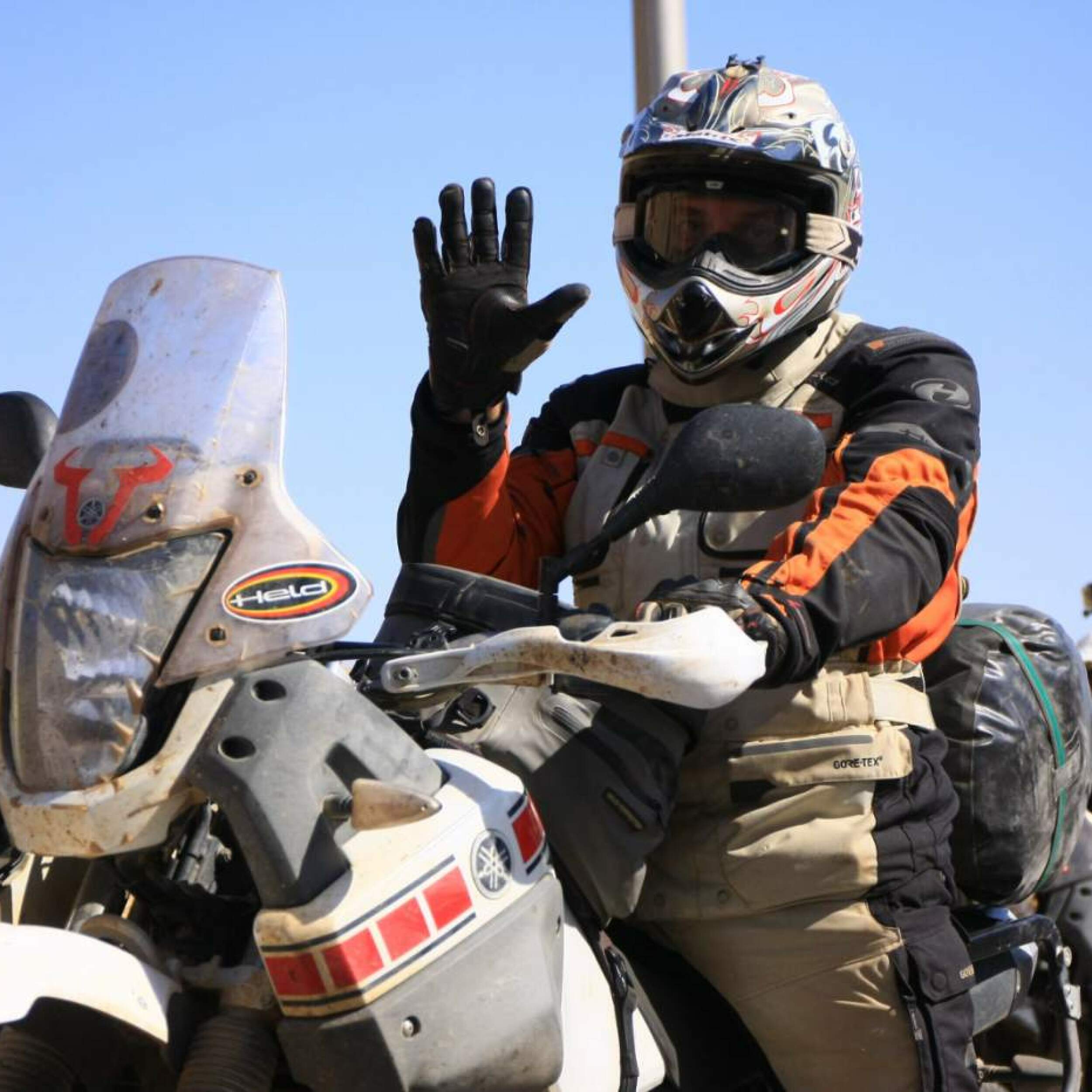
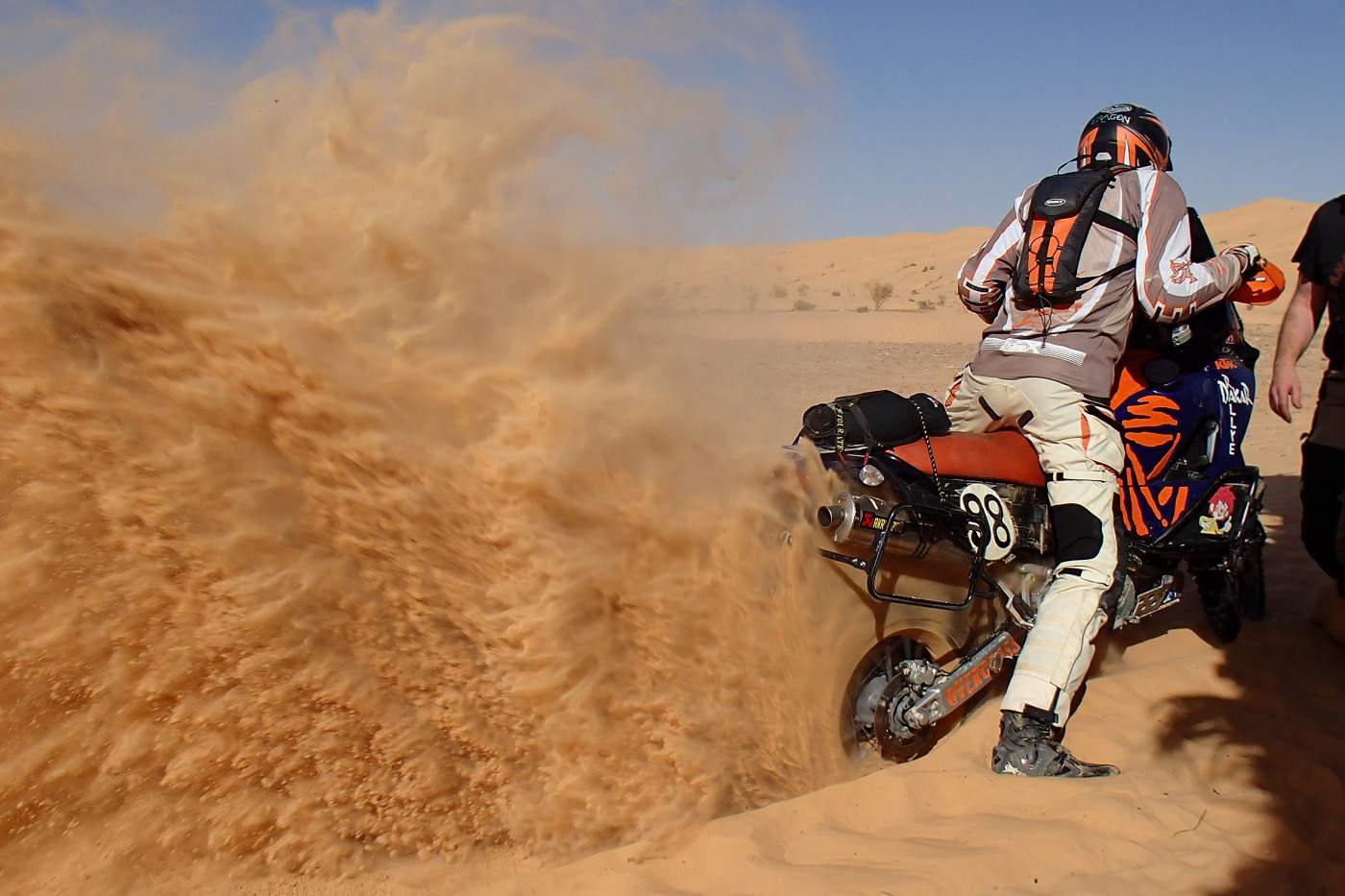
Normally, before traveling, one only seriously thinks about the necessary clothing when encountering a special climate or being restricted in packing quantities. For motorcyclists, especially those who want to venture into the Outback, functionality plays a major role. Motorcycle clothing for extreme demands must meet different requirements than what is worn in temperate zones, corresponding to our climate. It must be airy, but still offer the protection of a standard suit. Special motorcycle suits that are "desert suitable" are therefore necessary.
3. Flora and Fauna
Flora:
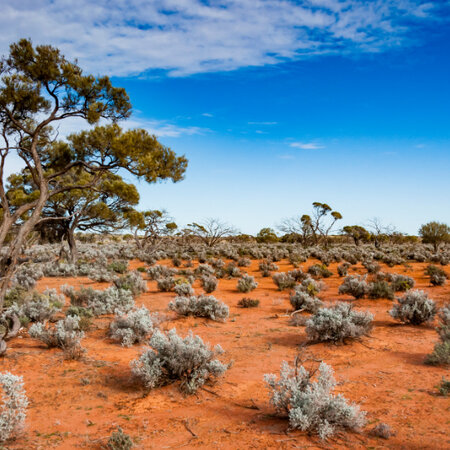
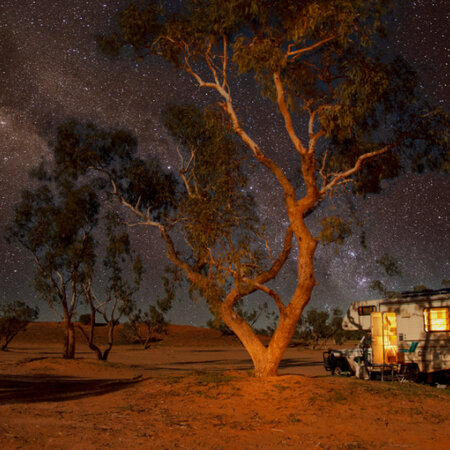
Of the approximately 20,000 native plant species, about 85% are found exclusively in Australia. Eucalyptus and acacia trees are typical of Australian vegetation. There are over 600 species of both. The fast-growing and undemanding eucalyptus tree is found in a variety of environments, including hot and dry central Australia. In the southeast of Australia, there are large forest areas; the densest vegetation can be found in the tropical rainforests of northern Queensland. Extensive deforestation leads to an endangerment of the stock and threatens the biodiversity in the forests. In the arid regions of Western Australia, the baobab tree, also called the bottle tree, appears, which can store water in its trunk. Vast areas of the interior are characterized by grassland, the most significant plant community here is spinifex grassland, which covers about a quarter of the country's area.
Fauna:
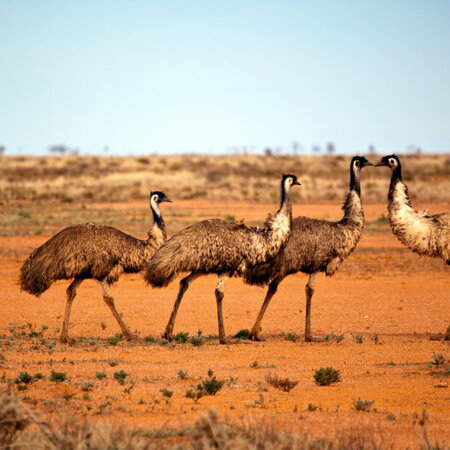
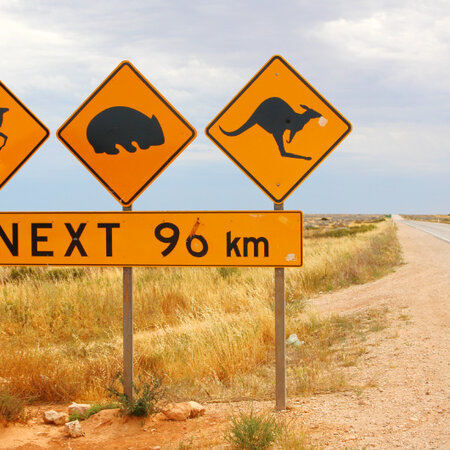
Typical representatives of Australia's wildlife are kangaroos, with over 40 species, the koala, the wombat, the Tasmanian devil, the marsupial mouse, and the genus of possums. Egg-laying mammals (monotremes), found only in Australia and New Guinea, are unique worldwide. In Australia, they are represented by the platypus and echidna. Livestock such as sheep and cattle compete with native animals for habitat, as huge areas are needed for their grazing, especially in steppe and desert-like regions. Australia's birdlife, with its numerous parrots and the Australian kingfisher, is very species-rich. Reptiles such as snakes, turtles, crocodiles, and lizards are also present in Australia. Two thirds of all snake species native to the Australian continent are venomous, and 25 species are dangerous to humans, among the snakes, for example, taipans and tiger snakes. Furthermore, various species of spiders (true widows, Atrax robustus), sharks, and box jellyfish should be mentioned.
4. National Parks and Nature Conservation
Large areas of Australia are not, or only sparsely, inhabited. The center (The Red Centre) of Australia is almost uninhabited. Most Australians live in coastal cities.
In order to protect nature and its beauty, Australia responded early and established nature reserves. The Royal National Park is the oldest national park in Australia and also the second oldest national park worldwide. This first national park in Australia was founded in 1879. Meanwhile, there are several hundred national parks in Australia.
Here is a list of the top 5 national parks in Australia
1. Kakadu
On around 20,000 sq km unfolds a unique diversity of species: 30% of all bird species in Australia, rare snakes, crocodiles and alligators, which Crocodile Dundee already approached closely in his film. In addition to the diverse wildlife, Kakadu National Park stands out for its impressive landscape of wetlands, waterfalls and caves with ancient rock paintings – best explored on a guided hike with Aborigines!
2. Uluru-Kata Tjuta (Northern Territory)
The national park with Australia's most famous landmark: Uluru, better known as Ayers Rock. In the heart of the Outback lies this reddish-brown desert, from which the 350-meter-high rock majestically rises. The rock group appears like an oasis, surrounded by lush vegetation that defies the dry climate. The highlight at Uluru: the world-famous play of colors, when the sun rises or sets and, depending on weather conditions, bathes Ayers Rock in glowing red or mystical blue light.
3. Wilsons Promontory
Wilsons Promontory National Park is the most visited and, for many, the most beautiful national park in Victoria. On its vast grounds, every traveler will find landscapes to their liking: 1,300 kilometers of coastline with romantic coves and wide beaches, dense rainforests, fern valleys, and granite cliffs inland. This is paradise for surfers and hikers alike. The hiking routes last from 30 minutes up to several days. No matter which path you take, you'll encounter wombats, parrots, seagulls, and countless other fascinating animals everywhere.
4. Port Campbell
The renowned travel portal gotsaga.com chose Port Campbell as one of the 10 most beautiful national parks in the world. The most famous landmark in its area is the rock formation of the “Twelve Apostles” on the south coast of the continent. In addition to these, you can discover other impressive limestone formations, gorges, and rock needles around every corner, which mainly provide ideal habitats for seabirds. On the beaches of the Twelve Apostles or London Bridge, you can experience unforgettable sunsets and catch penguin colonies returning home. You can reach Port Campbell by rental car from Melbourne via the panoramic Great Ocean Road in 3-4 hours. There’s a wide range of accommodation options and several towns in the area.
Twelve Apostles, Victoria (Australia)
5. Blue Mountains
Just 100 kilometers west of Sydney are the Blue Mountains with their rugged slopes and wide valleys. The mountains are named after the blue haze that rises above them from the surrounding eucalyptus forests in clear weather. There are numerous lookout points that offer views over the characteristic stone plateaus, some of which are over 1,000 meters high. The most famous representatives of the Blue Mountains: the “Three Sisters”, which are among the most photographed subjects in Australia.
5. Medical Information
There are no vaccination requirements, but the vaccination schedule from the Robert Koch Institute is recommended for children and adults and should be checked and completed in connection with the trip. LINK!!!!!!!
This also includes vaccinations for adults against tetanus, diphtheria, pertussis, and, if necessary, polio, mumps, measles, rubella, influenza and pneumococci.
For certain risks, vaccination against hepatitis A and B is also recommended; consult an experienced tropical/travel medicine specialist about this. A valid yellow fever vaccination is only required if entering from a yellow fever area, see www.who.int
There are no vaccination requirements for direct entry from Germany.
The Australian emergency number is 000. Through this number, you can connect with the police, ambulance, or fire department.
6. Population
Australia has about 25.4 million inhabitants. Of these, nearly 91% are of European descent, 7% come from Asia, 2.6% of the population identify as being of Australian (indigenous) descent. Of the European population of Australia, around 15% now come from non-British countries, especially from the former Yugoslavia, Serbia, but also Italy and Greece. Since the 1960s, there has been an increasing migration from Asian countries such as China. Life expectancy is 84 years for women, 80 years for men, and 72 years for Aborigines. Since the vast natural landscapes of Australia are practically uninhabitable, there is a strong concentration of the population in the cities. Thus, about 92% of the population live in the metropolitan areas on Australia’s coasts. However, living together with so many different cultures is not always easy. Aborigines are still considered second-class people today, even though they have had the right to vote since 1962 and have regained about a third of the Northern Territory since 1977, as well as control over their most important religious sites, such as Uluru (Ayers Rock). Even today, there are almost no opportunities for Aborigines to integrate in Australian cities, so they are often victims of disease and poverty.
7. Politics and Economy
Politics:
Australia is a democracy with a Senate, House of Representatives and Prime Minister. The head of state is the British monarch Charles III, currently represented by the Governor-General Quentin Bryce. The continent is divided into eight states. Queensland, New South Wales, Western Australia, Tasmania, Northern Territory, Victoria, South Australia and Australian Capital Territory. Government Since May 23, 2022, the Labour Party with Prime Minister Anthony Albanese forms the Australian government. The Foreign Minister is Penny Wong.
Economy:
The Australian economy is doing well and continues to grow. Tourism and education play an important role and are therefore supported accordingly. In addition, agriculture is a crucial economic factor, with 80% of agricultural products being exported. Other exports include gems, beef, wool and gold. Import products are predominantly machinery, pharmaceutical goods and equipment for mining. The most important mineral resources are coal, iron ore, gold, diamonds and uranium. Locals pray that the mining boom will never come to an end.
8. Transport Network
The rail network in Australia is by far not as developed as in Europe. The number one public means of transport is the bus, and Australia is covered by a well-developed bus network that even reaches remote and small places in the outback. However, most tourists in Australia prefer their own transportation, renting or buying a car. The roads are excellently developed. If you want to drive yourself, you only need to note that Australia has left-hand traffic. But in this regard, Australians have also made good arrangements for their overseas guests. Time and again, there are large lettered signs painted on the roads to remind you which side of the road is the correct one. If you find the distances between locations too great, or simply don’t have the necessary time to drive from one place to another, the airplane is a good option. Due to the long distances, there are numerous flights at regular intervals (sometimes hourly), especially connecting the major cities of Sydney, Melbourne, Brisbane and Perth. The national airline Qantas, with its subsidiary Jetstar, has its own low-cost airline like Tigerair, Virgin, and these days tickets for flights are sometimes even cheaper than bus and train tickets.
9. Cities and States
10. Culture and Sights
The sacred mountain Uluru
The nearly 350-meter-high and over 500-million-year-old Ayers Rock is illuminated red by the sun. The massive monolith, whose surface is crisscrossed by vertical grooves, extends over a length of 3 km and a width of 2 km. Most of this massive rock, which now belongs to the Uluru-Kata-Tjuta National Park spanning over 1,300 square kilometers, is hidden beneath the surface of the Australian outback.
The Great Barrier Reef
The Great Barrier Reef is undoubtedly the largest coral reef on Earth. It is located off the northeast coast of Australia and has been a UNESCO World Heritage Site since 1981. The Great Barrier Reef is counted among the current seven natural wonders of the world. The unique coral landscape attracts countless divers and snorkelers to Australia every year. But it is not only the corals themselves that make a beautiful photo motif. Over 1500 species of fish are native to this reef alone. Many colorful exotics, whose bright colors stand out against the stunning blue of the underwater world.
Sydney Opera
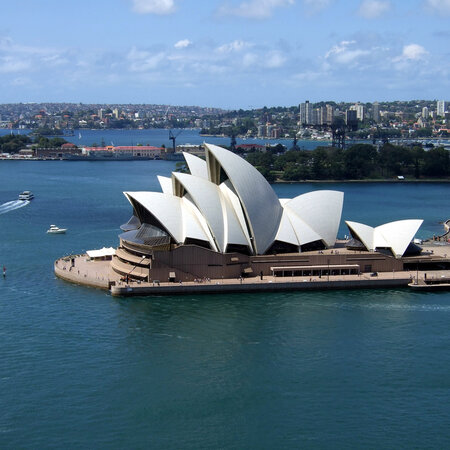
The otherwise cosmopolitan Australians were, after the completion of the Sydney Opera, which was finally achieved in 1973 after fourteen years of construction, initially skeptical for a long time and did not really appreciate the value of their great gem. They called the futuristic building construction “circus tents in a storm”. Since Jorn Utzon, the greatest Danish architect of the 20th century, was significantly involved in its construction, his masterpiece was initially known in Australia as the “Danish cupcake”. Today, however, the Sydney Opera enjoys the reputation of an outstanding landmark of Australia all over the world. The modern architecture of the opera demonstrates Australia's openness to the world.
Twelve Apostles
Not too far from the cult metropolis Melbourne, the “Twelve Apostles” are located in the state of Victoria. Rising up to 60 meters from the sea, these sometimes massive limestone rocks are among the attractions of Port Campbell National Park, which is located west of Melbourne. In 2005, another of the apostles collapsed into the sea, so there have only been eight of the 12 Apostles since then. In geologically short periods of time, more apostle victims can probably be expected in Australia.
Kakadu National Park
About 170 kilometers east of the city of Darwin is Kakadu National Park. Established in 1981 and covering more than 19,800 square kilometers, this protected area has held UNESCO World Heritage status as both a natural and cultural site since 1992. Kakadu National Park impresses with its diverse fauna and flora, the variety of landscape formations, and an unmatched number of ancient rock paintings, which are cultural and historical attractions not only in Australia but worldwide. The landscape of the national park alternates between high plateaus formed of sandstone that drop steeply and ruggedly at their edges. The almost 230 km long South Alligator River, which rises in the south of the protected area at an altitude of 235 meters, together with its rainforests, swamps, mangrove forests, impressive waterfalls, and all its tributaries up to its mouth in the Van Diemen Gulf, belongs to Kakadu National Park. More than 60 different mammals, nearly 300 bird species, 50 freshwater fish species, and over 10,000 insect genera are among the attractions in the animal world of Kakadu National Park. The diversity of this unique World Heritage Site is also reflected in more than 1,700 plant species, including numerous endemic genera.
Fraser Island
With 1,840 km², Fraser Island, which is called “K’gari” (Paradise) by the Aboriginal people and has been a UNESCO World Heritage Site since 1992, is almost twice as large as Germany’s largest island, Rügen. The vast and still-growing Fraser Island was formed by deposits of sand released by erosion of the “Great Dividing Range”, the mountain massif located on the east coast of Australia. Among the attractions on Fraser Island are the nearly 200 freshwater lakes, which are home to numerous freshwater turtles and fish species and have especially clear water. The habitats that have developed on the island also include attractions such as eucalyptus forests, bushland, and mangrove swamps. Tropical rainforests have formed on sand dunes, contributing to a diverse fauna and flora. Among the more than 350 bird species in the “Paradise” of Fraser Island are terns and Australian oystercatchers. In the coastal waters of Australia around this paradise island live humpback whales, dugongs, sea turtles, and dolphins.
Blue Mountains
Sixty kilometers west of Sydney rise the "Blue Mountains." The Blue Mountains are part of the mountain range called the "Great Dividing Range," which runs along the entire east coast of the Australian continent. Especially due to the variety of eucalyptus species, the attractions of the Blue Mountains were included in the UNESCO World Heritage in 2000. The light mist made up of essential oils evaporating from the eucalyptus leaves covers the mountain landscape and creates a special light diffusion, which in daylight appears as a blue shimmer and gave the "Blue Mountains" their name. The Blue Mountains, which climb up to 1,000 meters near the town of Katoomba, are the source of many rivers that over thousands of years have carved deep valleys into the sandstone mountains. The Blue Mountains, which stretch about 300 kilometers from north to south, begin in the south at the Nepean River with a diameter of 30 kilometers and reach further north—almost touching the Pacific—a width of 200 kilometers.
11. Public Holidays
If public holidays in Australia fall on a Saturday or Sunday, then the following Monday or Tuesday is declared a public holiday.
| Public Holiday | Date |
| New Year / New Year | 1 January |
| Australia Day | 26 January |
| Good Friday / Good Friday | variable |
| Holy Saturday / Holy Saturday | variable |
| Easter Monday / Easter Monday | variable |
| ANZAC Day | 25 April |
| 1st Christmas Holiday / Christmas Day | 25 December |
| 2nd Christmas Holiday / Boxing Day | 26 December |
12. Travel Information
Safety advice from the Federal Foreign Office indicates no particular warnings.
Here is a list of general things you should keep in mind in Australia.
Sun Protection
The Australian sun is very intense. Whenever possible, wear a T-shirt, a hat and sunglasses and use sunscreen with SPF 30+, even on cloudy days. If you spend the whole day outdoors, you should regularly renew your sun protection.
Bushfires – Fires in General
Bushfires can break out in Australia at any time. The period from late spring to summer is particularly dangerous. During this time, you should observe a few simple precautions. Stay informed about the current bushfire danger via TV, radio or newspapers before starting a trip or excursion. When camping, use the designated fire pits and follow the warning notices and fire bans. If you have to make a fire, always extinguish it completely with water.
Sharks and Crocodiles
Attacks by sharks are very rare in Australia but can be fatal. Shark nets, which are stretched in front of the Australian beaches, ensure that they do not come close to the shore. You can further reduce the risk by always swimming at patrolled beaches between the flags and never at dawn or in the dark. Avoid swimming alone and far out, and avoid river mouths and deeper waters.
Crocodiles can be found in the rivers and coastal estuaries of Northern Australia and often change their habitat via the waterway. If you travel through crocodile regions, pay attention to warning signs and do not swim in rivers, estuaries, tidal rivers (rivers subject to tides), deep waters, or at mangrove coasts. Seek advice from a knowledgeable person before camping, fishing, or boating.
Poisonous Animals – Snakes, Spiders and Box Jellyfish
Box jellyfish can be found in tropical waters between November and April. During this period, you can only swim within the nets stretched at most of the heavily frequented beaches. Wear a wetsuit (neoprene suit or appropriate protective clothing) when swimming, snorkeling or diving at the outer Great Barrier Reef. Always pay attention to warning signs. If you set out on a hike through the bush, you can avoid snake and spider bites by wearing closed, sturdy footwear and using your common sense. Seek medical treatment immediately if you are bitten
Travelling through Remote Regions
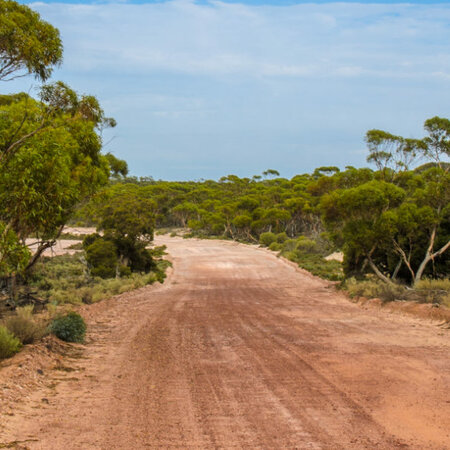
Travel through remote regions should only take place with careful planning. Before you set off with your four-wheel drive or embark on a journey into the outback, check whether your vehicle is roadworthy and equipped with GPS as well as spare canisters of petrol and two spare tires. In addition, you need reliable maps, sufficient food, water, enough petrol, and an emergency plan. Plan your route carefully and inform an outsider of the time of your planned return. Check the condition of the road before you travel, stay close to your vehicle in the event of a breakdown and avoid driving in extreme heat. If you travel through remote regions in a normal car, reduce your speed on unpaved, dusty, or narrow roads and always check the road conditions before leaving main roads. Mobile phones have only limited reception in remote regions. Therefore, ask your mobile provider about the respective coverage areas.
13. Foreign Representations
German Embassy in Canberra: Embassy of the Federal Republic of Germany 119 Empire Circuit, Yarralumla ACT 2600 Tel.: 6270 1911 Fax: 6270 1951
You can find further German representations here.
Australian Embassy in Berlin: Embassy of Australia Wallstrasse 76-79 10179 Berlin Tel.: 030 / 880088-0 Fax: 030 / 880088-210 here.
You can find further Australian representations here.
14. Sources and Links
www.wetterkontor.de
www.auswaertigesamt.de
www.tourism.australia.com
www.australia.gov.au
www.wikipedia.com