At a glance Contents
The Desert Doesn't Lie.
You picture the Sahara: golden dunes, sunset, silence. That exists. But first comes a hundred kilometers of gravel field that your back will feel. First come salt lakes that look like asphalt and are as soft as gum. First comes heat that bends the mind.
Those who know this still love the Sahara — maybe precisely because of it.
The Terrain: What Nobody Tells You Beforehand
Salt lakes (chotts) are the trickiest. Dry on top, soft underneath. A vehicle that stops sinks — not dramatically, but deep enough to need the shovel.
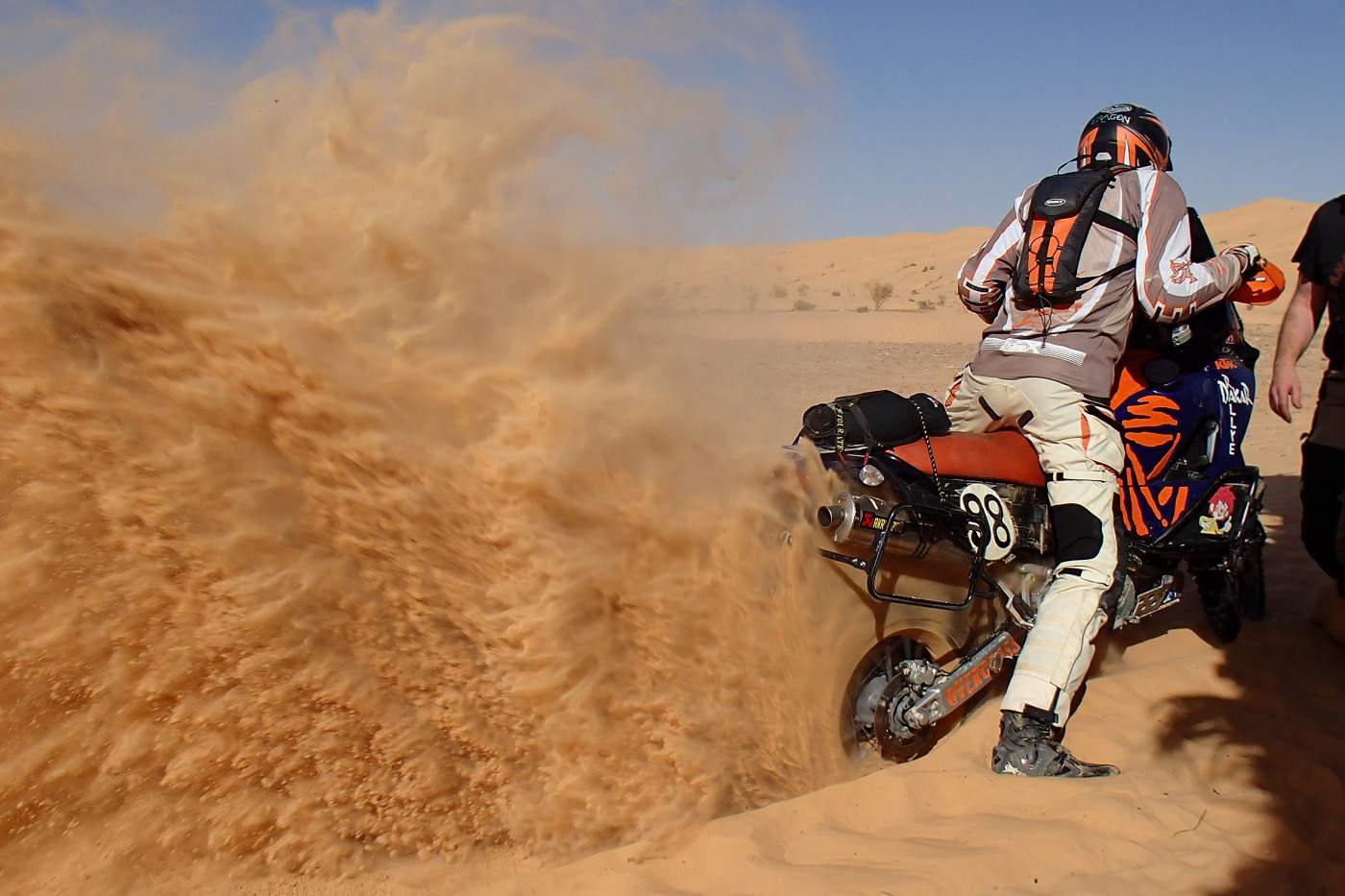
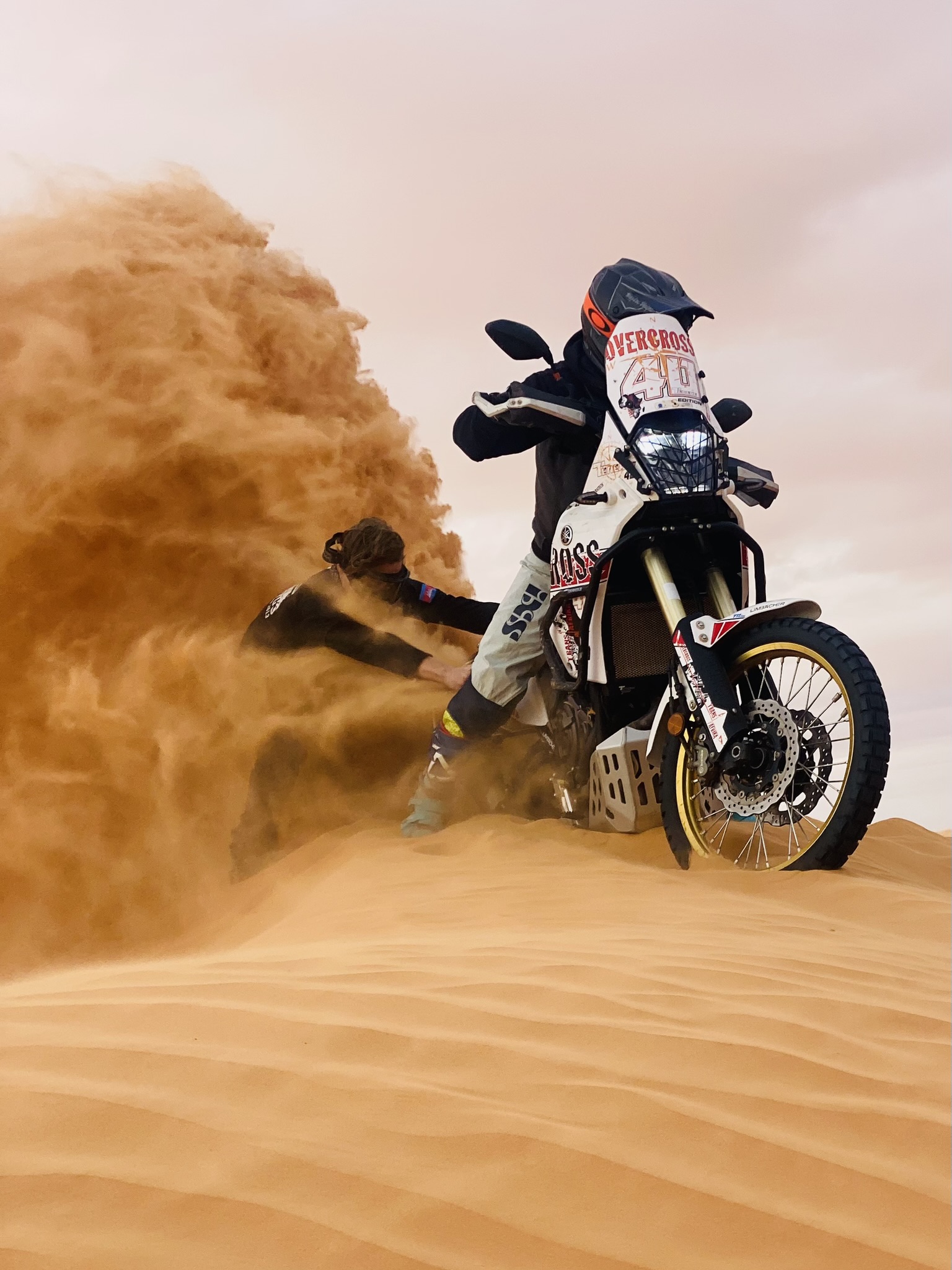
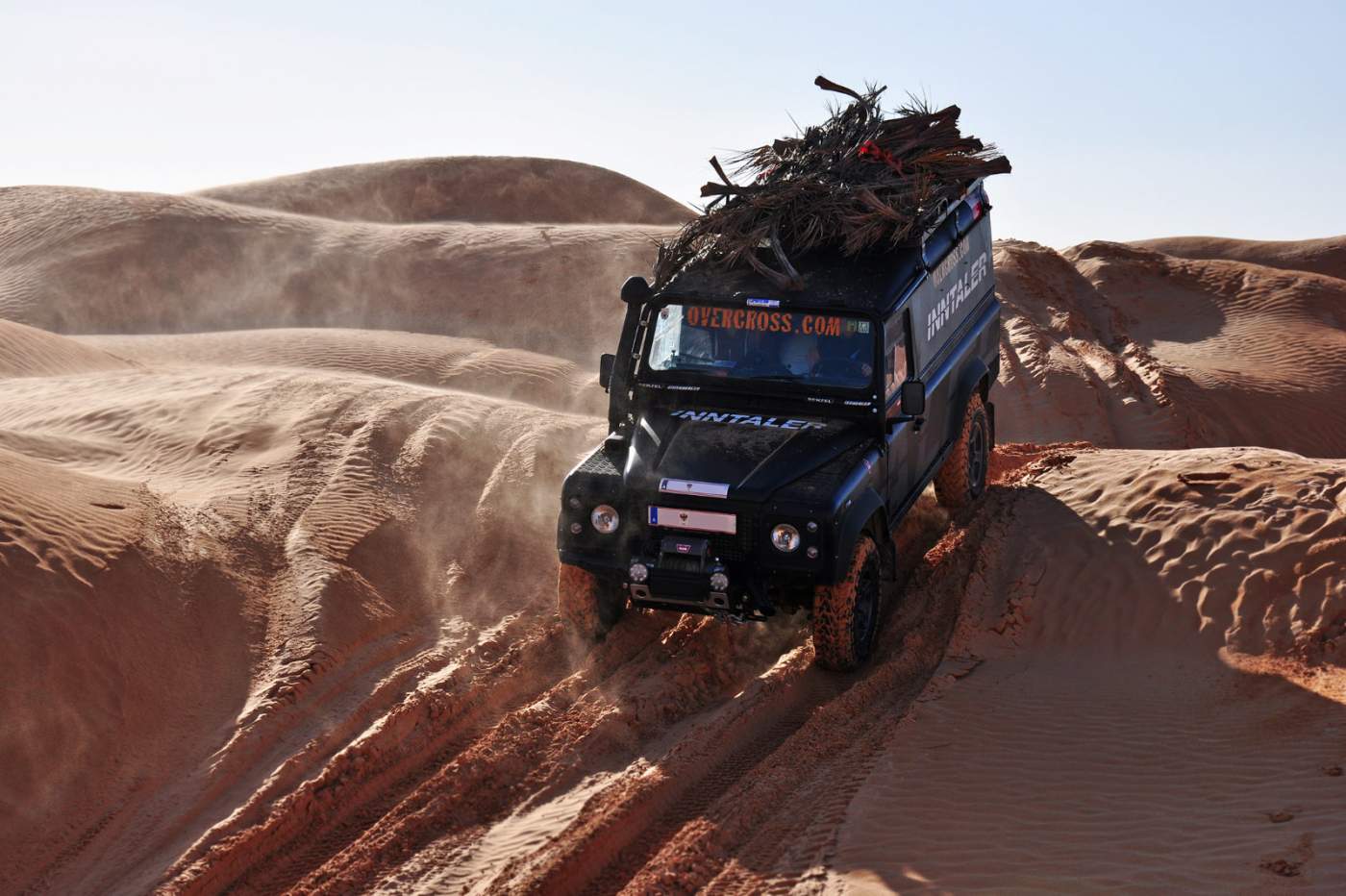
Dunes are the most spectacular and the most difficult at the same time. Build momentum, pressure down to 1.0–1.2 bar, never brake too late. The first dune run ends for 80% of first-timers with the vehicle sideways. That's not failure. That's the lesson.
Preparation: What Really Belongs in the Vehicle
Sand plates are not optional. They are mandatory. Two pieces under the vehicle, secured. Without them you'll be standing in the Tunisian Erg on a Tuesday waiting for someone who has sand plates.
Reifendruckmesser with deflation valve. Pump or compressor. Shovel. Tow strap. These four things solve most situations.
Water: more than you think. Per person per day at least 4 liters — in heat and exertion 6.
What a Group Does to a Tour
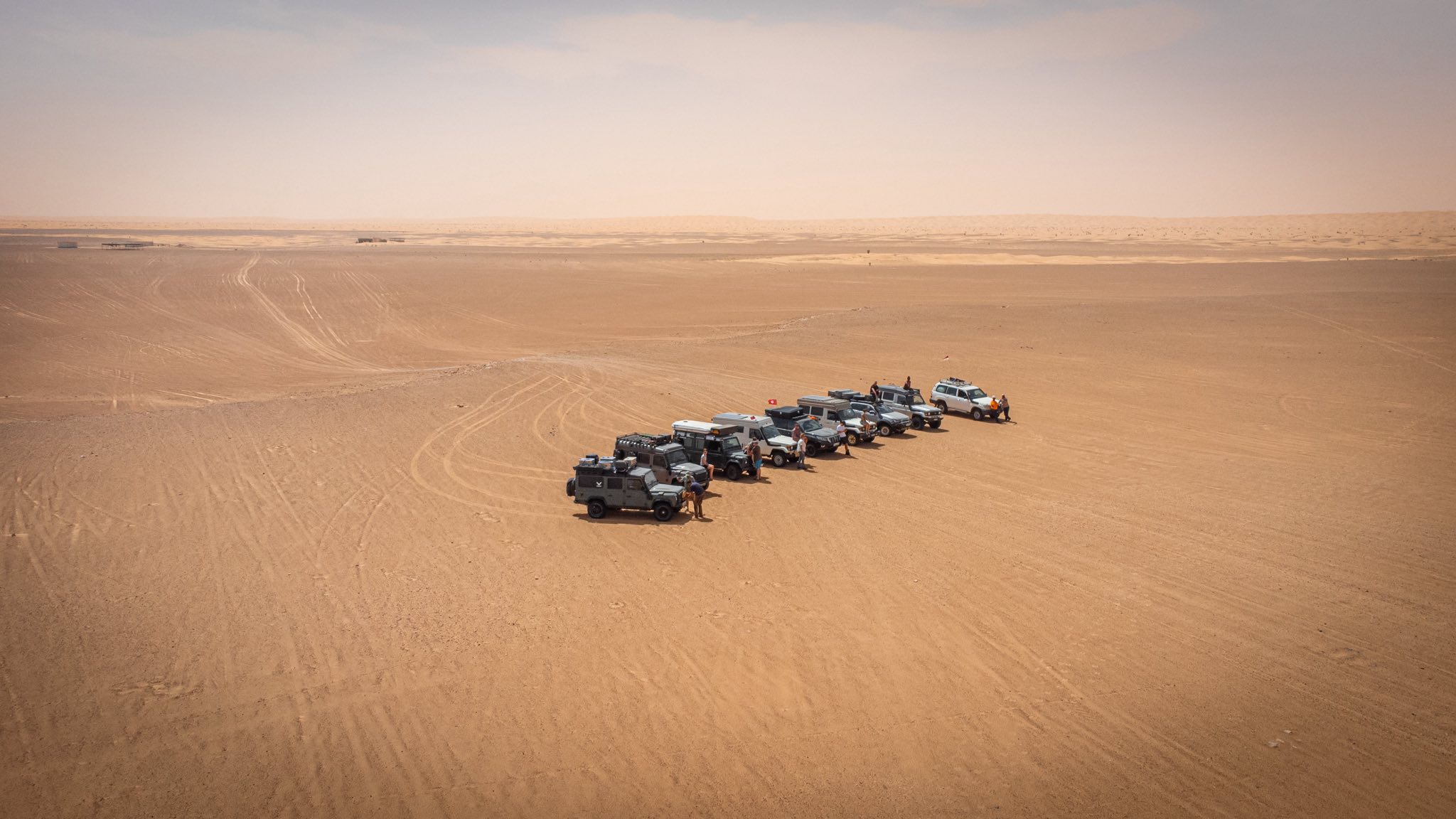
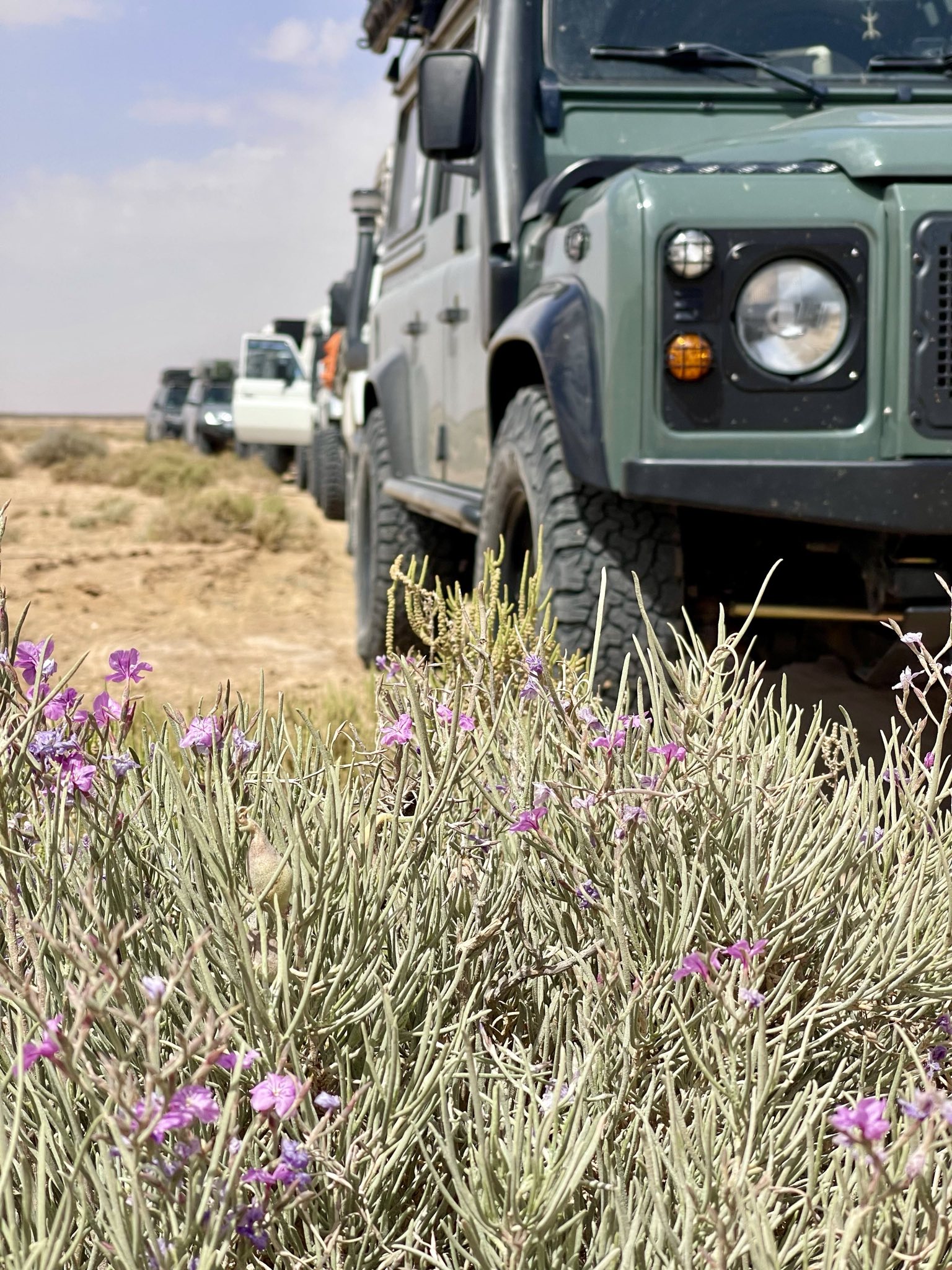
Going into the Sahara alone is possible. Smart it isn't. When you get stuck, you need someone with sand plates or a tow strap.
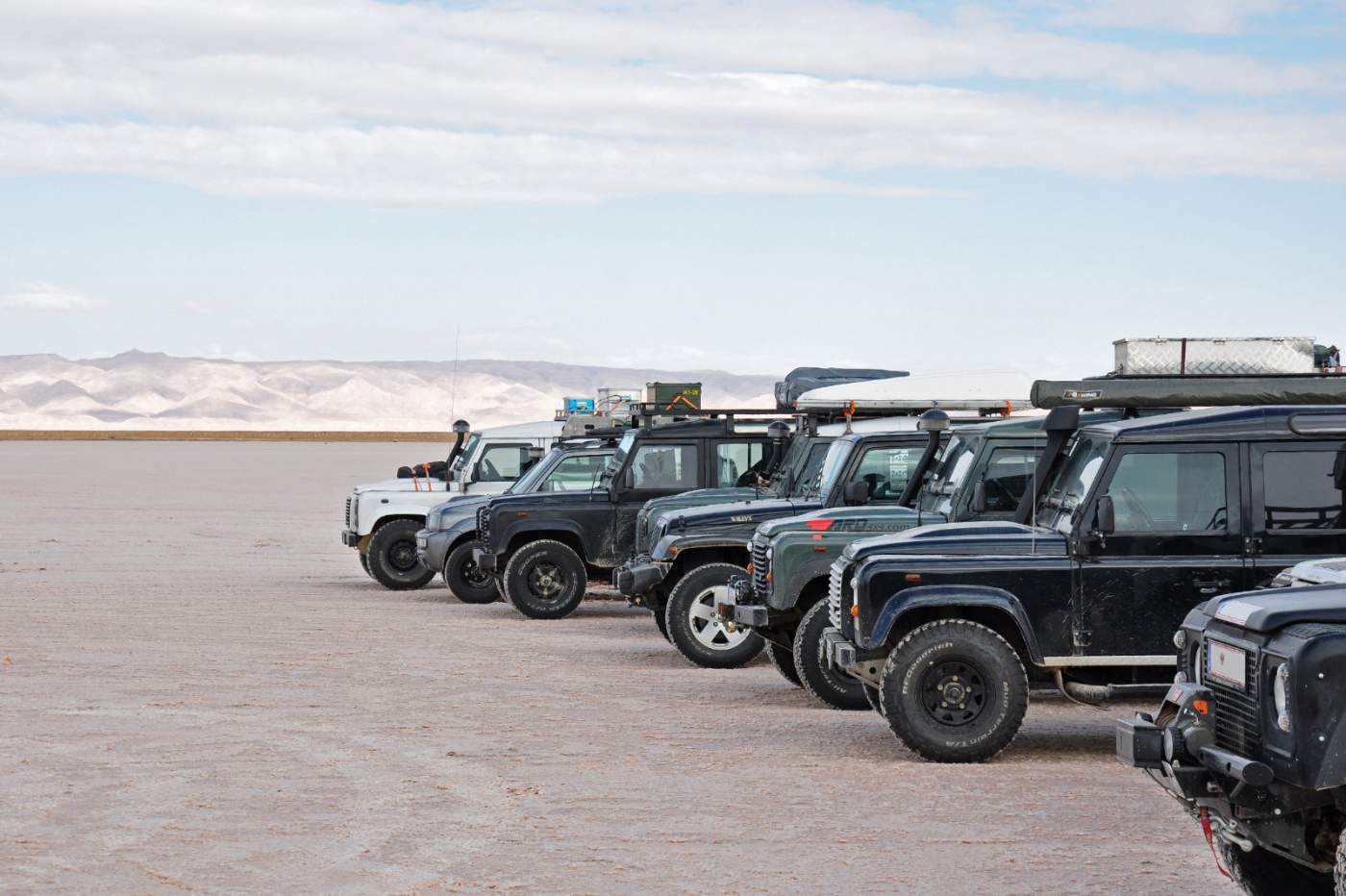
In a group, Sahara journeys change fundamentally. The first mountain of golden sand becomes a shared experience. The afternoon breakdown becomes campfire anecdote material.
The Tunisia 4x4 Family & Friends Tour is based on exactly this principle: your own vehicle, your own pace, but together — with a guide who knows where the chotts are harmless and where they're dangerous.
Encounters in the Desert: What No Travel Catalog Shows
Nomadic families still live in the Sahara. Tea with a Bedouin family, somewhere in the erg, with a camel in front of the tent — that's not a tourist program. It happens.
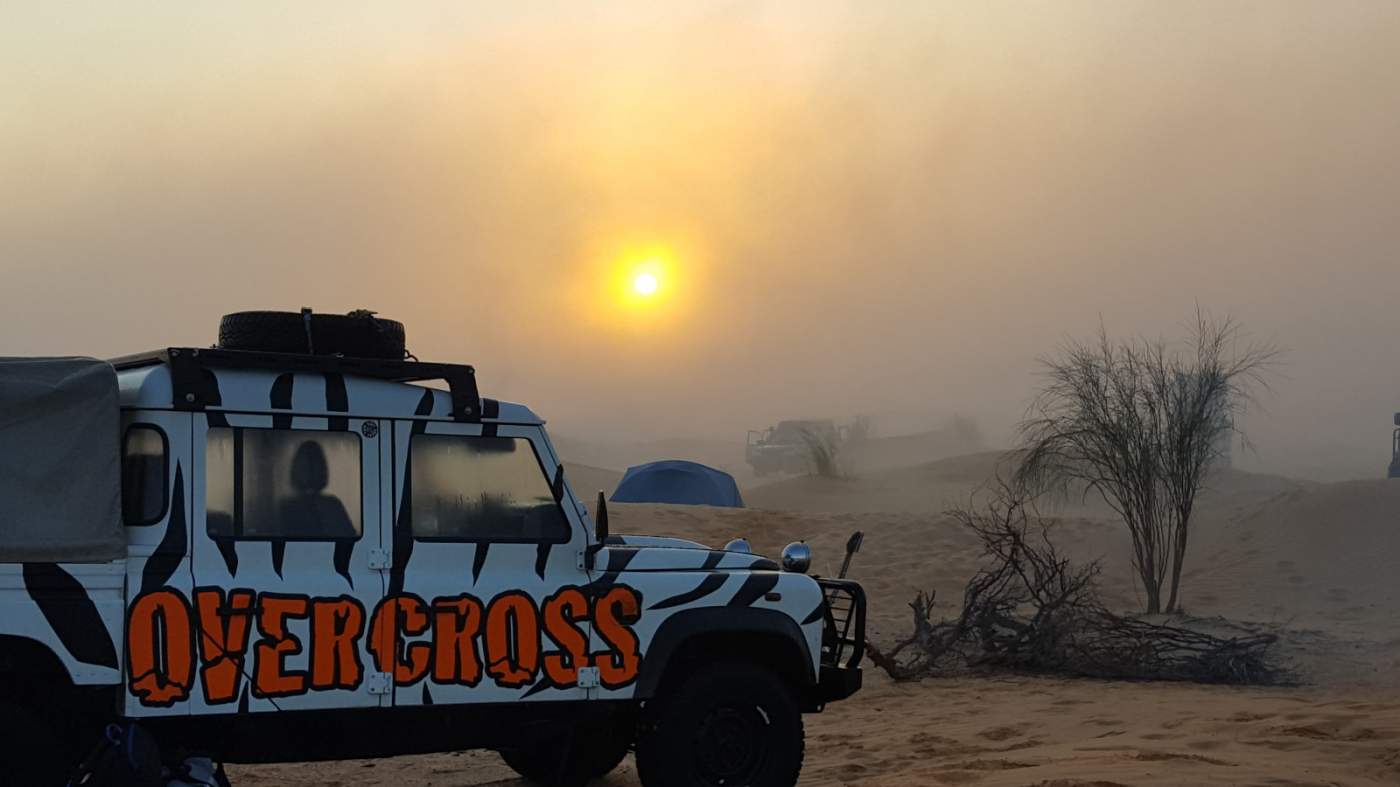
A sunset over the dunes of Erg Chebbi: the dunes glow orange, then red, then purple. That sounds like a postcard. But it actually is like that.
When to Go to the Sahara? And Where First?
October to March. That's the window. In summer, 50 degrees in the Sahara is not uncommon.
Tunisia is better for beginners than Morocco. The infrastructure is more stable, routes are often marked, and distances are more manageable. The New Year's trip through Tunisia shows this in 15 days.
Morocco is more complex, more diverse, more demanding — recommended after the first Sahara experience.