Everything you need to know about Island
Travel map of Iceland by the tour operator OVERCROSS
- Climate
- Animals and Plants
- National Parks and Nature Conservation
- Population
- Medical Care
- Languages
- Religions
- Human Rights
- Agriculture and Natural Resources
- Roads
- Cities
- Holidays

|
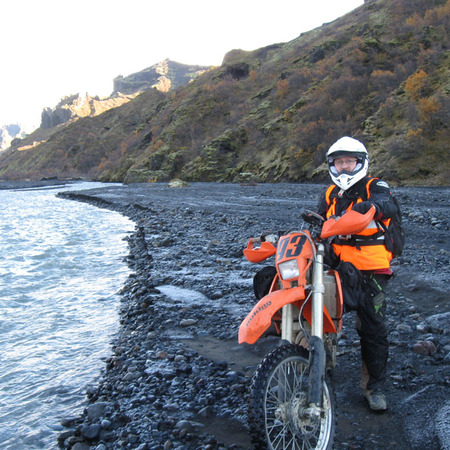
In the travel country Iceland, where we travel in 4x4 off-road vehicles and on enduros, there is a cool oceanic climate. The warm Gulf Stream ensures that Iceland is less cold than other areas at this latitude. The global warming that has become increasingly noticeable in recent decades has also led to a rise in average temperatures in Iceland, resulting in the strong retreat of some glacier tongues and the complete melting of many smaller glaciers, such as the Ok glacier.
The best or warmest travel time for Iceland is from mid-June to the end of August/mid-September.
At this time, there can be daytime temperatures of over 20 °C in some parts of the country, but the average temperatures tend to range between 12 and 15 °C. In contrast, winter brings average daytime temperatures between 0 and 3 °C.
In the south, precipitation amounts to about 2000 mm per year; on the 8,100 km2 Vatnajökull glacier, even up to 4000 mm. The least precipitation is found with under 600 mm in the highlands of northern Iceland.
Iceland’s wildlife is not particularly rich in species. Before the settlers came to our travel destination with their domesticated animals, especially sheep and horses, mainly birds, fish, insects, arctic foxes, seals, and the occasional polar bear that was accidentally brought ashore on an ice floe from Greenland lived here. Mice and rats were also brought into the country by the first “people” on their ships.
In contrast to other animal species, the diversity of birds in Iceland is surprisingly high, especially the so-called bird cliffs attract many birdwatchers from all over the world each year. The puffin is probably the most famous bird in the country. Alongside the puffin, the bird cliffs are home to, for example, guillemots, thick-billed murres, kittiwakes, black guillemots, and also gannets. In the interior of the country you can observe golden plovers, red-necked phalaropes, and red-throated divers, and on the sandurs it can happen that our adventure trip becomes even more adventurous and we are attacked by skuas and arctic terns.

There used to be a lot of forest in Iceland, but after the country was discovered by the Viking Gardar Svavarsson and then settled, the forests quickly vanished and today hardly anything is left of them. The land is shaped by its volcanic, hot soil.
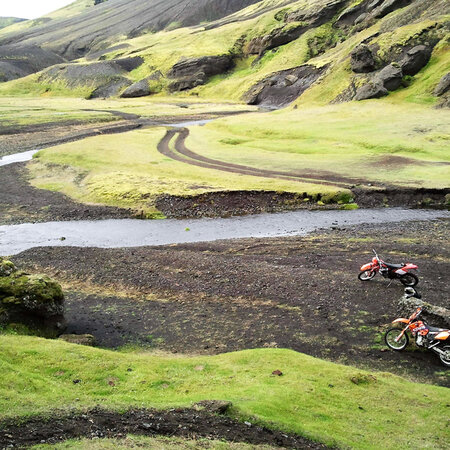
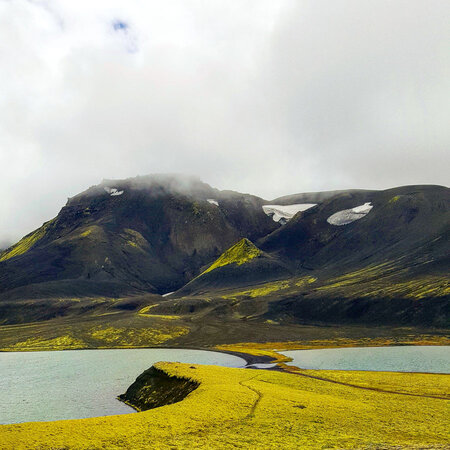
Today, Iceland is mainly covered with grasses, lichens, and mosses. Attempts are being made to re-cultivate forests in Iceland and these attempts have already been successful in some parts of the country.
National Parks and Nature Conservation

There are 3 national parks in Iceland: Þingvellir National Park, Snæfellsjökull National Park, and Vatnajökull National Park, which is the largest national park in Europe. Here, on our motorcycle and 4x4 tours, animals and plants can be admired particularly well.
Only about 376,000 people live in Iceland. Over 95% of the people living in Iceland are Icelanders, less than 5% come from abroad. The Poles are the largest ethnic minority in the country, but Danes, Filipinos, and Germans also live here. Unlike in many other European countries, the population is continuously increasing.
There are no mandatory vaccinations required for entry to Iceland, but the travel operator Overcross recommends checking and updating standard vaccinations.
The level of care in Iceland is good to very good, but you should keep in mind that our off-road vehicle and enduro tours often take us far away from any civilization.
If you have questions about international health insurance, you are welcome to contact the Overcross travel agency.
The Icelandic language is spoken on the island of Iceland. It is the official language of the country, even though that has never officially been confirmed, because it was not necessary, and it developed from Old Norse. Icelanders today can read texts from over 1,100 years ago almost without problems, because the written language has hardly changed during this time, for which the isolation in the North Atlantic is to blame. The pronunciation, however, has changed significantly in the last 1,000 years.
Iceland is very careful to keep its language as pure as possible, which is why it is not uncommon for foreign words to simply be replaced by Icelandic word creations. In today's world, with the Internet flooding the world with more and more, often English, foreign words, the Icelandic people can't succeed 100%, but they make a great effort.

The Evangelical Lutheran Icelandic National Church is state protected and receives support; about 80% of the Icelandic population belong to it. Various evangelical free churches make up 5% of the population, the Catholic Church about 3%. About 0.7% belong to the Ásatrú community (a variant of the old, pagan faith of the Vikings), 0.6% to the Pentecostal Church, and 0.3% identify themselves as Buddhists. In addition, there are Seventh-day Adventists (approx. 0.25%), Jehovah's Witnesses (0.22%), Muslims (about 0.2%), Orthodox churches (0.17%) and Bahai with 0.13%. Only 3.25% of the population belong to no religious denomination.
Iceland respects human rights and democracy is firmly anchored in the country. It ranks second on the Democracy Index, directly after the leader Norway.
Agriculture and Natural Resources
Because Iceland consists mainly of lava deserts and also 11% of the country is covered by glaciers, hardly any agriculture can be practiced. There are also hardly any mineral resources here. Iceland lives mainly from fishing, which accounts for about 75% of exports. Livestock farming also plays a relatively large role.

There are 13,004 km of roads in Iceland, of which 4,331 km are paved.
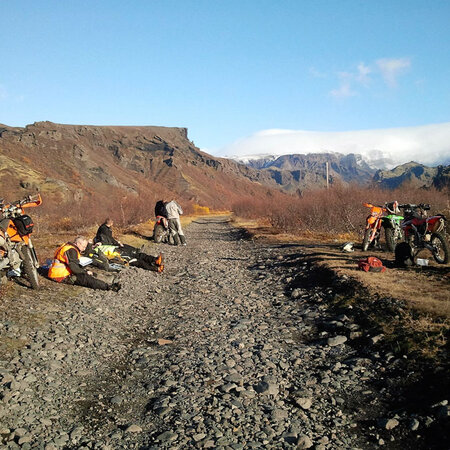
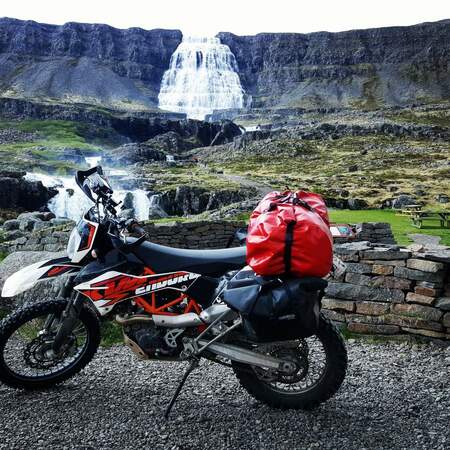
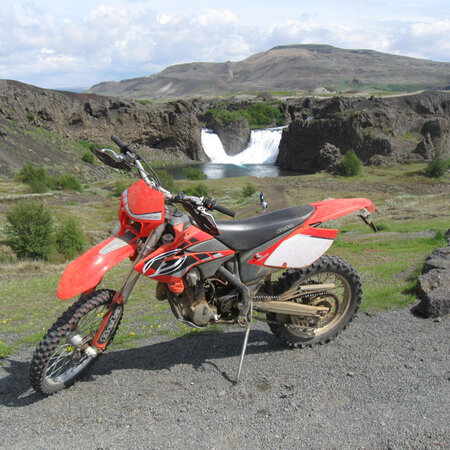
The highland area of Iceland is a very popular area for 4x4 and Enduro travelers because of its gravel tracks. However, you must bear in mind that off-road driving is prohibited due to the very sensitive vegetation, as even a small, inconspicuous tire track can already cause a stream bed to have formed at this spot a few years later. This is due to the very loose soil of the country, which consists mainly of lava soil.

Almost 93% of Iceland's inhabitants live in the cities; around 120,000 in the capital Reykjavik alone, which makes up over 1/3 of the total population. The reason why so few people live in rural areas is a long-lasting rural exodus during the 20th century.
|
Name of the city |
Number of inhabitants |
||||||||||||||||||||||||||||||||
|
Reykjavík |
130938 |
||||||||||||||||||||||||||||||||
|
Kópavogur |
35237 |
||||||||||||||||||||||||||||||||
|
Hafnarfjörður |
29678
|