ADVENTURE-TOURS · PERU
Mountaineering Course Peru: Cordillera Blanca Expedition
The mountaineering course Peru takes you into the Cordillera Blanca, where glaciated summits, settled weather and short approaches come together.
The Journey
Cordillera Blanca climbing across three summits
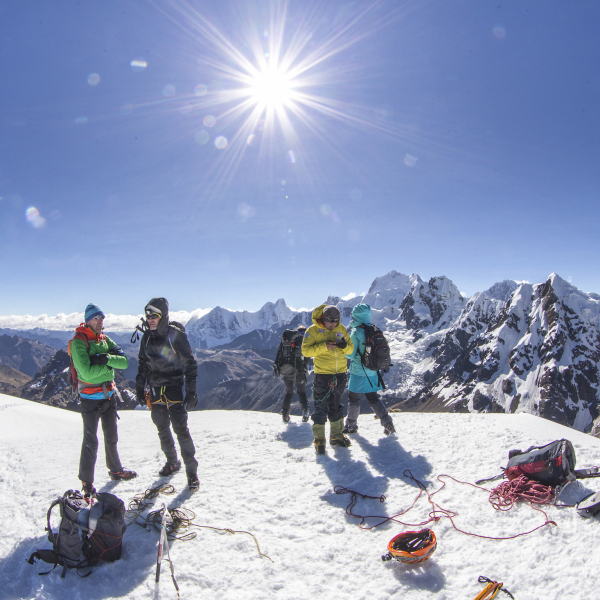
The mountaineering course Peru starts in Lima and follows the Panamericana to Huaraz, the hub for Huaraz climbing and the gateway to Huascaran National Park. After two days of altitude adjustment you move into the Ishinca Valley, where base camp stands at 4350 metres between the ice walls of Tocllaraju and Palcaraju. Here you train crevasse rescue, the handling of ice axe and crampons and the building of high camps. Between the summit days there is time for further training and recovery before you finish the high altitude course in Peru on the 6000er.
Key Highlights of the Trip
Key Highlights of the Trip

Peru
The mountaineering course Peru runs between Lima, Huaraz and the Ishinca Valley in the Cordillera Blanca, with base camp at 4350 metres inside Huascaran National Park.
Arrival in Lima
If you have booked your flight and transfer through us, you will be met at Lima airport and taken to the centrally located hotel. Depending on your arrival time there is room for a first walk through the city on your own. Overnight at the hotel.
Drive to Huaraz
You meet your mountain guide and the rest of the group at breakfast at the latest. The Panamericana takes you north along the coast with a stop in Barranca. The route then leaves the coast and gains height quickly. After around 410 kilometres and eight hours of driving you reach Huaraz, set between the Cordillera Negra and the ice peaks of the Cordillera Blanca.
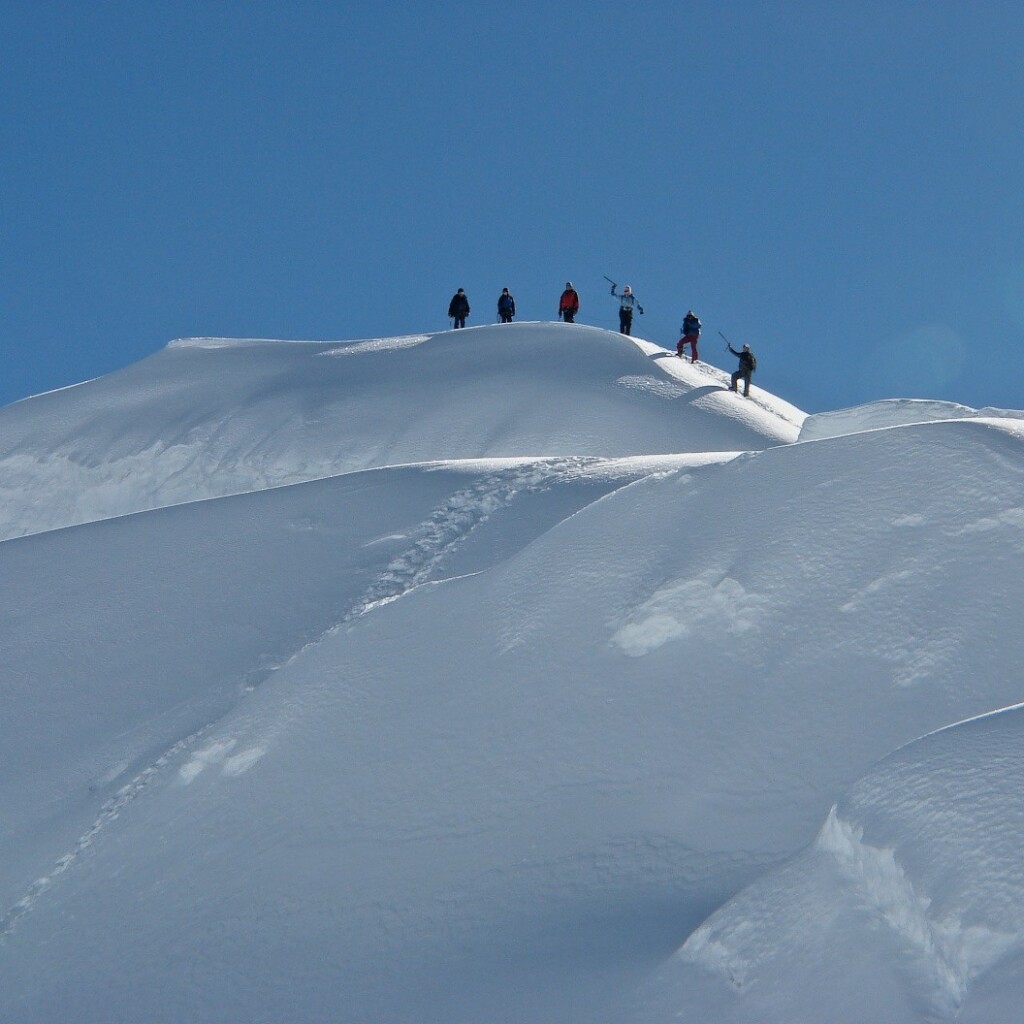
Huaraz, 3100 metres
A free day for altitude adjustment. The Santa Valley at around 3000 metres is ideal for acclimatisation hikes, and that is exactly what is on the programme today. If you want to learn high altitude mountaineering, you notice quickly here how much a steady pace and enough drinking matter. Overnight at the hotel in Huaraz.
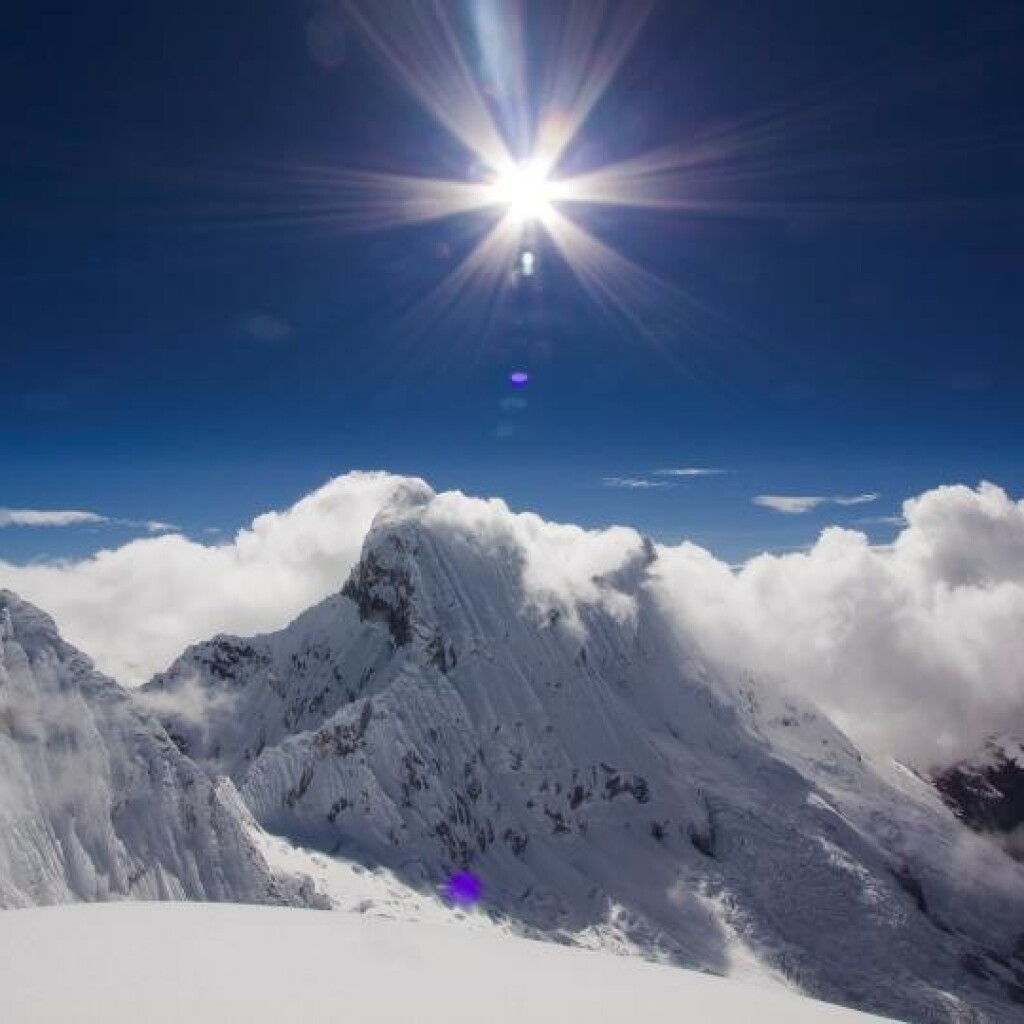
Transfer to the Ishinca Valley
The bus takes you through the Rio Santa valley into the Ishinca Valley, past Hacienda Collon at 3350 metres to Pashpa at 3600 metres, where the road ends. You camp here, because a night at this height improves acclimatisation noticeably. An afternoon hike rounds off the day.
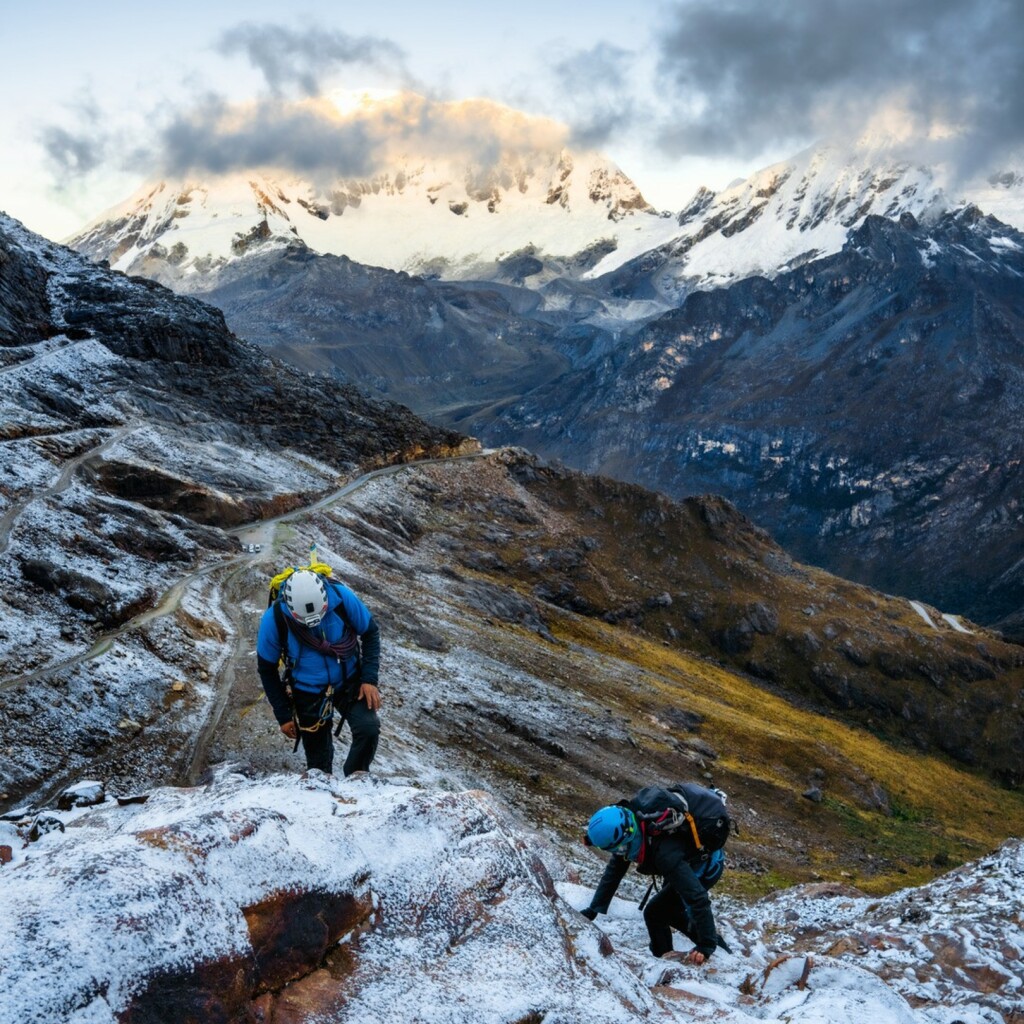
Trek to base camp
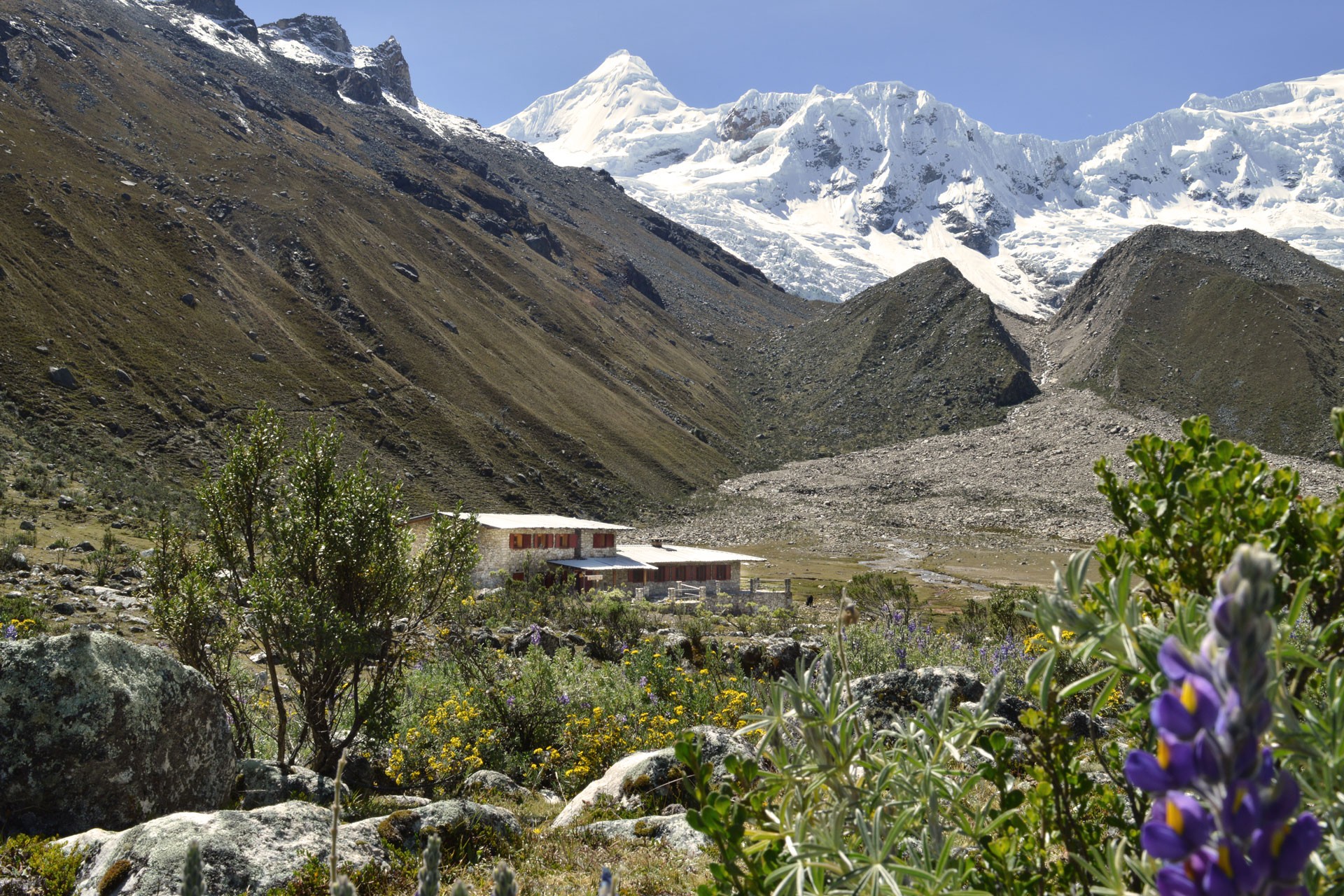
The luggage is loaded onto mules. Along the creek you approach steep granite walls, then continue through light forest and across alpine meadows to the head of the valley. Base camp goes up at 4350 metres, framed by the ice walls of Tocllaraju and Palcaraju. For the coming days this is home.
Rest day and training at base camp
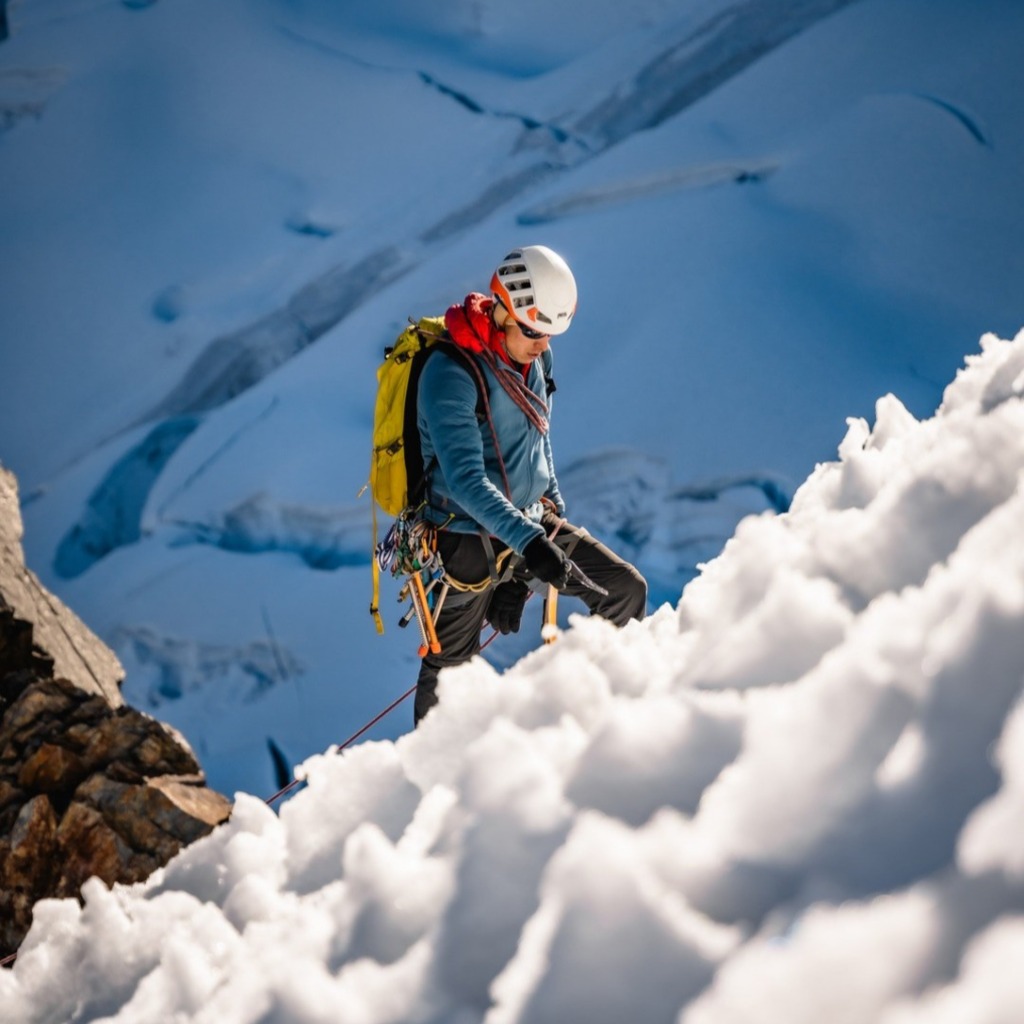
Acclimatisation and preparation shape the day. In theory and practice you are systematically prepared for the tours ahead: fixed rope training, high camp construction, altitude tactics and equipment science are only some of the topics. A crevasse rescue session and a short acclimatisation hike round off the day.
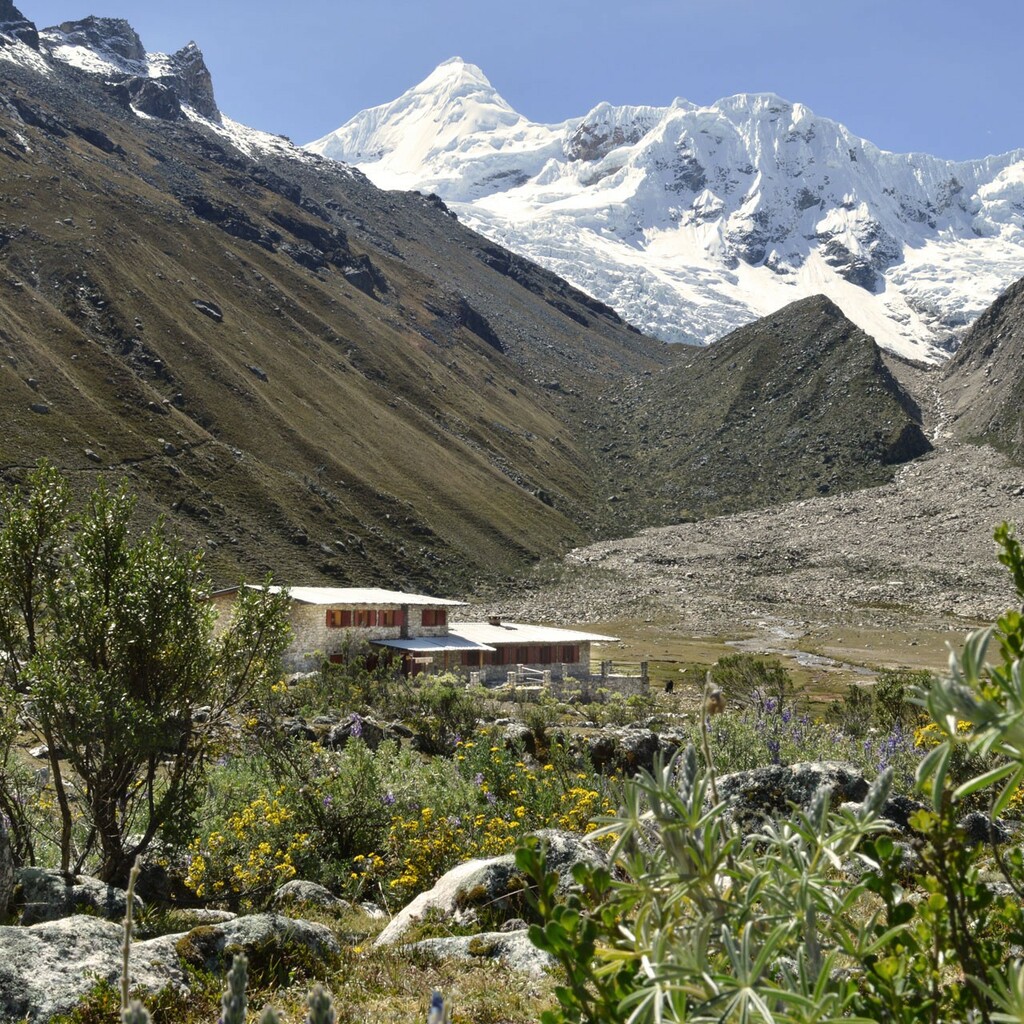
Nevado Urus, 5495 metres
The first objective is Nevado Urus. Over moraines, boulders and glacial striations a long traverse leads to the glacier tongue. Across sloping firn slopes and past large rock gendarmes you reach the small summit point in around 5.5 hours. The descent takes about 2.5 hours, with 1070 metres of height gain in total.
Training and recovery at base camp
Between the summit objectives there is time for further training and for recovery. Rope technique, securing methods on fixed ropes and planning for the next tour are deepened. If you feel like it you can take a short loop at the head of the valley, otherwise the day belongs to recovery at 4350 metres.
Questions about the tour itinerary?
Our tour guide is happy to answer any questions about the day-by-day route, stops, and details.
Nevado Ishinca, 5530 metres
If conditions are favourable, Nevado Ishinca is traversed from the north east. First through a well developed path system, then over scree to the glacier. In a left hand loop through large fracture zones you reach the summit structure after around 6.5 hours, finally over a steep flank of about fifty degrees. The descent by the tamer south west side takes three hours.
Recovery and training at base camp
The second buffer day serves recovery and preparation for the 6000er. Equipment checks, packing the high camp loads and tactics for the summit day are on the list. Andes mountaineering runs on good planning, so the timetable for the night time start is discussed in detail.
Ascent to high camp on Tocllaraju
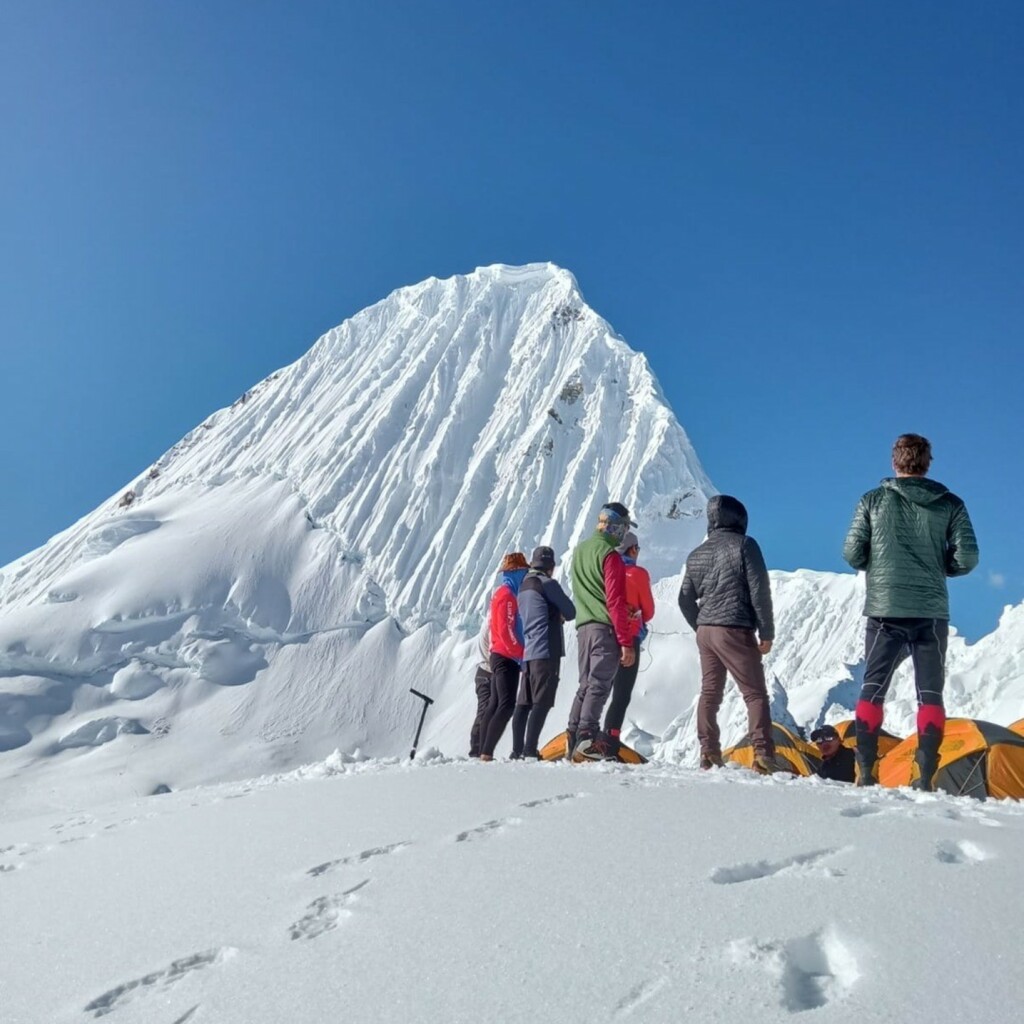
For the Nevado Tocllaraju ascent a high camp is set up at 5050 or 5200 metres. The climb there takes four to five hours over moraine and glacier. The camp goes up in the afternoon, then it is an early meal and an early night, because the start comes in the middle of the night.
Summit day Nevado Tocllaraju, 6034 metres
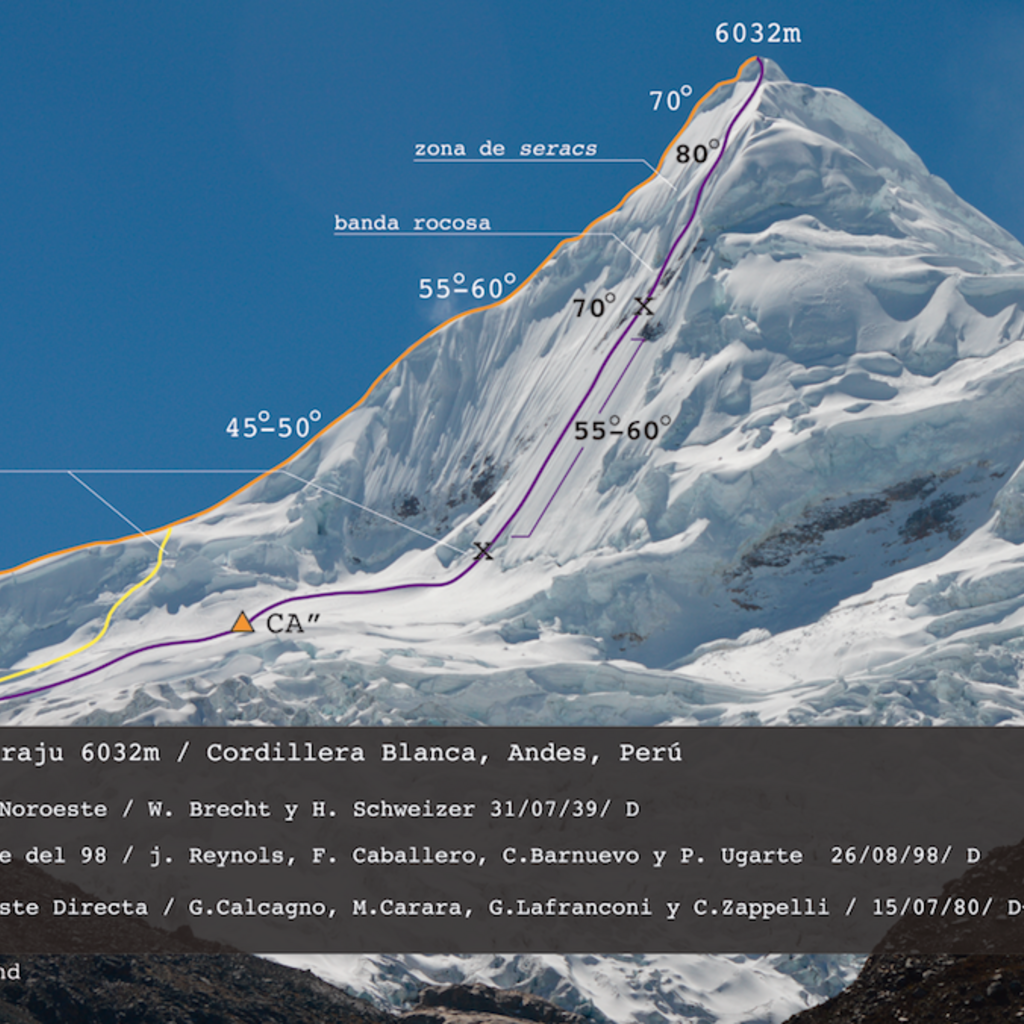
A very early start for the king of the round. The route leads through heavily crevassed glaciers and over several steep steps to the foot of the summit flank and the ridge shoulder. Over an exposed ridge you reach the solitary summit after around 7.5 hours. Via the high camp you descend in about 4.5 hours back to base camp, where the expedition ends with a few cervezas.
Descent and transfer to Huaraz
Descent from the Ishinca Valley and return to Huaraz, around 850 metres of descent in about three hours. The afternoon leaves time for a stroll through town before the farewell dinner brings the summit celebrations back to life. Overnight at the hotel.
Drive to Lima
You return to the capital on the same route as the outward journey, around 410 kilometres and eight hours of driving. You reach Lima in the evening and check into your hotel. Time to let the impressions from Huascaran National Park settle.
Lima and return flight
If you have booked the long haul flight through us, you will be taken to Lima airport today. Depending on departure time there may be room for the capital: start at the Plaza de Armas, continue to the bishop's palace with its famous wooden balconies and into the cathedral, where Peru's colonial past meets you at every turn.
Want a detailed description of all tour days?
Our expert will walk you through the full itinerary and answer all your questions.
from
Price Options
Trip includes
- Complete organisation of the expedition
- English speaking guide certified to IVBV, UIAGM and IFMGA standard
- Two additional English speaking local guides for up to 8 participants, three local guides from 8 participants
- Pick up at Lima airport and transfer to the hotel
- All transfers according to the programme
- Two nights in a three star hotel in Lima in a double room
- Three nights in a three star hotel in Huaraz in a double room
- Nine nights in tents at base camp and the high camps
- 13 x full board including meals at base camp and high camp
- Mules and muleteer for the luggage
- Entrance fees to Huascaran National Park
- Kitchen equipment
- Transfer from the hotel to the airport and bus station
- Complete base camp and high camp equipment
- All communal fixing and securing material
Service
The expedition is fully organised: transfers according to the programme, hotels in Lima and Huaraz, tents at base camp and the high camps, full board on the mountain, mules for the luggage, kitchen equipment and all communal securing material. The Cordillera Blanca expedition is led by an internationally certified mountain guide, supported by local guides.
-
You should already have alpine experience and move confidently on rock and firn. Basic handling of ice axe and crampons is assumed, everything beyond that is deepened on site. The aim is to prepare you systematically for taking part in a larger expedition.
-
Yes. Insurance covering mountain rescue and repatriation is mandatory for this expedition. It is not included in the price and you arrange it yourself. Travel accident and health cover comes on top of that and is strongly recommended.
-
Acclimatisation is built into the schedule. Huaraz at around 3100 metres is followed by a night in Pashpa at 3600 metres and the walk up to base camp at 4350 metres. Only then do the summit days begin, rising from 5495 to 5530 and finally 6034 metres.
-
Tocllaraju is the most demanding summit of the round. From high camp at 5050 or 5200 metres you set off very early, and the route leads through heavily crevassed glaciers and over several steep steps to the summit flank and the exposed ridge. Expect around 7.5 hours of ascent.
-
Yes. Crevasse rescue is a fixed part of the base camp training alongside fixed rope technique, high camp construction, altitude tactics and equipment science. Two days between the summit days remain for further practice and recovery.
-
Mountain boots, ice axe, crampons, harness, sleeping bag, mat and weatherproof clothing are yours to bring. Tents, kitchen equipment and all communal fixing and securing material for base camp and high camps are provided.
-
Two nights in Lima and three nights in Huaraz are spent in a hotel in a double room. On the mountain you sleep nine nights in tents, in a single tent at the Ishinca Valley base camp and in a double tent at the high camps.
-
The dry season from May to September brings the most settled conditions in the Peruvian Andes. Clear days, firm snow and well travelled glaciers are most likely in these months, which is why Andes mountaineering happens in this window.
Terms and Conditions of OVERCROSS
Similar Adventures

Send request
How did you
hear about us?