Everything you need to know about Rwanda
Travel map of Rwanda by the tour operator Overcross
- General information for Rwanda
- Climate in Rwanda
- Geography in Rwanda
- Flora and fauna in Rwanda
- National parks and conservation in Rwanda
- Population in Rwanda
- Politics and economy in Rwanda
- Transport network in Rwanda
- Cities and regions in Rwanda
- Culture and sights in Rwanda
- Public holidays in Rwanda
- Medical information for Rwanda
- Travel advice for Rwanda
- Foreign representation in Rwanda
- Information sources for Rwanda
1. General information for Rwanda
| Continent: | Africa |
| Geographical location: | Central Africa, located on the equator |
| Highest elevation: | Karisimbi (4507 m a.s.l.) |
| Longest river: | Nyabarongo (893 km) |
| Form of government: | Republic |
| Government system: | Presidential system |
| Languages: | Kinyarwanda, French and English, Swahili |
| Neighboring countries: | Uganda, Democratic Republic of the Congo, Burundi, Tanzania |
| Capital: | Kigali |
| Area: | Approx. 26,338 km² |
| Population: | Approx. 13,492,000 people (2023) |
| Population density: | 512 inhabitants per km² |
| Religions: | Approx. 83% followers of Christianity (43% Roman Catholic, 40% Protestant), 2% Muslims, 0.1% indigenous religions, 1.9% non-denominational |
| Currency: | Rwandan Franc (RWF); 1 EUR is approximately 1,135 RWF. The current exchange rates can be found at oanda.com |
| Climate: | Mild-humid and due to the altitude a moderate equatorial climate |
| Time zone: | UTC + 2 |
| International dialing code: | +250 |
| Country code: | RW |
| Electricity: | In Rwanda, socket types C and J are used. The mains voltage is 3 x 230V with 50Hz alternating current. A travel plug adapter is recommended. An overview of the sockets and plugs used in our travel countries can be found at wikipedia.de |
2. Climate in Rwanda
Rwanda has a tropical alternating humid climate, which is moderated in the predominant highlands of the country. In the lower-lying areas, temperatures remain consistently high throughout the year and average around 21 °C. Above 1800 m.a.s.l., the daily average values drop to about 17 °C. Night frost can occur at higher elevations. Rainy seasons are from February to April and from November to December. The amount of precipitation generally decreases from west to east. While up to 2000 mm is still measured annually in the western mountain region, the amounts in the eastern part of the country average 800 - 1000 mm per year. The amounts and events of precipitation overall, however, are subject to significant fluctuations, which repeatedly lead to crop failures and associated famines.


3. Geography in Rwanda
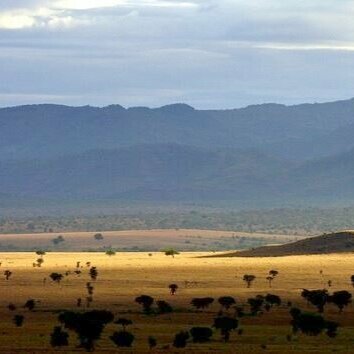
The Republic of Rwanda is located in eastern Central Africa and, as a landlocked country, borders Uganda to the north, the Democratic Republic of the Congo to the west, Burundi to the south, and Tanzania to the east. Covering an area of about 26,338 km² and at an average altitude of 1500 m.a.s.l., Rwanda is characterized by mountainous landscapes with partially active volcanoes. The very pronounced hilly landscape, especially in the western part of the country, has also given Rwanda the name "Land of a Thousand Hills." Geographically, Rwanda can be divided into the southeastern lowlands, the central high plateau, and the northwestern border mountains with the watershed of the Nile and the Congo.
Lake Kivu, which as part of the East African Rift System lies in the west of the country at an altitude of 1460 m.a.s.l., forms part of the border with the Democratic Republic of the Congo. The rift edge, which rises steeply eastward as a mountain range and reaches heights of up to 3000 m, forms the watershed between the Nile and the Congo. The chain of partially active Virunga volcanoes lies to the north of the rift edge and is considered one of the most earthquake-prone regions in the world. At 4507 m.a.s.l., Karisimbi in the northwest of the country is the highest elevation in Rwanda. The highlands in the east of Rwanda, which fall in steps to a height of around 1500 m.a.s.l., are deeply incised by numerous valleys. With several endorheic lakes, the east of the country features an extensive swamp landscape. On about 1250 m.a.s.l., the Kagera River forms the eastern border with Tanzania.
4. Flora and Fauna in Rwanda
The vegetation in Rwanda ranges from dry savannah in the east of Rwanda to tropical rainforest in the west near Lake Kivu, which transitions into bamboo forests at an altitude of about 2500 m. Moist savannahs cover the central highlands. Eucalyptus, acacia and oil palms are the predominant tree species of the approximately 20% forested national territory. Dense papyrus growth is found in the floodplain of the Kagera River. Large parts of the savannah have now become cultivated land due to Rwanda's dense settlement. While the center of Rwanda has long been intensively used for agriculture, the high mountains are characterized by special ecosystems with unique animal and plant species that result from the misty, humid and cool tropical climate. For example, Nyungwe Forest, as the only remaining montane rainforest, hosts considerable biodiversity with many endemic species.
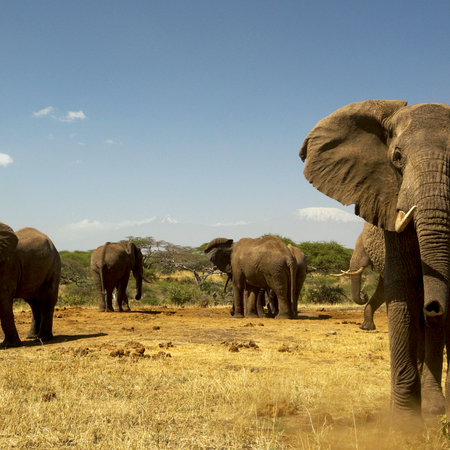
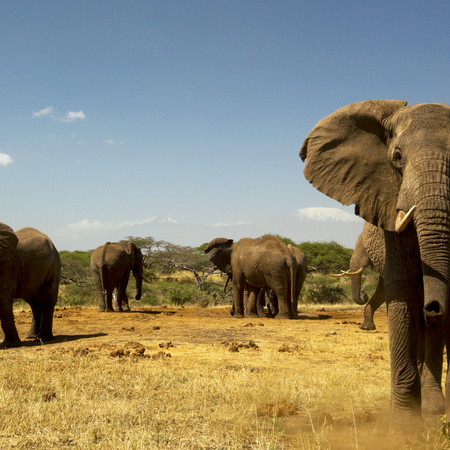
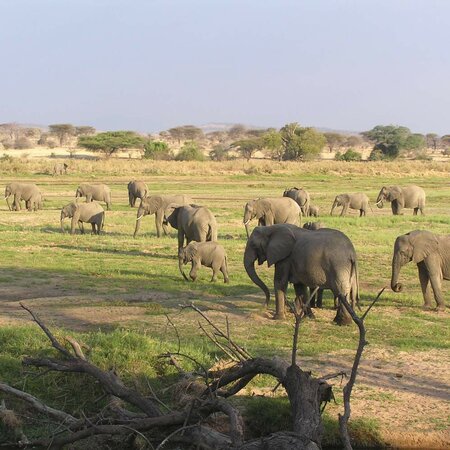
The country's three national parks have a rich mammal fauna, including elephants, waterbucks and buffaloes, antelopes, impalas, topis, zebras, lions, leopards, and even black rhinos. Due to the civil war, these animal populations, especially lions and antelopes, have unfortunately been greatly reduced.
In the flooded swamp areas, besides hippos and crocodiles, there are also numerous bird species. The native birdlife includes the splendid Rwenzori turaco, hornbills, African hummingbirds as well as many other birds. Volcanoes National Park is home to the last surviving mountain gorillas. In addition, Rwanda's forests are still home to relatively many chimpanzees, colobus monkeys, green monkeys, baboons, mangabeys and many other primate species.
5. National Parks and Nature Conservation in Rwanda
Rwanda has declared about 12 % of its national territory as nature reserves, which include the three national parks Akagera, Nyungwe, and the Volcanoes National Park, all of which are very popular safari destinations. The special attractions of these protected areas are, on the one hand, the still relatively large stocks of rainforest and, on the other hand, of course, the imposing mountain gorillas.
Environmental protection legislation has existed in Rwanda since 2005 and in 2006 the environmental authority REMA was founded, which sets the guidelines for environmental protection. It has managed to make Rwanda a role model for environmental protection for all other countries in Africa. Kigali is known as the cleanest city in Africa, since in Rwanda waste separation is required by law. Plastic bags are taken from tourists upon entry and disposed of, because only paper bags are used in Rwanda. Electricity is generated by hydropower plants and diesel generators. The government promotes the development of environmentally friendly forms of energy, to save firewood, which is still used as an energy source in many Rwandan households. As a result of intensive agriculture, Rwanda's soils are threatened by erosion. In the past, large areas of the original montane forests have been slash-and-burned or deforested. Resource protection programs are supported by the government and serious measures are being taken to conserve and reforest the remaining forests as protected areas.
6. Population in Rwanda
Rwanda has about 13.5 million inhabitants, with the proportion of the population under 14 years old accounting for about 41%. Only about 3% of the population is over 65 years old. With an average of 512 inhabitants per square kilometer, Rwanda is the most densely populated country in Africa. The Bantu people of the Hutu make up the majority of the population at around 83%, while the Tutsi have a population share of 16% and the descendants of Rwanda's indigenous people, the pygmy Twa, account for only about 0.5%. In addition, many refugees live in Rwanda, especially from the neighboring crisis areas of the Democratic Republic of Congo, which further exacerbate the problem of the rapid population explosion in Rwanda with an annual growth of over 2%. The official languages are the Bantu language Kinyarwanda and French, but English as a third official language has also gained increasing importance in recent years. Since 2017, Swahili has been introduced in Rwanda as part of ongoing integration into the East African Community as another official language.
7. Politics and Economy in Rwanda
Rwanda is a constitutional republic, which adopted its constitution by referendum in 2003. The president is elected in general elections. Today's politics are strongly influenced by the aftermath of the war (1990-1994), the genocide (1994), and by the economic problems in the region. Rwanda's foreign policy primarily serves the security of the country. The government seeks better integration into the African Union (AU) and into the East African Community. It is also striving to improve and intensify relations with direct neighbors, international potential investors, and active participation in international organizations.
Rwanda's economy grows by an average of about 6-7 percent per year. Forecasts for the coming years are also at this level. The service sector has the largest share of the country's economic output at just under 50%, followed by agriculture with just under 30%, and industry with just under 15%. The inflation rate in 2023 is about 8%.
8. Transport network in Rwanda
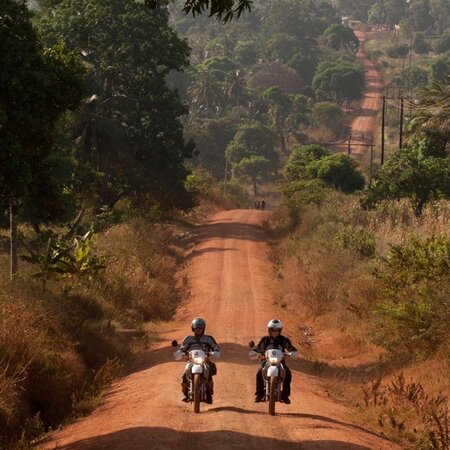
The transport infrastructure in Rwanda is mainly limited to a relatively well-developed road network, which, with a total length of 12,000 km, has about 1,500 km of asphalted routes and connects the country's main cities with the capital Kigali. There are also relatively good asphalt roads between the key cities. However, some regions are poorly connected. Secondary roads are unpaved and in varying condition. Nevertheless, by car, bus or minibus taxi, you can reach every region in this small country relatively quickly and easily.
Despite years of consideration to connect Rwanda to the rail networks of Uganda or Tanzania, Rwanda still does not have its own rail network. The international airport is located in Kigali. With foreign support, the country's infrastructure has been greatly expanded in recent years.
9. Cities and Regions in Rwanda
Rwanda is divided according to the cardinal points into the four regions North, East, West, South, and the capital province Kigali.
Kigali
With around 1,170,000 inhabitants (2023), the capital Kigali is by far the largest city in Rwanda. It is located in the center of the country on the Kagera River at an altitude of about 1600 m above sea level and is considered the cleanest city in Africa due to the introduced waste separation. Kigali has Rwanda's only international airport. There are a number of churches and mosques in Kigali, the most well-known of which are the Catholic Church Regina Pacis in Remera and the Green Mosque in Nyamirambo. The Kigali Genocide Memorial Centre commemorates the atrocities of the 1994 genocide.
Butare
The population of the city of Butare is about 103,000, making Butare the second largest city in Rwanda. The city, located in the south of the country, is considered the cultural center of Rwanda and is home to the national university with several faculties and about 8,000 students, as well as the national museum, which displays interesting exhibits from pre-colonial times.
Gisenyi
Gisenyi is a picturesque small town at the northern end of Lake Kivu, directly on the border with the Democratic Republic of Congo, with about 85,000 inhabitants. The city was founded during the German colonial period, and residential houses from that time are still preserved in Gisenyi. During the Belgian colonial period, many colonial officials and settlers also lived here. In the immediate vicinity of Gisenyi is the international airport Goma of the Democratic Republic of Congo, as well as the state-owned brewery Bralirwa, which generates the largest share of Rwanda's GDP. Because of its extensive sandy beach on Lake Kivu, Gisenyi is very popular with water sports enthusiasts.
Ruhengeri
Ruhengeri is located in the north of Rwanda in the lava plain at the foot of the volcanoes. About 75,000 people live in the city. From Ruhengeri, tourists climb the nearby volcanoes and visit mountain gorilla groups habituated to humans. Lake Bulera is also not far from Ruhengeri.
10. Culture and Sights in Rwanda
Among the sights of Rwanda are of course the national parks and protected areas and especially the Volcanoes National Park, where, in addition to the impressive volcanic landscape, the last free-living population of mountain gorillas can be observed. In addition, the extensive Akagera swamps in eastern Rwanda, which form part of the national park of the same name, are interesting.
The cultural highlights of Rwanda are mostly limited to the capital Kigali, although well-preserved buildings from the colonial era can also be found in Butare and Gisenyi. In Butare, the national museum of Rwanda also informs about the interesting history of the country.
Important art forms in Rwanda are music, dance, and poetry in the native language. The war dance Intore is meant to convey the heroic deeds after returning from a battle.
A widespread traditional visual art is Imigongo. These geometrically designed paintings are drawn by several artists together on wooden boards, formed three-dimensionally with cow dung, dried, and then painted. Traditionally, there are spiral patterns or zigzag patterns in black and white. Typical crafts include finely crafted wicker and basket works. In recent times, works by painters have also become widespread.
11. Fixed-date public holidays in Rwanda
| 1 Jan | New Year's Day |
| 2 Jan | Day After New Year's Day |
| 1 Feb | National Heroes Day |
| 7 Apr | Genocide Against the Tutsi Memorial Day |
| 1 May | Labour Day |
| 1 Jul | Independence Day |
| 4 Jul | Liberation Day |
| 15 Aug | Assumption of Mary |
| 25 Dec | Christmas |
| 26 Dec | Boxing Day |
12. Medical Information for Rwanda
For legal reasons, we as a tour operator are not permitted to communicate binding medical advice and therefore refer to the information of the Federal Foreign Office of the Federal Republic of Germany, the Robert Koch Institute, and the German Society for Tropical Medicine and International Health e.V.
13. Travel Information for Rwanda
Current travel and safety information, details on entry and exit, as well as special legal notes and behavioral recommendations for your stay in Rwanda are available from the Federal Foreign Office of the Federal Republic of Germany.
14. Foreign Representation in Rwanda
| Embassy of the Federal Republic of Germany in Rwanda | |
| Jurisdiction/ Consular district: |
Rwanda. |
| Location: | Kigali |
| Street address: | KN 27 St No. 5, Kiyovu, Kigali, Rwanda |
| Postal address: | Embassy of the Federal Republic of Germany, B.P. 355, Kigali, Rwanda |
| Telephone: | +250 280 57 52 22, +250 280 57 51 41 |
| Fax: | +49 30 1817 67201 |
| E-mail: | Contact form |
| Website: | http://www.kigali.diplo.de |
| Official languages in the host country: |
English (mainly), French, Kinyarwanda |
| Embassy of the Republic of Rwanda in Berlin (There are additional honorary consulates in Hamburg, Hanover and Tutzing near Munich) |
|
| Location: | Berlin |
| Street address: | Jägerstraße 67 - 69 |
| Postal address: | Jägerstraße 67 - 69, 10117 Berlin |
| Telephone: | 030 20 91 65 90 |
| Fax: | 030 209 16 59 59 |
| E-mail: | [email protected] |
| Website: | http://www.rwanda-botschaft.de |
15. Information sources for Rwanda
German Meteorological Service
Federal Foreign Office of the Federal Republic of Germany
Wikipedia