Everything you need to know about Laos
<
Travel map of Laos by the tour operator OVERCROSS
1. Climate
2. Animals and Plants
3. Population
4. Medical Care
5. Languages
6. Religion
7. Cities
8. Natural Resources and Agriculture
9. Roads
10. Public Holidays
Climate
Laos has a tropical climate with three different seasons. From October to February is the pleasant dry season: 8-30 °C, low humidity, good weather during the day, mostly sunny, it can get cold at night. In the Laotian mountain regions, such as Houeixai, Pak Beng, Luang Prabang and Plain of Jars, it can be very cold with temperatures from 0 to 5 °C.
March to May are known as the pleasant hot season: 22 to 36 °C, high humidity, cloudy, good weather often alternating with hazy hot weather. The months from June to September are the rainy months and despite heavy rain and high humidity, pleasantly warm: 25 to 33 °C.
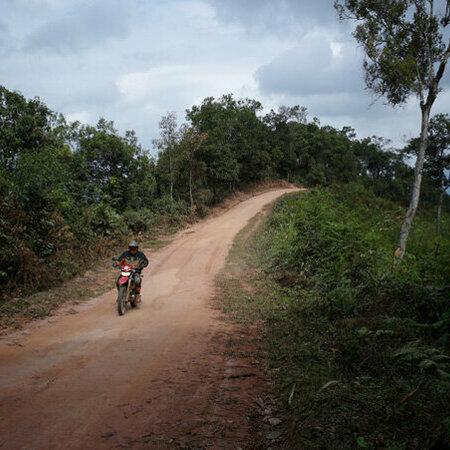
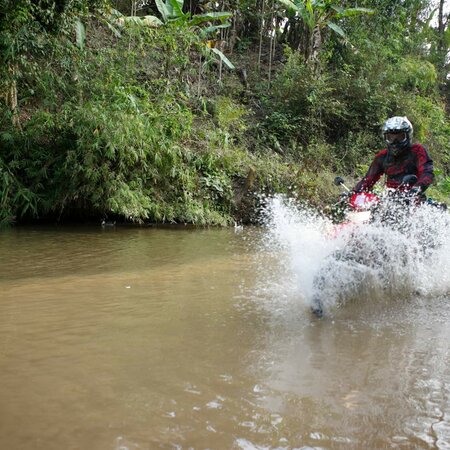
You can travel Laos all year round. Even in summer a tour is possible if you are not bothered by the very hot weather. The main problem is the impassability of some roads during the summer. Paths can be blocked especially in the mountain regions due to erosion or landslides. It should be noted that due to shifting cultivation by some farmers in the months of March and April, people with less robust health may experience respiratory problems. Such cases are rare but should be mentioned here.
Animals and Plants
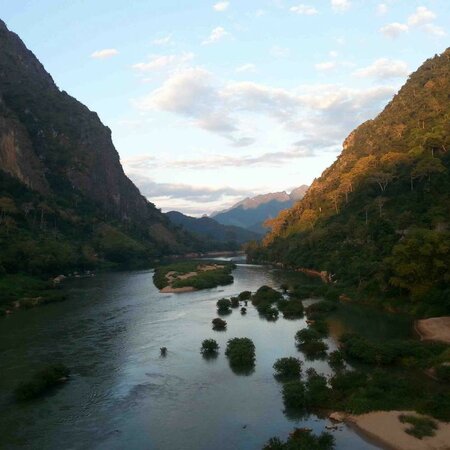
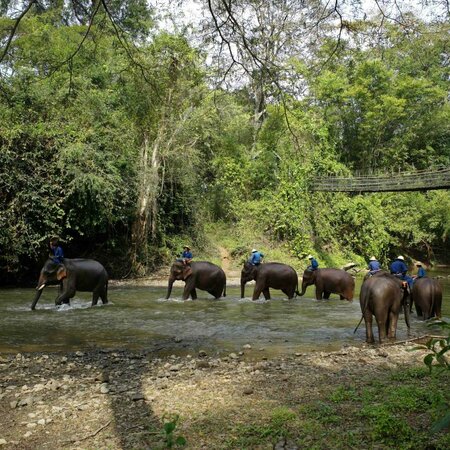
50% of Laos is forested with rainforest, tropical plants or monsoon forests, of which 8% is classified as virgin forest. Some predators also live in Laos, such as leopards, clouded leopards and tigers. Elephants are used as working animals, as in most Asian countries. There are various species of monkeys in Laos, such as slow lorises, crested gibbons and leaf monkeys. Many animals are protected species, including buffaloes, antelopes and bears.
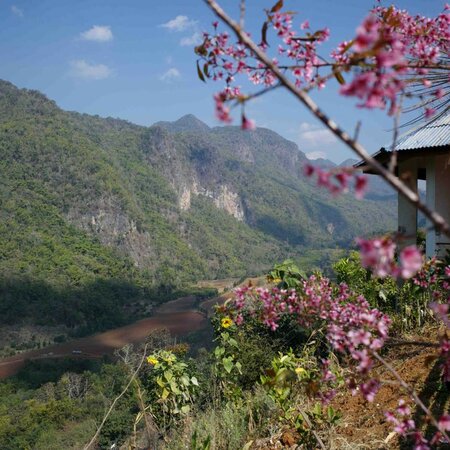
Laos is a wonderful destination for all lovers of nature and plants. In Laotian flora, next to imposing mountains and enormous waterfalls, there are partly still completely untouched forests. While the trees in the rainforest keep their leaves all year round, in the monsoon forests there are, alongside the trees that keep their leaves year-round, such species as the ironwood tree and the teak tree. Rosewood and bamboo also grow in the monsoon forests. In the mountains mainly subtropical pines and oaks grow. The plateaus form a savanna landscape with little vegetation, but grasslands. In the fertile plains rice, maize, yams, soy and mung beans, cotton, potatoes, peanuts, sugar, tea and coffee are mainly cultivated.

Population
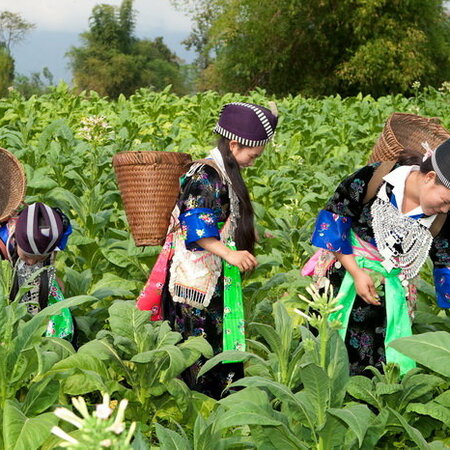
Countless ethnicities (officially 49) live side by side in Laos and are therefore responsible for the cultural richness of the country. The population can be roughly divided into three main ethnic groups, which at the same time describe the geographic settlement zones.


Three main ethnic groups:
- Lao Loum (majority people of the lowland Lao) approx. 60%
- Lao Theung (Mon-Khmer peoples of the mountain slopes) approx. 26%
- Lao Soung (Sino-Tibetan ethnic groups of the highlands, especially Hmong and Yao) approx. 13%
- then there is a minimal share of Chinese and Vietnamese (approx. 1%)
Medical care
The tour operator OVERCROSS recommends checking and completing the standard vaccinations when going on one of our tours through Laos. If there are questions about vaccinations, it makes sense to consult a tropical medicine specialist.
In cities, medical care is good; in rural areas, however, it mostly does not meet European standards. European-trained doctors are rare and even doctors in rural areas rarely speak English.
Anyone who would like information about international health insurance can do so at the OVERCROSS travel agency.
Languages
Laos is home to a variety of different languages, many of which are still unexplored, so there are between 70 and 120 languages.
The languages belong to four different language groups:
- Kam-Tai languages
- Mon-Khmer languages
- Miao-Yao languages
- Lolo-Burmese languages
The official language is Lao, which is very similar to Thai. There is a separate Lao script, the development of which can be traced back to an origin in the Indian Brahmi script, as is the case with most non-Romanized scripts of Southeast Asia.
French is significant due to the colonial past and is still predominantly learned by the Lao elite. Increasingly, however, English is being introduced.
Religions
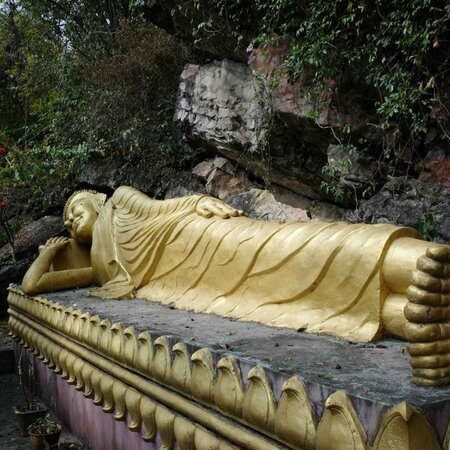
Lao culture is especially shaped by Buddhism. In earlier times, Buddhist temples in every village formed the spiritual center. Even today, most temples are found in Vientiane and Luang Prabang, and for this reason they are also called: Cities of a thousand temples.
Ancestral worship and animism are especially common among populations in the mountain regions, although these people have partly converted to Buddhism without giving up their traditional beliefs. Laos is also home to minorities of religions such as Islam, Christianity, as well as followers of Vietnamese and Chinese religious groups.
Cities
The largest cities in Laos are Vientiane with 203,000 inhabitants, followed by Pakse with 94,000 inhabitants, Savannakhet with 67,000 inhabitants, and the last major city is Luang Prabang with 47,000 inhabitants.
Resources and agriculture:
Laos lives from agriculture; about 80% of the population. The flood plains of the Mekong and its tributaries, as well as the Bolavens Plateau in southern Laos, are particularly suitable for agriculture.
Rice is the main product of agricultural production and makes up about 40% of the total volume produced. Only 10% of the amount produced is sold on the markets, the rest is consumed by the farmers themselves. Laos has a very high diversity of rice, about 3,000 to 4,000 varieties are known, most of which belong to sticky rice types. In addition to rice, maize, potatoes, yams, mung beans and soybeans, peanuts, cotton, sugar, coffee and tea are grown.
Roads
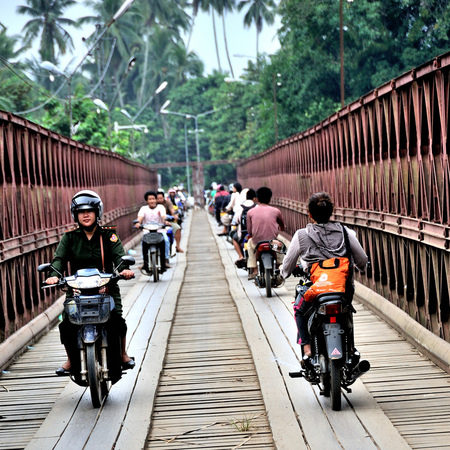
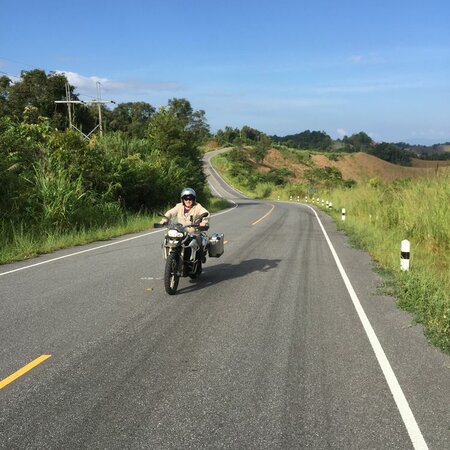
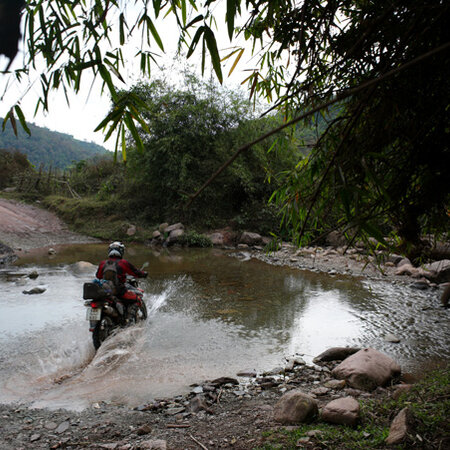
Laos has 13,000 kilometers of roads, of which only about 2,000 are paved. In addition, the road conditions leave much to be desired and fit the typical Asian road scene. Traffic drives on the right throughout Laos. Most cities are connected by public buses. There are relatively few private cars in the country, so many locals travel by bus or hitch rides on trucks. In larger cities, Laotians mostly use mopeds and bicycles if they can afford them.
Holidays
The official holidays in Laos include New Year's Day (1 January). Pi Mai, the Laotian New Year, which usually takes place in April and is calculated according to the lunar calendar. Labor Day (1 May) and National Day (2 December) are celebrated festively. If a holiday falls on a Saturday or Sunday, it is moved to the preceding or following working day. A religious holiday is Boun Bang Fai, on which the birth, enlightenment, and death of Buddha are celebrated. In July, another holiday follows: Khao Phansa, marking the beginning of the Buddhist Lent, and Ork Phansa, the end of Lent, usually at the end of October. These festivities are celebrated extensively with offerings: food and rice wine. Another festival, known as the string-tying ceremony, involves tying strings around each other's wrists and wishing for prosperity, joy, and health.
If you would like to know more about each holiday, feel free to contact us at any time, as Laos offers a huge variety of festivities that have to be recalculated every year, as they follow the lunar calendar.