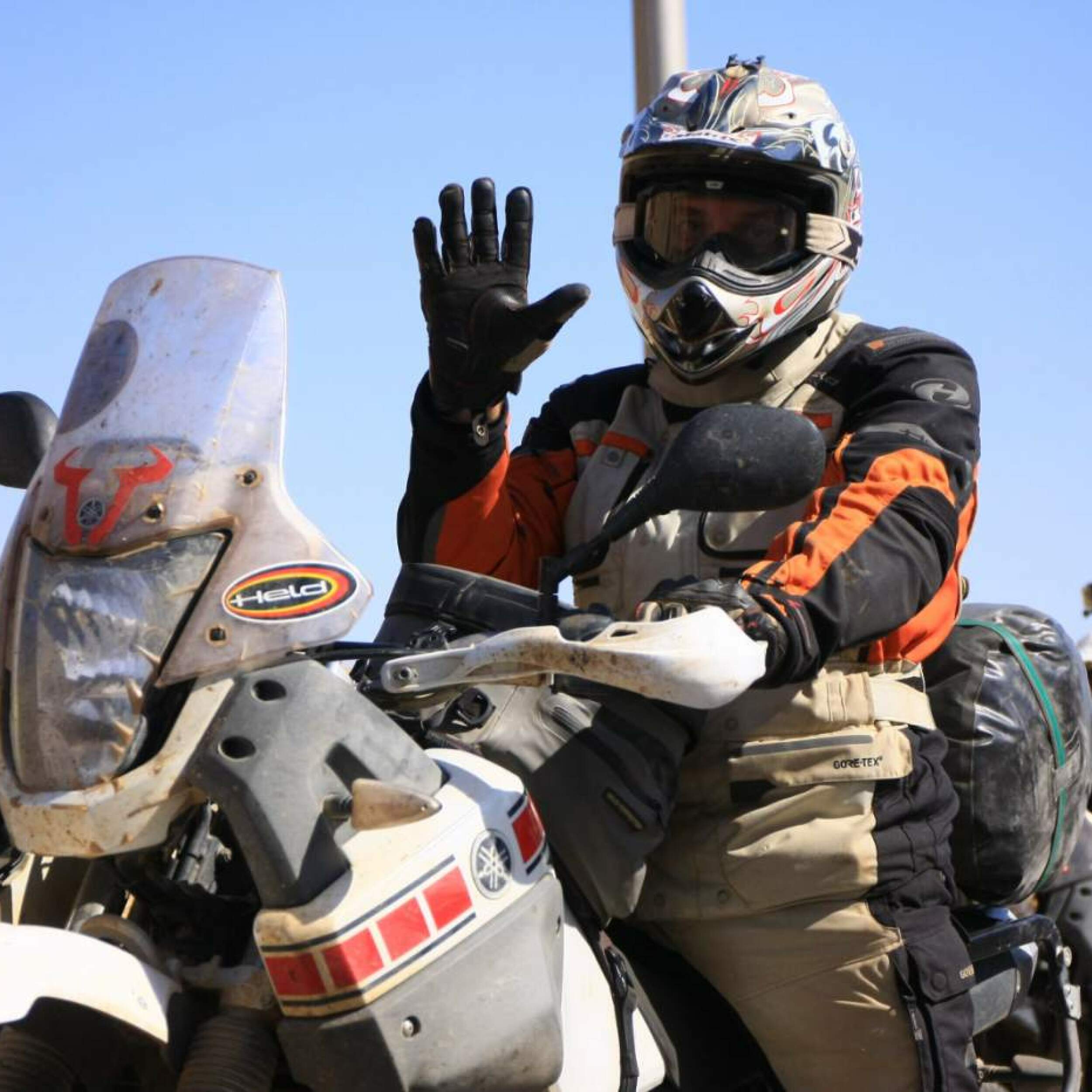
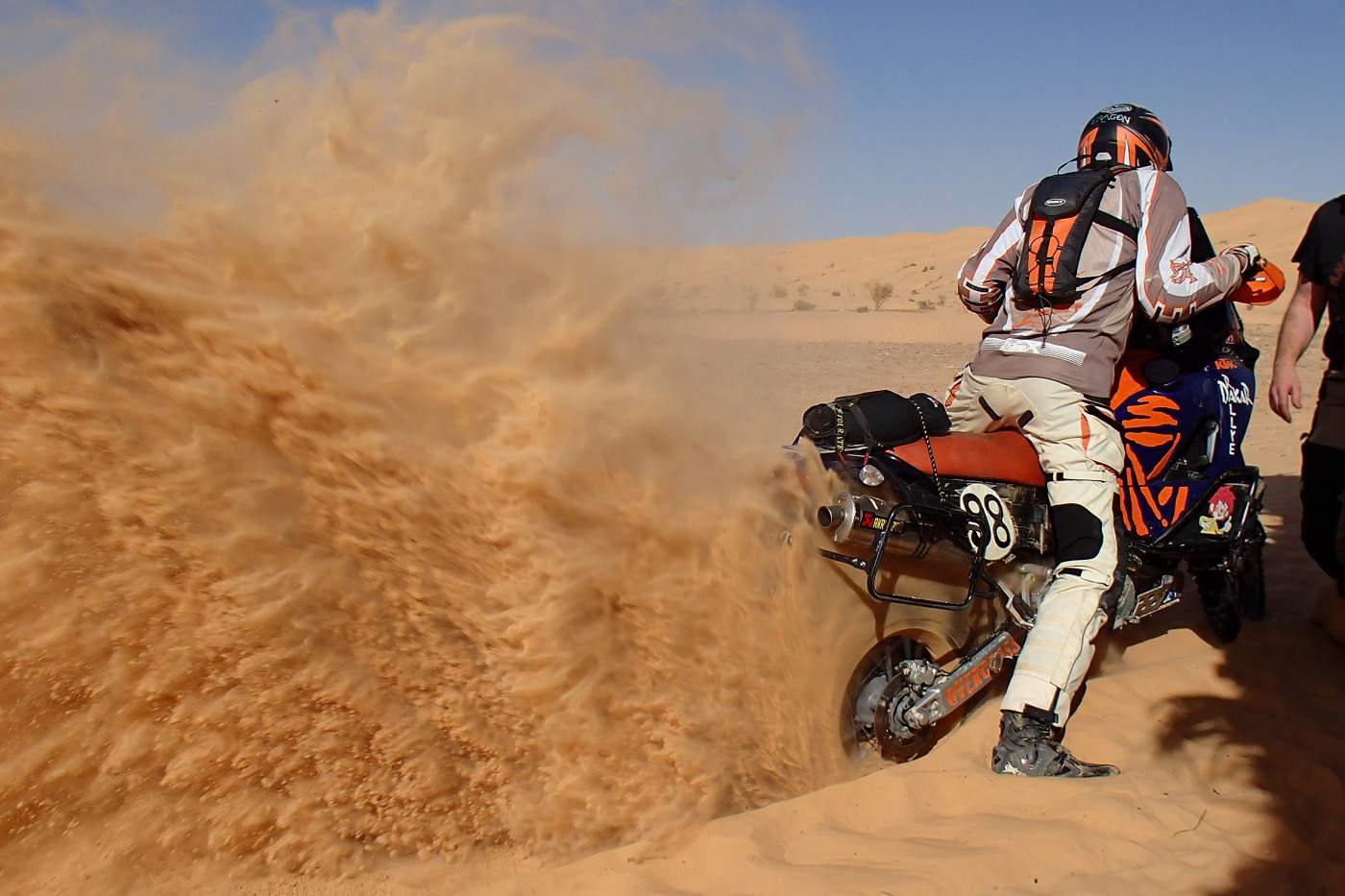
Offroad Doesn't Start on the Track. It Starts in the Garage.
Most breakdowns don't happen in the sand. They happen because someone set off in a vehicle that wasn't really ready. Worn tires. No spare. Brakes that were good enough on asphalt but not on gravel anymore.
Offroad driving begins with preparation. That sounds boring. But it's the difference between a journey and an incident.
This guide is for everyone who wants to seriously go off-road for the first time — and doesn't want to end up stranded with a breakdown on a gravel track in eastern Sardinia.
Your Vehicle: What It Needs to Do and What It Doesn't
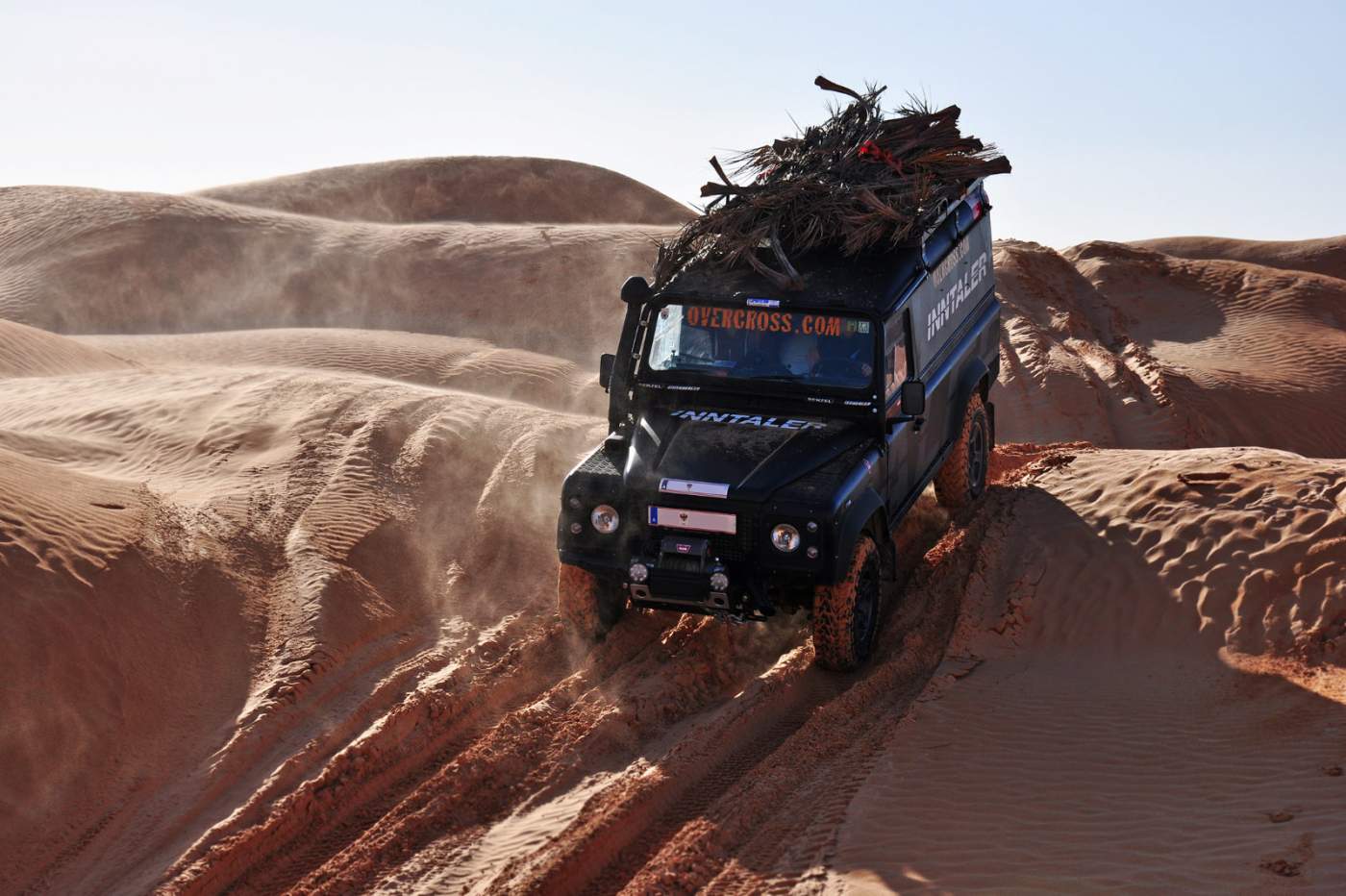
You don't need a fully kitted expedition vehicle. You need a vehicle with four-wheel drive, good off-road tires, and ground clearance that doesn't bottom out at the first field track.
Important: differential locks (at least one, rear) make the difference on loose surfaces. Without a lock, one wheel spins, the other runs free. With a lock the vehicle goes through. That's not an extra — it's the foundation.
Tire choice: all-terrain tires (AT or MT depending on terrain) make more difference than a 3cm lift. Those still driving on summer tires offroad will notice that at the first slope.
Ground clearance: at least 200mm. Anything less bottoms out on larger rocks or washed-out tracks. An underbody guard is not a luxury, it's backup insurance.
Equipment: The Four Things No Off-Roader Forgets
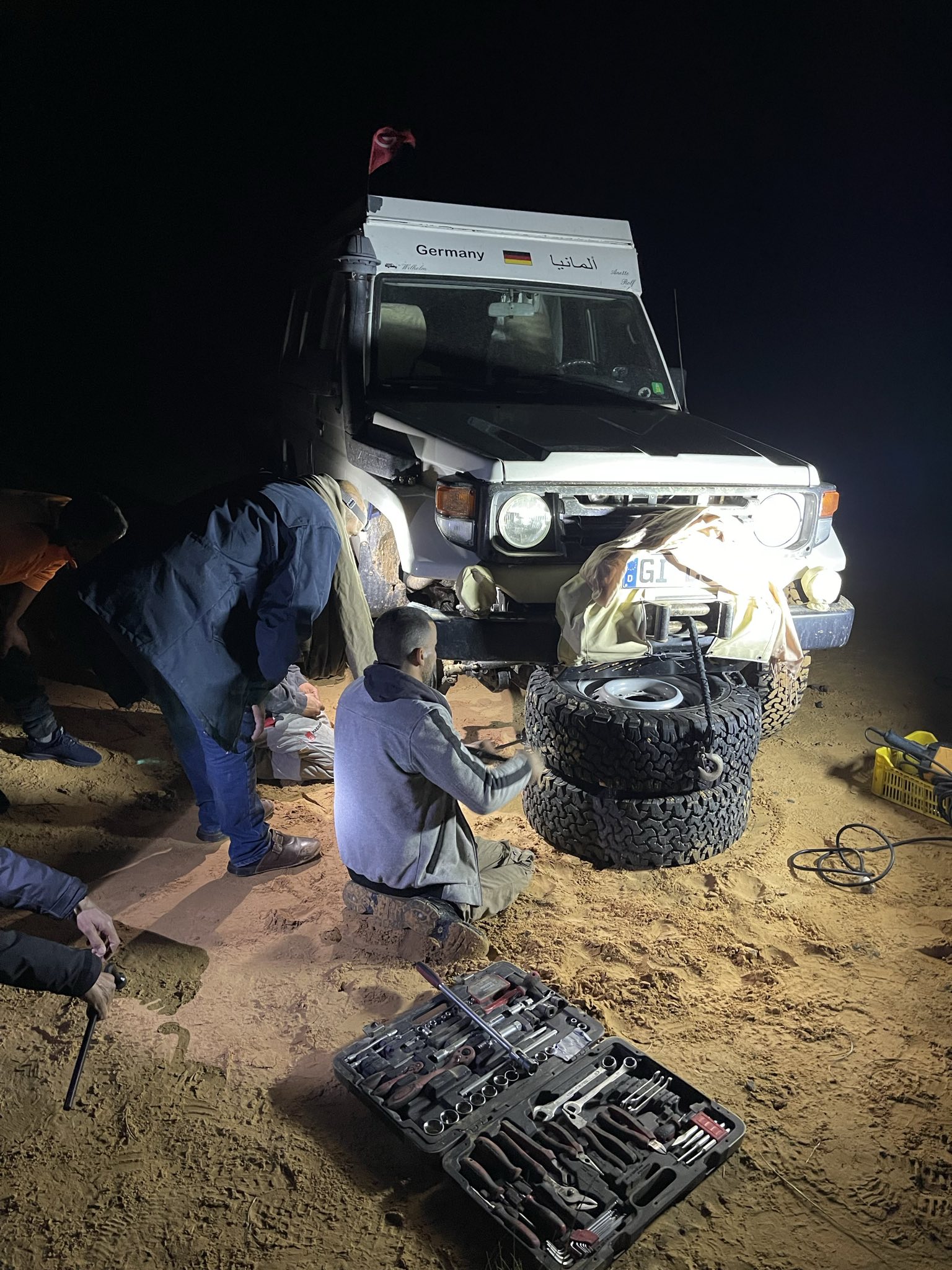
Number one: sand plates or traction aids. Hi-Lift jack and recovery strap as complement. This combination frees 90% of all stuck vehicles.
Number two: tire repair. Two spare wheels is ideal. One works. None is Russian roulette. Add a compressor (12V, min. 150 PSI) and tire plug kit.
Number three: navigation. Offline maps for all off-road apps (Maps.me, OsmAnd, Gaia GPS) are sufficient for most tours. Don't assume mobile coverage.
Number four: water and fuel for more than planned. Every tour takes longer than expected. Every fuel consumption offroad is higher than on asphalt. Calculate a 30% buffer.
Driving Technique: Why You Should Take a Training Course
Offroad driving looks easy. Gas on, four-wheel drive in, done. That's true for flat terrain. For slopes, sand, and muddy tracks it isn't.
A terrain training shows you in one day more than ten self-attempts without guidance. Braking behavior on gravel. Momentum with dunes. Downhill with engine braking instead of brake pedal. These are techniques that save vehicles.
The 4x4 basic training takes one day. You drive through all relevant terrain situations on a dedicated off-road course built exactly for that. Better to make mistakes there than in Sardinia or the Sahara.
The training is not mandatory. But those who've done it drive differently afterwards — calmer, more technical, safer.
Sardinia: The Underrated Off-Road Destination in Europe
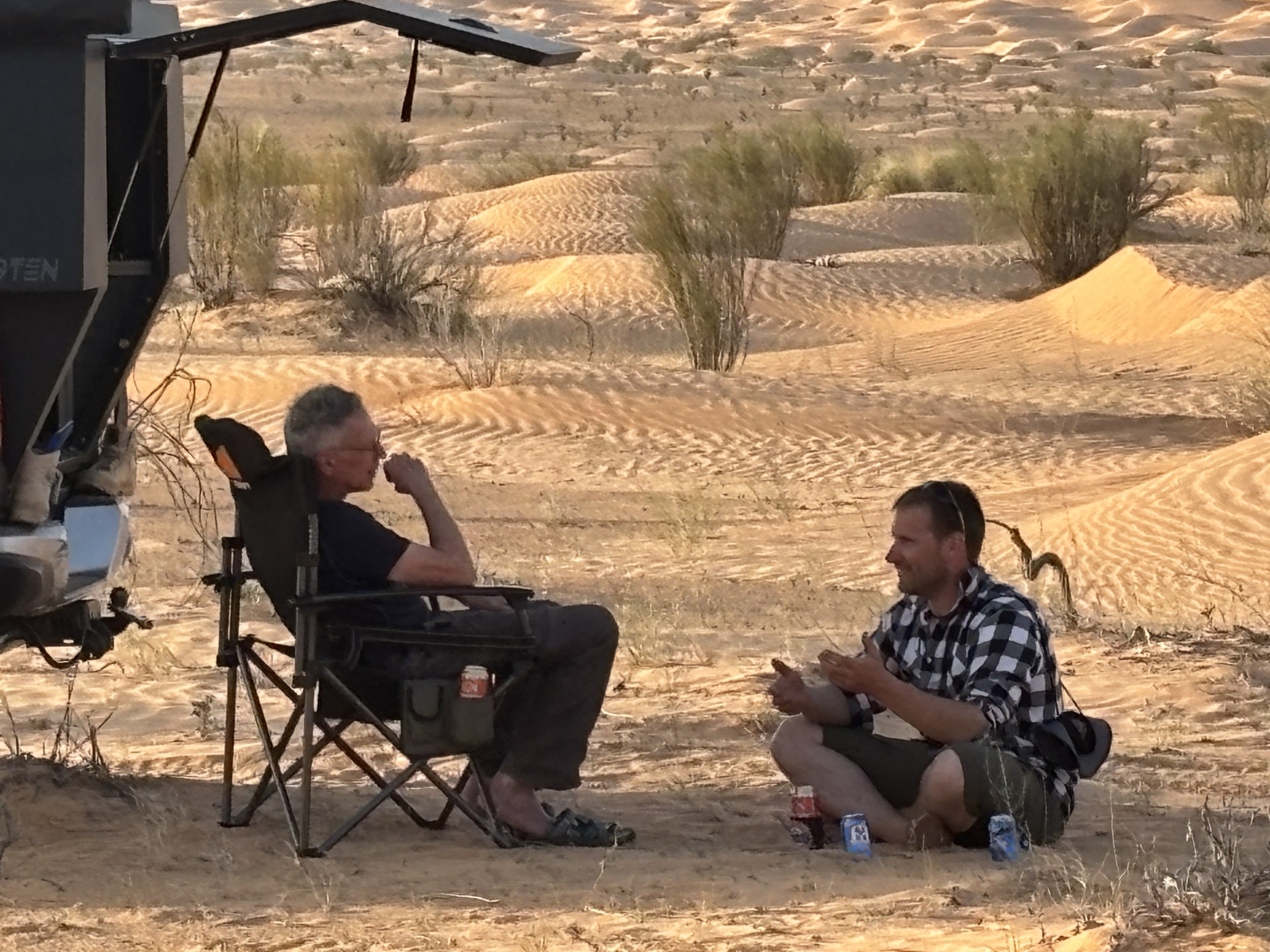
Those who don't want the Sahara right away: Sardinia is the perfect testing ground for European off-roaders. Rocky coastal trails, gravel tracks through maquis, abandoned mountain villages in the interior.
The island has so little off-road tourism that you can spend entire days without meeting other vehicles. No traffic, no crowds. Just rock, sea, and track.
The 4x4 journey through Sardinia shows this in 9 days: Nuragic culture, coastal tracks, camping on gravel lots with sea view. No luxury hotel, no pool. Real spirit.
Mental Preparation: What Really Counts
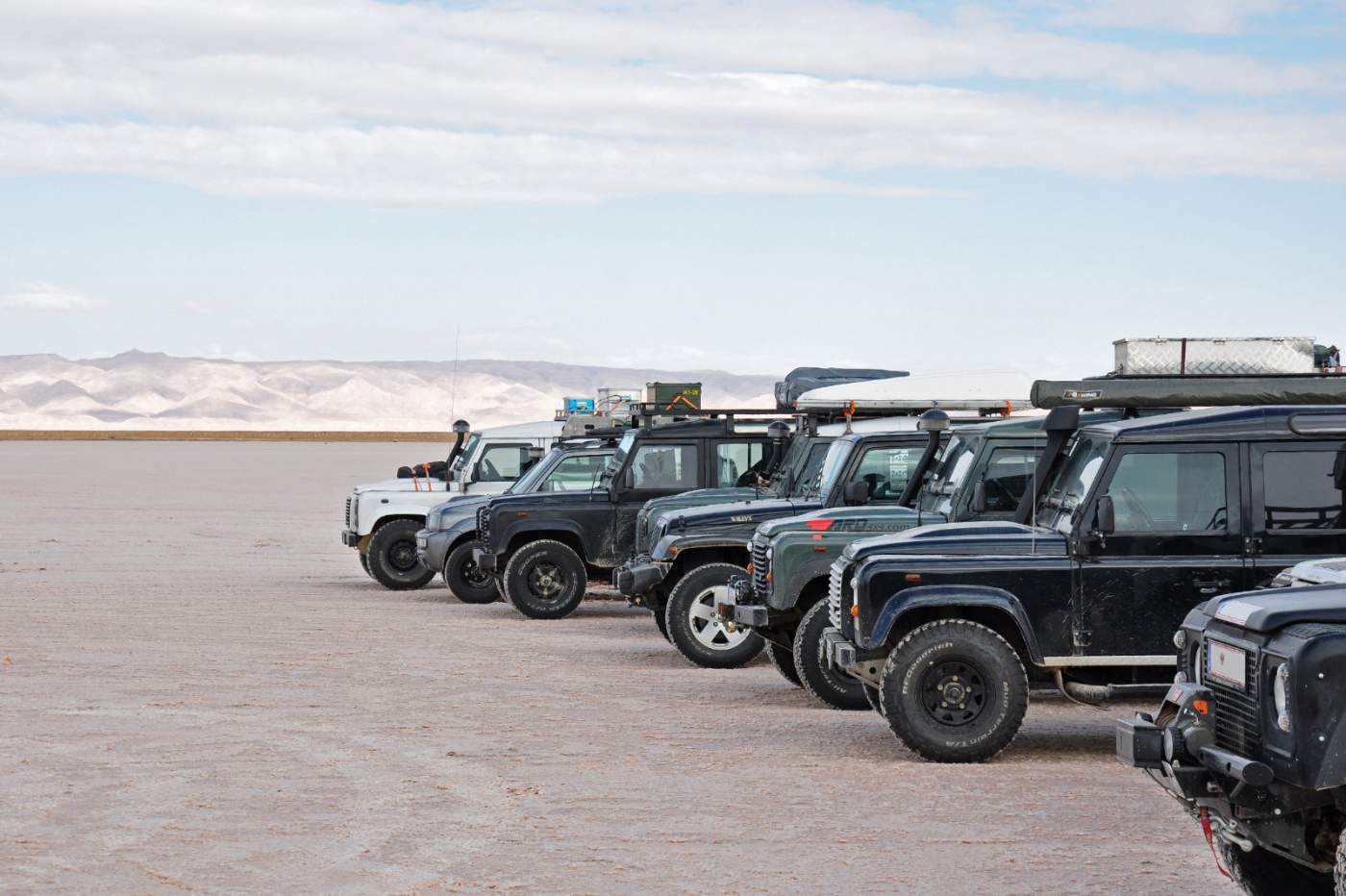
The vehicle can do everything. If the driver panics, that doesn't help.
Offroad demands calm when it gets difficult. Not adrenaline. Not determination. Calm. Stop briefly. Get out. Assess the situation. Then continue.
Those who feel pressure (because others are waiting, because it's getting late) make mistakes. The only time pressure that counts: night. Before dark you should be at your destination. Everything else can be taken slowly.
And if you get stuck: that's not failure. That's offroad. Shovel out, sand plate in, 10 minutes of work, continue.