Not Everything Fits. Good.
You're packing for a month. The saddlebags hold 30 liters. Do the math.
The first time you pack always ends the same: everything's in, the bike can barely ride, you don't know where to start cutting. The second time is better. The third time you pack in an hour.
The journey forces clarity. What do you really need? What do you just want? That question answers itself on the road — usually after three days, when you realize you haven't unpacked the big fleece shirt once.
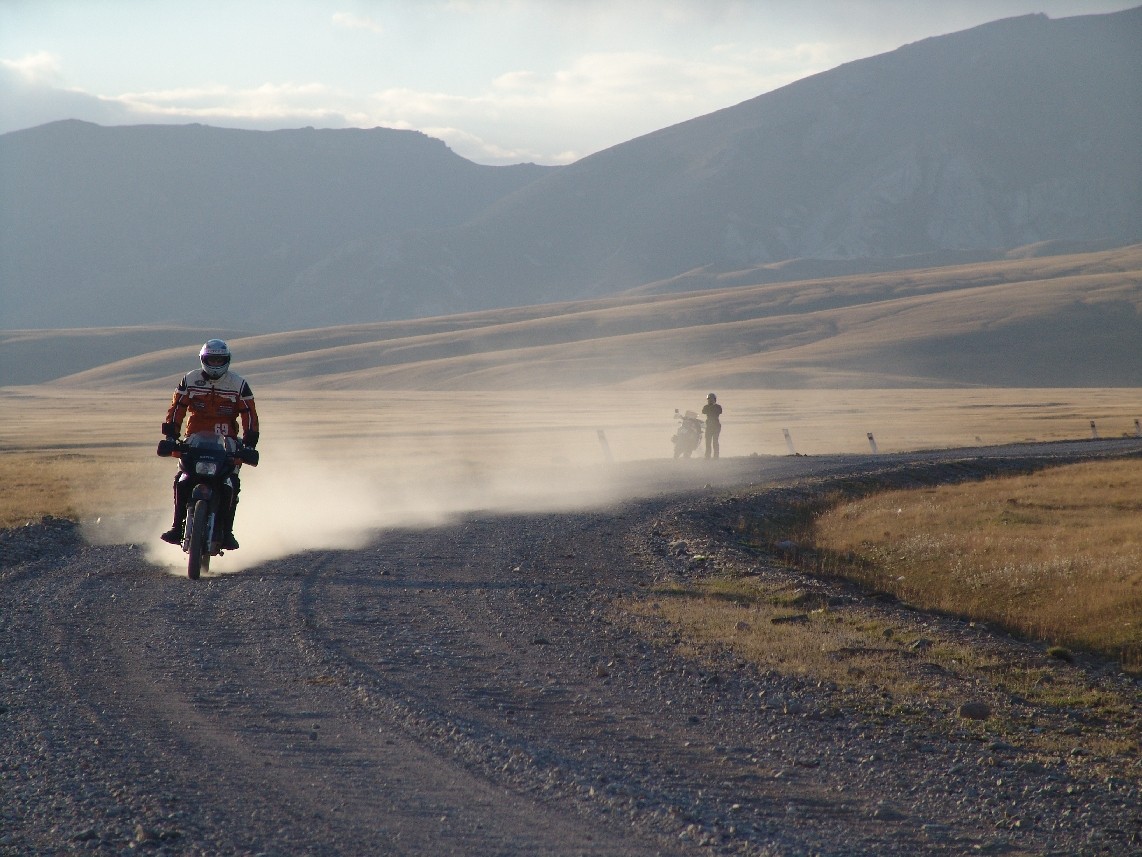
This list is based on what's actually needed on tours like the Pamir Highway — 15 days, Kyrgyzstan to Tajikistan, passes up to 4,650 meters.
Clothing: The Layer System That Actually Works
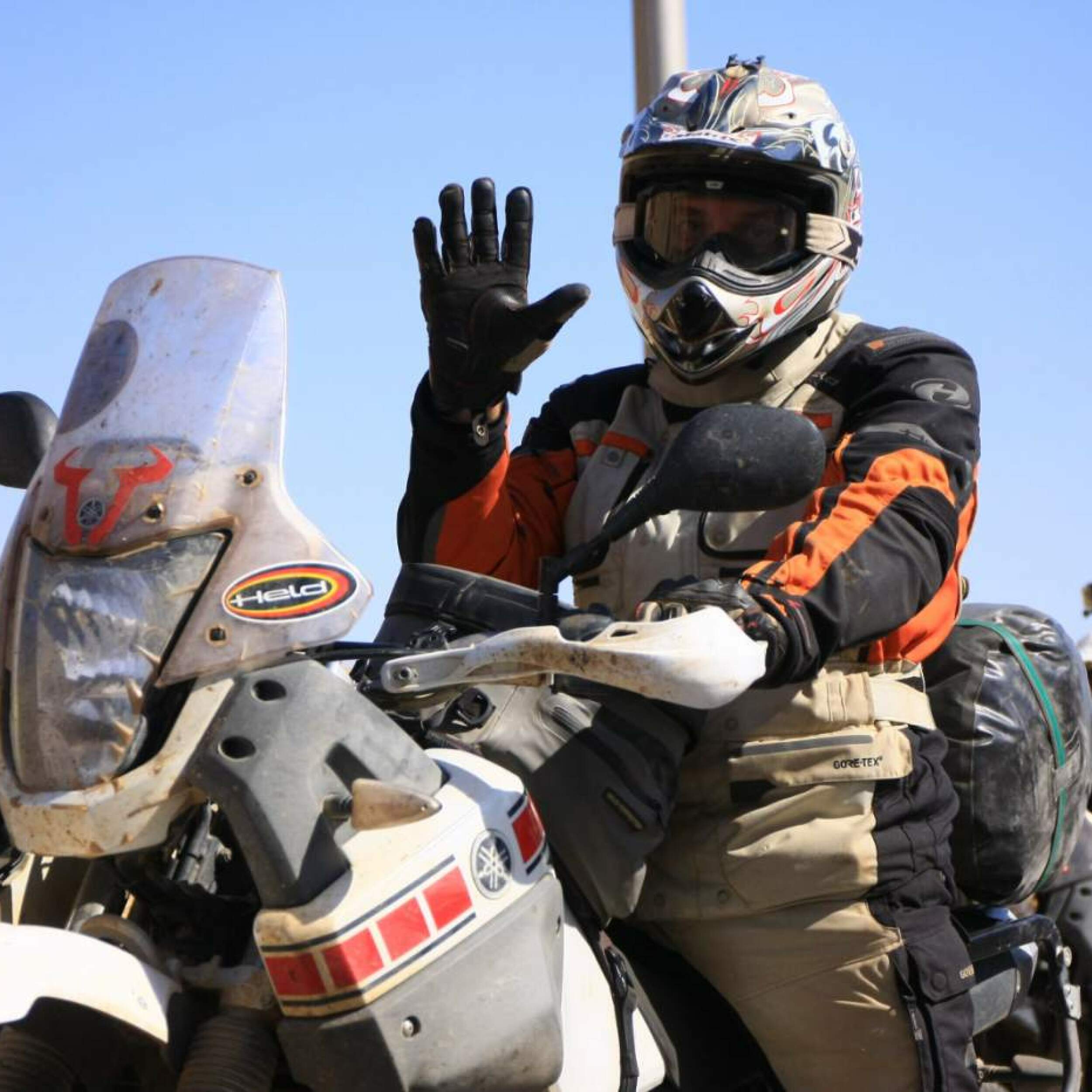
A motorcycle jacket with armor and membrane. A merino wool fleece. A thin long-sleeve shirt. That's your three-layer system, and it works from zero to 30 degrees.
Three pairs of underwear in performance fabric. Two pairs of pants — one for riding, one for the evening. Sturdy boots that are also usable on foot. Two pairs of gloves: summer and winter. In the Alps the difference between 9 AM and 2 PM is bigger than you think.
What you don't need: three jeans, an evening shirt you'll definitely never wear, and the thick down jacket. Replace the latter with a thin Primaloft vest. Same weight, a third of the volume.
Merino dries overnight. Synthetic performance fabric too. Cotton doesn't. You'll notice that at the first rain.
Tools: The Small Rescue by the Roadside
A tire plug kit. That's the most important thing. No debate.
Plus: hex key set fitting your bike. Combination pliers. Cable ties in three sizes. Electrical tape. Spare fuses. Chain oil (small bottle). A compressor or CO2 cartridges.
What you don't need: a complete toolbox. If you're somewhere in the world with a problem that can't be solved with a 17mm wrench and a hammer, you won't get further with the rest of your tools either. Then you need local help — and you'll find it in almost every village faster than you think.
A spare cable for your phone charger. Sounds trivial. It's critical when your GPS is your phone.
Documents and Money: The Underestimated Part
Passport. International driver's license. Vehicle registration. Green card or local insurance — depending on the country. That's the minimum. Without these four things you won't get far.
Copies of everything — stored separately. A scan on your phone isn't enough. Some borders don't accept digital documents, and some have no power for your screen.
Money: credit card, debit card, cash. Never all in the same place. Small denomination local currency helps at markets and small gas stations. In Central Asia you sometimes still pay with dollars. Asking doesn't hurt.
Important: a notebook with your insurance numbers, the embassy contact, and an emergency contact at home. Paper doesn't die when the battery runs out.
What's Often Forgotten — And Then Missing
Sunscreen. Sounds trivial. At 4,000 meters altitude on the Pamir with thin atmosphere you burn in two hours. Really.
Blister plasters. Long riding stages heat up your feet. Boots that were comfortable at home won't be after 400 kilometers.
Small first aid kit: bandages, disinfectant, paracetamol, Imodium. Stomach upsets happen. In countries where the drinking water is different from what you're used to, they happen often.
Zip-lock bags in several sizes. For wet clothing, for electronics in rain, for leftovers from the market. Weigh nothing. Useful for everything.
And a sarong or large cloth: sun protection, sleeping bag substitute on hot nights, tablecloth at a picnic, privacy screen. That one piece of fabric has survived every long tour.
What to Leave at Home — And Why
Laptop: too heavy, too much worry, too little use on the road. A tablet with offline maps is enough. Or just the phone.
More than two pairs of shoes: riding boots, light sandals for evenings. Done. The rest is luxury without value.
Cooking equipment for long tours in organized groups: not necessary. You'll eat what the surroundings offer — and that's usually better than what you'd cook yourself.
The book you've wanted to read for two years: you'll be too tired in the evenings. An e-reader with ten loaded books weighs the same as one — and you need the choice.
After the first week you'll throw something out or leave it somewhere anyway. That's normal. That's part of the journey.