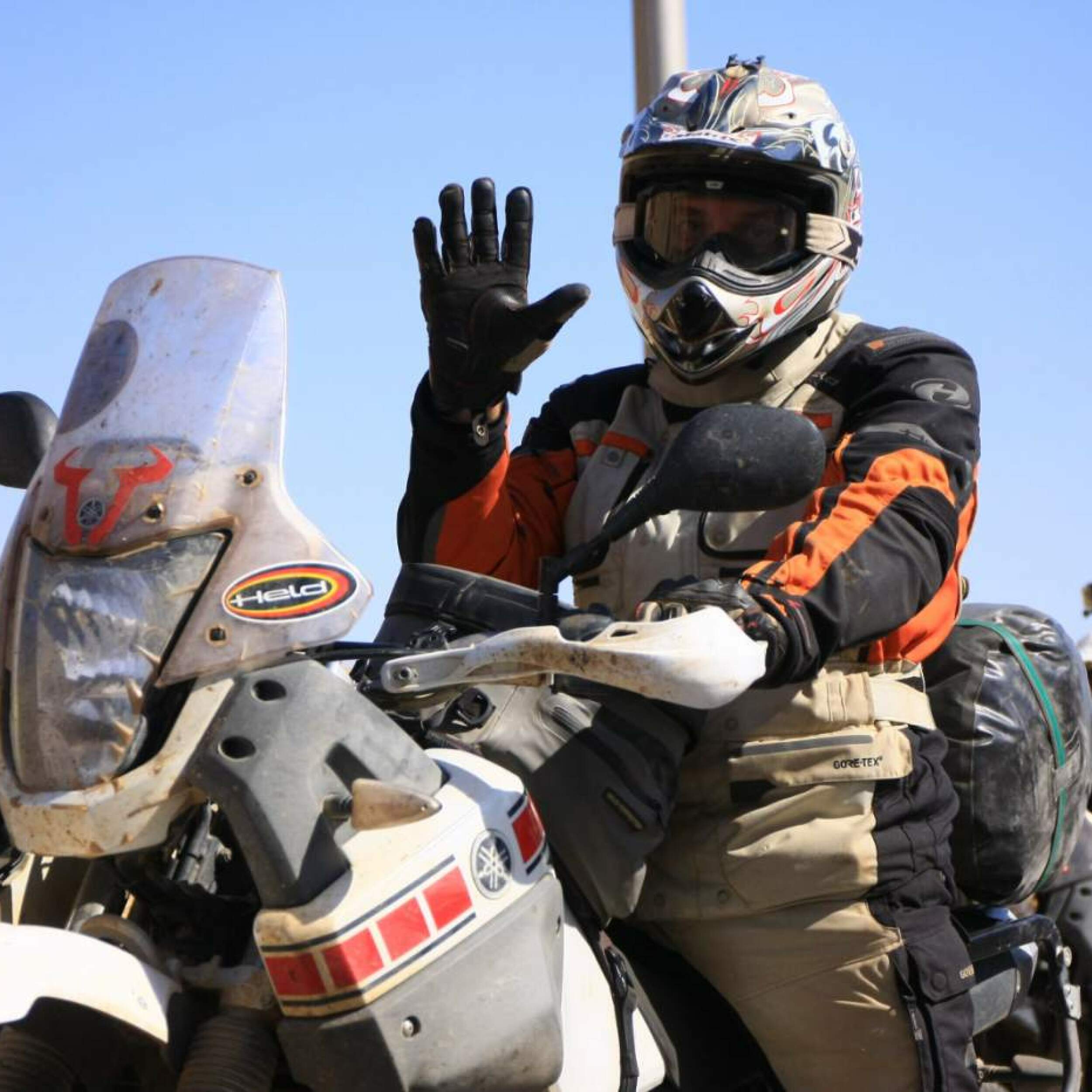
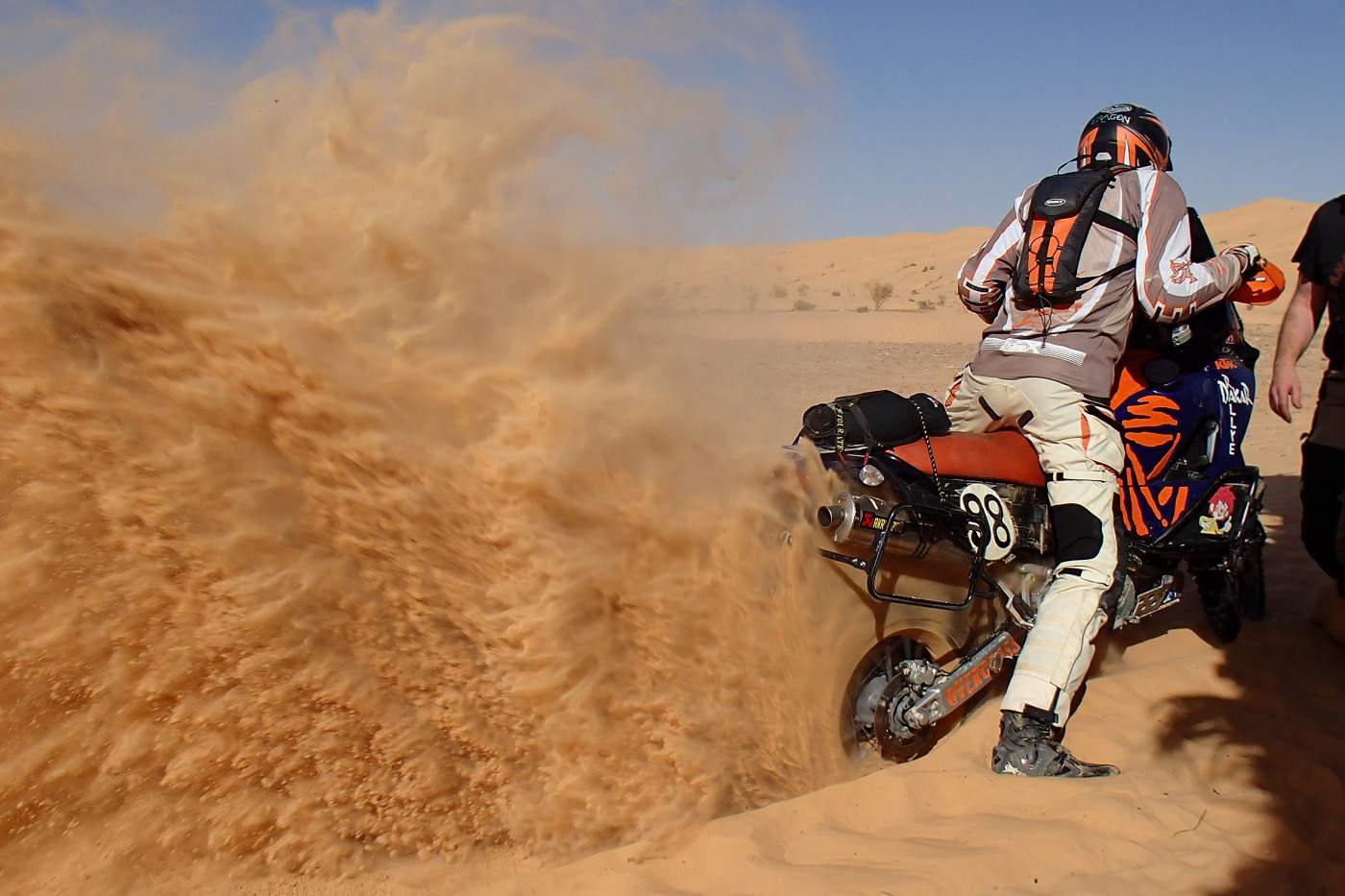
What is it actually like to ride through Mongolia?
Most people picture Mongolia as some kind of epic adventure — and they're not wrong. But what it's actually like day-to-day is different from anything a photo can show you.
No paved roads. No signposts. Sometimes no track at all. You navigate by GPS and by a sense of direction you slowly develop over the first few days. The steppe opens up in every direction and you just ride into it.
The terrain shifts constantly. Hard gravel plateau, then soft sand, then a river with no bridge. Daily distances of 200 to 350 km sound manageable — on Mongolian ground, that's six to eight hours in the saddle. You're genuinely tired by evening. The good kind.
What does the Gobi Desert actually look like?
Forget endless rolling sand dunes. Most of the Gobi is stone desert — flat rock, gravel, and a silence that feels strange at first and then deeply liberating after a few days.
.JPG)
The temperatures are extreme. Above 40°C during the day, below 5°C at night. The sky is so clear you see constellations at night that are invisible from any European city. At Bayanzag, the cliffs glow deep red at sunset — the same spot where researchers found the world's first dinosaur eggs in the 1920s.
And there are sand dunes too: the Khongoryn Els, up to 300 meters high. Standing at the top and looking out across the plain, you understand why people travel this far to see nothing but open space.
What landscapes will you actually ride through?
Mongolia isn't one single landscape — it's many, back to back. From Ulaanbaatar you ride out into grass steppe that turns golden as summer peaks. Wild horses sometimes run alongside you. It's not a tourist attraction. It just happens.
.JPG)
The Khangai Mountains are the opposite of the Gobi: green, forested, with mountain lakes so clear you can see the bottom. After days of desert heat, it feels almost unreal. The Gobi Desert enduro trip runs right through these contrasts — from green steppe to stone desert and back.
If you want to push further, the Silk Road trip through Mongolia and Kyrgyzstan extends the journey into a second country, with the Tian Shan mountains as the second highlight.
What do you need to bring for a motorcycle trip to Mongolia?
Gear matters more here than on most trips. There are no gas stations every 50 km. If something breaks, help isn't ten minutes away.
The essentials: a solid layering system for the extreme temperature swings, proper protective gear without compromise, and good boots. On guided Overcross trips the motorcycle is provided, so you don't need to ship your own bike.
Visa (apply in advance), vaccinations for Hepatitis A, Tetanus, and Rabies — sort all of this at least three months before departure. Don't leave it to the last week.
When is the best time to ride Mongolia?
The window is narrow: June through September. Before that the ground is still frozen or muddy from spring thaw. After that it gets seriously cold. July and August are the sweet spot — warm, dry, and the nomadic summer camps are active.
June has greener steppe and slightly cooler temperatures than peak summer. If you're riding the Gobi, factor in the heat: July means 40°C in the middle of the day. Bring plenty of water and start early.
Overcross runs regular groups through Mongolia during this season. The guided Gobi Desert enduro trip departs from June 20, 2026 — one of the earliest and most popular slots of the year.